• Search the Site

Upcoming Events

Contemplation: The Sorrows We Cannot Avoid

Contemplation: The Sorrows We Cannot Avoid 720 720 Tim Williams

By Timothy Williams, Senior Director of Formation and Leadership Development 

Our Catechism teaches that “faith is often lived in darkness and can be put to the test. The world we live in often seems very far from the one promised us by faith. Our experiences of evil and suffering, injustice and death, seem to contradict the Good News; they can shake our faith and become a temptation against it.” [CCC, 164] All of us have experienced suffering in our lives, and we know that it can challenge our faith. As Vincentians, we also are called to confront the suffering of the neighbor, for whom it is often incomprehensible. “How,” they must wonder, “can a loving God allow this?”

Our first duty of action on our home visits must be to do all that we can to alleviate the neighbor’s suffering: to alleviate anxiety by helping with bill payments, to alleviate hunger with food, and to alleviate illness with prescriptions – “No work of charity if foreign to the Society.” [Rule, Part I, 1.3] This is our first duty of action, but it is neither our motive nor our purpose for our actions.

For many, if not most of those we help, the crisis we help to avert will return again one day. Others have material needs greater than we can meet with the resources that we have. These are not failures of service, but reminders that the Society, like the Church, needing “human resources to carry out its mission, is not set up to seek earthly glory, but to proclaim, even by its own example, humility and self-sacrifice.” And again, like the Church, the Society “encompasses with love all who are afflicted with human suffering and in the poor and afflicted sees the image of its poor and suffering Founder. It does all it can to relieve their need and in them it strives to serve Christ.” [LG, 8]

Our primary purpose, our growth in holiness, is not something we take from the poor, but something they freely give us by virtue of allowing us to serve Christ in their persons. In return, Frédéric said, “We should give our poor brothers something more than meager alms.” [1457, to the Assembly, 1834]

Suffering is inescapable on this exile earth. [CCC, 385] It is for this reason that God sent His son to share in our suffering, and that the Son, in turn, sends us to share in each other’s suffering. We must always try to relieve the neighbor’s material needs, but whether we can or not, we must always seek to be a light in the darkness of the despair to which suffering can lead; to show to them the loving face of Christ through our presence, our gentleness, our friendship, and our prayers.

Because hope is not found in a loaf of bread, it cannot be destroyed by a lack of bread. True hope is found in the light that shines through works of love, offering reassurance that even in our darkest hours, God does not abandon us. As Frédéric reminds us, “the condition for progress is suffering and… friendship sweetens the sorrows we cannot avoid.” [53, to Falconnet, 1833]

Contemplate

Do I allow the neighbor’s suffering to overwhelm the hope that I try to share?

Recommended Reading

500 More Little Prayers for Vincentians

Contemplación: Los Dolores Que No Podemos Evitar

Traducción de Sandra Joya

Nuestro catecismo enseña que “la fe se vive a menudo en la oscuridad y puede ser puesta a prueba. El mundo en que vivimos a menudo parece muy lejano del que la fe nos promete. Nuestras experiencias de maldad y sufrimiento  de injusticia y muerte, parecen contradecir contra ella” (CIC, 164). Todos hemos experimentado el sufrimiento, en nuestras vidas y sabemos que puede desafiar nuestra fe. Como Vicentinos, también  estamos llamados a confrontar el sufrimiento del prójimo, para quién  a menudo resulta incomprensible. “¿Cómo,” deben preguntarse, “puede un Dios amoroso permitir esto?”

Nuestro primer deber en nuestras visitas domiciliarias debe ser, hacer todo lo posible por aliviar el hambre con alimentos y aliviar la enfermedad con medicamentos. “Ninguna obra de caridad es ajena a la Sociedad” (Regla, Parte 1,1.3) Este es nuestro primer deber de acción, pero  no es, ni el motivo ni el propósito  de nuestras acciones.

Para muchos, si no la mayoría  de aquellos a quienes ayudamos, la crisis que ayudamos a evitar volverá  algún  día. Otros tienen necesidades materiales mayores de las que podemos satisfacer con los recursos disponibles. Éstas no son fallas en el servicio, sino recordatorio de que la Sociedad, al igual que la Iglesia, necesitaba de recursos humanos para llevar a cabo su misión, no está  constituida para buscar la gloria terrena, sino para proclamar, incluso con su propio ejemplo, la humildad y la abnegación, y, de nuevo. al igual que la Iglesia, la Sociedad abarca con amor a todos los que sufren  y en los pobres y afligidos ve la imagen de su Fundador, pobre y sufriente. Hace todo lo posible por aliviar sus necesidades y en ellos se esfuerza por servir a Cristo. (LG, 8)

Nuestro esfuerzo principal, nuestro crecimiento en santidad, no es algo que tomamos de los pobres, sino algo que ellos nos dan libremente al permitirnos servir a Cristo en sus personas. A cambio, Federico dijo:  ” Debemos dar a nuestros hermanos pobres algo más  que una limosna miserable”. (1457, a la Asambkea, 1834)

El sufrimiento es ineludible en esta tierra de exilio. (CIC, 385) Es por esta razón  que Dios envió  a su hijo a compartir nuestro sufrimiento, y que el Hijo, a su vez, nos envía  a compartir el sufrimiento de los demás. Siempre debemos procurar aliviar las necesidades materiales del prójimo,  pero, podamos o no, siempre debemos buscar ser una luz en la oscuridad de la desesperación, a la que puede conducir el sufrimiento; mostrarles el rostro amoroso de Cristo mediante nuestra presencia, nuestra dulzura, nuestra amistad y nuestras oraciones.

Porque la esperanza no se encuentra en un trozo de pan, no puede ser destruida por la falta de pan. La verdadera esperanza se encuentra en la luz que brilla a través  de las obras de amor, que nos da la seguridad de que, incluso en nuestros momentos más  oscuros, Dios no nos abandona. Como nos recuerda Federico, ” la condición  para el progreso es el sufrimiento y….la amistad endulza las penas que no podemos evitar (53, a Falconnet, 1833).

Contemplar

¿Dejo que el sufrimiento del prójimo  apague la esperanza que intento compartir?

Bridges of Charity: Seattle and Kerala United Through International Twinning

Bridges of Charity: Seattle and Kerala United Through International Twinning 680 510 admin

Bridges of Charity: Seattle and Kerala United Through Twinning

Through the International Twinning Program of the Society of St. Vincent de Paul, Vincentians are building bonds of faith, friendship, and service across continents. U.S. Conferences are walking in solidarity with their counterparts in countries where poverty is profound and resources are scarce. Through spiritual support and financial assistance, they are bringing Christ’s love to the most vulnerable.

One inspiring example is the twinning partnership between the St. James Conference in Seattle, Washington and the St. Mary’s Conference in Kerala, India. This relationship has blossomed into a lifeline for families in need, enabling vital charitable works in the southern region of India—an area still recovering from the economic impacts of the COVID-19 pandemic, monsoon flooding, and ongoing unemployment challenges.

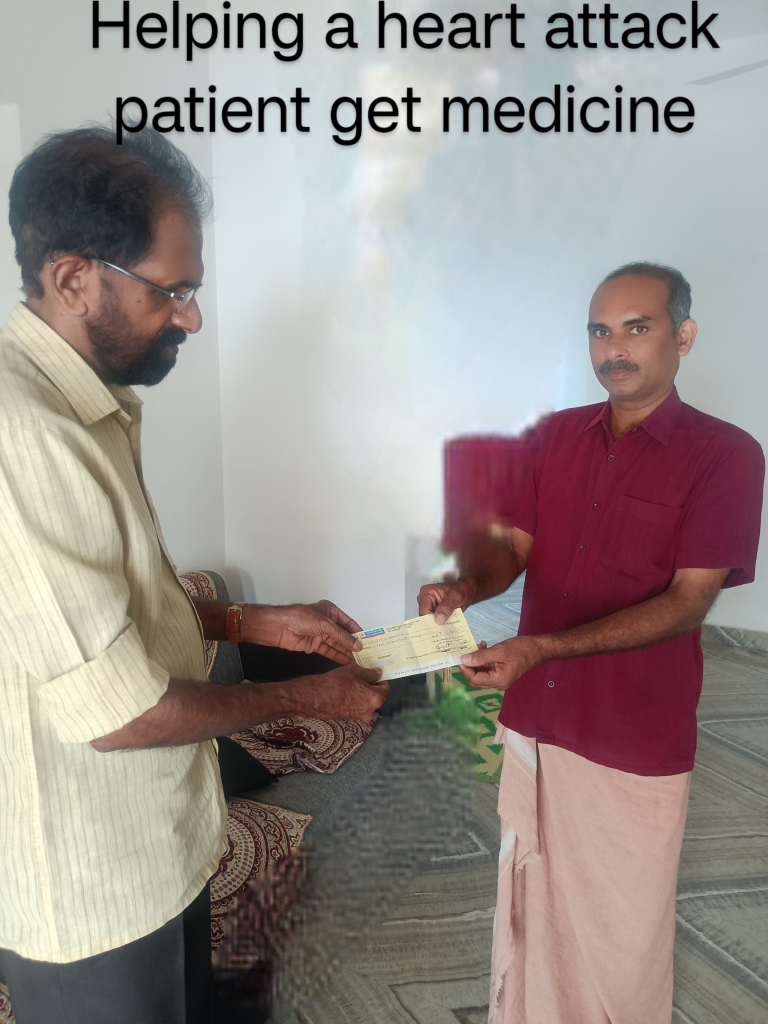
With support from the St. James Conference, St. Mary’s is able to provide much-needed financial assistance for medical care, housing, education, food, and other essential needs to low-income families and elderly individuals in their parish and surrounding communities. The impact has been deeply felt on both sides of the ocean.

“The International Twinning Program has impacted us spiritually since we are twinning with a place that has a bond with one of our Conference members whose family is in India,” said Blake Steller, President of the St. James Conference. “It helps us remember that our impact goes beyond our community.”

The partnership has not only fostered a sense of global solidarity but also deepened the mission and awareness within the Seattle-based Conference. When asked if he would recommend the program to others, Steller added:

“Absolutely. Twinning helps our Conference recognize that the work we do can spread and help people abroad—it expands our understanding of what it means to serve.”

The gratitude from the St. Mary’s Conference is heartfelt and profound. N.L. Jose, Secretary of the Conference, shared this message:

“We are able to provide some badly needed financial assistance—for medical, housing, education, food, and so on—to the poor people around us with your help. We are really grateful to you for that and eagerly look forward to your continued assistance to our Conference.”

This exchange of charity, communication, and prayer continues to strengthen both communities and bear lasting fruit in the lives of those served.

If your Conference is not yet involved in Twinning, now is the time to consider forming one. Twinning transforms lives—not only of those served, but of those serving.

To learn more about starting a Twinning relationship and discover the areas of greatest need, contact the National Council or visit: https://ssvpusa.org/international-twinning

4-24-25 Weekly Questions & Answers

4-24-25 Weekly Questions & Answers 1200 628 admin

April 24, 2025

Q: We got a call from an attorney handling an estate.  The specification was for funds to go to a Conference that no longer exists. The attorney indicates the funds were specified to serve the needy. Any suggestions?

A: If the attorney agrees, the funds can be turned over to the appropriate Council with the restriction that the funds be used to help people within the boundaries of the former Conference.  The District Council can then distribute those funds as necessary to Conferences assisting people within those boundaries.

Q:  If a resignation is received in writing from a Conference member — do they need to rejoin the Conference again as a new member? Please clarify this for us.

A: The Rule, Part III, Statute 3 provides a process for admission.  Ultimately, it is the decision of the Conference who may join. However, once they are members, they cannot be removed except by the National President.


24 de Abril 

P: Recibimos una llamada de un abogado que maneja un patrimonio.  La especificación era que los fondos fueran a una Conferencia que ya no existe.  El abogado indica que los fondos fueron específicamente para servir a los necesitados. ¿Alguna sugerencia?

R: Si el abogado está de acuerdo, los fondos pueden ser entregados al Consejo apropiado con la restricción de que los fondos se utilicen para ayudar a las personas dentro de los límites de la antigua Conferencia.  Después, el Consejo de Distrito puede distribuir esos fondos según sea necesario a las Conferencias que ayudan a las personas dentro de esos límites.

P: Si se recibe una renuncia por escrito de un miembro de la Conferencia, ¿es necesario que se reincorpore a la Conferencia nuevamente como nuevo miembro? Por favor, aclárenos esto.

R: La Regla, Parte III, Estatuto 3 establece un proceso de admisión.  En última instancia, es decisión de la Conferencia de quién puede adherirse.  Sin embargo, una vez que son miembros, no pueden ser removidos sino únicamente por el Presidente Nacional.

Contemplation: The Medium is the Message

Contemplation: The Medium is the Message 1078 781 Tim Williams

By Timothy Williams, Senior Director of Formation and Leadership Development 

In a 1964 book, Marshall McLuhan concluded that “the medium is the message.” To fully understand a message, in other words, you need to understand the means by which it was delivered. This is perhaps why, from the time of creation, God has chosen so many different media to speak to us. He did so through the prophets, He did so from the mountaintops, He did so through storms and destruction, and He even did so in a tiny whisper. But still, it seemed, we did not understand. How frustrated must He have been with His children?

And so, He chose a new way to teach us. Rather than summon us to the mountain again, He came to us. He put on the cloak of humanity and made Himself one of us. He, the Lord Almighty, came to His lowly creatures, and He came not as a king or ruler, but as a humble, common man. As Bl. Frédéric once put it, the one who “regenerated the hidden world is a divine person who was hidden for thirty years in the workshop of a carpenter.” [24th Lecture at Lyon]

If not to the Father, to whom might we better listen than to one just like us, one who shares our suffering, one who comes not to be served, but to serve? One who loves us beyond all reason?

Frédéric’s Saint-Simonian classmates in the Conference of History strongly believed that their way of scientific progress, of planning the lives of others, could lead to the perfectibility of material lives. In challenging Frédéric to show the good of the church, it was their very confidence that they could be more than carpenters; that they could be architects that revealed to Frédéric the answer to their challenge: “We must do what is most agreeable to God…Let us go to the poor.” [Baunard, 65]

And so, then as now, we go to our neighbors, not as social workers or teachers, not as architects, but as carpenters, not as strangers, but as friends. We go to them in their homes, on the streets, in hospitals, in prisons, or in nursing homes. “In this way,” the Society’s Council General explains, “the contrast is obvious between the Society’s openhanded offer to help, in a spirit of love and friendship, and a State activity which demands that the poor come for help to a certain location.” [Commentaries, p.87]

On its surface, our message to the poor may appear to be assistance with rent or utilities, help with a job application or car repair, or “any form of help that alleviates suffering or deprivation and promotes human dignity and personal integrity in all their dimensions” because “no work of charity is foreign to the Society.” [Rule, Part I, 1.3]

But our true message, delivered by one who comes not to be served, but to serve, is best understood by understanding the medium, and like the Incarnate Word, our medium is love.

Contemplate

How can I best make my message to the neighbor a message of love?

Recommended Reading

Mystic of Charity

Contemplación: El Medio es el Mensaje

Traducción de Sandra Joya

En el libro de 1964, Marshall McLuhan concluyó que ” el medio es el mensaje”. Para comprender plenamente un mensaje, es necesario comprender el medio por el cual se transmitió. Quizás  por eso, desde la creación , Dios ha elegido tantos medios diferentes para hablarnos.  Lo hizo a través  de los profetas, lo hizo desde las cimas de las montañas, lo hizo a través  de tormentas y destrucción, e incluso lo hizo en un susurro. Pero aún  así,  parecía  que no entendíamos. ¿Cuán  frustrado debió  de estar con sus hijos?

Y así, eligio una nueva forma de enseñarnos. En lugar de llamarnos de nuevo a la montaña, vino a nosotros. Se vistió de humanidad y se hizo uno de nosotros. El Señor Todopoderoso, vino a sus humildes criaturas, y no vino como un rey o gobernante, sino como un hombre humilde y común . Como dijo el Beato Federico lo expresó  una vez: quién ” regeneró el mundo oculto es una persona divina que estuvo oculta durante treinta años en el taller de un carpintero”. (24a. Conferencia en Lyon)

Si no es al Padre, ¿a quién mejor escuchar que a alguien como nosotros, alguien que comparte nuestro sufrimiento, alguien que viene no para ser servido, sino para servir? ¿Alguien que nos ama más  allá  de toda razón?

Los compañeros sansimonianos de Federico en la Conferencia de Historia creían  firmemente que su forma de progreso cientifico, de planificar la vida de los demás, podía  llevar a la perfectibilidad de la vida material. Al desafiar a Federico a mostrar el bien de la Iglesia, fue su misma confianza en que podían  ser más  que carpinteros; en que podían  ser arquitectos, lo que le reveló  la respuesta a su desafío: ” Debemos hacer lo que más  agrada a Dios….Vayamos a los pobres”. (Baunard, 65)

Así,  entonces como ahora, nos acercamos a nuestros vecinos, no como trabajadores sociales o maestros.ni como arquitectos, sino como carpinteros, no como desconocidos, sino como amigos. Los visitamos en sus hogares, en la calle, en hospitales, en prisiones o en residencias de ancianos. De este modo, explica el Consejo General de la Sociedad, “el contraste entre el ofrecimiento de la Sociedad de ayudar tendiendo la mano, en un espíritu de amor y amistad, y la actividad estatal que exige que los pobres vayan a ciertos lugares en busca de ayuda.” (Comentarios, p. 86)

A primera vista, nuestro mensaje a los pobres puede parecer asistencia con el alquiler o los servicios públicos , ayuda con una solicitud de empleo o la reparación  de un coche, o “cualquier forma de ayuda que alivie el sufrimiento o la privación, y promueva la dignidad humana y la integridad personal en todas sus dimensiones“, porque “ninguna obra de caridad es ajena a la Sociedad“. (Regla, Parte 1, 1. 3)

Pero nuestro verdadero mensaje, transmitido por alguien que no viene a ser servido, sino a servir, se comprende mejor al comprender al médium, y al igual que el Verbo Encarnado, nuestro médium  es el amor.

Contemplar

¿Cómo  puedo lograr que mi mensaje al prójimo  sea un mensaje de amor?

4-17-25 Weekly Questions & Answers

4-17-25 Weekly Questions & Answers 1200 628 admin

April 17, 2025

Q: Our Conference has closed our Thrift Store, and we want to gift the building to our parish for a dollar. Is this okay?

A: If the building is in the name of the Conference, you have a right to sell it. However, selling a property for a tokenized amount (such as $1.00) is the equivalent of giving away assets of the Society.  The amount does not matter as much as the principle.  In this case, it is making a donation to the parish (an outside organization).  Based on our Rule, this cannot be done.  Even if your Conference would close, based on the wording in the nationally approved bylaws (updated through Midyear meeting, 2019), you cannot turn over assets to the parish; the assets would be turned over to the next higher Council. In addition, there may be additional legal matters that also come into play beyond our own internal rules that require expert legal advice.

Q: Who is the official spokesperson for the Society? Where will I find this in the Rule?

A: This is not specifically in The Rule, it is found in the National Council Resolution 5, dated Sept 1, 2006. The National President is the only spokesperson of the Society on national issues. The President may elect to delegate this responsibility to another Board member and/or Executive Director, especially in times of crisis communications.


17 de Abril 

P: Nuestra Conferencia ha cerrado la tienda de segunda mano, y queremos regalar el edificio a nuestra parroquia por un dólar. ¿Es esto, está bien?  

R: Si el edificio está a nombre de la Conferencia, ustedes tienen derecho a venderlo. Sin embargo, vender una propiedad por una cantidad como toque de agradecimiento ($ 1.00) es el equivalente a regalar activos de la Sociedad.  La cantidad no importa tanto como el principio.  En este caso, se trata de hacer una donación a la parroquia (una organización externa).  Basándonos en nuestra Regla, esto no se puede hacer.  Incluso si su Conferencia cerrara, según la redacción de los Estatutos aprobados a nivel Nacional (actualizados hasta la reunión de medio año del 2019), no puede entregar activos a la parroquia; los bienes serían entregados al siguiente Consejo Superior. Además, puede haber asuntos legales adicionales que también entren en juego más allá de nuestras propias normas internas y que requieran asesoramiento legal de un experto.

P: ¿Quién es el portavoz oficial de la Sociedad? ¿Dónde encontraré esto en la Regla?

R: Esto no está específicamente en la Regla, se encuentra en la Resolución 5 del Consejo Nacional, del 1 de septiembre de 2006. El Presidente Nacional es el único portavoz de la Sociedad en los asuntos Nacionales. El Presidente puede optar por delegar esta responsabilidad a otro miembro de la Mesa Directiva y/o Director Ejecutivo, especialmente en tiempos de crisis en comunicación.

Contemplation: Lord, Let Our Eyes Be Opened

Contemplation: Lord, Let Our Eyes Be Opened 720 404 Tim Williams

By Timothy Williams, Senior Director of Formation and Leadership Development 

A man who won an enormous amount of money just a few years back, quit his job, and spent it extravagantly. Now he lives in a rented house, is unemployed, behind on his rent, and faces eviction. He was a millionaire last year and now he begs for help – how can this be?

Why do you notice the splinter in your brother’s eye, but do not perceive the wooden beam in your own eye?

Single mom with two teens, unemployed, panicked, and sobbing. The sheriff is coming tomorrow; it’s too late to pay the rent. She has no idea what to do. At this point, is there even a way that we can help?

How many loaves do you have?

A man who seems constantly underemployed. No matter what he does, it seems, he can’t catch up. If he doesn’t get laid off, he faces a family crisis or a health crisis. It’s always something new, but we have been helping with the rent for years.

How long will I be with you? How long will I endure you?

An older woman, with retirement income sufficient to pay rent, who chooses instead to live in her car, homeless. She is not interested in moving into a home but calls for help with other things from time to time.

What do you want me to do for you?

An older man who moved from homelessness to assisted living only because a health issue landed him in a hospital. If he would only sign the papers, his Social Security and Medicare would pay for him to stay there permanently. Instead, he wants to remain independent, living in a place he can’t afford, knowing he will likely be homeless again in a few months.

What are you thinking in your hearts?

She sits on a bench most of the time, except when she lies on the ground to sleep. Many people have offered help, and sometimes she will accept blankets, clothing, or food. She has a pension and could get into housing, but she gets angry when people offer to help with that. How can I help those who do not want my help?

Do you love me?

Contemplate

What does it mean to truly, as Bl Frédéric implores us, “do as our Lord Jesus Christ did”?

Recommended Reading

The Spirituality of the Home Visit

Contemplacion: Señor Abre Nuestros Ojos

Traducción de Sandra Joya

Un hombre ganó una enorme cantidad de dinero hace sólo  unos años, renunció  a su trabajo y lo gastó  desmedidamente. Ahora vive en una casa alquilada, está desempleado, atrasado en el pago del alquiler y se entrega al desahucio. Era millonario el año pasado y ahora pide ayuda. ¿Cómo  es posible?

¿Por qué  te fijas en la paja que está  en el ojo de tú  hermano, pero no ves la viga que está  en el tuyo?

Una madre soltera con dos hijos adolescentes, desempleada, presa del pánico  y sollozando. El Sheriff viene mañana; es demasiado tarde para pagar el alquiler. No tiene ni idea de qué  hacer. A estas alturas. ¿hay alguna manera de ayudar?

¿Cuántos  panes tienes?

Un hombre que parece estar constantemente subempleado. Haga lo que haga,parece que no puede ponerse al día.  Si no lo despiden, se enfrenta a una crisis familiar o de salud. Siempre hay algo nuevo, pero llevamos años ayudando con el alquiler.

¿Cuánto  tiempo estaré contigo? ¿Cuánto  tiempo te soportare?

Una mujer mayor, con ingresos de jubilación suficientes para pagar el alquiler, que prefiere vivir en su coche, sin hogar. No le interesa mudarse a una residencia, pero de vez en cuando pide ayuda con otras cosas.

¿Qué  quieres que haga por ti?

Un hombre mayor que pasó  de la indigencia a una residencia asistida sólo  porque un problema de salud lo llevó  al hospital. Si tan sólo  firmara los papeles, su Seguro Social y Medicare pagarían  su estancia alli permanentemente. En cambio, quiere seguir siendo independiente, viviendo en un lugar que no puede pagar, sabiendo que problamente volverá  a estar sin hogar en unos meses.

¿Qué  piensan?

Se sienta en un banco la mayor parte del tiempo, excepto cuando se tumba en el suelo a dormir. Mucha gente le ha ofrecido ayuda, y a veces acepta mantas, ropa o comida. Tiene una pensión  y podría  conseguir una vivienda, pero se enoja cuando le ofrecen ayuda. ¿ Cómo  puedo ayudar a quienes no quieren mi ayuda?

¿Me amas?

Contemplar

¿Qué  significa realmente, como nos implora el Beato Federico, hacer como hizo Nuestro Señor Jesucristo?

Lectura recomendada

La Espiritualidad de la Visita Domiciliara

4-10-25 Weekly Questions & Answers

4-10-25 Weekly Questions & Answers 1200 628 admin

April 10, 2025

Q: How do Council leaders report the hours they spent at a national meeting? Is it counted as 24 hours a day, eight hours in a given day, or is it strictly based on the total number of hours actually present at meetings (including workshops, committee meetings, presentations, general session attendance, Masses attended meals shared in a Vincentian group, etc.)? 

A: It can be approached two ways. One, start with the first scheduled event for the day and run through the last event scheduled for the day. Sometimes this is eight hours, sometimes 12. The second is to use the first method plus the time spent in “on-your-own” time if it is effectively in meetings with other Vincentians. 24 hours per day is unreasonable, but eight hours on average per day works also.

Q: Can you provide examples of Vincentian assistance that may be considered as “Other In-Person Visits”?

A: Other In-Person visits anytime you meet someone at a location other than their home; for example, meeting someone at the parish office or your Conference pantry.  Another example is when someone calls in need of gasoline, and you meet them at the gas station.  You may meet someone at a neutral site who calls for help and lives in an area of heavy crime.  During the pandemic, telephone, zoom, or other like interviews are considered Other In-Person Visits.


10 de Abril 

P: ¿Cómo informan los líderes del Consejo las horas que pasaron en una reunión nacional? ¿Se cuenta como 24 horas al día, ocho horas en un día determinado o se basa estrictamente en el número total de horas realmente presentes en las reuniones (incluidos talleres, reuniones de comité, presentaciones, asistencia a sesiones generales, comidas y a las misas compartidas en las cuales participo como parte del grupo Vicentino, etc.)?

R: Se puede abordar de dos maneras. Uno, comience con el primer evento programado para el día y cuente las horas hasta el último evento programado para ese día. En ocasiones son ocho horas, en otras son doce horas. La segunda es utilizar el primer método más el tiempo empleado en el tiempo “por su cuenta” si son efectivamente en reuniones con otros Vicentinos. 24 horas al día no es razonable, pero ocho horas como promedio al día también funcionan.

P: ¿Puede dar ejemplos de algunos servicios Vicentinos que puedan considerarse como “Otras Visitas en persona”?

R: Otras Visitas en persona son aquellas en las cuales usted tiene un encuentro con una persona en necesidad en un lugar que no sea su hogar; por ejemplo, reunirse con ellos en la oficina parroquial o en la despensa de su Conferencia.  Otro ejemplo es, cuando alguien llama para pedir ayuda con gasolina y se encuentran con ellos en la estación de servicio.  Es posible que se encuentren con alguien en un sitio neutral porque el que está pidiendo ayuda vive en una zona de mucha delincuencia.  Durante la pandemia, las entrevistas telefónicas, por zoom u otros encuentros similares se consideran otras Visitas en persona.

Contemplation: Open to All

Contemplation: Open to All 1080 1080 admin

By Timothy Williams, Senior Director of Formation and Leadership Development 

Membership in the Society, our Rule tells us, “is open to all those who seek to live their faith, loving and committing themselves to their neighbor in need.” [Rule, Part I, 3.1] The Society is open, but are all of our Conferences open?  Are each of us open to “all those who seek to live their faith”?

The core work of the Society since its founding has been visiting the poor in their homes, and this remains the core work of the Society. Yet from our earliest days, these person-to-person encounters, these mutual relationships with the neighbor, have inspired other works. If we truly serve for love alone, if we truly seek to form relationships based on trust and friendship [Rule, Part 1, 1.9], how could they not lead us to other actions? If an old work friend suffered a job loss and needed a little help, of course we’d try to help – maybe with money, but even more importantly – perhaps even more obviously, we’d make a few calls to people in our industry and offer a recommendation for our friend in his job search.

In a similar way, when we reflect together in our Conferences on what we have seen and heard and learned from our neighbors, we will recognize more ways to remove barriers that make it difficult for them to move from poverty to self-sufficiency; not because we are analysts or social workers, but simply because that is what you do for your friends.

The ideas our members, especially new members, may offer will not always be “the way we do things around here,” but part of being a welcoming Conference is remaining open to the ideas of others. As Emmanuel Bailly put it in his Circular Letter of March 1844, “among us there are no masters to command the rest.” Instead, he explained, we are all brothers and sisters, friends with each other and the neighbor, in whose service we seek to live our faith.

If we are truly open, truly welcoming, then “we shall reject no reasonable proposal, no genuine improvement. Nothing is so injurious to the unity and progress of a Society as a tendency … to reject every idea that does not originate with ourselves, to subject to a rigorous and impossible uniformity, the free and spontaneous action of our Brothers…” [Bailly, CL, Mar 1844]

To be welcoming requires us not only to welcome new members, but to welcome new ideas – provided, of course, they do not contradict the Rule or Scripture. “When the Spirit inspires members, our first duty is to not get in the way! Vibrant Conferences grow by responding to new ideas not by saying ‘no’ but by asking ‘how?’ In welcoming new ideas, we welcome the members who offer them.” [Culture of Welcome]

Each of us brings to our shared Vincentian pathway our particular experiences, our particular gifts, and our particular ideas. In remaining open to those ideas, we grow in holiness together.

Contemplate

How can I be more welcoming to new members and new ideas?

Recommended Reading

A New Century Dawns


Contemplación : Abierta a Todos

Traducción de Sandra Joya

Nuestra Regla nos dice que la membresía  en la Compañía  está  abierta a todos aquellos que buscan vivir su fe amando y compronetiendose con el prójimo necesitado. (Regla, Parte 1.3.1) La Compañía  está  abierta, pero ¿Están  abiertas todas nuestras Conferencias? ¿Estamos cada uno de nosotros abiertos a todos aquellos que buscan vivir su fe?.

La labor principal de la Compañía  desde su fundación  ha sido visitar a los pobres en sus hogares, y esta sigue siendo su labor principal. Sin embargo, desde nuestros inicios, éstos  encuentros personales, éstas  relaciones mutuas con el prójimo, han inspirado otras obras, si realmente servimos sólo  por amor, si realmente buscamos forjar relaciones basadas en la confianza y la amistad (Regla, Parte 1, 1.9) ¿Cómo  no podrían  llevarnos a otras acciones? Sí  un viejo compañero de trabajo perdiera su trabajo y necesitara ayuda, por supuesto que intentariamos ayudarlo, quizás con dinero, pero aún  más  importante, quizás  incluso más  obvio, haríamos  algunas llamadas a personas de nuestro sector y le recomendaríamos  algo para su búsqueda de empleo.

De igual manera cuando reflexionamos juntos en nuestras Conferencias sobre lo que hemos visto, oido y aprendido de nuestros vecinos. reconoceremos más  maneras de eliminar las barreras que les dificultan pasar de la pobreza a la autosuficiencia; no porque seamos analistas o trabajadores sociales, sino simplemente porque eso es lo que uno hace por sus amigos.

Las ideas que nuestros miembros, especialmente los nuevos, puedan aportar no siempre serán  ” como hacemos las cosas aquí ” pero parte de ser una Conferencia acogedora es permanecer abiertos a las ideas de los demás. Como expresó  Emmanuel Bailly en su Carta Circular de marzo de 1844: ” entre nosotros no hay amos que guíen  a los demás ”  En cambio explicó, todos somos hermanos y hermanas, amigos entre nosotros y con el prójimo,  a cuyo sericio buscamos vivir nuestra fe.

Si somos verdaderamente abiertos, verdaderamente acogedores, entonces no rechazaremos ninguna propuesta razonable, ninguna mejora genuina. Nada es tan perjudicial para la unidad y el progreso de una Sociedad como la tendencia….a rechazar toda idea de que no provenga de nosotros mismos a someter a una uniformidad rigurosa e imposible la acción  libre y espontánea  de nuestros hermanos. (Bailly, CL, marzo de 1844).

Ser acogedores nos exige, no sólo  dar la bienvenida a los nuevos miembros, sino también  a las nuevas idea, siempre que, por supuesto, no contradigan la Regla ni las Escrituras. ” Cuando el Espíritu  inspira a los miembros, ¡Nuestro primer deber es no estorbar!

Las Conferencias vibrantes crecen respondiendo a las nuevas ideas, no diciendo que no, sino preguntando como. Al acoger nuevas ideas, damos la bienvenida a los miembros que las ofrecen. (Cultura de Bienvenida)

Cada uno de nosotros aporta a nuestro camino Vicentino compartiendo sus experiencias, dones e ideas particulares. Al permanecer abiertos a esas ideas, crecemos juntos en Santidad.

Contemplar 

¿Cómo puedo ser más acogedor con los nuevos miembros y las nuevas ideas?

4-3-25 Weekly Questions & Answers

4-3-25 Weekly Questions & Answers 1200 628 admin

April 3, 2025

Q: Is it required by members to obtain a copy of a driver’s license and proof of insurance before issuing a gasoline card to those in need? Is there any National policy or position statement on this?

A: This is a local decision. There are no national guidelines available. There are many Conferences that require seeing a driver’s license and an insurance card, but again this is a local decision.

Q: What is national’s official position on having co-presidents within a Conference?

A: The National Council’s official stand is that co-presidents in a Conference are not recommended. Too many problems occur with co-presidencies, and it is difficult for Vincentian members and the National Council to know who to go to for issues and/or concerns that may arise.  This is why we have vice-presidents. One president per Conference is sufficient.


3 de Abril 

P: ¿Es necesario que los miembros obtengan o pidan una copia de una licencia de conducir y un comprobante de seguro del automóvil antes de emitir una tarjeta de gasolina a los necesitados? ¿Existe alguna política Nacional o declaración de esta posición al respecto?

R: Esta es una decisión local. No se dispone de directrices nacionales. Hay muchas Conferencias que requieren ver una licencia de conducir y un comprobante de seguro, pero nuevamente esta es una decisión local.

P: ¿Cuál es la posición oficial de la Oficina Nacional sobre tener copresidentes dentro de una Conferencia?

R: La posición oficial del Consejo Nacional es que no se recomiendan los copresidentes en una Conferencia. Ocurren demasiados problemas con las copresidencias, y es difícil para los miembros Vicentinos y el Consejo Nacional saber a quién acudir para resolver los problemas y / o preocupaciones que puedan surgir.  Por eso tenemos Vicepresidentes. Un presidente por Conferencia es suficiente.

Contemplation: God’s Will is the Way

Contemplation: God’s Will is the Way 1080 1080 admin

By Timothy Williams, Senior Director of Formation and Leadership Development 

According to our Rule, “all decisions are made by consensus” rather than by voting. [Rule, Part I, 3.10] While there may be organizations, such as the armed forces, or some businesses, where consensus-based decision-making would be impractical, presidents in our Conferences and Councils are neither bosses nor commanders; they are servants, not issuing directives, but seeking to fulfill the will of the members.

For many of us, having spent much time in organizations whose meetings are governed by Robert’s Rule, rather than the Rule of the Society, voting seems to come naturally. This habit can cause us to lose sight of how often the votes are just expressions of a consensus we have already effortlessly reached. It’s only when the issue to be decided is more complex, and there is more disagreement, that the advantages of seeking consensus become clearer.

In the commentaries to the Rule, the International Council General explains a key principle: “Is anybody cleverer or holier than the other members? We cannot be sure through whom the Holy Spirit will speak… Light will frequently arise from the one of whom we expect the least… A dominating leader will de-motivate some people, be a source of conflict and ultimately will harm the Society.”

Because none of us can know which of us is truly inspired by the Holy Spirit, we must listen to all, setting our egos aside, and understanding that our own way may not be the best way. After all, our virtue of humility reminds us that we can achieve nothing of eternal value without God’s grace. [Rule, Part I, 2.5.1] In order to arrive at consensus, then, we must seek His will, not our own, through a process of discernment.

In Vincentian discernment, we are asked to consider especially two sources of finding God’s will: people and events. By opening our minds and our hearts to each other, we hope not to decide who is right, nor to determine who “wins,” but to be open to the Holy Spirit, speaking through each of us, and in turn through all of us, united in seeking God’s will.

Consensus rarely forms around a single idea, accepted by all at the moment it is offered. It can be a lengthy process, requiring much patience by all involved. In the end, though, a decision that is supported by all, rather than fifty percent plus one, will be sustainable.

Through discernment and consensus, we are called not to unanimity, but to unity; to seeking God’s will together, and in this way, to continue “to journey together towards holiness.” [Rule, Part I, 2.2]

Contemplate

Do I seek first to impose my will in my Conference or Council, or to seek God’s will together?

Recommended Reading

Rule and Commentaries


Contemplación : La voluntad de Dios es el camino

Traducción de Sandra Joya

Según  nuestra Regla, “todas las decisiones se toman por consenso” en lugar de por votación. (Regla. Parte 1, 3.10) Si bien pueden haber organizaciones, como las fuerzas armadas o algunas empresas donde la toma de decisiones por consenso sería  impractica, los presidentes de nuestras Conferencias y Consejos, no son jefes ni comandantes; son servidores que no dan directivas, sino que buscan cumplir la voluntad de los miembros.

Para muchos de nosotros tras haber pasado mucho tiempo en organizaciones cuyas reuniones se rigen por la Regla de Robert, en lugar de la Regla de la Sociedad, votar parece ser algo natural. Este hábito  puede hacernos perder de vista que, a menudo,las votaciones son sólo  expresiones de un consenso que ya hemos alcanzado sin esfuerzo. Sólo  cuando el asunto a decidir es más  complejo y hay más  desacuerdo, se hacen más  evidentes las ventajas de buscar el consenso.

En los comentarios a la Regla, El Consejo General Internacional explica un principio clave; “hay alguien más  inteligente o más  santo que los demás  miembros?  No podemos estar seguros de a través  de quién  hablará  el Espíritu  Santo. ..con frecuencia, la luz surgirá  de aquel de quién  menos esperamos… un líder  dominante desmotivara a algunos, será  fuente de conflicto, y, en última  instancia perjudicará a la Sociedad.”

Como nadie puede saber quién  está  verdaderamente inspirado por el Espíritu  Santo debemos escuchar a todos dejando de lado nuestros egos y comprendiendo que nuestra propia manera de actuar puede no ser la mejor. Después  de todo, nuestra virtud de la Humildad nos recuerda que  no podemos lograr nada de valor eterno sin la gracia de Dios. (Regla, Parte 1. 2.5.1) Para llegar a un consenso, entonces, debemos buscar su voluntad, no la nuestra, mediante un proceso de discernimiento.

En el discernimiento vicentino, se nos pide considerar especialmente dos fuentes para encontrar la voluntad de Dios; las personas y los acontecimientos.  Al abrir nuestras mentes y corazones, esperamos no decidir quién  tiene razón, ni determinar quién  “gana” sino estar abiertos al Espíritu  Santo que habla a través de cada uno de nosotros y, a su vez,  a través  de todos, unidos en la búsqueda  de la voluntad de Dios.

El consenso rara vez se forma en torno a una sola idea, aceptada por todos en el momento en que se presenta. Puede ser un proceso largo, que requiere mucha paciencia de todos los involucrados. Sin emvargo, al final, una decisión  con el apoyo de todos, en lugar del cincuenta por ciento más  uno, será  sostenible.

A través  del discernimiento y el consenso, estamos llamados no a la unanimidad, sino a la unidad; a buscar juntos la voluntad de Dios y, de esta manera, a continuar ” caminando juntos hacia la santidad. (Regla, Parte 1, 2 2)

Contemplar 

¿Busco primero imponer mi voluntad en mi Conferencia o Consejo, o buscar juntos la voluntad de Dios?

Sign Up for Our Newsletter

Privacy Preferences

When you visit our website, it may store information through your browser from specific services, usually in the form of cookies. Here you can change your Privacy preferences. It is worth noting that blocking some types of cookies may impact your experience on our website and the services we are able to offer.

Click to enable/disable Google Analytics tracking code.
Click to enable/disable Google Fonts.
Click to enable/disable Google Maps.
Click to enable/disable video embeds.
Our website uses cookies, mainly from 3rd party services. Define your Privacy Preferences and/or agree to our use of cookies.
Skip to content