
By Timothy P. Williams, Senior Director of Formation and Leadership Development
On our home visits, we always seek to help the neighbor determine the highest priorities among their needs; to figure out what is most important to take care of right now. This is not for us to decide, but for the neighbor to decide with our encouragement, understanding, and, if it is wanted, our advice. We hope to relieve the neighbor of the tyranny of the moment, to keep things in perspective and move ahead with confidence.
Often, the greatest need seems obvious. Surely, there is no more urgent need than food, and shelter is clearly more important than transportation. Sometimes, though, while stepping back to try to evaluate problems from a distance, to see them objectively, we can lose sight of the most important thing.
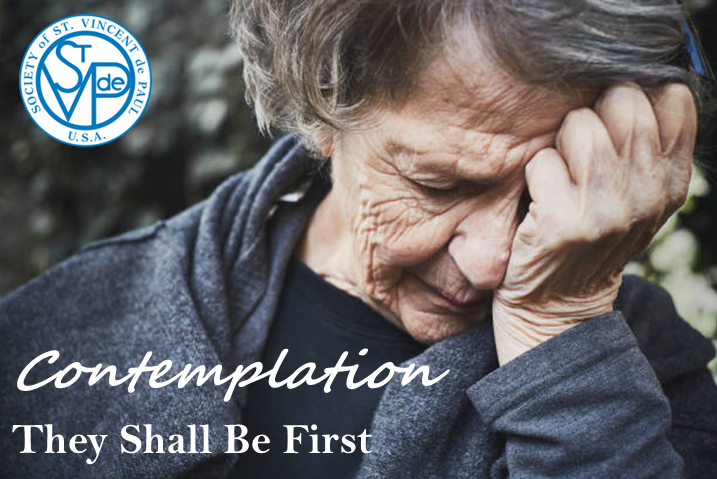
On a recent home visit, the neighbor was completely overwhelmed by the emotional burden of the many challenges that had completely disrupted her life in recent months. Her needs had piled up, snowballed into a burden so enormous that its shadow alone was too much to bear. She was facing challenges I have never faced, but it wasn’t the lack of money or a job or a home or a car that brought her to tears. Instead, she sobbed, “I’ve never felt so unimportant.”
Not poor. Not desperate. Unimportant. This is how you feel when you walk down the shoulder of the road, unnoticed and hungry, as the world continues to speed past. Unimportant. This is how you feel when all that you worked for is gone, and you feel you have nothing left with which to show the world what you are worth.
“Our aim,” St. Vincent said, should be “always to consider that someone else is worth much more than we are.” [CCD IX:239] The Apostle Paul said the same, that we always should “humbly regard others as more important than ourselves.” When we read those words and try to put them into practice, it is difficult, because all of us instinctively place ourselves first. It is only heroes, the ones who throw themselves on grenades, or trade their own lives for that of another, who truly live those words. But these are acts not of heroism, but of love; of putting the good of another before our own, just as by His own example of humanity and sacrifice, Christ showed us the ultimate expression of love.
It is in exactly this way that the poor in spirit are blessed; they are holy. They have been forced to see themselves as less important than others. They are humbled as Christ was humbled. They stand before us in His stead, pleading to be seen and understood. So, when we seek to help them find what matters most, let us always seek to say, in our words and in our actions, “You matter to me. At this moment, and in my heart, to me and to our Father, you are important.”
Contemplate
Do I allow the neighbor’s poverty to bless me, and return that blessing with love?
Recommended Reading
Contemplación: Ellos serán lo primero
Traducción de Sandra Joya
En nuestras visitas domiciliarias, siempre buscamos ayudar al vecino a determinar sus necesidades más prioritarias; a determinar qué es lo más importante que debe atender en este momento. Esto no nos corresponde a nosotros decidir, sino al vecino con nuestro apoyo, comprensión y, si lo desea, con nuestro consejo. Esperamos aliviar al vecino de la tiranía del momento, para que mantenga la perspectiva y avance con confianza.
A menudo, la mayor necesidad parece obvia. Sin duda, no hay necesidad más urgente que la comida, y el alojamiento es claramente más importante que el transporte. Sin embargo, a veces, al tomar distancia para intentar evaluar los problemas desde la distancia, para verlos objetivamente, podemos perder de vista lo más importante.
En una visita domiciliaria reciente, la vecina estaba completamente abrumada por la carga emocional de los numerosos desafíos que habían trastocado por completo su vida en los últimos meses. Sus necesidades se habían acumulado, convirtiéndose en una carga tan enorme que su sola sombra era insoportable. Ella enfrentaba desafíos que yo nunca había enfrentado, pero no fue la falta de dinero, trabajo, casa o coche lo que la hizo llorar. En cambio, sollozó: «Nunca me había sentido tan insignificante».
Ni pobre. Ni desesperada. Insignificante. Así te sientes cuando caminas por el arcén, desapercibido y hambriento, mientras el mundo sigue pasando a toda velocidad. Insignificante. Así te sientes cuando todo por lo que has trabajado se ha ido, y sientes que no te queda nada con qué mostrarle al mundo lo que vales.
«Nuestro objetivo», dijo San Vicente, «debe ser siempre considerar que alguien vale mucho más que nosotros». [CCD IX:239] El apóstol Pablo dijo lo mismo: que siempre debemos «considerar humildemente a los demás como superiores a nosotros mismos». Cuando leemos estas palabras e intentamos ponerlas en práctica, es difícil, porque todos nos ponemos instintivamente en primer lugar. Solo los héroes, quienes se lanzan sobre granadas o intercambian su vida por la de otro, viven verdaderamente esas palabras. Pero estos no son actos de heroísmo, sino de amor; de anteponer el bien ajeno al nuestro, así como con su ejemplo de humanidad y sacrificio, Cristo nos mostró la máxima expresión del amor.
Es exactamente así como los pobres de espíritu son bendecidos; son santos. Se han visto obligados a verse menos importantes que los demás. Son humillados como Cristo fue humillado. Están ante nosotros en su lugar, suplicando ser vistos y comprendidos. Así que, cuando buscamos ayudarlos a encontrar lo que más importa, procuremos siempre decir, con nuestras palabras y acciones: «Tú me importas. En este momento, y en mi corazón, para mí y para nuestro Padre, eres importante».
Contempla
¿Dejo que la pobreza del prójimo me bendiga y devuelvo esa bendición con amor?