• Search the Site

Upcoming Events

August is Make a Will Month

August is Make a Will Month 1707 1707 admin

Why Do We Work Our Whole Lives to Build Financial Security—But Not Plan How It Will Reflect Our Values After We’re Gone?

By Dennis Kempf, Director of Philanthropy

Many of us spend a lifetime earning, saving, and giving back. But when it comes to what happens after we’re gone, too often we leave our legacy to chance. Why Do We Work Our Whole Lives to Build Financial Security—But Not Plan How It Will Reflect Our Values After We’re Gone?

Have you prayerfully considered how your life’s work—and your life’s values—can continue to bless others?

The benefits of planning ahead are clear:

  • Peace of mind
  • Reduced family conflict
  • Ensuring your legacy reflects your faith and values
  • A deep sense of fulfillment and well-being

Will everything go to your heirs? Is there room at the table for others—those whose lives could be transformed by your generosity?

Here’s how four Vincentians have answered that call and named SVdP in their plans:

  1. Michael is establishing an endowment via his estate plans. He has been donating to SVdP every quarter for 5 years – this will continue his generosity for future generations. Why? “I’ve been very blessed in life and am paying it forward.”
  2. Jim established an endowment to fund the capital expenses for food pantries. The goal is to extend the life of our food pantries, “helping keep the doors open for years to come to feed those in need.”
  3. Another Jim shared that he has a strong Catholic viewpoint about death through his years of working at a cemetery. Ninety five percent of the groundskeepers were immigrants from Italy and Ireland trying to escape poverty. In response, he has been supporting grants through our Friends of the Poor for over ten years. His estate plans will help him continue his legacy of loving support for years to come.
  4. Mary Ann named us a beneficiary of a life insurance policy and comically suggests that we “do not spend it yet!” She said that our Vincentian work means that we are good people, but with our spirituality … we are saints!

You, too, can reflect your faith, your values, and your love for those in need—today and tomorrow.
Have you prayerfully considered how you might continue your legacy of love and service through St. Vincent de Paul?

Let your legacy feed the hungry, clothe the cold, and uplift the forgotten.
Your faith can live on—in action. 

SVdP’s Advancement Team oversees planned giving, fundraising, National Partners, the Friends of the Poor® Walk, the Friends of the Poor® grants, and the CARS vehicle donation program

Feature: What Would You Do if you Answered the Phone?

Feature: What Would You Do if you Answered the Phone? 534 712 admin

What Would You Do if you Answered the Phone?

By Jeff Beamguard, National Director of Stores Support

What would you do if you answered the phone and a “Neighbor in Need” said, “I need water”?  I was stunned and asked if she could be more specific.  An elderly female voice replied, “I’m thirsty and need water.  I can’t drink the tap water because it tastes like metal.”

Now in most cases when I get a call from someone needing assistance, I refer them to St. Thomas Aquinas Church or the Resource Center at the SVDP Phoenix Campus, but this call hit my heart and soul. I told her that I would buy a couple of cases of bottled water and bring it to her house on my way home.  I asked the Production Manager Yadira at the National Store in Avondale to come along with me.  The two of us went to the house and asked for Nina.  A voice inside the house said she was not home but would be back later.  We asked if we could come in and the man behind the metal screen door was reluctant and wanted to know who we were and why were we there.  He said he did not trust anyone he did not know.  We finally convinced him that we were there because Nina had asked us for help and we had some bottled water for her.  We found out that John who let us in the house was Nina’s son.  John lived there with his mother and was dressed in dirty ripped up clothing from a job he had just returned home from.

The house was in disarray, and we noticed there was no air conditioning or a working refrigerator in the house.  On this day the outside temperature in Phoenix was 108 degrees and my guess was that the inside temperature of the house was over 90 degrees.  John told us that the A/C had gone out last summer along with the refrigerator.  They were using a small mini freezer on the floor that had two bags of ice in it and another mini fridge with only enough food in it for a couple of days.  There was also a Coleman cooler that contained a small amount of lunch meat, bread, and condiments.  John told us that they were living off Nina’s social security income and odd jobs he could get, and they didn’t have the money to fix the refrigerator or the A/C.  I called Nina, who was at her daughter’s house, to see if we could come by the next day to talk and she agreed.

Yadira and I called Nina the next morning to see if she was home and asked if we could come over.  She said, yes of course, and thanked me for the water.  When we got to the house, Nina, who was a very petite woman, greeted us with open arms and said she didn’t think I would follow through on bringing her the water.  As we talked, I inquired about her life.  She told me she was born in Mexico and moved to California as a small girl with her mother and father.  Nina’s family (husband, daughter and two young boys) wanted to leave southern California for a better life for her kids in Arizona so they sold their home in Los Angeles and with the proceeds paid cash for their new home in 2000.  Tough times hit the family immediately after getting to Phoenix when her husband and oldest son got cancer at the same time and died shortly afterward. Nina, now 87 years old, has tried to hold together what was left of her family since then.

I got permission from my supervisor to help Nina and her family, and then I went to Home Depot and ordered a new refrigerator and giant  swamp cooler (a portable and efficient cooling system for space in the home).

I set the delivery and installation of the refrigerator and cooler for the next day.  Our store drivers showed up to remove the old refrigerator and the Home Depot drivers came soon afterward to install the new refrigerator and hook up the cooler.  Nina kept asking me why we were doing all of this for her!  I told her because it was what Saint Vincent de Paul does for our neighbors in need.  She called all of the SVDP staff “angels” repeatedly.

As we were filling the swamp cooler with water to start cooling down the house, Yadira filled a one-gallon pitcher from the sink, and we saw the brown colored water coming out of the tap that Nina described as not drinkable.  After letting the water run for 5-6 minutes the water became clear again.  We’re not sure why the water got that way, but it probably was the result of the city flushing the pipes in her area.

In less than an hour, Nina and her son had a working refrigerator that came with a water filter so Nina could get fresh ice and water, and a swamp cooler to lower the inside temperature of the house to a tolerable temperature.  On our way out of the house Nina continued to hug all the SVDP staff and thank all of us repeatedly.  We also brought 5 pairs of shorts and tops for John from the thrift store and said we hoped this would be enough clothing so he could replace the tattered clothing he was wearing.  This is when we found out their washing machine had also quit working!  Are you kidding me?

As I was telling this story to one of our long time Vincentian volunteers, she immediately offered to buy Nina a new washer!  We went back to Home Depot to pick out a washer and our store drivers delivered and installed the new washer for Nina.

Nina asked if it was ok if she could call me occasionally and I said of course she could.  She did call me a couple of weeks later and told me she still could not believe why we helped her but wanted me to know how much she appreciated what we did for her family.  She said everything was working so perfectly, something many of us take for granted!


Feeding Hope: A Vincentian Connection from California to Morelos with International Twinning

Feeding Hope: A Vincentian Connection from California to Morelos with International Twinning 843 632 admin

Feeding Hope: A Vincentian Connection from California to Morelos

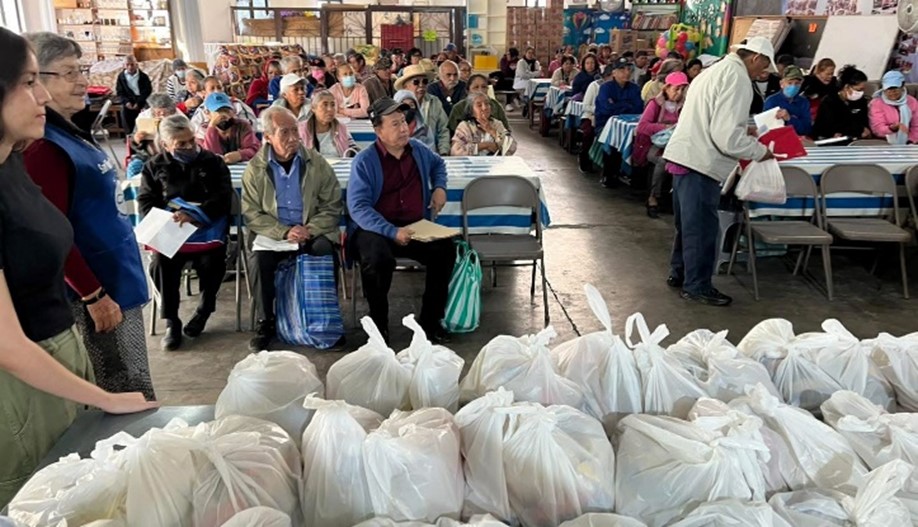
Through the International Twinning Program of the Society of St. Vincent de Paul, Vincentian communities form bonds of faith and charity that transcend borders. One inspiring example is the partnership between the St. Clement Conference in Hayward, California, and the Centro Vicentino de Morelos, operated by the Council of Region IV in Cuernavaca, Mexico.

The Centro Vicentino runs three essential projects: Nutrition, Education, and Community Support, which serve more than 450 families each month. Through these programs, families receive basic food pantry items to ensure they have meals at home. Additionally, the Center prepares and distributes hot meals daily, both on site and outside hospitals, providing nourishment to the families of patients who often face difficult circumstances.

This compassionate service goes beyond addressing physical needs, offering hope, dignity, and spiritual comfort to those served. The ongoing partnership with St. Clement Conference has strengthened the Center’s capacity, allowing it to reach even more vulnerable individuals and communities.

More than just financial support, this twinning relationship is a shared journey of prayer, communication, and commitment to service. The impact resonates deeply on both sides of the border. Families in Cuernavaca receive vital assistance and hope, while the members of St. Clement Conference experience spiritual renewal as they witness the power of solidarity.

If your Conference is not yet part of the Twinning Program, now is the time to consider joining. Twinning transforms lives, not only of those receiving help but also of those who serve.

To learn more about starting a Twinning relationship and discover the areas of greatest need, visit:
https://ssvpusa.org/international-twinning


Feature: Poverty Program committees

Feature: Poverty Program committees 1280 853 admin

A Tradition of Transformative Action 

By Steve Uram, National Director of Poverty Programs

The Society of St. Vincent de Paul is composed of individuals who seek personal holiness through works of charity – in other words, we are called to action. When you think of advocacy, your mind may immediately move to our National Voice for the Poor Committee, legislative advocacy through Voter Voice, or to our new Washington DC office, led by National Director of Public Policy and Advocacy, Ingrid Delgado. These groups take action to influence policy and change the systems that trap people in poverty.

It should come as no surprise that our other National Poverty Program Committees are also all about action: our new Poverty Action Committee and our Homelessness Prevention Committee. Both committees meet monthly over video chat and are open sessions that Vincentians can listen to.

The Poverty Action Committee is charged with engaging more Councils and Conferences in systemic or transformational change. Valuable webinars are available to watch, like last fall’s webinars on “The Benefits Cliff” (Part 1, Part 2).

The Poverty Action Committee is focused on how to encourage Conferences and Councils to build and expand their systemic change programs.  One way to inspire such change is through the Systemic Change Grant.  This annual grant provides up to $20,000 a year for Councils or Conferences to create or expand a transformational program that will shift the conditions that hold poverty in place. The grant application asks Conferences and Councils to draw from encounters with their neighbors, survey the needs of their community, and build sustainable and replicable programs.

“I have reviewed systemic change grant applications for over four years and have seen the innovative programs presented by Conferences and Councils to address the barriers faced by our neighbors,” said Deb Zabloudil, Chair of the Poverty Action Committee.  “This grant program allows conferences and councils the opportunity to pilot a new program or implement a more established program such as reentry, workforce development, or Getting Ahead, that are prevalent across the Vincentian Family network.”

The grant application, scoring rubric, and a recording of last week’s informational webinar can be found on our websiteApplications are due July 11th.

The Homelessness Prevention Committee is charged with providing guidance and best practices in homelessness prevention and shelter diversion to Councils and Conferences. They are working with likeminded national homelessness organizations to create a series of training courses and toolkits for Vincentians, continuing our long-standing mission to prevent homelessness in our local communities.

Denise Fisher, Chair of the Homelessness Prevention Committee said of her committee, “Our goal is to help Vincentians become confident in their knowledge of the homelessness response system and potential interventions to help neighbors avoid the trauma of homelessness. By using best practices in program design, we hope to help councils and conferences become more intentional about who they are serving, more effective in the way they are serving, and more confident in their ability to communicate and advocate for homelessness prevention efforts in their community.”

“Each one of us plays a vital role in this beautiful network of charity. We as Vincentians know we need to work together to tackle issues of poverty: we cannot do it alone. We cannot feed the hungry, shelter the unsheltered or pay for all our neighbor’s utilities by ourselves: we gather up, go out two by two to do that work together,” said Bobby Kinkela, Chair of the Voice for the Poor Committee. “Countless small acts of service combine to make meaningful impact in the world.”

Advocacy and action are, by definition, transformative. Those actions will become part of your culture. That culture will become a tradition. That’s how systemic or transformational change takes place, one action step at a time. Ask yourself, do you regularly make advocacy and action a part of your meeting agenda? If not, consider how you might do that.

SVdP Poverty Programs consist of the Homelessness Prevention Committee, the Poverty Action Committee, the Voice for the Poor and the following shared interest groups: Reentry, Workforce Development, Housing, and Getting Ahead.

Feature: Young Vincentian Excellence Awards

Feature: Young Vincentian Excellence Awards 2160 1440 admin

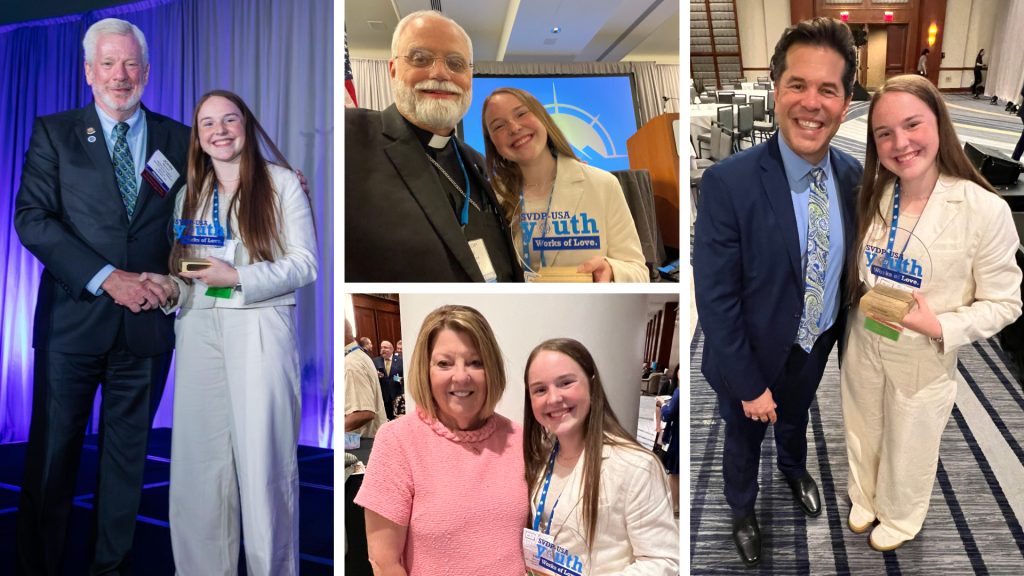
Young People in the Spotlight for the 2025 Young Vincentian Excellence Awards

By Linda Roghair, National Vice President of Youth, Young Adults & Emerging Leaders 


A Society-wide search for young people doing amazing work in their community is happening now.

Vincentians from across the U.S. are invited to nominate emerging young Vincentian servant leaders from their Conferences, Councils, and Special Works for two Young Vincentian Excellence Awards which will be presented at the National Assembly in Louisville, KY in August.

We are asking Vincentians to nominate a young person who serves the Society in their community, embodies servant leadership, and has a passion towards the Vincentian Charism. Nominations are open now until May 15, 2025.

Submission Requirements

  • Nominees must be involved in the Society of St. Vincent de Paul USAin some capacity (ie. Youth Conference, Youth University Conference, Adult Conference, Special Works, etc.).
  • Age groups: Youth 16-18 (High School) or Youth University (18-University age), and Young Adults (18-40)
  • Include photos, volunteer logs, etc. if possible
  • Nomination Form must be submitted via email to: YYAEL@svdpusa.org by May 15, 2025. Please include your Conference President, Council President, NCM & Regional Vice President when submitting a nomination.

Award recipients will be gifted a paid trip to participate in the 2025 National Assembly in Louisville, KY (August 28 – 30). Award recipients must commit to attending the National Assembly in order to receive the award.

Last year’s award winner Sarah of the Madison Wisconsin St. Vincent de Paul Youth Service Council had this to say:

“For me being a Vincentian means actively growing in my faith through allowing the grace of incarnational charity to fuel impactful service and beautiful friendships. Winning the Young Vincentian Excellence Award allowed me the opportunity to attend the National Assembly and connect with the Society on a larger scale. I am especially grateful for becoming a member of the YYAEL Team since this amazing group of passionate young people keep me connected to the Society while I am at a college with no current SVdP presence.”

Last year’s award winner Zoie Roghair of the Sioux Falls St. Michael Conference had this to say:

“I am grateful for what this award represents—opportunity, future growth, and community,” said Zoie Roghair of the Sioux Falls St. Michael Conference. “The award and Society have opened many doors for servant leadership, advocacy for the voiceless, friendships, and increasing the involvement of Youth and Young Adults. It is something I will cherish forever.”

Do you know a young person who serves the Society in their community, embodies servant leadership, and has a passion towards the Vincentian Charism? Please submit a completed form and any supplemental material to YYAEL@svdpusa.org by May 15, 2025.


Feature: Annual Reporting is an Essential Membership Requirement

Feature: Annual Reporting is an Essential Membership Requirement 800 800 admin

SVdP Annual Reporting is an Essential Membership Requirement

By Pam Hudson Johnson, National Director of Membership Services

Annual reporting is an essential requirement for all Councils and Conferences.

On May 1st at 11:59pm, the final deadline for online Annual Reports data entry closes (that is midnight tonight!). All Councils and Conferences must submit an annual report.

Why Annual Reporting is So Important:

Accountability and Compliance: The annual reports help maintain proper record-keeping and compliance with the requirements of our tax-exempt status.

Solidarity and Income Calculation: The current formula is based on income shown in the annual reports.  If a Council or Conference does not submit an annual report, it causes significant delays in the solidarity process.

Budgeting and Operations: Delays in reports cause delays in the budgeting process and affect the operations of the National Council.

Conference Annual Reports are due by November 30; District Council Reports by December 31; and (Arch)Diocesan Council Reports by January 31. Any reports not entered before midnight must be submitted in paper form.

Each year our national consolidated annual report publication is shared with our members nationally and internationally, U.S. Bishops, donors and contributors, elected officials and many more of the great works the Society is doing in the U.S. to serve our neighbors in need. This is our way of telling our story, and the good work we are doing to serve our neighbors in need to alleviate poverty in our communities. Find a copy of the 2022-2023 National annual report here.

To better understand the reporting structure, based on our formal structure, please see details below:

  1. For those dioceses which have an Archdiocesan or Diocesan Council: This is based on the formal structure of the Society – not on your legal name. Some Councils have improperly called themselves a Diocesan Council even though they are really a District Council. An Archdiocesan Council or a Diocesan Council has District Councils reporting to it. An Archdiocesan Council or a Diocesan Council has NO Conferences reporting directly to it.

An Archdiocesan Council or a Diocesan Council will provide multiple reports as appropriate. At a minimum, it will provide the (Arch)Diocesan Council Data, the Consolidated Districts Report and the Consolidated Conferences Report. In addition, if the (Arch)Diocesan Council operates any stores, it will provide a single store report for each store. If the (Arch)Diocesan Council operates any Special Works, it will provide a single Special Work Report for each separate Special Work.

  1. For all District Councils: This applies to every District Council regardless of whether they belong to an Archdiocesan Council or a Diocesan Council or are simply a standalone District Council. A District Council has Conferences reporting directly to it.

A District Council will provide multiple reports as appropriate. At a minimum, it will provide the District Council Data and the Consolidated Conferences Report. In addition, if the District Council operates any stores, it will provide a single store report for each store. If the District Council operates any Special Works, it will provide a single Special Work Report for each separate Special Work.

  1. For all Conferences: At a minimum, a Conference will provide the Annual Conference Report. In addition, if the Conference operates any stores, it will provide a single store report for each store. If the Conference operates any Special Works, it will provide a single Special Work Report for each separate Special Work.

Things to Know and Common Misconceptions:

-Some regions have believed new Councils and Conferences do not need to submit reports in their first year, but this is incorrect. All Councils and Conferences must submit an annual report each year.

-All Vincentians are accountable for the work they do and they are required, at all levels, to do proper record keeping. Remember that the key to good reporting is keeping good records throughout the reporting year [i.e., monthly and quarterly reporting].

-The National Council does not require quarterly report filings. Conference quarterly reports are provided by the national office as a courtesy for completion by Conferences at the request of their District Councils.

If you have any questions regarding annual reporting, contact Pam Hudson Johnson, National Director of Membership Services at phudson@svdpusa.org  or (314) 576-3993 extension 214. We are One Society!

Bridges of Charity: Seattle and Kerala United Through International Twinning

Bridges of Charity: Seattle and Kerala United Through International Twinning 680 510 admin

Bridges of Charity: Seattle and Kerala United Through Twinning

Through the International Twinning Program of the Society of St. Vincent de Paul, Vincentians are building bonds of faith, friendship, and service across continents. U.S. Conferences are walking in solidarity with their counterparts in countries where poverty is profound and resources are scarce. Through spiritual support and financial assistance, they are bringing Christ’s love to the most vulnerable.

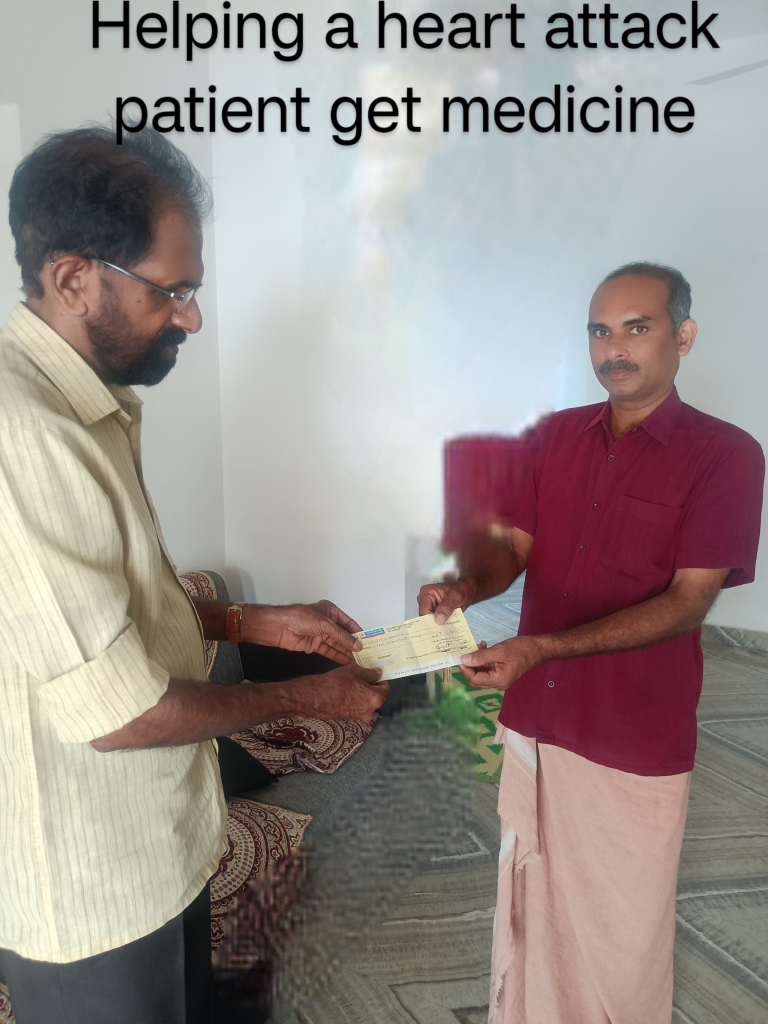
One inspiring example is the twinning partnership between the St. James Conference in Seattle, Washington and the St. Mary’s Conference in Kerala, India. This relationship has blossomed into a lifeline for families in need, enabling vital charitable works in the southern region of India—an area still recovering from the economic impacts of the COVID-19 pandemic, monsoon flooding, and ongoing unemployment challenges.

With support from the St. James Conference, St. Mary’s is able to provide much-needed financial assistance for medical care, housing, education, food, and other essential needs to low-income families and elderly individuals in their parish and surrounding communities. The impact has been deeply felt on both sides of the ocean.

“The International Twinning Program has impacted us spiritually since we are twinning with a place that has a bond with one of our Conference members whose family is in India,” said Blake Steller, President of the St. James Conference. “It helps us remember that our impact goes beyond our community.”

The partnership has not only fostered a sense of global solidarity but also deepened the mission and awareness within the Seattle-based Conference. When asked if he would recommend the program to others, Steller added:

“Absolutely. Twinning helps our Conference recognize that the work we do can spread and help people abroad—it expands our understanding of what it means to serve.”

The gratitude from the St. Mary’s Conference is heartfelt and profound. N.L. Jose, Secretary of the Conference, shared this message:

“We are able to provide some badly needed financial assistance—for medical, housing, education, food, and so on—to the poor people around us with your help. We are really grateful to you for that and eagerly look forward to your continued assistance to our Conference.”

This exchange of charity, communication, and prayer continues to strengthen both communities and bear lasting fruit in the lives of those served.

If your Conference is not yet involved in Twinning, now is the time to consider forming one. Twinning transforms lives—not only of those served, but of those serving.

To learn more about starting a Twinning relationship and discover the areas of greatest need, contact the National Council or visit: https://ssvpusa.org/international-twinning

Feature on Estate Planning: How Do You Want to Be Remembered?

Feature on Estate Planning: How Do You Want to Be Remembered? 1707 1707 admin

How Do You Want to Be Remembered?

By Dennis Kempf, Director of Philanthropy

When a gentleman explained why he chose to remember SVdP in his estate plans, he cited Matthew 25 three different times. “When did we see you hungry and feed you, or thirsty and give you drink? When did we see you a stranger and welcome you, or naked and clothe you? When did we see you sick or in prison and visit you?” “And the King will answer them: ‘Truly I say to you, as you did it to one of the least of my brothers, you did it to me.’” He then asked: “After my life on earth has ended, will my God greet me by saying: ‘Well done, you good and faithful servant?’”

Another gentleman said it much simpler: “I have been very blessed in my life, and I simply want to pay it forward.” SVdP “does so much good helping the poor, and I simply want to continue their work … even after my death.”

How do you want to be remembered?

What values do you want to leave behind? How can you ensure that your faith and generosity continue beyond this life?

One meaningful way is by including the Society of St. Vincent de Paul USA (SVdP) in your estate plans.

Why Plan Ahead?
Many people spend more time planning their next vacation than preparing for the future. In fact, 68% of Americans pass away without a Will or Trust — leaving their assets to be distributed by state laws, often excluding charities and loved ones beyond immediate family. Without putting them into writing, any wishes you might have had will vanish.

The Benefits of Estate Planning

  • Provides peace of mind knowing your wishes will be honored
  • Ensures support for the people and causes you care about
  • Allows you to live in the present, knowing your values will continue for years to come

Where to Start

  1. List Your Assets – Property, investments, jewelry, retirement accounts, pensions, etc.
  2. Review Beneficiaries – Ensure designations on bank accounts, IRAs, and life insurance policies are current.
  3. Create or Update Your Will/Trust – Consult with your counsel or advisor to determine whether you need to create a Will or Trust, or simply add a codicil amendment.
  4. Prayerfully Consider Including SVdP – Options include naming SVdP as:
    • A beneficiary of an account (e.g., IRA, life insurance)
    • A recipient in your Will or Trust (specific amount, percentage, or residual estate)

Making a Lasting Impact
Adding SVdP as a partial or full beneficiary takes as little as 10 minutes. Simply request a “change of beneficiary” form from your financial institution, complete it, and return it.

Lastly, ensure that your executors or trustees are informed and prepared to fulfill your wishes.

By planning today, you can bring Christ’s presence into the world for years to come.

Would you consider including the Society of St. Vincent de Paul in your legacy?

Legal Title: National Council of the United States, Society of St. Vincent de Paul, Inc.  
 Tax ID #: 13-5562362 

For more information, please contact Dennis Kempf at dkempf@svdpusa.org or (314) 576-3993 ext 222.

SVdP’s Advancement Team oversees planned giving, fundraising, National Partners, the Friends of the Poor® Walk, the Friends of the Poor® grants, and the CARS vehicle donation program

Feature: Weaving Bonds and Building Community

Feature: Weaving Bonds and Building Community 1906 1071 admin

Weaving Bonds and Building Community

By Pam Matambanadzo, SVdP Chicago area

We “make no distinctions in those we serve because, in them, Vincentians see the face of Christ.”

We follow in the footsteps set by Blessed Frédéric so many years ago, journeying towards holiness and building on generations before us. Now that we have accepted the baton, we need to pass it on to others so that we can reinforce the strength of the baton. Our challenge is that the world has changed and evolved but our ways have lagged. Our parish communities no longer look like they did 20 or 40 years ago. We hold on to the ways we have been operating even when our efforts are not bearing fruit.

Change is hard. How do we make sure that as we journey together our legacy, like Blessed Frédéric , will inspire diverse Vincentians for generations to come?

Striving for diversity within the Society of St. Vincent de Paul is not just a reflection of societal values, but also a strategic approach to better fulfill our mission. By mirroring the diversity of both Catholic parishioners and the communities they serve, SVdP ensures a more inclusive, culturally competent, and effective response to the challenges of poverty.

Our efforts need to reflect the diversity of both those in the pews, as well as those attending Mass at different time slots to ours. Our awareness should also be inclusive of the broader communities we serve, extending beyond ethnicity and encompassing age and economic diversity. We need to ask ourselves this: Are we “enabling each person to participate actively in the Church’s mission according to his or her own charism and vocation”? Here are four areas that we should contemplate:

Inclusivity and Representation

  • Fellow Parishioners: The global Church is a community that spans a rich tapestry of cultural, linguistic, and ethnic backgrounds. Mirroring this diversity ensures that we, as an organization, are inclusive and representative of the broader Catholic community, fostering a sense of belonging among parishioners.
  • Communities Served: Those who seek assistance from us come from various backgrounds, reflecting the diversity of the broader society. By embracing diversity within our own ranks, the Society ensures that our members can better relate to and understand the unique needs of those we serve, fostering trust and creating a more empathetic and effective support system.

Cultural Competence

  • Understanding Different Perspectives: A diverse membership brings a range of perspectives, experiences, and cultural competencies. This diversity allows us to approach issues with a more nuanced understanding, ensuring that our services are culturally sensitive and relevant to the diverse needs of the communities we serve. Encountering them where they are. When stocking our pantries, are we providing food for the communities we are serving, or are we guided by our own lived experience? Culturally, we each have different comfort foods.
  • Communication and Outreach: We have always prided ourselves on our ability to tailor services based on the needs of the person in front of us. Different communities will have unique challenges and require tailored approaches. Having a diverse membership allows us to communicate effectively and engage with a wider audience, breaking down potential cultural and linguistic barriers that might hinder outreach efforts. Have we explored growth potential locally — even if we may need to accommodate other languages?

Young and Economic Diversity

  • Attracting a New Generation of Vincentians: Embracing young members ensures the longevity and sustainability of the Society’s mission. By involving younger members, the organization can benefit from fresh perspectives, technological savvy, and a passion for social justice, helping to adapt and evolve its services to meet changing community needs. Are we open to changing our meeting times to accommodate younger members with work and family commitments?
  • Economic Diversity: Economic challenges affect individuals and families across various demographics. A diverse member base, including individuals from different economic backgrounds, can bring a more comprehensive understanding of the issues related to poverty and inequality. This can lead to more effective strategies for addressing these challenges at both the individual and systemic levels.

Building a Stronger Community 

  • Collaboration and Unity: A diverse group of members fosters collaboration and unity within the organization. When individuals from diverse backgrounds work together towards a common goal, it strengthens the sense of community within community and society as a whole.
  • Inspiring Others: Seeing a diverse group of members actively engaged in service to the People of God can inspire others to join our chosen vocation. This can lead to a snowball effect, encouraging more people from various backgrounds to participate, broadening the organization’s impact and reach.

The Multicultural Diversity Committee is committed to “End Poverty Through Systemic Change” with a laser focus on removing all barriers associated with discrimination of any kind through education, awareness, and compassion. The committee holds a monthly Zoom call to encourage Vincentians to advocate for justice in their local community. Learn more information at https://members.ssvpusa.org/diversity

Feature: Formation & The Vincentian Digital Pathway

Feature: Formation & The Vincentian Digital Pathway 1839 510 admin

A Lifelong Journey of Becoming

By Tim Williams, Senior Director of Formation & Leadership Development

When I am formed,” a frustrated young Frédéric Ozanam asked, “When will that be?” Many of us may share his confusion. We attend the Ozanam Orientation, which we know is formation, and then, satisfied that we have checked off our “formation” box we find ourselves instead constantly invited to more and more “formation”! So, what is formation, exactly?

The primary purpose of the Society of St. Vincent de Paul is our own growth in holiness, our seeking to become, as Christ calls us to be, “perfect, just as your heavenly Father is perfect.” Attaining holiness, or perfection, is not the work of one seminar or workshop – it is a lifelong journey of becoming.

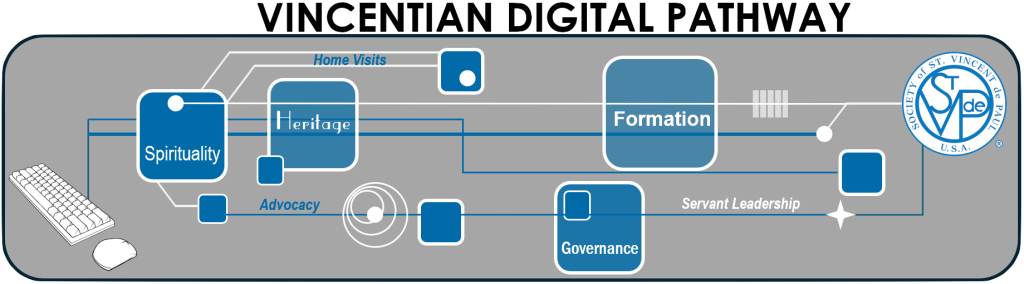
The Society of St. Vincent de Paul is a true lay vocation, a special way of being Catholic, a special pathway for us to follow on our journey: the Vincentian Pathway. On this pathway, we are formed in four different dimensions.

  • Our Human Formation is focused on our behavior, beginning with our virtues. We study and try to practice our Vincentian Virtues of simplicity, humility, gentleness, selflessness, and zeal, knowing that we may become by doing. Just as one becomes a builder by building, we may become humble by practicing humility. And all of these virtues in service of the greatest virtue of love, are practiced in our person-to-person service of the poor.
  • Our Spiritual Formation, most importantly, is shared. No one is saved alone, as we are taught, and in turn, you cannot be a Vincentian without other Vincentians. We are created to live in communion, and to help lead each other to holiness. As our Rule puts it, we grow in holiness together. This growth is fed, informed, and enriched by our regular spiritual reflections at Conference meetings, by attending Mass together, and by our life of prayer, individual and shared.
  • Our Intellectual Formation connects our minds and our hearts. It includes reading to help us learn more about our heritage and our traditions, and training to help us better understand the changing face of poverty and systemic change, and to be better servant leaders.
  • Finally, our Ministerial Formation draws us to truly live this vocation, to make our service to the poor and to each other not merely a thing that we do, but a thing that we are. In our ministerial formation, we are open to all opportunities to serve, including servant leadership.

If you are perfect, your formation is complete! For the rest of us, the National Formation Committee, chaired by Marge McGinley, tries to provide a wide variety of resources to help each Council, each Conference, and each member to follow the path in a way that best suits their own calling, interests, and charisms.

A good starting point for all is the Vincentian Digital Pathway, introduced last year. Here, you can begin wherever you wish, and explore the documents, videos, pictures, and books collected there. You will find that the links will take you into other subject areas, sometimes areas you did not realize were so closely connected. In the Digital Pathway, you do not have to know what you are looking for – just jump in and find what speaks to you, without trying to “check every box”!

If you are brand new to the Society, or you haven’t been to an Ozanam Orientation in a while, you might want to start with the “Introduction to the Society” video. View it alone, or better yet, with other members so you can pause and discuss it.

Are you looking for an even deeper dive? For Servant Leaders, the Society offers a unique and very special retreat twice a year called Invitation for Renewal. For all members, you can take online course through the Ozanam Institute.

Each Region also has a formation team, and in turn each Council has one, too. In the Conference, it is the Spiritual Advisor who is primarily responsible for guiding (and sharing in) the formation of members. These teams of Formators and Spiritual Advisors put together workshops, training, retreats, formation plans, and more not acting as professors or priests, but as fellow Vincentians, walking the pathway alongside us, all of us growing in holiness together.

Sign Up for Our Newsletter

Privacy Preferences

When you visit our website, it may store information through your browser from specific services, usually in the form of cookies. Here you can change your Privacy preferences. It is worth noting that blocking some types of cookies may impact your experience on our website and the services we are able to offer.

Click to enable/disable Google Analytics tracking code.
Click to enable/disable Google Fonts.
Click to enable/disable Google Maps.
Click to enable/disable video embeds.
Our website uses cookies, mainly from 3rd party services. Define your Privacy Preferences and/or agree to our use of cookies.
Skip to content