By Timothy P. Williams, Senior Director of Formation and Leadership Development
“This isn’t where I thought I’d be at 40,” she sighed from the depth of her spirit, a tear running down her cheek. The home visitors welled up a little bit, too. They had listened to her story and knew how long and hard she had worked in low-paying jobs, raising her kids as a single mom, then putting herself through college so she could stop living paycheck to paycheck. But her career path just hadn’t worked out the way she’d hoped so far, and right now she was unemployed, and asking for help with her rent – no closer to her goals, it seemed, than she’d been before all those efforts.
“This isn’t where I thought I’d be,” the home visitor thought to himself. It’s easy to pay the rent, or to bring a bag of groceries, and people are so happy when you lift those burdens from them, but this was something more – something deeper. He knew what material assistance his Conference could give and knew where to refer people for the support they couldn’t offer. But the Conference wasn’t on the home visit. It was two Vincentians, sitting with a woman whose world had caved in, who felt like a failure. They would help with the rent, of course, but right now, that didn’t seem like the most important thing.
“I’m so sorry,” he said. Not knowing what to say, he let his heart speak first. “That must be so hard. But I’m really glad you called us, and I’m really glad we could be here with you right now.”
Her tears came down a little harder, but they began to change a little bit. She was no longer alone in that apartment, wondering how things had gone so wrong. She was with friends, whose hearts reached out to hers, who felt what she felt. They sat and listened and talked and shared, offering words of consolation, and slowly turning despair towards hope.
“Where did my words today come from?” he thought. He had felt himself unprepared for a visit or a conversation like this. But he knew it was God who had given him the words, God who had placed them in that room, and God who had used them as instruments of His peace. They had seen in her the suffering Christ, and like Veronica along the via crucis, had offered a cloth to dry her tears, reassuring her by their presence more than their words that God had not abandoned her.
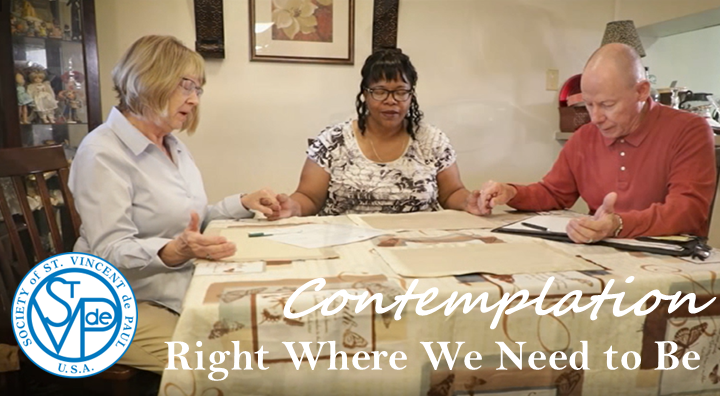
“May we pray with you?” he asked. She nodded, standing up with hands outstretched. The three of them clasped hands and he offered her needs to God, reassuring himself as much as her that God loved her, and because of His love he had sent two Vincentians to be with her in her hour of need and poverty of spirit. He had called them, and He was there, too, and all of them knew it.
“This is exactly where I said I would be,” said Christ, in the midst of the three as they offered prayers for each other in His name.
Contemplate
Do I trust God to give me the words I need, and trust Him enough to speak them?
Recommended Reading
The Spirituality of the Home Visit
Contemplación: Justo donde necesitamos estar
Traducción de Sandra Joya
«Aquí no es donde pensé que estaría a los 40 años», suspiró ella desde lo más profundo de su espíritu, mientras una lágrima rodaba por su mejilla. Los visitadores domiciliarios también se conmovieron un poco. Habían escuchado su historia y sabían cuán larga y ardua había sido su labor en empleos mal remunerados, criando a sus hijos como madre soltera y, posteriormente, costeándose sus estudios universitarios para poder dejar de vivir al día, de cheque en cheque. Sin embargo, su trayectoria profesional no había resultado, hasta el momento, tal como ella esperaba; en ese preciso instante se encontraba desempleada y solicitando ayuda para pagar el alquiler, sin parecer estar más cerca de sus metas que antes de haber realizado todos esos esfuerzos.
«Aquí no es donde pensé que estaría yo», pensó para sus adentros el visitador domiciliario. Resulta sencillo pagar el alquiler o llevar una bolsa de víveres, y la gente se siente inmensamente feliz cuando uno les alivia esas cargas; pero aquello era algo más, algo mucho más profundo. Él sabía qué tipo de asistencia material podía brindar su Conferencia y conocía los lugares a los que podía remitir a las personas para que recibieran el apoyo que ellos no podían ofrecer. Pero la Conferencia, como institución, no estaba presente en aquella visita domiciliaria. Allí solo estaban dos vicentinos, sentados junto a una mujer cuyo mundo se había desmoronado y que se sentía como un fracaso. Por supuesto que la ayudarían con el alquiler, pero, en ese momento, aquello no parecía ser lo más importante.
«Lo siento muchísimo», le dijo él. Sin saber qué palabras pronunciar, dejó que fuera su corazón el que hablara primero. «Eso debe de ser terriblemente difícil. Pero me alegra de veras que nos hayas llamado, y me alegra mucho que podamos estar aquí contigo en este instante».
Sus lágrimas brotaron con un poco más de intensidad, pero comenzaron a adquirir un matiz diferente. Ya no se encontraba sola en aquel apartamento, preguntándose cómo era posible que las cosas hubieran salido tan mal. Estaba acompañada por amigos, personas cuyos corazones se tendían hacia el suyo y que sentían exactamente lo mismo que ella. Se sentaron, escucharon, conversaron y compartieron, ofreciendo palabras de consuelo y transformando, poco a poco, la desesperanza en esperanza.
«¿De dónde surgieron las palabras que pronuncié hoy?», se preguntó él. Había sentido que no estaba preparado para realizar una visita o mantener una conversación de aquella índole. Pero él sabía que era Dios quien le había dado las palabras, Dios quien las había puesto en aquella habitación, y Dios quien las había utilizado como instrumentos de Su paz. Habían visto en ella al Cristo sufriente y, al igual que Verónica en el Vía Crucis, le habían ofrecido un paño para secar sus lágrimas, asegurándole —más con su presencia que con sus palabras— que Dios no la había abandonado.
«¿Podemos rezar con usted?», preguntó él. Ella asintió, poniéndose de pie con las manos extendidas. Los tres se tomaron de las manos y él presentó las necesidades de ella ante Dios, reafirmándose a sí mismo —tanto como a ella— en la certeza de que Dios la amaba y que, precisamente por ese amor, había enviado a dos vicentinos para estar con ella en su hora de necesidad y de pobreza de espíritu. Él los había llamado, y Él mismo estaba allí también; y todos ellos lo sabían.
«Este es exactamente el lugar donde dije que estaría», afirmó Cristo, en medio de los tres, mientras estos elevaban oraciones los unos por los otros en Su nombre.
Contemplar
¿Confío en que Dios me dará las palabras que necesito? ¿Y confío lo suficiente en Él como para pronunciarlas?


 De hecho, mientras nos esforzamos por vivir nuestra vocación Vicentina, con la oración al Espíritu Santo, también debemos entender nuestro “Manual”, para mantenernos “formados”. El aprendizaje continuo en todas las áreas de nuestra vida Vicentina es crucial para ayudarnos a mantener el enfoque, guiándonos a servir con compasión y fervor. Los Consejeros Espirituales y Formadores, quienes se comprometen a una formación personal continua, podrán proporcionar todo lo que los otros Vicentinos necesitan para su vida de servicio.
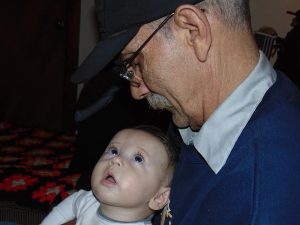 Al igual que Federico, nunca pensé que podría amar más profundamente que el amor que siento por mis hijos. Era un amor casi indescriptible. ¿Recuerda usted la primera vez que tuvo a su nieto en sus brazos? ¡Y, aun así, está ahí! ¿Es posible que, en esos momentos trascendentales, podamos empezar a comprender la profundidad del amor que Dios tiene por cada uno de nosotros? ¿Podríamos traducir ese amor que experimentamos en ese momento e imitarlo mientras nos acercamos a nuestros prójimos en necesidad? Un amigo mío dijo una vez: “Cuando miro a mi hermano con sus nietos, empiezo a entender cómo debe ser el amor de Dios por nosotros.”
 Durante la Cuaresma, el Vía Crucis puede ser un excelente momento para la meditación y la oración compartidas, y los Vías Crucis Vicentinos también están disponibles para descargar e imprimir en