• Search the Site

Upcoming Events

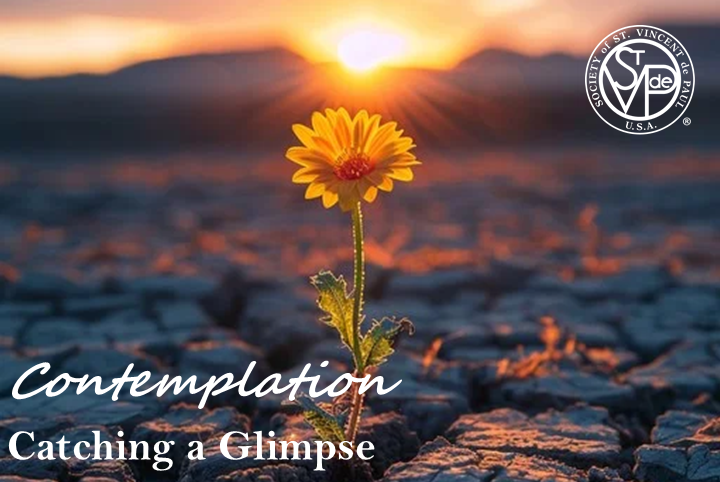
Contemplation: Catching a Glimpse

Contemplation: Catching a Glimpse 720 482 Tim Williams

Leer en Español

By Timothy P. Williams, Senior Director of Formation and Leadership Development 

There are few things that can cheer a parent’s heart more than to hear their child exclaim, “This was the best day of my life!” Hearing this is one of the best moments of the parent’s life, no matter what else is going on in the world, no matter the worries of the days ahead that may weigh on us. And although that child has many more days ahead of him – some happy, some sad – he will always remember this one, not for whatever activities made him so happy, but for the happiness itself. The memory of days and moments like these can help carry us through times of trial.

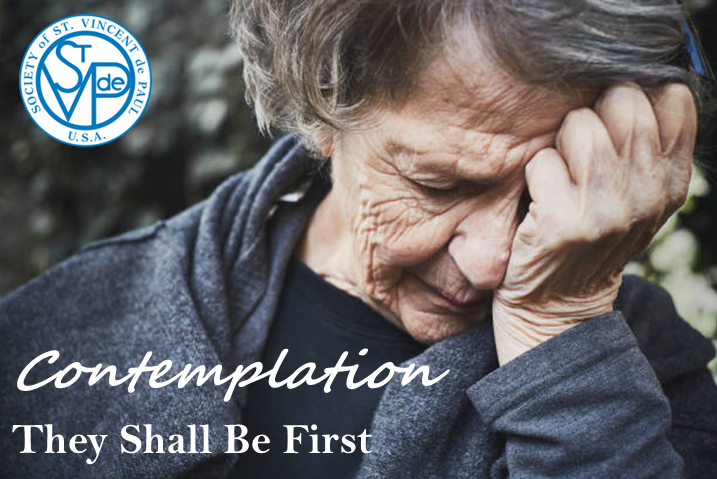
One of the great burdens of poverty, whether it is short-term, situational poverty or lifelong, generational poverty, is the feeling of isolation and abandonment that it can engender. Overwhelmed by what seem to be insurmountable challenges can cause us not only to lose hope, but to lose the energy to even try to find a way out. Even Vincentian home visitors can become overwhelmed by the stories we hear and discouraged that we can’t solve every problem. It can cause us to lose sight of why we go to the poor in the first place.

How often do we hear that we are the only ones who returned the call for help? How often, when we depart, does the neighbor offer heartfelt thanks for our visit “even if you can’t help”? The poet Maya Angelou once said that “people will forget what you said, people will forget what you did, but people will never forget how you made them feel.”

While it is true that we also help with bills, rent, food, and “any form of help that alleviates suffering or deprivation” [Rule, Part I, 1.3], those are not the things that wipe away tears, or make future burdens lighter. Rather, it is when our presence and our caring allow them to “catch a glimpse of God’s great love for them” [Rule, Part I, 2.1] that the visit can become one of those moments that buoys the spirits not only today, but for many days to come.

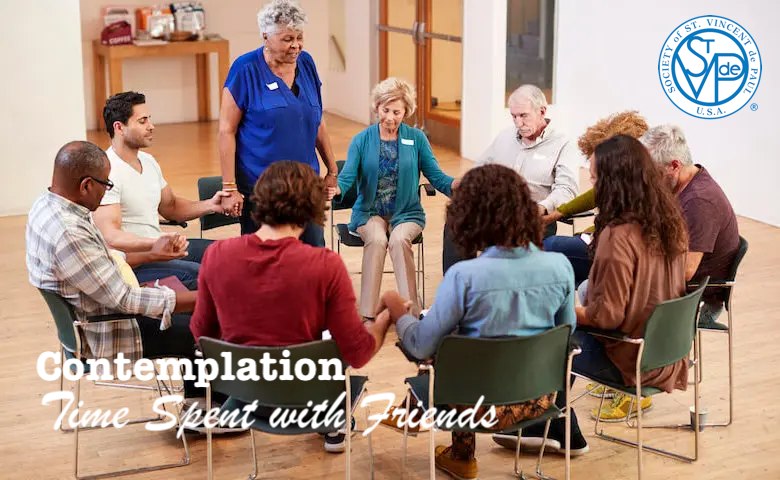
We have all called friends in times of distress, not because we thought they could do anything about the illness, job loss, or other difficulty we were facing, but because we needed them to share our burden, to remind us by their presence and understanding that we are not alone. It is for exactly that reason that our Rule calls us to “establish relationships based on trust and friendship.” [Rule, Part I, 1.9]

We always give generously, we always provide whatever material assistance we can, but we must always also be mindful that even if “I give away everything I own…but do not have love, I gain nothing.” We visit as friends in the hope above all that the neighbor will buoyed, today and in days to come, by how we made them feel: loved.

Contemplate

How can I be a better friend to the neighbor?

Recommended Reading

Faces of Holiness

Contemplación: Un vistazo

Traducción de Sandra Joya

Pocas cosas alegran más el corazón de un padre que escuchar a su hijo exclamar: “¡Este fue el mejor día de mi vida!”. Escuchar esto es uno de los mejores momentos de la vida de un padre, sin importar lo que suceda en el mundo, sin importar las preocupaciones que nos agobien en los próximos días. Y aunque ese hijo tenga muchos más días por delante —algunos felices, otros tristes—, siempre recordará este, no por las actividades que lo hicieron tan feliz, sino por la felicidad misma. El recuerdo de días y momentos como estos puede ayudarnos a superar los momentos difíciles.

Una de las grandes cargas de la pobreza, ya sea la pobreza temporal y situacional o la pobreza generacional de por vida, es la sensación de aislamiento y abandono que puede generar. Abrumados por desafíos aparentemente insuperables, podemos no solo perder la esperanza, sino también la energía para intentar encontrar una salida.  Incluso los visitadores domiciliarios Vicencianos pueden sentirse abrumados por las historias que escuchamos y desanimados por no poder resolver todos los problemas. Esto puede hacernos perder de vista la razón principal por la que acudimos a los pobres.

¿Con qué frecuencia escuchamos que somos los únicos que devolvimos la llamada de ayuda? ¿Con qué frecuencia, al despedirnos, el vecino nos agradece de corazón nuestra visita «aunque no pueda ayudar»? La poeta Maya Angelou dijo una vez: «La gente olvidará lo que dijiste, la gente olvidará lo que hiciste, pero la gente nunca olvidará cómo los hiciste sentir».

Si bien es cierto que también ayudamos con las facturas, el alquiler, la comida y «cualquier tipo de ayuda que alivie el sufrimiento o la privación» [Regla, Parte I, 1.3], esas no son las cosas que enjugan las lágrimas ni alivian las cargas futuras.  Más bien, es cuando nuestra presencia y nuestro cariño les permiten vislumbrar el gran amor de Dios por ellos [Regla, Parte I, 2.1] que la visita puede convertirse en uno de esos momentos que animan el ánimo, no solo hoy, sino por muchos días.

Todos hemos llamado a amigos en momentos de angustia, no porque pensáramos que pudieran hacer algo por la enfermedad, la pérdida del trabajo u otra dificultad que afrontábamos, sino porque necesitábamos que compartieran nuestra carga, que nos recordaran con su presencia y comprensión que no estamos solos. Es precisamente por eso que nuestra Regla nos llama a establecer relaciones basadas en la confianza y la amistad [Regla, Parte I, 1.9]

Siempre damos generosamente, siempre brindamos toda la ayuda material posible, pero también debemos ser conscientes de que incluso si “doy todo lo que tengo… pero no tengo amor, no gano nada“. Visitamos como amigos con la esperanza, sobre todo, de que el prójimo se sienta animado, hoy y en el futuro, por cómo lo hicimos sentir: amado.

Contemplar

¿Cómo puedo ser mejor amigo del prójimo?

The Well: Formation and Spirituality Video Library

The Well: Formation and Spirituality Video Library 150 150 Tim Williams

The Society has published many books and documents for purchase or download, but there are also many videos available for personal enrichment, or to share at Conference or Council Meetings.

Spirituality and Formation Channel

On the Society’s Vimeo pages, there is a special channel for videos related to Spirituality and Formation. There are almost fifty videos there, and they are well worth reviewing to find videos of special interest to you or your Conference. We’ll highlight just a few of them below.

Pro-Tip: if you don’t have a reliable Wi-Fi connection in your meeting room, you can download any of these videos onto your computer in advance. On the screen below the video you’ve chosen, look for the download icon (indicated here with a red arrow) and click it to download. 

Fred Talks

Fred Talk videos are only three to five minutes long, and each covers a single topic, such a one of the Vincentian Virtues. They make a nice change of pace for reflections at your Conference meetings, by watching them together and then discussing. You’ll notice throughout the videos there are text pop-ups indicating reference sources for the materials discussed. These are for members who may wish to take a deeper dive on their own.

Retreats

There are several recorded retreats. These are typically longer videos (about an hour) that you can play, with several pauses to discuss and share what you’ve seen. These include The Faces of Christ, Turn Everything to Love, as well as talks such as Laying Down Your Life for a Friend. These longer form videos can save you a lot of preparation time in planning your own retreat. Be sure to think through prayers for the group to say together, prompting questions to help facilitate sharing, and other parts of the retreat, such as Mass, snacks, or meals.

Training and Instruction

Now that we’ve mentioned planning a retreat, would it be nice if there were a video on How to Plan a Spiritual Retreat? You’re in luck – there is! There are also videos on Formation Planning, and the Spirituality of Vincent and Frédéric.

There is a long list of videos to choose from on our channel, and more will continue to be added. Be sure to bookmark the page and check back often. Those videos are for you and for your Conferences and Councils!

The Well: Refresh – Renew – Refuel – Reflect

The Well: Refresh – Renew – Refuel – Reflect 150 150 Tim Williams

By Marge McGinley, National Vincentian Formation Committee Chair

Some people say that summer slows down a little but really summer offers us different choices, especially if Our Lord has led us to work in Formation. Most of our workshops where we spend time teaching and hopefully inspiring our Vincentians to grow in holiness as they minister to our neighbors in need, are conducted during the school year. As Conference members we continue to care for our neighbors in need but also take those opportunities to spend time with family and friends and hopefully take a little time off or away.

Instead of teaching the Ozanam Orientation on a Saturday, perhaps you’ve been invited to a picnic. Instead of running a webinar during a weekday evening, maybe you’re sitting by a pool, lake or ocean. Just the thoughts are refreshing. When we have time to pause our activities, the Holy Spirit can lead us where He needs us most. Our minds can clear, and creativity can heighten. Taking time for ourselves also helps prevent compassion fatigue therefore, never even approaching burnout.

Taking good care of ourselves allows us to do God’s work longer in our lives. When we are compassionate people, every situation and every person whom we encounter, impacts us. That can take a toll over time. So, let’s look a little deeper into all the “re-“words in the title of this article.

Bl. Frédéric teaches us that “the poor we see with the eyes of the flesh; they are there and we can put finger and hand in their wounds and the scars of the crown of thorns are visible on their foreheads…and we should fall at their feet and say with the Apostle, Tu est Dominus et Deus meus. You are our masters, and we will be your servants. You are for us the sacred images of that God whom we do not see, and not knowing how to love Him otherwise shall we not love Him in your persons?”

What can we do to stay capable to “share more love” with God’s people?

We often saw Jesus take time with His disciples to pray, but we also witness Him enjoying their company along with so many others. The wedding feast of Cana, the fish fry gatherings on the beach, the dinners at friends’ and sinners’ homes. Jesus was available and willing to spend time in nourishment and fun. As we gather as Vincentians, we are building friendships which will provide support and keep us well to better serve our neighbors in need. As we gather with family and friends this summer, take time to soak in their love and care for you, so you may share it with others.

Take steps to avoid compassion fatigue: Live within your mission statement, de-brief with other Vincentians, Refill and refuel in healthy ways, Leave your superman/woman cape in the closet. As Vincentians, and servant leaders we must find ways to pour ourselves out without wearing ourselves out and be able to teach others the same. St. Paul tells us in Phil 4:11-13, “I have learned the secret of being content in any and every situation, whether well fed or hungry, whether living in plenty or in want. I can do all this through him who gives me strength.”

While we are relaxing and refreshing, perhaps we might dream about where the Holy Spirit might be leading us in next year’s formation in our Conferences and Councils, always aware of Saint Vincent’s guidance:

“Since you know the means of getting better, in the name of God, make use of them. Do not take on anything beyond your strength, do not be anxious, do not take things too much to heart, go gently, do not work too long or too hard.”

The Well: Learning from Christ How to Find Him in the Moment of Encounter

The Well: Learning from Christ How to Find Him in the Moment of Encounter 1600 1200 Tim Williams

By Rita St. Pierre, National Vincentian Spirituality Committee Chair

As Vincentians, we often are reminded that our charism is “finding the face of Christ in the poor.” But how do we understand the term “charism” and how do we live it? The word “charism” is from the Greek and means “favor” or “free gift.” Charisms are graces of the Holy Spirit.

This grace of seeing the face of Christ in the poor and being Christ for those we visit is the core of our vocation. During every encounter, regardless of the location, Christ within us encounters Christ in our neighbor in need. Recognizing, accepting and living that grace requires reflecting on how this can be accomplished. Let us learn from Christ Himself by reflecting on two of His encounters.

The woman who had hemorrhaged for many years simply touched his cloak, with faith that she would be healed (Mk 5:25-34). Jesus asked who touched Him, then waited for her to come forward and present herself. He looked at her with love, healed her and sent her off saying “go in peace.” Many times, our friends come to us reluctantly for assistance without fully sharing the details or extent of their needs. Some are anxious or, like this woman, some are embarrassed. This encounter teaches us to be patient, compassionate, respectful and to wait calmly for God’s son/daughter to share. Then hopefully we leave them with peace in their hearts.

Now let’s examine the encounter between Jesus and the woman accused of adultery. Jesus waited until the crowd left after he challenged them. With a calm and patient presence, Jesus allowed for a confidential, calm interaction with the woman, thereby restoring her dignity. Again, He certainly looked at her, spoke with her and not at her, without judgment but with respect, encouragement and hope. Can we honestly say that we emulate this encounter? Our encounters require only one response: our kind presence and profound listening. Financial or other assistance will flow from there.

When we need to refresh and renew ourselves as we serve, prayer is a priority. From the beginning of His ministry, Jesus often went off alone to pray. “And in the morning, a great while before day, He rose and went out to a lonely place, and there He prayed.” (Mk 1:35). We read that He frequently went up to the mountain to pray. (Mk 6:46; Lk 6:12; Lk 9:28).

Making time for frequent prayer, sitting in silence with the Holy Spirit, will always give us the graces to see Christ in our neighbors, Because of our encounters with Christ in prayer, the neighbors we visit will see Christ in us. Let us remember that Elijah waited on the mountain to hear from God. Elijah heard Him only “in the sound of sheer silence”. (1 Kings 19:11-13). To refresh and renew, to deepen our relationship with the Lord, where is our mountain, and can we wait patiently to hear Him in the sound of silence?

Contemplation: Not to Gratify, but to Glorify

Contemplation: Not to Gratify, but to Glorify 720 478 Tim Williams

Leer en Español

By Timothy Williams, Senior Director of Formation and Leadership Development 

Vincentians around the world and across nearly two centuries are united by a common Rule that reflects not only the purpose and ends of the Society, but the practical experience of the founders who first sought to achieve those ends. The Rule was written only after the founders had waited two years “to ascertain that God wished that it should continue, before determining the form which it should assume”. [Rule, 1835] It is not a Rule for single time or place, but for a timeless vocation of love.

To modern ears, a title such as “Rule” implies a bureaucratic set of instructions, leading us to seek a specificity that often does not appear in its text. This pursuit can become like the “flair” scene in the movie Office Space. Certainly, the Rule does specify some practices, such as elections of presidents, frequency of meetings, and making decisions by consensus, and these are indeed meant to be followed, but it is, for the most part, concerned less with the specifics of what we do than with the essence of who we are, and with what we seek to become: holy.

For example, although the home visit is the only charitable work that is specifically mentioned in the Rule, this does not mean other works are prohibited. Beyond the home visit, the Rule refers to “special works” only generally – not even thrift stores are mentioned a single time. Yet we know that our many and varied special works are completely aligned with the Rule, provided they derive from what we learn through our person-to-person service of the neighbor, and that they alleviate suffering or deprivation and promote human dignity and personal integrity in all their dimensions. [Rule, Part I, 1.3]

Bl. Frédéric feared that excessive rules and bureaucracy might result in the Society “degenerating into public assistance bureaus”. [182, to Lallier, 1838] He emphasized the importance, in works charity, “to surrender oneself to the inspirations of the heart rather than the calculations of the mind.” [82, to Curnier, 1834] The Rule must be accepted in whole, not dissected for loopholes, or used merely to settle disagreements, Rather, it is a guide on our pathway, following the footsteps, wisdom, and experience of our founders. The very word rule derives from the Latin regula, which refers to a straightedge. Our Rule, then, serves best not to direct us but to measure our progress towards holiness.

Just as St. Vincent taught the Daughters of Charity to “keep your Rule”, we also are meant to keep ours. Asked “whether it’s advisable to dispense with the Rule for the service of the poor” Vincent responded that “the service of the poor must be preferred to everything else” since that is God’s first calling to us in this vocation, but that any deviation from the Rule “must be done with discernment and not to gratify yourself.” [CCD IX:171] In other words, we may sometimes “leave God for God”, [CCD IX:252] but we must never be motivated by our own reluctance or inconvenience, nor by seeking to meet a “minimum standard”, but rather by a true desire to give of ourselves for the love and the glory of God.

Contemplate

Do I sometimes brush aside or downplay parts of the Rule for reasons of convenience?

Recommended Reading

The Rule

Contemplación: No para gratificar, sino para glorificar

Traducción de Sandra Joya

Los Vicentinos de todo el mundo y a lo largo de casi dos siglos están unidos por una Regla común que refleja no solo el propósito y los fines de la Compañía, sino también la experiencia práctica de los fundadores que primero buscaron alcanzarlos. La Regla se escribió solo después de que los fundadores esperaran dos años para “constatar que Dios deseaba que continuara, antes de determinar la forma que debía asumir”. [Regla, 1835] No es una Regla para un tiempo o lugar específicos, sino para una vocación de amor atemporal.

Para los oídos modernos, un título como “Regla” implica un conjunto de instrucciones burocráticas, lo que nos lleva a buscar una especificidad que a menudo no aparece en su texto. Esta búsqueda puede llegar a ser como la escena del “estilo” en la película Office Space.  Ciertamente, la Regla especifica algunas prácticas, como la elección de presidentes, la frecuencia de las reuniones y la toma de decisiones por consenso, y estas deben ser seguidas, pero, en general, se centra menos en los detalles de lo que hacemos que en la esencia de quienes somos y en lo que aspiramos a ser: la santidad.

Por ejemplo, aunque la visita domiciliaria es la única obra de caridad que se menciona específicamente en la Regla, esto no significa que otras obras estén prohibidas. Más allá de la visita domiciliaria, la Regla se refiere a las “obras especiales” solo de forma general; ni ​​siquiera las tiendas de segunda mano se mencionan una sola vez. Sin embargo, sabemos que nuestras numerosas y variadas obras especiales están completamente alineadas con la Regla, siempre que deriven de lo que aprendemos a través de nuestro servicio personal al prójimo, y que alivien el sufrimiento o las privaciones y promuevan la dignidad humana y la integridad personal en todas sus dimensiones. [Regla, Parte I, 1.3]

El Beato Federico temía que el exceso de normas y burocracia pudiera llevar a la Compañía a “degenerar en oficinas de asistencia pública”.  [182, a Lallier, 1838] Enfatizó la importancia, en la caridad de las obras, de “entregarse a las inspiraciones del corazón más que a los cálculos de la mente”. [82, a Curnier, 1834] La Regla debe aceptarse en su totalidad, no diseccionarla en busca de lagunas legales ni usarla simplemente para resolver desacuerdos. Más bien, es una guía en nuestro camino, siguiendo los pasos, la sabiduría y la experiencia de nuestros fundadores. La palabra regla deriva del latín regula, que se refiere a una regla. Nuestra Regla, entonces, sirve mejor no para dirigirnos, sino para medir nuestro progreso hacia la santidad.

Así como San Vicente enseñó a las Hijas de la Caridad a “guardar su Regla”, también nosotros debemos guardar la nuestra.  Al preguntarle si era aconsejable prescindir de la Regla para el servicio a los pobres, Vicente respondió que «el servicio a los pobres debe preferirse a todo lo demás», ya que es la primera llamada de Dios en esta vocación, pero que cualquier desviación de la Regla «debe hacerse con discernimiento y no para complacerse a sí mismo». [CCD IX:171] En otras palabras, a veces podemos «dejar a Dios por Dios» [CCD IX:252], pero nunca debemos dejarnos llevar por nuestra propia reticencia o inconveniencia, ni por la búsqueda de un «estándar mínimo», sino por un verdadero deseo de entregarnos por amor y gloria de Dios.

Contemplar

¿A veces dejo de lado o minimizo partes de la Regla por conveniencia?

Contemplation: The Best of Our Ability

Contemplation: The Best of Our Ability 720 476 Tim Williams

Leer en Español

By Timothy Williams, Senior Director of Formation and Leadership Development 

Serve the poor to the best of your ability,” St. Vincent taught, “and entrust the rest to the goodness of God.” [CCD VII:256] We understand this, correctly, as an admonition to trust in Divine Providence, and to act with humility, understanding that “we can accomplish nothing of eternal value without God’s grace.” [Rule, Part I, 2.5.1] How different this is from almost everything else we do in our lives and professions, where “results” are the only real measure of success.

Every salesman knows that it makes no difference how hard he works, how many calls he makes, or what terrific presentations and proposals he makes, if he is not closing deals and generating revenue. Sales and dollars are very easy to count, to understand, and to rank against others. It was by worldly measures such as these that 19th Century critics of the Society of St Vincent de Paul accused it of offering the “charity of a glass of water.”

At times, we make the same accusation of ourselves. “We don’t have enough money to really help.” “We don’t have enough members to make all the visits.” “The families we feed will only be hungry again next week or next month.”

All those things are true, but none of them should be reason for despair if we truly serve the poor, in Vincent’s words, to the best of our ability. The Hippocratic Oath, honored for centuries by physicians, does not bind them to cure or to heal, but rather to treat patients ethically, tirelessly, and to the best of their ability. As Frédéric said, “the same authority which tells us that we shall always have the poor amongst us is the same that commands us to do all we can to ensure that there may cease to be any.” [O’Meara, 177] Just as a physician cannot promise to heal the sick, we cannot promise to end poverty, even for one person. We can only promise to try to the best of our ability.

So, what is the best of our ability as Vincentians? Our gifts and talents, our time and treasure, vary widely from one Vincentian to another, and from one Conference to another, but each us, and each of our neighbors, is created in the image and likeness of God, and God is love.

The best of our ability, then, is to love, and if ours is a charity of a glass of water, it is water drawn from a bottomless well, and offered to all those who thirst for God’s love. We may run out of money, we may run out of food, we may even run out of time, but we will never run out of hope because we can never run out of love. It is through our love that we serve, and through love that God acts, too. This is why Vincent teaches us that “God does not consider the outcome of the good work undertaken but the charity [the love] that accompanied it.” [CCD I:205]

Contemplate

When I feel I have fallen short in my service, have I fallen short in my love?

Recommended Reading

Seeds of Hope

Contemplación: Lo Mejor de Nuestras Capacidades

Traducción de Sandra Joya

“Sirve a los pobres lo mejor que puedas”, enseñó San Vicente, “y confía el resto a la bondad de Dios”. [CCD VII:256] Entendemos esto, correctamente, como una exhortación a confiar en la Divina Providencia y a actuar con humildad, entendiendo que “nada de valor eterno podemos lograr sin la gracia de Dios”. [Regla, Parte I, 2.5.1] ¡Qué diferente es esto de casi todo lo demás que hacemos en nuestras vidas y profesiones, donde los “resultados” son la única medida real del éxito!

Todo vendedor sabe que no importa cuánto trabaje, cuántas llamadas haga o qué tan buenas sean sus presentaciones y propuestas, si no está cerrando tratos y generando ingresos. Las ventas y el dinero son muy fáciles de contabilizar, comprender y comparar con otros. Fue con medidas mundanas como estas que los críticos del siglo XIX de la Sociedad de San Vicente de Paúl la acusaron de ofrecer la “caridad de un vaso de agua”.

A veces, nos acusamos a nosotros mismos de lo mismo. «No tenemos suficiente dinero para ayudar de verdad». «No tenemos suficientes miembros para hacer todas las visitas». «Las familias que alimentamos volverán a pasar hambre la semana que viene o el mes que viene».

Todo esto es cierto, pero nada debería ser motivo de desesperación si realmente servimos a los pobres, en palabras de Vincent, lo mejor que podamos. El Juramento Hipocrático, honrado durante siglos por los médicos, no los obliga a curar ni a sanar, sino a tratar a los pacientes de forma ética, incansable y lo mejor que puedan. Como dijo Frédéric: «La misma autoridad que nos dice que siempre tendremos pobres entre nosotros es la misma que nos manda hacer todo lo posible para asegurar que deje de haberlos». [O’Meara, 177] Así como un médico no puede prometer curar a los enfermos, nosotros no podemos prometer acabar con la pobreza, ni siquiera para una sola persona. Solo podemos prometer esforzarnos al máximo.

Entonces, ¿cuál es nuestra máxima capacidad como Vicencianos? Nuestros dones y talentos, nuestro tiempo y recursos varían enormemente de un Vicenciano a otro y de una Conferencia a otra, pero cada uno de nosotros, y cada uno de nuestros prójimos, somos creados a imagen y semejanza de Dios, y Dios es amor.

Nuestra máxima capacidad, entonces, es amar, y si nuestra caridad es un vaso de agua, es agua extraída de un pozo sin fondo y ofrecida a todos aquellos que tienen sed del amor de Dios. Podemos quedarnos sin dinero, podemos quedarnos sin comida, incluso podemos quedarnos sin tiempo, pero nunca se nos acabará la esperanza porque nunca se nos acabará el amor. Es a través de nuestro amor que servimos, y a través del amor que Dios también actúa. Por eso Vicente nos enseña que «Dios no considera el resultado de la buena obra realizada, sino la caridad [el amor] que la acompañó». [CCD I:205]

Contemplar

Cuando siento que he fallado en mi servicio, ¿he fallado en mi amor?

Contemplation: Simple, Gentle Humility

Contemplation: Simple, Gentle Humility 720 537 Tim Williams

By Timothy Williams, Senior Director of Formation and Leadership Development 

Blessed Frédéric warned the Society against a “proud pharisaism that sounds the trumpet before it”, and the establishment of “bureaucracies which impede our march by multiplying our machinery”, believing these would be the Society’s downfall. [310, to Amélie, 1841] It was one of his regular reminders of the importance of the “primitive spirit”: the simple, gentle, humility that had motivated and animated our works from the beginning.

There was, in Frédéric’s time, no shortage of organizations working for the relief of the poor, just as there was no shortage of the poor. While he acknowledged the good these other organizations, which called themselves not charitable but philanthropic, accomplished, he noted that “they are only a year in existence when they already have large volumes of resumés”. [90, to Curnier, 1835]

Although Frédéric was not its primary author, the first version of our Rule reflected this thinking, recalling that “Our association originated in religious motives; we must, therefore, look for the rules of our conduct nowhere but in the spirit of religion – in the examples and words of our Savior – in the instructions of the Church – in the lives of the Saints.” As for other organizations, the Rule said, we should be happy that they serve the poor in their own way, and that, although we are very fond of the Society, we should regard it as “less excellent than others”. [Rule, 1835]

We should remember, the Rule explained, that our Society is “a work formed nobody knows by whom, nor how – born yesterday, and which may die tomorrow.” [Ibid] This echoes St. Vincent’s frequent reminders that he and Louise deserved no credit for the founding nor the works of the Congregation of the Mission, the Confraternities of Charity, nor the Daughters of Charity. If it is God we seek to follow in our actions, then all glory, all credit, necessarily goes to God, not to us. Christ Himself often told witnesses of His miracles not to tell anybody about them!

We were founded, after all, to show the good of the church, a good that is found in simplicity, not productivity; in humility, not pride; and in gentleness, not efficiency. Vincent considered these to be the virtues most closely tied to the life of Christ, and they are the heart of the Society’s primitive spirit.

It is the primitive spirit that can guide us faithfully into the future, and our primitive spirit is to love, to will the good not only of the other, but of every other. It is to humbly regard others, including other groups who serve the poor, as more important than ourselves. It is, above all, to serve in imitation of Frédéric Rosalie, Vincent, and Louise, who in turn imitated Christ, who came among us to serve and not to be served, in every part of our lives.

Contemplate

How can I keep the value of each personal work of charity above the value of an extensive “resumé”?

Recommended Reading

‘Tis a Gift to be Simple

Contemplación: Humildad sencilla y amable

Traducción de Sandra Joya

El beato Federico advirtió a la Compañía contra un «fariseísmo orgulloso que se jacta de ello» y el establecimiento de «burocracias que obstaculizan nuestra marcha multiplicando nuestra maquinaria», creyendo que esto sería la ruina de la Compañía. [310, a Amélie, 1841] Era uno de sus recordatorios habituales de la importancia del «espíritu primitivo»: la humildad sencilla y amable que había motivado y animado nuestras obras desde el principio.

En la época de Federico, no faltaban organizaciones que trabajaban para ayudar a los pobres, así como tampoco faltaban los pobres. Si bien reconocía el bien que estas otras organizaciones, que se consideraban no caritativas sino filantrópicas, realizaban, señaló que «solo llevan un año de existencia cuando ya cuentan con una gran cantidad de currículos». [90, un Curnier, 1835]

Aunque Federico no fue su autor principal, la primera versión de nuestra Regla reflejó este pensamiento, recordando que «Nuestra asociación se originó por motivos religiosos; por lo tanto, no debemos buscar las reglas de nuestra conducta sino en el espíritu de la religión, en los ejemplos y palabras de nuestro Salvador, en las instrucciones de la Iglesia, en la vida de los santos». En cuanto a otras organizaciones, decía la Regla, debemos alegrarnos de que sirvan a los pobres a su manera, y que, aunque apreciamos mucho a la Sociedad, debemos considerarla «menos excelente que otras». [Regla, 1835]

Debemos recordar, explicaba la Regla, que nuestra Sociedad es «una obra formada, nadie sabe por quién ni cómo, nació ayer y que puede morir mañana». [Ibíd.] Esto evoca los frecuentes recordatorios de San Vicente de que él y Luisa no merecían ningún reconocimiento por la fundación ni las obras de la Congregación de la Misión, las Cofradías de la Caridad ni las Hijas de la Caridad. Si buscamos seguir a Dios en nuestras acciones, entonces toda la gloria, todo el mérito, es necesariamente para Dios, no para nosotros. ¡Cristo mismo a menudo les dijo a los testigos de sus milagros que no los contaran a nadie!

Fuimos fundados, después de todo, para mostrar el bien de la Iglesia, un bien que se encuentra en la sencillez, no en la productividad; en la humildad, no en el orgullo; y en la gentileza, no en la eficiencia. Vicente consideró estas virtudes las más estrechamente ligadas a la vida de Cristo, y son el corazón del espíritu primitivo de la Sociedad.

Es el espíritu primitivo el que puede guiarnos fielmente hacia el futuro, y nuestro espíritu primitivo consiste en amar, en desear el bien no solo del otro, sino de todos los demás. Es considerar humildemente a los demás, incluidos otros grupos que sirven a los pobres, como más importantes que nosotros mismos. Se trata, sobre todo, de servir a imitación de Federico Rosalía, Vicente y Luisa, quienes a su vez imitaron a Cristo, quien vino entre nosotros para servir, no para ser servido, en cada aspecto de nuestra vida.

Contemplar

¿Cómo puedo mantener el valor de cada obra personal de caridad por encima del valor de un extenso currículum?

Contemplation: The One I Love the Least

Contemplation: The One I Love the Least 720 476 Tim Williams

By Timothy Williams, Senior Director of Formation and Leadership Development 

Do you love me?” Christ asked Saint Peter not once, not twice, but three times, leaving the Apostle distressed, because Jesus, knowing all things, surely already knew His disciple’s love; Peter did not need to prove it, nor to convince Jesus it was true. The Savior’s question, though, was not for Himself, but for Peter, and for us.

We are called in this vocation “see the suffering Christ” in the poor. [Rule, Part I, 1.8] Not to imagine Him, but to truly feel His presence and to know that He is there. As St. Vincent explained, we “are serving Jesus Christ in the person of the poor. And that is as true as that we are here.” [CCD IX:199] When we visit the neighbor, when we encounter the needy, we are in the presence of the One who asks:

Do you love me?”

As Saint Paul learned, simply answering “yes” is not enough. We are called to “love God,” in St. Vincent’s famous formulation, “with the strength of our arms and the sweat of our brows.” [CCD XI:32] Loving is not simply feeling, it is doing – not for ourselves but for the other. When our Catechism tells us to love our neighbor, that love is not separated from our love for God. On the contrary, we are called to love God “for his own sake” and to love the neighbor “for the love of God.” [CCC, 1822] Love of God and love of neighbor cannot be separated.

Indeed, as the Apostle John explains “whoever does not love a brother whom he has seen cannot love God whom he has not seen.” We love the neighbor in part because we can see him – he is the hungry one, the thirsty one, the stranger, the prisoner, the sick. He is standing right over there, outside the window, shivering in the cold. He is calling our Conference helplines, again, and again, and again, testing our patience as each time we answer his call, he asks as if he does not already know:

Do you love me?”

All the crazy things we do for the love of romance or of friendship; the sacrifices we make and the favors we do for our friends and family are never too much for them to ask of us. They don’t even have to ask because our love alone compels us. So, when Jesus asks Peter (and us) if we love Him, He reminds us gently what the love of God calls us to do: “Feed my lambs.”

Whatever we do for the least of these, we do for Christ Himself. Or, as Servant of God Dorothy Day once put it, “I really only love God as much as I love the person I love the least.”

Contemplate

Who do I love the least, and how can I love them more?

Recommended Reading

Turn Everything to Love

Contemplación: Aquél a Quién Menos Amo

Traducción de Sandra Joya

“Me amas?” preguntó Cristo a San Pedro no una, ni dos, sino tres veces, dejando al Apóstol angustiado, porque Jesús sabiendolo todo, seguramente ya conocía el amor de su discípulo; Pedro no necesitaba demostrárselo ni convencerlo de su veracidad. Sin embargo, la pregunta del Salvador no era para sí mismo, sino para Pedro y para nosotros.

En ésta vocacion estamos llamados a “ver a Cristo sufriente” en los pobres. (Regla, Parte 1, 1.8) No a imaginarlo, sino a sentir verdaderamente su presencia y saber que El esta ahí. Como explicó  San Vicente, “servimos a Jesucristo en la persona de los pobres y eso es tan cierto, como que estamos aquí.” (SV 9a:240) Cuando visitamos al prójimo, cuando nos encontramos con el necesitado, estamos en presencia de aquel que pregunta:

“¿Me amas?”

Cómo  aprendió  San Pablo, responder simplenebte “sí” no basta, estamos llamados a “amar a Dios”,  en la famosa frase de San Vicente,  “con la fuerza de nuestros brazos y el sudor de nuestra frente”,  (CCD XI:32) Amar no es simplemente sentir, es hacer, no por nosotros mismos, sino por el otro.

Cuando nuestro Catecismo nos dice que amemos al prójimo, ese amor no está  separado de nuestro amor a Dios, al contrario, estamos llamados a amar a Dios “por sí  mismo” y a amar al prójimo  “por amor a Dios”. (CIC 1822)

El amor a Dios y el amor al prójimo  son inseparables.

De hecho como explica el Apóstol  Juan, “quién  no ama a su hermano a quién  ve, no puede amar a Dios a quién  no ve“. Amamos al prójimo  en parte porque podemos verlo; es el hambriento, el sediento, el forastero,  el preso, el enfermo. Está  ahí  mismo, fuera de la ventana, tenblando de frío.  El llama  a las lineas  de ayuda de Nuestra Conferencia, una y otra vez, poniendo a prueba nuestra paciencia, pues cada vez que respondemos a su llamada, nos pregunta como si ya no lo supiera.

“¿Me amas?”

Todas las locuras que hacemos por amor o amistad, los sacrificios que hacemos y los favores  que hacemos a nuestros amigos y familiares nunca son demasiado para ellos. Ni siquiera tienen que pedirnoslos, porque sólo  nuestro amor nos impulsa. Así  que, cuando Jesús  le pregunta a Pedro (y a nosotros)  si lo amamos, nos recuerda con ternura lo que el amor de Dios nos llama a hacer “Apacienta mis corderos”.

Todo lo que hacemos por el más pequeño de éstos, lo hacemos por Cristo mismo. O como dijo una vez la sierva de Dios Dorothy Day: “Realmente sólo amo a Dios tanto como amo a la persona que menos amo.”

Contemplar

¿A quién  amo menos y cómo  puedo amarlo más?

Contemplation: Not Our Help, but Our Hearts

Contemplation: Not Our Help, but Our Hearts 715 442 Tim Williams

By Timothy Williams, Senior Director of Formation and Leadership Development 

It is easy to understand, in the practice of humility, that the credit for any of our good works does not go to us, but to God; as our Rule puts it, “we can achieve nothing of eternal value without His grace.” [Rule, Part I, 2.5.1] This echoes St. Augustine, who says “you do not boast of your good works as if they were your own, since it is God who works within you.” [On Grace and Free Will, 21] Whether worldly or eternal, all good comes from God.

St. Vincent, explaining how he knew that the Company of the Daughters of Charity was a holy institution, declared that there could “be no doubt whatever that it was God who established you. It wasn’t [Louise de Marillac]; she didn’t think of it. As for me, alas! it never occurred to me.” [CCD IX:358] Whatever good the world may credit to us is from the God who chooses to work through us. What good would boasting accomplish anyway? All worthwhile rewards come from God, not man, and after all, as Bl. Frédéric put it, “The greatest danger of all is worldly respect”. [Baunard, 297]

So, we do not boast of our achievements, but what about our failures? What about the neighbor who fell into deeper destitution despite all our efforts? What about the special works project that fell through for lack of donations, or lack of results? We do not boast of good outcomes, knowing they are the work of God, but accepting failures requires us to balance our humility with trust in Providence, which is not only trusting that He will provide what we need, but that He will know what is needed, even though it sometimes makes no sense to us.

Without a doubt,” Frédéric once explained, “Providence does not need us to execute its merciful designs, but we, we need it”. [135, to Bailly, 1836] It is not for us to decide ourselves worthy, it is for the God who called us to decide. He doesn’t want our help, He wants our hearts, for “if He needed the help of men for the successful outcome of His plans,” St. Vincent counseled a discouraged missioner, “[He] would have put in your place a Doctor and a saint.” [CCD III:464]

We serve for love alone, not reward or credit, and so, as St. Vincent asks us, we “await the outcome patiently and hope that, if it is not as we wish, it will nevertheless be according to God’s Will, which is all that we should be seeking…” [CCD VII:378] We always seek to do God’s will, and having done so, we  wait, he said, “in a state of great indifference so that, whatever the outcome, it may find us well disposed to accept it.” [CCD IV:79]

Indifference in this context is not apathy, it is the purest trust, it is the hope in which we serve, and it is the unwavering faith that “The works of God are not accomplished when we wish them, but whenever it pleases Him.” [CCD III:613]

Contemplate

Do allow myself to become discouraged when plans don’t work out as I wished?

Recommended Reading

Letters of Frédéric Ozanam: Earliest Letters

Contemplación:  No es nuestra ayuda, sino nuestro corazón

Traducción de Sandra Joya

Es fácil comprender, en la práctica de la humildad, que el mérito  de nuestras buenas obras no es nuestro. Sino de Dios; como dice nuestra Regla: “No podemos lograr nada de valor eterno sin su gracia”. (Parte 1, 2.5.1) Esto evoca a San Agustín , quién  dice ” No te jactes de tus buenas obras como si fueran tuyas, ya que es Dios quién  obra en ti”. (Sobre la Gracia y el Libre Albedrío. 21) ya sea mundano o eterno, todo bien proviene de Dios.

San Vicente, explicando cómo  sabía  que la Congregación  de las Hijas de la Caridad era una institución  santa, declaró  que no podía  haber ” ninguna duda de que fue Dios quién  las estableció. No fue Luisa de Marillac; ella no lo pensó . En cuanto  a mí  ¡ ay! nunca se me ocurrió  ( CCD IX. 358) Cualquier bien que el mundo nos atribuya proviene de Dios, quién  decide obrar a través  de nosotros;  ¿ de que serviría  jactarse? Todas las recompensas valiosas provienen de Dios, no del hombre, y después  de todo, como dijo el Beato Federico: “El mayor peligro de todos es el respeto mundano”  (Baunard, 297).

Así  pues. no nos jactemos de nuestros logros. pero ¿ qué  hay de nuestros fracasos? ¿Qué  hay del prójimo  que cayó  en una mayor miseria a pesar de todos nuestros esfuerzos? ¿Qué  hay del proyecto de obras especiales que fracasó  por falta de donaciones o resultados?

No nos jactemos de los buenos resultados, sabiendo que son obra de Dios,pero aceptar los fracasos requiere que equilibremos nuestra humildad con la confianza en la Providencia, que no solo consiste en confiar en que El proveerá  lo que necesitamos, sino en que El  sabrá qué  necesitamos, aunque a veces no tenga sentido para nosotros.

Sin duda explico Federico, – la Providencia. no nos  necesita para ejecutar sus designios miseticordiosos, pero nosotros sí  la necesitamos. (135, a Vailly,1836)  No nos corresponde a nosotros decidirnos dignos, sino al Dios que nos llamó.  El no quiere nuestra ayuda, quiere nuestros corazones, pues ” si necesitara la ayuda de los hombres para el exito de sus planes”, aconsejó  San Vicente a un misionero desanimado, “habría  puesto en tu lugar a un doctor y a un santo.” (CCD III, 464).

Servimos solo por amor, no por recompensa, ni mérito,  y por eso, como nos pide San Vicente”,  esperamos pacientemente el resultado y esperamos que, sí no es como deseamos, será  conforme a la voluntad de Dios, que es todo lo que debemos buscar  (CCD VII, 378) Siempre buscamos hacer la voluntad de Dios, y una vez hecha. esperamos dijo “con gran indiferencia para que, sea cual sea el resultado, nos encuentre bien dispuestos a aceptarlo.” (CCD IV 79).

La indiferencia en este contexto no es apatía , es la confianza más pura, es la esperanza con la que servimos. y es la fe inquebrantable en que ” las obras de Dios no se realizan cuando las deseamos, sino cuando les place.” (CCD III, 613).

Contemplar

¿Me permito desanimarne cuando los planes no salen como deseaba?

Contemplation: A Union Made Perfect

Contemplation: A Union Made Perfect 1062 678 Tim Williams

By Timothy Williams, Senior Director of Formation and Leadership Development 

Home Visits,“ our Rule reminds us, “always are made in pairs.” [Rule, Part III, St. 8] Although this may offer protection from liability, that is an entirely unintended effect, given that the requirement predates our modern, litigious society by millennia. It predates even the Rule, which first set down our practices in writing two years after the founding of the first Conference.

We were founded with Frédéric’s simple declaration that our first principle, and first activity, was to act in imitation of Jesus Christ. “We will do what is most agreeable to God,” he said. “Therefore, we must do what Our Lord Jesus Christ did when preaching the Gospel. Let us go to the poor.” [Baunard, 65] Our model of visitation, then, necessarily follows the model Christ gave to His disciples, first the twelve, and later the seventy-two, whom He sent out not alone, but in pairs.

St. Vincent gives us keen insight into Christ’s reason for this, explaining that since loving the neighbor presupposes more than one person (you and the neighbor), then, by traveling in pairs, we can also “constantly practice charity toward one another, and, if one of [us] were to fall, there would be someone to help him up, or to encourage him in his labors, if he grew weary and exhausted.” [CCD XI:322] We lift each other up, we show we are Christians by our love for one another, extended also to the neighbor.

Certainly, there are very practical reasons for visiting in pairs, primarily the ability to see the neighbor, and the situation from two different perspectives. There is a children’s toy, the Viewmaster, that forces the eyes to view a photo from two different angles, helping us visualize three dimensions. In a similar way, seeing and hearing the neighbor from the perspectives of two different people lends a depth to our understanding that we could not gain alone. When the home visit team is a man and woman together, they benefit from the wholeness that complementarity provides. When the team pairs together young and old, or people from different backgrounds and cultures, we again benefit from the union of our differences.

There is still a greater reason to visit in pairs. Most of us have observed that we grow closer to friends when we share activities like conversation, travel, or sharing a meal. “If purely physical acts have this power,” Blessed Frédéric explains, “moral acts possess it all the more. And if two or three come together to do good, their union will be perfect.” [142, to Curnier, 1837]

It is this special character of friendship, true friendship, Christian friendship, that we form first among ourselves, and then extend to the neighbor that is at the heart of the home visit. It is a friendship united in spirit and service. You might even call it essential.

Contemplate

Do I grow closer in true friendship with my fellow Vincentians by our shared works of charity?

Recommended Reading

Serving in Hope Module I – especially Part 5, the Essential Elements

Contemplación: Una Union Perfeccionada 

Traducción de Sandra Joya

“Las visitas domiciliarias,” nos recuerda nuestra Regla “siempre se hacen de dos en dos.” (Regla, Parte III, Est.8) Si bien esto puede ofrecer protección  contra responsabilidades, es en efecto totalmente imprevisto, dado  que el requisito es milenario y anterior a nuestra Sociedad moderna y litigiosa,. Es incluso anterior a la Regla, que estableció  por primera vez nuestras prácticas  por escrito dos años después  de la fundación  de la primera Conferencia.

Fuimos fundados con la sencilla declaración de federico de que nuestro primer principio y nuestra primera actividad era actuar a imitación de Jesucristo. “`Haremos lo que más agrade a Dios,” dijo. “Por lo tanto debemos hacer lo que nuestro Señor Jesucristo hizo al predicar el Evangelio. Vayamos a los pobres.” (Baunard, 65). Nuestro modelo de vista,entonces sigue necesariamente el modelo que Cristo dio a sus Discípulos, primero a los doce y luego a los setenta y dos, a quienes envió mo solos, sino de dos en dos.

San Vicente nos ofrece una profunda comprensión de la razón de Cristo para esto, explicando que, dado que amar al prójimo presupone más de una persona ( tú y el prójimo), al viajar en pareja, también podemos practicar constantemente la caridad unos a otros, y si alguno de nosotros cayera, habría alguien que lo levantara o que lo animara en sus esfuerzos si se causara y se agotara. (CCD XI:322) Nos apoyamos mutuamente, demostramos que somos cristianos mediante nuestro amor mutuo, que se extiende también al prójimo.

Ciertamente,hay razones muy prácticas para visitar en pareja. Principalmente la posibilidad de ver al prójimo y la situación desde dos perspectivas diferentes. Hay un juguete infantil,el Viewmaster, que obliga a los ojos a ver una foto desde dos ángulos diferentes, ayudándonos a visualizar tres dimensiones. De manera similar, ver y escuchar al projimo desde la perspectiva de dos personas difetentes aporta una profundidad a nuestra comprensión que no podríamos obtener solos. Cuando el equipo de visita domiciliaria está formado por un hombre y una mujer,  se venefician de la plenitud que brinda la complementariedad.  Cuando el equipo reune a jóvenes y mayores, o a personas de diferentes orígenes y culturas, nos beneficiamos de la unión de nuestras diferencias.

Hay una razón aún mayor para visitar en parejas. La mayoría hemos observado que nos acercamos más a los amigos cuando compartimos actividades como converzar, viajar o compartir una comida. ” Si los actos puramente físicos tienen este poder”, explica el beato Federico,” los actos morales lo poseen aún más. Y si dos o tres se unen para hacer el bien, su unión será perfecta”. (142, a Cyrnier, 1837)

Es este carácter especial de la amistad, la verdadera amistad, la amistad cristiana, que primero forjamos entre nosotros y luego extendemos al prójimo;  lo que está en el corazón de la visita domiciliaria. Es una amistad unida en Espíritu y servicio, incluso podríamos llamarla esencial.

Contemplar

¿Me acerco mas más a la verdadera Amistad con mis compañeros Vicentinos mediante nuestras obras de caridad compartidas ?

Sign Up for Our Newsletter

Privacy Preferences

When you visit our website, it may store information through your browser from specific services, usually in the form of cookies. Here you can change your Privacy preferences. It is worth noting that blocking some types of cookies may impact your experience on our website and the services we are able to offer.

Click to enable/disable Google Analytics tracking code.
Click to enable/disable Google Fonts.
Click to enable/disable Google Maps.
Click to enable/disable video embeds.
Our website uses cookies, mainly from 3rd party services. Define your Privacy Preferences and/or agree to our use of cookies.
Skip to content