• Search the Site

Posts By :

Tim Williams

Contemplation: We Are Called and We Are Sent

Contemplation: We Are Called and We Are Sent 720 477 Tim Williams

Leer en Español

By Timothy P. Williams, Senior Director of Formation and Leadership Development 

Ours is a missionary church. For it to be the Catholic (universal) church, this is a necessary condition. The church’s mission is to “preach the Gospel to all” so that they may “share in the communion between the Father and the Son in their Spirit of love.” [CCC, 849-50] But what is “mission”? The word is rooted in the Latin mittere, meaning “to send.” This root also gives us the word “Mass” our name for the celebration of the Eucharist. Just as Christ in the Eucharist is blessed, broken, and shared, so we are called first to receive that gift, and then sent forth to share it.

In a similar way, Vincentians are first called, and then sent on a mission, which in turn serves the larger mission of the church. The mission of the Society of St Vincent de Paul in the United States is twenty-seven simple words: A network of friends, inspired by Gospel Values, growing in holiness and building a more just world through personal relationships with and service to people in need. [Manual, 47]

While many people may first identify the Society by its works in service of the poor and marginalized, “service to people in need” is the last thing mentioned in our mission. The statement begins by defining who we are: a network of friends. We are friends with each other and with the neighbor, united in a mutual love with Christ at the center. And we are not only friends, but “a network of friends,” united with each other across all of our Conferences, Councils, states, and regions.

So, what does it mean to be “inspired by gospel values,” which also characterizes our friendship? The word inspire comes from the Latin spīrāre, meaning to breathe, the same root as the word spirit. We breathe the Gospel in, we are filled by it, it is part of us. Gospel, from the Old English gōdspell, means good news, so in a sense, asking the value of the good news is a question which answers itself; its value is that it is good. Yet this phrase echoes the challenge that was answered by our founders in 1833 when they were asked to “show the good of the church in the world.”

The good of the church, like the mission of the church, is the Gospel – the promise of eternal life in union with our Creator. It is the good news that Jesus came to proclaim, and to which he calls all of us. He calls us (vocation) and sends us (mission). On this mission and in this vocation, we grow in holiness and build a more just world not only through contemplation, but through action – our service to people in need, rendered not as a cold transaction, but through relationships that fulfill the commandment to love our neighbor as ourselves for the love of God.

In the Mass, the bread is blessed, broken, and shared, no longer bread but the body of Christ. Vincentians also share bread, which we share as friends for love alone. May our loving service offer the neighbor a glimpse of God’s great love and draw us both closer to Him. That is our mission.

Contemplate

Do I try to keep in mind always that I am sent to share God’s love?

Recommended Reading

Mystic of Charity

Contemplación: Somos llamados y somos enviados

Traducción de Sandra Joya
La nuestra es una iglesia misionera. Para que sea la iglesia católica (universal), esta es una condición necesaria. La misión de la iglesia es «predicar el Evangelio a todos» para que puedan «participar de la comunión entre el Padre y el Hijo en su Espíritu de amor». [CIC, 849-50] Pero ¿qué es «misión»? La palabra tiene su raíz en el latín mittere, que significa «enviar». Esta raíz también nos da la palabra «Misa», nuestro nombre para la celebración de la Eucaristía. Así como Cristo en la Eucaristía es bendecido, partido y compartido, también nosotros somos llamados primero a recibir ese don y luego enviados a compartirlo.

De manera similar, los Vicentinos son primero llamados y luego enviados a una misión, que a su vez contribuye a la misión más amplia de la iglesia. La misión de la Sociedad de San Vicente de Paúl en Estados Unidos se resume en veintisiete palabras sencillas: Una red de amigos, inspirados por los valores del Evangelio, que crece en santidad y construye un mundo más justo mediante las relaciones personales y el servicio a las personas necesitadas. [Manual, 47]

Si bien muchas personas identifican inicialmente a la Sociedad por sus obras al servicio de los pobres y marginados, el “servicio a las personas necesitadas” es lo último que se menciona en nuestra misión. La declaración comienza definiendo quiénes somos: una red de amigos. Somos amigos entre nosotros y con el prójimo, unidos en un amor mutuo con Cristo como centro. Y no solo somos amigos, sino “una red de amigos”, unidos entre nosotros en todas nuestras Conferencias, Consejos, estados y regiones.

Entonces, ¿qué significa estar “inspirados por los valores del Evangelio”, que también caracteriza nuestra amistad? La palabra inspirar proviene del latín spīrāre, que significa respirar, la misma raíz que la palabra espíritu. Respiramos el Evangelio, nos llenamos de él, es parte de nosotros. Evangelio, del inglés antiguo «gōdspell», significa buena noticia. Por lo tanto, en cierto sentido, preguntarse por el valor de la buena noticia es una pregunta que se responde a sí misma; su valor reside en que es buena. Sin embargo, esta frase evoca el desafío que respondieron nuestros fundadores en 1833 cuando se les pidió «mostrar el bien de la Iglesia en el mundo».

El bien de la Iglesia, al igual que su misión, es el Evangelio: la promesa de vida eterna en unión con nuestro Creador. Es la buena noticia que Jesús vino a proclamar y a la que nos llama a todos. Nos llama (vocación) y nos envía (misión). En esta misión y en esta vocación, crecemos en santidad y construimos un mundo más justo no solo mediante la contemplación, sino mediante la acción: nuestro servicio a los necesitados, prestado no como una simple transacción, sino a través de relaciones que cumplen el mandamiento de amar al prójimo como a nosotros mismos por amor a Dios.

En la Misa, se bendice, se parte y se comparte el pan; ya no es pan, sino el cuerpo de Cristo. Los Vicencianos también compartimos el pan, que compartimos como amigos solo por amor. Que nuestro servicio amoroso ofrezca al prójimo una visión del gran amor de Dios y nos acerque a ambos a Él. Esa es nuestra misión.


Contemplar

¿Intento tener siempre presente que soy enviado a compartir el amor de Dios?

Contemplation: With Simple Assurance

Contemplation: With Simple Assurance 728 485 Tim Williams

Leer en Español

By Timothy P. Williams, Senior Director of Formation and Leadership Development 

Our virtue of simplicity is not really about living a more ascetic lifestyle, although that is also a virtuous pursuit. Simplicity, as we seek to practice it, is about a dedication to the truth, or as our Rule puts it, to “frankness, integrity, genuineness.” [Rule, Part I, 2.5.1] It is through our simplicity that we earn the trust of the neighbor, our benefactors, our communities, and each other.

St. Vincent said that simplicity was his favorite virtue; that it has to do first with God, for it is about truth, and God is the ultimate truth. He even went so far as to say that “God is very simple, or, rather. He’s Simplicity personified; consequently, where there’s simplicity, there God is also found”. [CCD XI:40] So, being called to imitate Christ, to be His face in our encounters with the neighbor, we must be committed to truth. Vincent taught that to speak with simplicity is to speak the words as they are in our hearts, just as we think them, and to do otherwise is dishonest.

Often, we avoid simplicity not to be dishonest, but because we are afraid of how others may respond. Certainly, simplicity should not be confused with bluntness, or lead us to voice all of our thoughts. Instead, with simplicity tempered by prudence, we say what needs to be said, as gently as possible. Sparing somebody’s feelings is kind. Hiding the truth from them is not. Seeking the balance between those two things is simplicity. Vincent explained that we should not be afraid to say what is good, we should be certain we are correct before saying what is bad, and as for the indifferent, we needn’t say anything at all. “We must always consider God,” he said, “and never ourselves.” [CCD XIIIb:280]

Blessed Frédéric also expressed a fear of simplicity, writing his friend “I regret very much having sometimes hidden what I thought in order to seem to agree with you.” Having concerned himself first with how he might be viewed, he did his friend no favors, and so, he concluded “Let us not be afraid to tell each other the whole truth.” [13, to Materne, 1830] In this way, theirs would become a stronger friendship. In a similar way, our simplicity with the neighbor is essential to forming relationships based on trust and friendship. We don’t make promises we cannot keep, and if we believe the best way to help may not include material assistance, we explain why we feel that way, without, for example, hiding behind guidelines that we pretend have tied our hands.

When we try to protect ourselves by not speaking plainly, we will often find ourselves replaying the conversation in our minds, feeling as if it never really ended, and wondering what would happen if our true thoughts were discovered. This is why, Vincent taught, “the person who walks simply, walks with assurance; whereas, on the contrary, those who are wily and practice duplicity are in constant fear that their craftiness will be discovered, and that, if people catch them in their deception, they’ll no longer be willing to trust them.” [CCD XI:40]

Contemplate

When I am less than truthful, is it truly to protect others, or is it sometimes to protect myself?

Recommended Reading

‘Tis a Gift to Be Simple

Contemplación: Con Sencilla Seguridad

Traducción de Sandra Joya

Nuestra virtud de la sencillez no consiste realmente en vivir un estilo de vida más ascético, aunque también es una búsqueda virtuosa. La sencillez, tal como la practicamos, se trata de una dedicación a la verdad, o como dice nuestra Regla, a la «franqueza, integridad y autenticidad». [Regla, Parte I, 2.5.1] Es a través de nuestra sencillez que nos ganamos la confianza del prójimo, de nuestros benefactores, de nuestras comunidades y de los demás.

San Vicente decía que la sencillez era su virtud favorita; que tiene que ver primero con Dios, pues se trata de la verdad, y Dios es la verdad última. Incluso llegó a decir: «Dios es muy sencillo, o mejor dicho, es la Simplicidad personificada; por consiguiente, donde hay sencillez, allí también se encuentra Dios». [CCD XI:40] Así pues, llamados a imitar a Cristo, a ser su rostro en nuestros encuentros con el prójimo, debemos comprometernos con la verdad.  Vicente enseñó que hablar con sencillez es decir las palabras tal como están en nuestro corazón, tal como las pensamos, y hacer lo contrario es deshonesto.

A menudo, evitamos la sencillez no por deshonestidad, sino por miedo a cómo puedan reaccionar los demás. Ciertamente, la sencillez no debe confundirse con la brusquedad ni llevarnos a expresar todos nuestros pensamientos. En cambio, con sencillez moderada por la prudencia, decimos lo que hay que decir, con la mayor delicadeza posible. Evitar los sentimientos de alguien es bondadoso. Ocultarle la verdad no lo es. Buscar el equilibrio entre ambas cosas es sencillez. Vicente explicó que no debemos tener miedo de decir lo bueno, debemos estar seguros de tener razón antes de decir lo malo, y en cuanto a los indiferentes, no debemos decir nada en absoluto. «Siempre debemos considerar a Dios», dijo, «y nunca a nosotros mismos». [CCD XIIIb:280]

El beato Federico también expresó su temor a la sencillez, escribiendo a su amigo: «Lamento mucho haber ocultado a veces lo que pensaba para parecer estar de acuerdo contigo».  Tras preocuparse primero por cómo lo percibirían, no le hizo ningún favor a su amigo, y por eso concluyó: «No tengamos miedo de decirnos toda la verdad». [13, a Materne, 1830] De esta manera, su amistad se fortalecería. De igual manera, nuestra sencillez con el prójimo es esencial para forjar relaciones basadas en la confianza y la amistad. No hacemos promesas incumplibles, y si creemos que la mejor manera de ayudar no incluye la ayuda material, explicamos por qué nos sentimos así, sin, por ejemplo, escudarnos en directrices que fingiremos tenernos de manos atadas.

Cuando intentamos protegernos no hablando con franqueza, a menudo nos encontramos repasando la conversación en nuestra mente, sintiendo como si nunca hubiera terminado y preguntándonos qué pasaría si se descubrieran nuestros verdaderos pensamientos.  Por eso, enseñaba Vicente, «quien camina con sencillez, camina con seguridad; mientras que, por el contrario, quienes son astutos y practican la duplicidad temen constantemente que su astucia sea descubierta y que, si los pillan en su engaño, ya no estarán dispuestos a confiar en ellos». [CCD XI:40]

Contemplar

¿Cuando no soy del todo sincero, ¿es realmente para proteger a los demás o a veces para protegerme a mí mismo?

Contemplation: Not a Separation but a Bond

Contemplation: Not a Separation but a Bond 720 626 Tim Williams

Leer en Español

By Timothy P. Williams, Senior Director of Formation and Leadership Development 

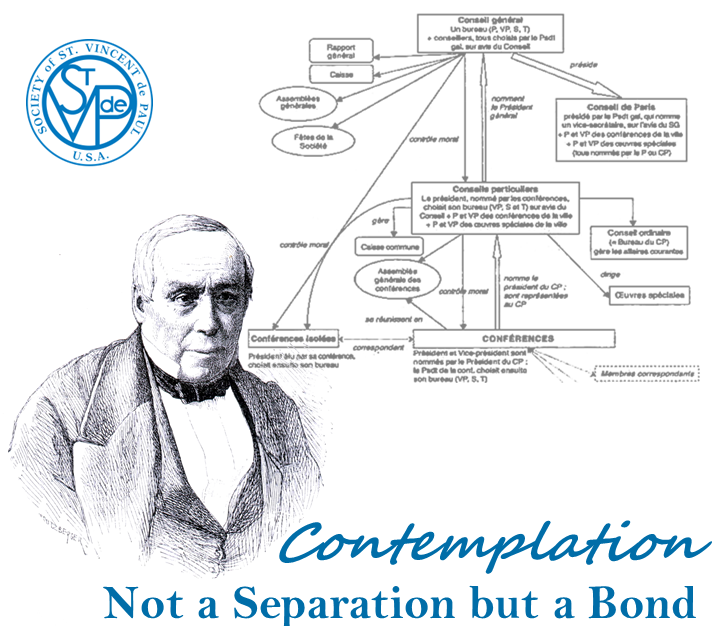
Among the four Permanent Principles of Catholic Social Doctrine is subsidiarity, by which we preserve the dignity of each person, and of each organization by reserving to them the decisions which affect them most directly, and which they can best fulfill. [cf. CSDC, IV]  As a faithful Catholic organization, then, it is only logical that “The Society embraces the Principle of Subsidiarity as its basic standard of operation.” [Rule, Part I, 3.9]

This principle is most often invoked to explain the relationship of Conferences to Councils, and Councils to higher level Councils, all the way to the Council General. The first significant addition to the Rule pertained to the addition of Councils, which, it said, existed primarily to provide “unity of direction in important matters, and great freedom for action of each Conference in the details of its works.” [1841 Rule, Ch. II] The current Rule continues to explain the role of Councils in very similar terms.

As then-President-General Bailly explained in 1841, “a Council … is rather a link than a power… to explain or solve the difficulties which arise naturally in a young Society. But all this has been imposed on no one, all is freely accepted, followed, and may be abandoned.” [Bailly, Circ. Ltr. 1841]

Although it can be tempting to view all this as justification to ignore everything our higher Councils recommend to us, a more complete understanding of subsidiarity must include its mutual nature. The word itself derives from the Latin subsidium, meaning “support.” The term was used by Roman armies to refer to forces held in reserve, or reinforcements. The purpose of reinforcements is of course not to consume or command the regular forces, but to strengthen and help them.

While establishing new Conferences in his home city of Lyon in 1836, Frédéric expressed this relationship in a letter to Emmanuel Bailly, explaining that just the first Conference had once benefitted from Bailly’s “advice and example,” it would become the highest priority to enable the new members to have the same benefit by establishing these new Conferences “in union with the society of Paris. Our work here is nascent, but it is living. It is feeble, but it can become strong by preserving its bonds with the mother work.” [135, to Bailly, 1836]

Subsidiarity, then, is not a hierarchy but a union; not a separation but a bond; a mark of neither dependence nor independence, but of “a true and unique worldwide Community of Vincentian friends.” [Rule, Part I, 3.3] As Bailly explained, between Councils and Conferences “there is neither authority nor obedience; there may be deference and advice; there is certainly, above all, charity; there are the same end, the same good works; there is a union of hearts in Jesus Christ our Lord.” [Bailly, Circ. Ltr., 1841]

Contemplate

Does my Conference seek advice and example from its Council? Does my Council offer support and freedom to its Conferences?

Recommended Reading

It is always good to re-read The Rule

Contemplación: No una separación, sino un vínculo

Traducción de Sandra Joya

Entre los cuatro Principios Permanentes de la Doctrina Social Católica se encuentra la subsidiariedad, mediante la cual preservamos la dignidad de cada persona y de cada organización, reservándoles las decisiones que les afectan más directamente y que mejor pueden cumplir. [cf. CSDC, IV] Como organización católica fiel, es lógico que «La Compañía adopte el Principio de Subsidiariedad como su norma básica de funcionamiento». [Regla, Parte I, 3.9]

Este principio se invoca con mayor frecuencia para explicar la relación de las Conferencias con los Consejos, y de estos con los Consejos de nivel superior, hasta llegar al Consejo General. La primera adición significativa a la Regla se refiere a la incorporación de los Consejos, que, según se afirma, existían principalmente para proporcionar «unidad de dirección en asuntos importantes y gran libertad de acción a cada Conferencia en los detalles de sus trabajos». [Regla de 1841, Cap. II] La Regla actual continúa explicando la función de los Consejos en términos muy similares.

Como explicó el entonces Presidente General Bailly en 1841, «un Consejo… es más un vínculo que un poder… para explicar o resolver las dificultades que surgen naturalmente en una Sociedad joven. Pero todo esto no se ha impuesto a nadie; todo se acepta, se sigue y puede abandonarse libremente». [Bailly, Carta Circular 1841]

Aunque puede resultar tentador considerar todo esto como una justificación para ignorar todo lo que nuestros Consejos superiores nos recomiendan, una comprensión más completa de la subsidiariedad debe incluir su naturaleza mutua. La palabra en sí deriva del latín subsidium, que significa «apoyo». El término era utilizado por los ejércitos romanos para referirse a las fuerzas mantenidas en reserva o refuerzos. El propósito de los refuerzos, por supuesto, no es consumir ni comandar las fuerzas regulares, sino fortalecerlas y ayudarlas.

Al fundar nuevas Conferencias en su ciudad natal, Lyon, en 1836, Federico expresó esta relación en una carta a Emmanuel Bailly, explicando que, si bien la primera Conferencia se había beneficiado una vez de los consejos y el ejemplo de Bailly, sería la máxima prioridad permitir que los nuevos miembros obtuvieran el mismo beneficio estableciendo estas nuevas Conferencias «en unión con la sociedad de París. Nuestra obra aquí es incipiente, pero viva. Es débil, pero puede fortalecerse preservando sus vínculos con la obra madre». [135, a Bailly, 1836]

La subsidiariedad, entonces, no es una jerarquía, sino una unión; no es una separación, sino un vínculo; una marca ni de dependencia ni de independencia, sino de «una verdadera y única Comunidad mundial de amigos vicencianos». [Regla, Parte I, 3.3] Como explicó Bailly, entre los Consejos y las Conferencias «no hay autoridad ni obediencia; puede haber deferencia y consejo; sin duda, hay, sobre todo, caridad; hay el mismo fin, las mismas buenas obras; hay unión de corazones en Jesucristo nuestro Señor». [Bailly, Carta Circular, 1841]

Contemplar

¿Mi Conferencia busca el consejo y el ejemplo de su Consejo? ¿Mi Consejo ofrece apoyo y libertad a sus Conferencias?

Contemplation: The Saint Within

Contemplation: The Saint Within 720 507 Tim Williams

Leer en Español

By Timothy P. Williams, Senior Director of Formation and Leadership Development 

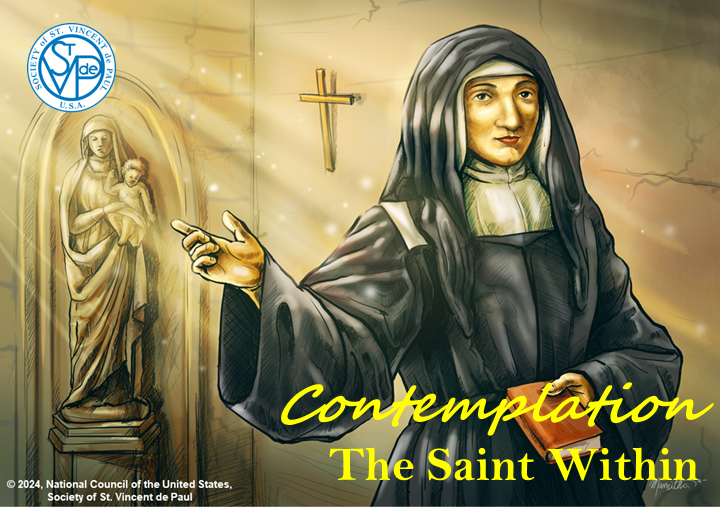
St. Louise de Marillac is often presented as a woman who is very anxious and unsure, is easily upset and indecisive, and who needs constant guidance from St. Vincent de Paul. Yet Louise was a natural leader, a gift that Vincent recognized very early in their relationship. She was well-educated in theology, had a deep and mystical spirituality, wrote beautifully about the faith, and acted as a spiritual guide for many, especially the Daughters of Charity. Under Canon Law, it was Vincent who formally founded the Daughters, but we know from their correspondence that the company was Louise, the co-founder’s original vision. So why do we keep hearing that misleading characterization?

The answer, as with so many misjudgments we make about people we encounter, lies in the context. Louise and Vincent exchanged many letters during their 35-year relationship. They were truly friends, with deep mutual respect. Their correspondence often discussed the “business” of their many works of charity, but the letters that touch us most deeply, and seem to reveal more of both personalities, are the ones not between two leaders of religious communities, but between Louise and her Spiritual Director.

In a relationship with a Spiritual Director, we reveal our deepest anxieties, our uncertainties, and our weaknesses. We seek the guidance of that director, sometimes referred to as a “confessor” in order to grow. The letters are both personal and true, giving us wonderful insights into these saints whom we love. Imagine, though, if a stranger seeking to learn more about you were to read all that you have revealed in the confessional, or in intimate conversations with very close friends and family members.

In a similar way, we encounter neighbors who are, at the time they call us, often in a desperate bind, sometimes facing consequences of their own decisions, and struggling with both financial and emotional burdens. If that were all we knew about them, if our encounter ended with a phone call, or a mailed-in application, how much of their full stories would we miss? How quickly might we leap to judgment, unintentionally betraying the trust they’ve shown by confiding to us their personal crisis?

It is for this reason that we visit the neighbor, person-to-person, forming “relationships based on trust and friendship”. We try to “understand them as we would a brother or sister”, like the family members who confide in us, cry on our shoulders, and whom we love and appreciate. [Rule, Part I, 1.9] Like Louise, they are much more than the sum of their weaknesses. They trust us with what Frédéric called the “secret of [their] lonely heart and troubled mind.” [Baunard, 279]

There are other saints who ensured that their personal writings were not preserved after their death. Saint Louise, by revealing to us both her weakness and her holiness, reminds us to seek the holiness within all of our neighbors – and ourselves.

Contemplate

How can I better see past the crisis on the surface to find the saint within?

Recommended Reading

Get to know Louise through some of her Spiritual Writings.

Contemplación: La Santa Interior

Traducción de Sandra Joya

Santa Luisa de Marillac suele ser presentada como una mujer muy ansiosa e insegura, que se alteraba fácilmente y era indecisa, y que necesitaba la guía constante de San Vicente de Paúl. Sin embargo, Luisa era una líder nata, un don que Vicente reconoció desde el principio de su relación. Tenía una sólida formación teológica, una profunda espiritualidad mística, escribía con gran belleza sobre la fe y fue guía espiritual para muchos, especialmente para las Hijas de la Caridad. Según el Derecho Canónico, fue Vicente quien fundó formalmente las Hijas, pero sabemos por su correspondencia que la empresa fue la visión original de Luisa, la cofundadora. Entonces, ¿por qué seguimos escuchando esa descripción engañosa?

La respuesta, como ocurre con tantos juicios erróneos que hacemos sobre las personas que conocemos, reside en el contexto. Luisa y Vicente intercambiaron mucha correspondencia durante sus 35 años de relación. Eran verdaderos amigos, con un profundo respeto mutuo.  Su correspondencia a menudo trataba sobre el “asunto” de sus numerosas obras de caridad, pero las cartas que nos conmueven más profundamente y parecen revelar más de ambas personalidades son las que se intercambian no entre dos líderes de comunidades religiosas, sino entre Luisa y su Director Espiritual.

En la relación con un Director Espiritual, revelamos nuestras más profundas ansiedades, incertidumbres y debilidades. Buscamos la guía de ese director, a veces llamado “confesor”, para crecer. Las cartas son personales y sinceras, y nos brindan una maravillosa perspectiva de estos santos a quienes amamos. Imaginen, sin embargo, si un desconocido que busca saber más sobre ustedes leyera todo lo que han revelado en el confesionario o en conversaciones íntimas con amigos y familiares muy cercanos.

De manera similar, nos encontramos con vecinos que, al llamarnos, a menudo se encuentran en una situación desesperada, a veces enfrentando las consecuencias de sus propias decisiones y lidiando con cargas financieras y emocionales.  Si eso fuera todo lo que supiéramos de ellos, si nuestro encuentro terminara en una llamada telefónica o una solicitud por correo, ¿cuánto de sus historias completas nos perderíamos? ¿Con qué rapidez podríamos juzgarlos precipitadamente, traicionando sin querer la confianza que nos han demostrado al confiarnos su crisis personal?

Por eso visitamos al prójimo, de persona a persona, forjando relaciones basadas en la confianza y la amistad. Intentamos comprenderlos como a un hermano o una hermana, como a los familiares que confían en nosotros, lloran en nuestros hombros y a quienes amamos y apreciamos. [Regla, Parte I, 1.9] Como Luisa, son mucho más que la suma de sus debilidades. Nos confían lo que Federico llamó el «secreto de [su] corazón solitario y su mente atribulada». [Baunard, 279]

Hay otros santos que se aseguraron de que sus escritos personales no se conservaran después de su muerte.  Santa Luisa, al revelarnos tanto su debilidad como su santidad, nos recuerda que debemos buscar la santidad en nuestro prójimo y en nosotros mismos.

Contemplar

¿Cómo puedo ver mejor más allá de la crisis superficial para encontrar la santidad interior?

Contemplation: Urging Us Gently

Contemplation: Urging Us Gently 720 571 Tim Williams

Leer en Español

By Timothy P. Williams, Senior Director of Formation and Leadership Development 

Our Rule is very clear about “hoarding”.[Rule, Part I, 3.14] We are not to hold back the money donated to us in order to save it for later. It is meant for the needs presented to us today; for the neighbor’s rainy day, not our own. For most Conferences, though, the fear of having enough money to hoard does not keep us up at night. We are simply grateful to have enough to help the people who call us.

Money, though, is not our only resource, nor even the most important one. Rather, “giving love, talents, and time is more important than giving money.” [Ibid] This is why, even when we are out of money, we still make home visits. Understanding that our love and presence are the most important things we can offer, we can sometimes feel that we must fight the urge to “hoard” our time and ourselves by resting. After all, we think, if I am still here, I have more of myself to give; if I have not yet collapsed, I have not yet loved God “with all my strength.”

This drive to consume ourselves completely with the work is something that St. Vincent often cautioned against. The reason was simple, “even though God commands us to love Him with all our heart and with all our strength, His Goodness doesn’t, however, want us to go so far as to damage and ruin our health by these acts; no, no! God doesn’t ask us to kill ourselves for that.” [CCD XI:204]

Our bodies, minds, hearts, and spirits need to rest and to be replenished from time to time. If we are not taking the time to reflect upon our work, to share it with each other, and to pray for the neighbors we have visited, we will soon find our hearts emptied and our actions rote. It is important for us to remember this individually and as Conferences. Because we always want to help does not mean that we always truly can. As our first Rule cautioned, “if the members take the charge of too many families they would be led to visit them only in a passing way to do no more for them than just to distribute alms.” [1835 Rule, Art. 22 notes]

We all understand that monthly envelopes or other fundraisers allow us to continue to generously offer material assistance. Fundraising isn’t hoarding. In a similar way, if we truly believe that our presence and our love are the most important things we offer, then we need to allow time for prayer, reflection, and rest to give us an even greater treasury of compassion and love to share.

The poor will always be with us, so the work will never be done, but as St. Vincent cautioned, if we do more than we are able, we will end up unable to do anything. Let’s instead remember that “The spirit of God urges one gently to do the good that can be done reasonably, so that it may be done perseveringly and for a long time.” [CCD I:92]

Contemplate

Do I take the time for rest and prayer so that I can serve the poor cheerfully and gratefully?

Recommended Reading

Apostolic Reflection with Rosalie Rendu

Contemplación: Instándonos suavemente

Traducción de Sandra Joya

Nuestra Regla es muy clara respecto a la acumulación de bienes. [Regla, Parte I, 3.14] No debemos retener el dinero que se nos dona para guardarlo para más adelante. Está destinado a las necesidades que se nos presentan hoy; para las necesidades del prójimo, no para las nuestras. Sin embargo, para la mayoría de las Conferencias, el temor de no tener suficiente dinero para acumular no nos quita el sueño. Simplemente estamos agradecidos de tener lo suficiente para ayudar a las personas que nos llaman.

El dinero, sin embargo, no es nuestro único recurso, ni siquiera el más importante. Más bien, “dar amor, talentos y tiempo es más importante que dar dinero”. [Ibíd] Por eso, incluso cuando no tenemos dinero, seguimos haciendo visitas a domicilio. Comprendiendo que nuestro amor y nuestra presencia son lo más importante que podemos ofrecer, a veces sentimos que debemos luchar contra la tentación de “acumular” nuestro tiempo y nuestras energías, descansando. Después de todo, pensamos, si todavía estoy aquí, tengo más de mí para dar; si aún no me he agotado, todavía no he amado a Dios “con todas mis fuerzas”.

Esta tendencia a entregarnos por completo al trabajo es algo contra lo que San Vicente de Paúl a menudo advertía. La razón era simple: “aunque Dios nos manda amarlo con todo nuestro corazón y con todas nuestras fuerzas, su bondad no quiere, sin embargo, que lleguemos al extremo de dañar y arruinar nuestra salud con estas acciones; ¡no, no! Dios no nos pide que nos matemos por ello”. [CCD XI:204]

Nuestros cuerpos, mentes, corazones y espíritus necesitan descansar y reponerse de vez en cuando. Si no nos tomamos el tiempo para reflexionar sobre nuestro trabajo, para compartirlo entre nosotros y para orar por los vecinos que hemos visitado, pronto sentiremos nuestros corazones vacíos y nuestras acciones mecánicas. Es importante que recordemos esto individualmente y como Conferencias. Que siempre queramos ayudar no significa que siempre podamos hacerlo realmente. Como advertía nuestra primera Regla: “si los miembros se hacen cargo de demasiadas familias, se verían obligados a visitarlas solo de pasada, sin hacer nada más por ellas que distribuir limosnas”. [Regla de 1835, Art. 22 notas]

Todos entendemos que las colectas mensuales u otras actividades de recaudación de fondos nos permiten seguir ofreciendo ayuda material con generosidad. Recaudar fondos no es acumular riquezas. De manera similar, si realmente creemos que nuestra presencia y nuestro amor son lo más importante que podemos ofrecer, entonces necesitamos dedicar tiempo a la oración, la reflexión y el descanso para que podamos tener una reserva aún mayor de compasión y amor para compartir.<

Los pobres siempre estarán con nosotros, por lo que la labor nunca terminará, pero como advirtió San Vicente, si hacemos más de lo que podemos, terminaremos sin poder hacer nada. Recordemos, en cambio, que «El espíritu de Dios nos impulsa suavemente a hacer el bien que se puede hacer razonablemente, para que se haga con perseverancia y durante mucho tiempo». [CCD I:92]<

Contemplar

¿Me tomo el tiempo para descansar y orar para poder servir a los pobres con alegría y gratitud?

El Pozo: Una Refrescante Fuente Vicentina Feb 2026

El Pozo: Una Refrescante Fuente Vicentina Feb 2026 1048 584 Tim Williams

Dilexit Nos y nuestra Vocación

Por Rita St. Pierre, Presidenta del Comité Nacional de Espiritualidad

En la edición de primavera de “El Pozo” 2025, Marge McGinley utilizó una imagen muy inspiradora para ayudarnos a entender la Formación Vicentina: la importancia, de que los jugadores de fútbol puedan comprendan las distintas formaciones en su libro de jugadas.

De hecho, mientras nos esforzamos por vivir nuestra vocación Vicentina, con la oración al Espíritu Santo, también debemos entender nuestro “Manual”, para mantenernos “formados”.  El aprendizaje continuo en todas las áreas de nuestra vida Vicentina es crucial para ayudarnos a mantener el enfoque, guiándonos a servir con compasión y fervor. Los Consejeros Espirituales y Formadores, quienes se comprometen a una formación personal continua, podrán proporcionar todo lo que los otros Vicentinos necesitan para su vida de servicio.
Lo principal de nuestra vocación es ver el rostro de Cristo en los prójimos en necesidad y ser Cristo para ellos. El Papa Francisco escribió una hermosa reflexión: “Dilexit Nos (Él nos amó.”} que profundiza nuestro deseo de ver con los ojos de Cristo. (Hacer clic en el enlace de abajo para leer la reflexión del Papa).

El Papa Francisco señala: “Estamos invitados a reflexionar y a descansar bajo la “mirada” de Jesús, Él que nos ve.”  Se incluyen varias referencias bíblicas que cuentan cómo Jesús miró a las personas y cómo respondió con compasión y amor, mostrándonos, como nosotros podemos hacer lo mismo.

Esta reflexión del Papa Francisco y sus referencias bíblicas serían maravillosas para su uso en una reunión de Conferencia o del Consejo, o en un retiro Vicentino y sin duda, para la oración y reflexión personal.

Ver a través de los ojos de Dios

Por Marge McGinley, Presidenta del Comité Nacional de Formación

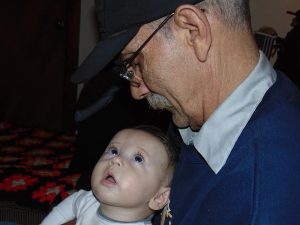
Como una vez dijo el beato Federico sobre su hija recién nacida: “No puedo contemplar esa dulce carita, llena de inocencia y pureza, sin ver la imagen del Creador reflejada más claramente en ella que en nosotros… ¿Podría Dios haber elegido un medio más dulce para enseñarme, corregirme y ponerme en el camino al Cielo?”

Al igual que Federico, nunca pensé que podría amar más profundamente que el amor que siento por mis hijos. Era un amor casi indescriptible. ¿Recuerda usted la primera vez que tuvo a su nieto en sus brazos? ¡Y, aun así, está ahí! ¿Es posible que, en esos momentos trascendentales, podamos empezar a comprender la profundidad del amor que Dios tiene por cada uno de nosotros? ¿Podríamos traducir ese amor que experimentamos en ese momento e imitarlo mientras nos acercamos a nuestros prójimos en necesidad? Un amigo mío dijo una vez: “Cuando miro a mi hermano con sus nietos, empiezo a entender cómo debe ser el amor de Dios por nosotros.”
En ese momento, nos damos cuenta de que nada podría separarnos de este niño. Al contemplar este precioso regalo, es de alguna manera diferente a otras experiencias. Quizá seamos más sabios y nos demos cuenta de que la vida está llena de desafíos y que para siempre estaremos vinculados a este niño en nuestros pensamientos y oraciones. ¿Podría ser esto solo una parte de lo que el amor de Dios es para nosotros?

Cuando pasamos tiempo con nuestros prójimos de la comunidad, ¿nos atrevemos a intentar verlos a través de los ojos de Dios? Con la oración vemos la belleza de cada persona a la que servimos. Podemos ver qué cosas buenas aportan a nuestro mundo, frente a lo que les puede faltar. Somos capaces de ver lo valioso y a veces lo frágil que puede ser nuestro prójimo.

Recientemente, mi compañera de visita domiciliaria y yo íbamos a llevar a alguien a una cita relacionada con sus beneficios. Cuando llegamos a su casa para recogerla, nos abrió la puerta muy alterada. Ella dijo: “Es un mal día, no estoy para ello.” Nos invitó a pasar y nos explicó su nivel de ansiedad, y simplemente no podía soportar a un entrevistador en una oficina gubernamental. Sin embargo, pasamos tiempo con ella asegurándole que lo intentaríamos otro día. Al irnos, la señora nos dijo: “No me olvidaran, ¿verdad?” En ese momento, pude entender la mirada de amor de Dios hacia nosotros. “¡No, no la olvidaremos – nunca!”

Un pueblo de Oración

Como Consejeros Espirituales y como Formatores, a menudo se nos pide que dirijamos oraciones, ya sea de forma espontánea, como parte de una reunión o ceremonia, o como un tiempo dedicado a la oración con nuestras Conferencias y Consejos.

Para la mayoría de nosotros, rezar es fácil, pero no siempre es fácil encontrarlas o escribirlas, y mucho menos encontrar o escribir oraciones específicamente Vicentinas.

Por suerte, ¡hay recursos de oración estupendos disponibles para ayudarle!

Recursos de Formación

Una práctica maravillosa para las Conferencias es rezar juntos regularmente el Rosario. Esta devoción Mariana es Vicentina por su propia naturaleza, ¡ya que la Santísima Virgen es la patrona de la Sociedad! Desde la página web del Consejo Nacional, puede descargar e imprimir un Rosario Vicentino, que incluye meditaciones sobre los misterios con un enfoque Vicentino. Está disponible en inglés y en español.

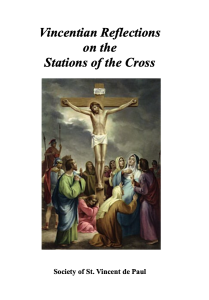
Durante la Cuaresma, el Vía Crucis puede ser un excelente momento para la meditación y la oración compartidas, y los Vías Crucis Vicentinos también están disponibles para descargar e imprimir en inglés y español.
Para las Estaciones y el Rosario, intente asignar a varias personas para dirigir las oraciones y meditaciones cuando las haga.

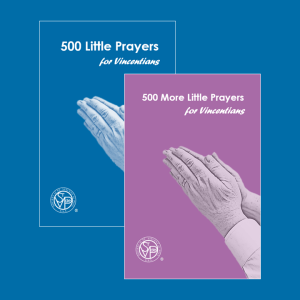
Para esos momentos en los que solo necesita una oración rápida, pruebe 500 Pequeñas Oraciones para los Vicentinos, o 500  Más Oraciones Pequeñas para  Vicentinos (y en junio también puede usted conseguir Otras 500 Pequeñas Oraciones para los Vicentinos).  También puede descargar  500 y 500 más para leerlos en su móvil (son un poco largos de imprimir en casa). Lo siento, estos son solo en inglés.

Y, por supuesto, las Oraciones de Apertura y Cierre para las Reuniones de la Sociedad deberían usarse realmente en cada reunión. Estas oraciones están disponibles en español o inglés, aparecen en las tarjetas, en el Manual y pueden descargarse o pedir en formato impreso.

Puede encontrar aún más oraciones en la página web para descargar o para pedir en formato impreso.

Los Consejeros y Formadores Espirituales desempeñan un papel clave en lo que la Regla llama “Promover una vida de oración y reflexión, tanto a nivel individual como comunitario, compartiendo con sus compañeros miembros.” [Regla, Parte I, 2.2] ¡Estas sencillas herramientas le ayudarán a conseguirlo!

Quinto Foro de los Miércoles

Para Formadores y Consejeros Espirituales (y otros)

29 de abril, 7:00 p.m., hora del este

Sumérgete en la espiritualidad Vicentina

Ya sea que sea un Formador o Consejero Espiritual nuevo o experimentado, o esté tratando de discernir si está llamado a este servicio, esperamos que se una a nosotros para una sesión de Zoom muy interactiva. Después de una breve presentación, esta será una oportunidad para hacer preguntas y tener conversaciones con los miembros del Comité Nacional y entre todos. Nuestra primera sesión, que le dará un recorrido por los recursos disponibles (dónde encontrarlos y cómo usarlos) es el 29 de octubre.

¡Regístrese ahora para asistir a una o todas las próximas sesiones!

The Well: A People of Prayer

The Well: A People of Prayer 150 150 Tim Williams

As Spiritual Advisors and as Formators, we are often called upon to lead prayers, either spontaneously, as part of a meeting or ceremony, or as a dedicated time of prayer with our Conferences and Councils.

For most of us, saying prayers is easy, but it is not always easy to find or to write those prayers, much less to find or write specifically Vincentian prayers.

Luckily, there are some terrific prayer resources available to help!

A wonderful practice for Conferences is to regularly pray the Rosary together. This Marian devotion is Vincentian by its very nature, since the Blessed Mother is the Patroness of the Society! From the National Council website, you can download and print a Vincentian Rosary, which includes meditations on the mysteries with a Vincentian focus. This is available in English and in Spanish.

During Lent, the Stations of the Cross can be an excellent time for shared meditation and prayer, and the Vincentian Stations of the Cross are also available to download and print in English and in Spanish.

For both the Stations and the Rosary, try to assign several people to lead the prayers and meditations when you do them.

For those times that you just need a quick prayer, try 500 Little Prayers for Vincentians, or 500 More Little Prayers for Vincentians (and in June you can also get Another 500 Little Prayers for Vincentians).  You can also download 500 and 500 More to read on your phone (they are a little long to print at home.) Sorry, these are English only.

And of course, the Opening and Closing Prayers for Society Meetings should really be used at each meeting. These prayers are available in Spanish or English, and they appear on the cards, in the Manual, and can either be downloaded or ordered in print.

You can find even more prayers on the web site to download, or to order in print.

Spiritual Advisors and Formators play a key role in what the Rule calls “Promoting a life of prayer and reflection, both at the individual and community level, sharing with their fellow members.” [Rule, Part I, 2.2] These simple tools will help you to do that!

The Well: Dilexit Nos and our Vocation

The Well: Dilexit Nos and our Vocation 150 150 Tim Williams

By Rita St. Pierre, National Spirituality Committee Chair

In the Spring 2025 issue of The Well, Marge McGinley used a truly inspired image to help us understand Vincentian formation –the importance of football players understanding various formations in their playbook.

Indeed, as we strive to live our Vincentian vocation, with prayer to the Holy Spirit, we also must understand our “playbook,” be “formed.”  Ongoing learning in all areas of our Vincentian life is crucial to help us maintain our focus, guiding us to serve with compassion and zeal. Spiritual Advisors and Formators who commit to ongoing personal formation will be better able to provide whatever other Vincentians need for their life of service.

Primary to our vocation is to see the face of Christ in the poor, and to be Christ for them. Pope Francis wrote a beautiful reflection, Dilexit Nos (He loved us), that deepens our desire to see with the eyes of Christ. (Click the link below to read the Pope’s reflection).

Pope Francis notes: “We are invited to ponder and to rest in the “gaze” of Jesus, the one who sees us.”  He includes several Scripture references that tell how Jesus saw people and how he responded with compassion and love, thereby showing us how we can do the same.

This reflection from Pope Francis and its Scripture references would be wonderful for use within a conference or council meeting, a Vincentian retreat, and certainly for personal prayer and reflection.

The Well: Seeing Through God’s Eyes

The Well: Seeing Through God’s Eyes 150 150 Tim Williams

By Marge McGinley, National Formation Committee Chair

As Bl. Frédéric once said of his newborn daughter, “I cannot behold that sweet little face, all innocence and purity, without seeing the image of the Creator more clearly mirrored in her, than in us… Could God have selected a sweeter means of teaching, correcting, and placing me on the road to Heaven?”

Like Frédéric, I never thought I could love any deeper than the love I have for my children. It was a love that was almost indescribable. Do you remember the first time you held your grandchild? Yet, it is there! Is it possible, that for those transcendent moments we could begin to understand the depth of love God has for every one of us? Could we translate that love we experienced in that moment and imitate that love as we approach our neighbors in need? A single friend of mine once stated, “When I look at my brother with his grandchildren, I begin to understand what God’s love for us must look like.”

In that moment we realize that nothing could separate us from this child. As we gaze at this precious gift, it’s somehow different than other experiences. Perhaps we are wiser and we realize life is full of challenges and forever we will be linked to this child in our thoughts and prayers. Could this be just a piece of what God’s love is for us?

When we spend time with our community friends, do we dare try to see them through the eyes of God? With prayer we see the beauty of each person whom we serve. We can see what assets they bring to our world vs what they may be lacking. We are able to see how very precious and at times how very fragile our neighbor might be.

Recently, my home visit partner and I were supposed to take someone to an appointment related to her benefits. When we got to her home to pick her up, she answered the door in a very frazzled state. She said, “It’s a bad day, I’m not up to it.” She invited us in and explained her anxiety level, and she just couldn’t take on an interviewer at a government office. However, we spent time with her assuring her that we will try again another day. As we were leaving, our friend said, “You won’t forget me, will you?” In that moment, I could understand God’s gaze of love for us. “No, we won’t forget you – ever!”

Contemplation: Can I Get a Witness?

Contemplation: Can I Get a Witness? 720 563 Tim Williams

Leer en Español

By Timothy P. Williams, Senior Director of Formation and Leadership Development 

In the early days of the Vincentian Family, St. Vincent instructed the priests of the Mission to regularly read The Martyrology, a listing of the names and stories of the Church’s martyrs. St. Louise required the Daughters of Charity to read it daily. In this way, they would be reminded of the great cloud of witnesses before them who had truly imitated Christ, which all the faithful are called to do.

The Catholic Church defines martyrdom as “the supreme witness given to the truth of the faith: it means bearing witness even unto death.” [CCC, 2473] At the center of martyrdom is not only the death of the martyr, but the act of witness. Indeed, the very word martyr derives from the Greek word meaning “witness”, and while few of us will ever face the threat of death for our faith, we all are called to bear witness to it. Vincentians, in particular, are called to bear witness, not only in word, but through our actions, “to follow Christ through service to those in need and so bear witness to His compassionate and liberating love.” [Rule, Part I, 1.2]

Vincent, hearing the story of a Daughter of Charity, who, though gravely ill herself, had left her bed to help a sick person, and died from her exertions soon after, suggested that she was, by the witness of her actions, “a martyr to charity.” [CCD X:409] He suggested that “there are several kinds of martyrdom”, and that to be a martyr may not necessarily entail dying in a specific act, but it did require action. In other words, to share the Gospel “not in words but by conforming one’s life to that of Jesus Christ and witnessing His truth and sanctity to the faithful and to unbelievers; consequently, to live and die like that is to be a martyr.” [CCD XI:167ff]

In this same light, Blessed Frédéric argued that “to be a martyr is possible for every Christian”, not by dying instantly, but by giving our whole lives, however long they may be, to God and the neighbor. To be a martyr, he said, is “to give back to heaven all that one has received: his money, his blood, his entire soul.” [90, to Curnier, 1835] For Frédéric, then, a martyr’s life could also end in natural death, after many years, as long as those years are lived as true witnesses to the truth of the faith. In this sense, martyrdom is exemplified by our Vincentian virtue of selflessness, in which we “[die] to our ego with a life of self-sacrifice; members share their time, their possessions, their talents and themselves in a spirit of generosity.” [Rule, Part I, 2.5.1]

By virtue of living, we also are dying. The choice we have before us, then, is not whether to die, but how to live: as observers, or as witnesses, testifying through our example to the faith, to the truth, and to the one true hope that transcends death. As Frédéric reminds us “Religion is less for thinking than for acting and, if it teaches how to live, it is so we may learn how to die.” [70, to Falconnet, 1834]

Contemplate

Do I concern myself more with giving assistance, or with giving witness to Christ’s love?

Recommended Reading

Faces of Holiness

Contemplación: ¿Puedo tener un testigo?

Traducción de Sandra Joya

En los primeros tiempos de la Familia Vicentina, San Vicente instruyó a los sacerdotes de la Misión a leer regularmente el Martirologio, una lista de los nombres e historias de los mártires de la Iglesia. Santa Luisa exigió a las Hijas de la Caridad que lo leyeran a diario. De esta manera, recordarían la gran multitud de testigos que les precedieron y que habían imitado verdaderamente a Cristo, algo a lo que todos los fieles están llamados.

La Iglesia Católica define el martirio como «el testimonio supremo dado a la verdad de la fe: significa dar testimonio incluso hasta la muerte». [CIC, 2473] En el centro del martirio no está solo la muerte del mártir, sino el acto de testimonio. De hecho, la palabra mártir deriva de la palabra griega que significa «testigo», y aunque pocos de nosotros nos enfrentaremos a la amenaza de muerte por nuestra fe, todos estamos llamados a dar testimonio de ella. Los vicentinos, en particular, están llamados a dar testimonio, no solo con palabras, sino a través de nuestras acciones, «a seguir a Cristo sirviendo a los necesitados y así dar testimonio de su amor compasivo y liberador». [Regla, Parte I, 1.2]

Vicente, al escuchar la historia de una Hija de la Caridad que, a pesar de estar gravemente enferma, se levantó de su cama para ayudar a una persona enferma y murió poco después a causa del esfuerzo, sugirió que ella era, por el testimonio de sus acciones, «una mártir de la caridad». [CCD X:409] Sugirió que «hay varios tipos de martirio», y que ser mártir no necesariamente implica morir en un acto específico, pero sí requiere acción. En otras palabras, compartir el Evangelio «no con palabras, sino conformando la propia vida a la de Jesucristo y dando testimonio de su verdad y santidad a los fieles y a los no creyentes; en consecuencia, vivir y morir de esa manera es ser mártir». [CCD XI:167ss]

En este mismo sentido, el Beato Federico argumentó que «ser mártir es posible para todo cristiano», no muriendo instantáneamente, sino entregando toda nuestra vida, por larga que sea, a Dios y al prójimo. Ser mártir, dijo, es «devolver al cielo todo lo que se ha recibido: el dinero, la sangre, el alma entera». [90, a Curnier, 1835] Para Frédéric, entonces, la vida de un mártir también podía terminar con una muerte natural, después de muchos años, siempre y cuando esos años se vivieran como verdaderos testigos de la verdad de la fe. En este sentido, el martirio se ejemplifica en nuestra virtud vicentina del desinterés, en la que «morimos a nuestro ego con una vida de abnegación; los miembros comparten su tiempo, sus bienes, sus talentos y a sí mismos con espíritu de generosidad». [Regla, Parte I, 2.5.1]

Por el simple hecho de vivir, también estamos muriendo. La elección que tenemos ante nosotros, entonces, no es si morir, sino cómo vivir: como observadores o como testigos, dando testimonio con nuestro ejemplo de la fe, de la verdad y de la única esperanza verdadera que trasciende la muerte. Como nos recuerda Frédéric: «La religión es menos para pensar que para actuar y, si enseña a vivir, es para que aprendamos a morir». [70, a Falconnet, 1834]

Contemplar

¿Me preocupo más por brindar ayuda o por dar testimonio del amor de Cristo?

Sign Up for Our Newsletter

Privacy Preferences

When you visit our website, it may store information through your browser from specific services, usually in the form of cookies. Here you can change your Privacy preferences. It is worth noting that blocking some types of cookies may impact your experience on our website and the services we are able to offer.

Click to enable/disable Google Analytics tracking code.
Click to enable/disable Google Fonts.
Click to enable/disable Google Maps.
Click to enable/disable video embeds.
Our website uses cookies, mainly from 3rd party services. Define your Privacy Preferences and/or agree to our use of cookies.
Skip to content