• Search the Site

Posts By :

admin

Feature: Thrift Stores

Feature: Thrift Stores 534 712 admin

Vincentian Experiences: Transactional or Relational?

By John Thelen, Executive Director of Lansing Diocesan Council
and Mike McClanahan, Director of Retail Operations of Phoenix Diocesan Council

Vincentian success stories happen throughout our country on a daily basis.

Our Vincentian encounters begin with that first call from a neighbor in need who is seeking some form of assistance from our SVdP Conference or Council.

As a Vincentian, it helps me to try to remember how hard it must be as a neighbor in need to make that first call to seek some form of assistance from SVdP. How we proceed with the initial call will help shape the story that will be told in the future about our work.

Is our Vincentian work creating “transactional” type experiences or will our actions create a “relational” experience with our neighbors in need?

Sometimes it’s easy to handle what just seems like transactions. Our neighbors are seeking a pretty straightforward request; paying a quick utility bill to prevent a shut-off or paying a landlord for a late rent payment. They can be pretty easy, quick transactions. The neighbor feels blessed to get the emergency assistance they were seeking and we as Vincentians feel good about what we were able to provide.

But is that enough?

Will the neighbor look back on their experience with our SVdP unit and see it as a transaction or will they think about it later and feel that we were invested in them as a person. Do we ask how everything else is going for them and then listen to really hear how we might be able to assist in other meaningful ways?

In my Conference, our Vincentians were fulfilling a lot of transactions. We were helping a good number of people with a good amount of money to clear up their emergency needs. As Vincentians, we felt like we were accomplishing the mission.

Over the last couple years, we have transitioned away from transactional experiences to doing more relational experiences. It has created a totally different feel among the Vincentian in our Conference. It does require additional time and follow-up with our Neighbors in Need, but certainly an investment worth making!

Ms. Cindy Teffer

To help make this more real, we would like to share Ms. Cindy Teffer’s experience with Vincentian Stephanie Wise, who is Lead Case Manager from the Phoenix, Arizona area.


The video shows a two-plus year experience between Cindy and Stephanie and others in the Vincentian Family.

All Conferences or Councils may not have the services available that you will see in this video, but the relationship created is what we can offer to our Neighbors in Need.

Towards the end of this short video, you will see how a pop-up thrift store at the National Assembly in Phoenix, Arizona helped put the icing on the cake for Ms. Cindy Teffer’s experience with SVdP.

Thrift Stores aren’t a necessity to provide meaningful experiences to our Neighbors in Need, but they can often times provide additional services that might not be available otherwise.

SVdP thrift stores provide meaningful employment and volunteer opportunities, and are a significant driver of the Society’s mission and effectiveness. Profits from stores contribute millions of dollars for Councils and Conferences to use in their communities. If you have questions about SVdP Thrift Stores near you or would like to explore the resources available to your Conference or Council, please go to https://thriftstores.ssvpusa.org

1-23-25 Weekly Questions & Answers

1-23-25 Weekly Questions & Answers 1200 628 admin

January 23

Q:  All Conferences submit financials for transparency and oversight to upper Councils. What authority do Councils have to request such information?

A:  According to Article 16 in the nationally approved Conference bylaws each Conference is required to make an annual audit and submit the reports of the audit to the next higher Council.  The new treasurer’s handbook (click here), on page 15, discusses the requirement for a Conference annual audit and provides a link to the necessary forms to perform the audit.

Q: Is it against the Rule for a Vice President to also serve as treasurer?

A: There is nothing explicit in the Rule or the National Council Approved Bylaws related to this. In Part II of the Rule, International Statute 7.4: “Any matter that is not specifically governed by any parts of the Rule and Statutes shall be governed by tradition and, in the final instance, by the decision issued by the Board of the Council General.”  The tradition of the Society is one-office/one-person.  This is set in place to such a degree that, when applying for aggregation, the application will be rejected if one person holds more than one office.


23 de enero

P: Todas las Conferencias presentan sus estados financieros para su transparencia y supervisión a los Consejos superiores. ¿Qué autoridad tienen los Ayuntamientos para solicitar dicha información?

R: De acuerdo con el Artículo 16 de los Estatutos para Conferencia aprobados a nivel Nacional, cada Conferencia está obligada a realizar una auditoría anual y presentar los informes de la auditoría al Consejo inmediato superior.  El nuevo manual del tesorero (haga clic aquí), en la página 15, analiza el requisito de una auditoría anual de la Conferencia y proporciona un enlace a los formularios necesarios para realizar la auditoría.

P: ¿Va en contra de la Regla que un Vicepresidente también se desempeñe como Tesorero?

R: No hay nada explícito en la Regla o en los Estatutos Aprobados por el Consejo Nacional relacionado con esto. En la Parte II de la Regla, Estatuto Internacional 7.4: “Cualquier asunto que no esté específicamente regulado por ninguna parte de la Regla y los Estatutos se regirá por la tradición y, en última instancia, por la decisión emitida por la Mesa Directiva del Consejo General”.  La tradición de la Sociedad es de un solo cargo/por una sola persona.  Esto se establece hasta el punto de que, al solicitar la agregación, la solicitud será rechazada si una persona ocupa más de un cargo.

Contemplation: Do You Believe in Miracles?

Contemplation: Do You Believe in Miracles? 1080 1080 admin

By Timothy Williams, Senior Director of Formation and Leadership Development 

Sometimes, on our Home Visits, we feel the urge to give the neighbor a plan, or a list of tasks to improve their material well-being. It can become frustrating when they don’t follow our advice, and we may even feel as if our help should be made conditional on following it. It shouldn’t, and not only because we should have the humility to admit that our advice may be completely wrong.

As the Conference President Handbook explains, we should “not be too quick to advise,” instead offering advice only when it is “wanted and appropriate.” But, the Handbook continues, “we must never force our will onto those we help… Be sure that you don’t make your assistance dependent upon them actually taking your advice.” [Pres Handbook, 35]

It helps to remind ourselves of our true purpose, which is to seek our own holiness, and to draw the neighbor closer to Christ. We do this work of evangelization “through visible witness, in both actions and words.” [Rule, Part I, 7.2] The material assistance we offer is of course meant to relieve real needs, but we hope, as Blessed Frédéric put it, that in “ensuring material help, it will be possible to ensure at the same time spiritual improvement.” [Baunard, 127]

Our model, as in all things, is Jesus Christ, who offered material help, often miraculously, and always unconditionally. In feeding the five thousand (and healing their sick), He did not ask them to earn it in any way, He was simply “moved with pity.” His great and unconditional acts of compassion showed God’s love for all of His people, and He often took the time to explain exactly this point, as when he healed the man with the withered hand, who had not even asked to be healed, or the paralytic, whom He first forgave of his sins, then healed only to demonstrate that His power to forgive was real.

Similarly, we give of our time, our talents, our possessions, and ourselves not in order to extract submission to our advice, but in order to demonstrate Christ’s love, and to inspire hope in the heart of the neighbor. After all, Frédéric explained, “material assistance is only a secondary object of the Society; sanctification of souls is the principal aim.” [Baunard, 339]

All of this is not to say that we should ignore longer term needs, nor limit our assistance only to the offering that begins our relationship. As Frédéric said, “the same authority which tells us that we shall always have the poor amongst us is the same that commands us to do all we can to ensure that there may cease to be any.” [O’Meara, 230] The poor, we are taught, are blessed, yet their material deprivations can separate them from God just as surely as riches can separate the wealthy from God. Jesus did not withhold his miracles from us because we are undeserving. If our assistance is offered with the same unconditional compassion and love, it just might be miraculous, too.

Contemplate

Do I ever, even subconsciously, set conditions for offering assistance?

Recommended Reading

Turn Everything to Love


Contemplación : ¿Crees en los Milagros?

Traducción de Sandra Joya

A veces, durante nuestras visitas al hogar, sentimos la necesidad de darle al vecino un plan o una lista de tareas para mejorar su bienestar material. Puede ser frustrante cuando no siguen nuestros consejos, y podríamos incluso sentir que nuestra ayuda debería estar condicionada a que los sigan. Sin embargo, no debería ser así, y no solo porque debemos tener la humildad de admitir que nuestros consejos podrían estar completamente equivocados.

Como explica el Manual del Presidente de Conferencia, no debemos “ser demasiado rápidos para aconsejar”, ofreciendo consejo solo cuando sea “deseado y apropiado”. Pero, continúa el Manual, “nunca debemos imponer nuestra voluntad a aquellos que ayudamos… Asegúrate de que no condicionas tu asistencia a que sigan tu consejo.” [Manual del Presidente, 35]

Es útil recordarnos nuestro verdadero propósito, que es buscar nuestra propia santidad y acercar al vecino a Cristo. Hacemos este trabajo de evangelización “a través del testimonio visible, tanto en acciones como en palabras.” [Regla, Parte I, 7.2] La ayuda material que ofrecemos está, por supuesto, destinada a aliviar necesidades reales, pero esperamos, como decía el Beato Federico, que al “asegurar la ayuda material, sea posible asegurar al mismo tiempo una mejora espiritual.” [Baunard, 127]

Nuestro modelo, como en todas las cosas, es Jesucristo, quien ofreció ayuda material, a menudo milagrosamente y siempre incondicionalmente. Al alimentar a los cinco mil (y curar a sus enfermos), no les pidió que lo merecieran de ninguna manera; simplemente “se compadeció de ellos.” Sus grandes y actos incondicionales de compasión mostraron el amor de Dios por todos Sus hijos, y a menudo se tomaba el tiempo para explicar precisamente este punto, como cuando curó al hombre de la mano seca, que ni siquiera había pedido ser curado, o al paralítico, a quien primero perdonó sus pecados y luego curó solo para demostrar que su poder de perdonar era real.

De manezra similar, damos de nuestro tiempo, talentos, posesiones y de nosotros mismos no para obtener sumisión a nuestros consejos, sino para demostrar el amor de Cristo e inspirar esperanza en el corazón del vecino. Después de todo, Federico explicaba, “la asistencia material es solo un objetivo secundario de la Sociedad; la santificación de las almas es el objetivo principal.” [Baunard, 339]

Esto no significa que debamos ignorar las necesidades a largo plazo ni limitar nuestra asistencia solo a la ayuda inicial que comienza nuestra relación. Como decía Federico, “la misma autoridad que nos dice que siempre tendremos a los pobres entre nosotros es la misma que nos manda hacer todo lo posible para que no haya ninguno.” [O’Meara, 230] Los pobres, se nos enseña, son bienaventurados, pero sus privaciones materiales pueden alejarlos de Dios con la misma certeza con que las riquezas pueden separar a los ricos de Dios. Jesús no nos negó sus milagros porque no los mereciéramos. Si nuestra asistencia se ofrece con la misma compasión y amor incondicional, también podría ser milagrosa.

Contemplar 

¿ Alguna vez, incluso de forma subconsciente, establezco condiciones para ofrecer?

1-16-25 Weekly Questions & Answers

1-16-25 Weekly Questions & Answers 1200 628 admin

January 16

Q:  Now that our Conference has its own 501(c)3 tax exemption, are we required to document and submit our Conference rules to the federal and local governments?

A:  The National Council is not aware of any need to send the copies of our rules and guidelines to government organizations.

Q: Can a lawyer subpoena one of our SVdP members on behalf of a neighbor we once served?

A: It has been the practice of SVdP to honor subpoenas related to the Society and its work. For example, if a Conference receives a subpoena to reveal all of its records associated with a given person who it helped, the legal document (subpoena) would override our rules of confidentiality. If the member is being subpoenaed to testify related to his/her work within the Society, then that member should honor the subpoena.


16 de enero

P: Ahora que nuestra Conferencia tiene su propia exención de impuestos 501(c)3, ¿estamos obligados a documentar y presentar las Reglas de nuestra Conferencia a los gobiernos federales y locales?

R: El Consejo Nacional no está al tanto de ninguna necesidad de enviar las copias de nuestras Reglas y Directrices a las organizaciones gubernamentales.

P: ¿Puede un abogado citar a uno de nuestros miembros de SVdP en nombre de un prójimo en necesidad al que alguna vez servimos?

R: Ha sido práctica de SVdP cumplir con las citaciones relacionadas con la Sociedad y su trabajo. Por ejemplo, si una Conferencia recibe una citación para revelar todos sus registros asociados con una persona determinada a la que ayudó, el documento legal (citación) anularía nuestras reglas de confidencialidad. Si el miembro está siendo citado a testificar en relación con su trabajo dentro de la Sociedad, entonces ese miembro debe cumplir con la citación.

Feature: SVdP Young Adults at SEEK

Feature: SVdP Young Adults at SEEK 800 500 admin

Brace Yourselves: 20,000 Young Adult Vincentians coming your way!

By Kat Brissette

The SEEK Conference is an annual gathering of thousands of Catholic college students seeking to deepen their faith, explore ways to live it out, and grow as leaders in the Church. SEEK features all of the most renowned Catholic Speakers, and is a time to encounter Christ, connect with peers, and experience transformation through truth, beauty, and goodness. This year, over 20,000 young adults gathered for an unforgettable experience—and the Society of St. Vincent de Paul was right there in the thick of it with nine Young Adult Vincentian delegates, a standout interactive claw machine booth, and the privilege of leading an inspiring breakout session.

“It was really fun to see Priests, Nuns, Deacons and Michael Acaldo ripping it up on the dance floor right before Monsignor Shea’s keynote,” remarked Luciano from the University of Connecticut.

“It was super cool to see everyone at Mass and adoration. Everyone was enthusiastic and wanted to be there,” added Laura, one of the SVdP Emerging Leaders, a freshman at the University of Wisconsin Eau Claire.

“SEEK was amazing because there were so many people my age there who had lots of different things to share and teach me about their experiences in college or with SVdP, and we were all united in our amazing faith. The amount of energy in every room, whether at Mass, adoration, a talk given by one of the countless speakers, or Mission Way, was inspiring,” remarked Genevieve, one of the SVdP Emerging Leaders, a freshman at Elmira College.

Check out highlights from SEEK and get a glimpse of a day at the conference by visiting our social media at @svdpusa.

A Booth that Inspired: Engaging Young Adults in the Vincentian Mission

Thanks to the hard work and dedication of nine Young Adult Vincentian delegates, the Society had the privilege of hosting a vibrant booth and leading an interactive workshop that captured the hearts and minds of thousands of students. From engaging conversations at the booth to an inspiring breakout session, the Catholic faith and Vincentian spirit was alive and well, and the energy at SEEK was truly electric!

The SVdP booth became a standout attraction at SEEK’s Mission Way. Students stopped by to learn about the Society’s mission and discover how they could get involved. From our claw machine (sourced from a young adult who volunteered weekly at an SVdP thrift store, while in college) filled with awesome prizes to the powerful presence of Vincentian relics of saints like St. Vincent de Paul, St. Louise de Marillac, and St. Catherine Laboure, the booth was alive with conversation and inspiration.

Check out highlights from SEEK and our claw machine booth and get a glimpse of a day at the conference by visiting our social media at @svdpusa.
Together the team came up with 4 key messages:

1. SVdP was founded by college students who were inspired to live out their faith through service – What are you doing to put your faith into action?

2. Young people have been at the heart of the Society of St. Vincent de Paul, for nearly 200 years. Many saints and blesseds found their purpose as young adults through the Society – Could this be your path to Sainthood?

3. Catholics are called to serve, and through encounters with the poor, we grow in holiness. Holiness often begins with simple, compassionate acts of love, and ultimate trust in Divine providence.  – We can do more!

4. SVdP is practically everywhere, and we can support both new and existing service projects on campuses, creating a lasting impact wherever you may be. Local Vincentians can play an active role by mentoring, hosting workshops, and guiding young adults in their faith and service journey. – What are you waiting for?

“Being a delegate at SEEK was an enriching experience. One of the highlights of our time as delegates in Salt Lake City was working as a team to engage young adults and inform them about the Society of St. Vincent de Paul. Throughout SEEK, we not only discussed friendship, service, and spirituality with other young adults, but we experienced growing in all three Vincentian essential elements as a group,” Santina a Junior at the University of Connecticut.

Check out highlights from SEEK Day 3 and get a glimpse of a day at the conference by visiting our social media at @svdpusa.

The booth featured a special focus on Society Saints—including soon to be Saint Pier Giorgio Frassati, Pope St. John Paul II, St. Gianna Mollo, and St. Zélie Martin. These beloved patrons found their way to sainthood through their work with SVdP.

Luciano shared: “One of my goals while working in the booth and having conversations with young adults was making people aware of the ‘incredible’ Saints who were part of the Society when they were our age. It got young adults thinking the same way Frederic Ozanam was thinking when he was challenged to put his faith into action,”

“It was such a great conversation starter, and the students were eager to dive deeper into the history and spirituality of the Society and its members,” added Francis.

Students were inspired to learn that many of these saints were once young adults, serving the poor through the Society. YYAEL even designed t-shirts for each Saint and a quote. If you are interested in ordering some, reach out to us at youngadults@svdpusa.org.

Throughout the week we hosted a Pray It Forward Challenge, inviting participants to leave a prayer intention, and carry someone else’s with them. This was a small act of kindness that everyone wanted to join in on. “We quickly started to hear of people who ended up receiving similar, but specific prayer intentions to their own. Priests, students, and other religious people would come back and share the stories with us. It was such a fruitful reminder that in this crazy world, as alone as we may sometimes feel – we are not. Not only do we have a loving God watching out for us, we are connected within this beautiful, huge Catholic family,” explained Kat, 2nd Vice President.

Putting Faith into Action: A Workshop That Made an Impact

In addition to the booth, SVdP hosted a highly successful breakout session titled “Putting Faith into Action: ‘Go to the Poor, and You Will Find God.'” This session drew nearly 1000 participants and gave students an interactive experience of the tough decisions faced by those living in poverty. Participants reflected on how to grow in holiness while serving others in their communities and on their campuses.

The session was led by National CEO Michael Acaldo, National 2nd Vice President Kat Brissette, and her brothers, Catholic College Students and Social Media Influencers, Francis and John Paul Brissette. The response was overwhelming, with many students expressing excitement to bring SVdP back to campus and getting more involved in their community.

“The workshop was a really great opportunity to expose young adults to the difficulties of living in poverty and to how SVdP serves those struggling within our own communities,” explained Luciano. For many, community service is a mandatory task or a week-long mission trip, but our goal was to share about the opportunities to take service to a new level, serving in their own backyards.  “Michael shared about SVdP’s efforts in homelessness prevention, followed by Francis and John Paul leading an interactive poverty simulation. During the simulation, although some students passionately wanted to spend money on getting a gym membership, they quickly recognized the importance of first being able to provide food for a family. The poverty simulation really opened eyes to the struggles people experience and even inspired many young adults to approach us after the workshop to discuss possibilities of starting an SVdP Conference on their college campus,” Luciano continued.

Building Lasting Connections: Engaging Young Adults in the Vincentian Mission

At SEEK, our goal was to inspire college students and campus ministers to connect more deeply with the Society of St. Vincent de Paul (SVdP). We recognized that while many campuses are already involved with SVdP, there is a growing desire for more substantial engagement. Students expressed interest in starting SVdP conferences on their campuses, joining local conferences to serve the poor, and using their skills in service or employment with the Society. Our Young Leaders highlighted that SVdP can enhance and complement the service students are already doing, offering a meaningful way to put faith into action. Whether you’re an established Vincentian or someone eager to inspire young adults in your community, now is the time to get involved.

“Getting started can be the most overwhelming part, as there is a balance of understanding the intricacies of the Society as well as the intricacies of the campus community itself. It can take up to a year to get things really going on campus, as a balance is found. We are already working with a few locations that we hope to be sharing within the next couple months!” Kat explained.

We encourage both young adults and Vincentians to take action:

● Explore opportunities to connect with Catholic communities on local campuses and partner with or start SVdP initiatives.

● Find unique opportunities  for young people to use their time, talents, and skills to serve those in need – young people can make a big impact with SVdP with as little as $5, 5 hours, or 5 friends.

● To learn more about how your SVDP council or conference can create lasting connections with Catholic young adults and college campuses, Kat and the Emerging Leaders team are happy to help. The YYAEL team has been working on materials that are helpful for this process and they would love to send them your way.

For more resources and inspiration, visit our Emerging Leaders Blog:

Next year’s SEEK conference, SEEK26, promises to be even bigger and more inspiring. With three different locations—each offering unique opportunities for encounter, community, and transformation—SEEK26 is a chance for young adults to connect with the Church and each other on a deeper level. The theme for SEEK26 – “To the Heights” – invites participants to follow the example of St. Pier Giorgio Frassati, a Vincentian who will be canonized this year.

Let’s continue the tradition of encountering, praying, learning, and serving together—just as the first Vincentians did.  The future of the Vincentian mission is bright, and together, we can continue to spread the flame of service and faith across campuses and parishes. If you are interested in learning more about engaging college students and young adults, reach out to us at youngadults@svdpusa.org. 

Contemplation: Beware of Faintheartedness

Contemplation: Beware of Faintheartedness 1080 1080 admin

By Timothy Williams, Senior Director of Formation and Leadership Development 

Such turbulent times we live in, filled political polarization, social controversies, economic upheavals, natural disasters, wars and rumors of wars! It’s almost enough to make you throw up your hands and give up sometimes. Blessed Frédéric’s times were certainly no less turbulent, with the industrial revolution, epidemics, new forms of poverty, and multiple revolutions overturning France’s government every few years.

Yet rather than “despairing of your age,” Frédéric cautioned, “beware of that faintheartedness which leads so many to give up all effort when witnessing, as they say, the decline … of civilization, and who, by dint of announcing the approach of the country’s ruin, end by precipitating it.” [O’Meara, 244] By allowing the day’s own troubles to overwhelm us, in other words, we become part of the problem, when we should instead remember that we do not belong to this world. We do not serve in despair, but in hope, and the hope in which we serve, the hope we seek to share with the neighbor is the very hope that Christ shared with us.

Naturally, on Home Visits, in systemic change projects, and through our advocacy, we fully engage with the world as it is with our neighbors, our communities, and with other organizations. The first sign of hope we offer is food, rent, utilities, or other material, worldly things. And how can we do otherwise? We do not belong to this world, but it is where we live. Indeed, we have been sent into the world!

Again and again, Jesus provided for material needs, from the wedding at Cana, changing water to wine to keep the party going, to the loaves and fishes, when he took pity on the hungry crowds. But by these actions He was not teaching us to measure our success by the loaves, the fishes, or the casks of wine. As Frédéric put it, the letters we share with each other should not be “statistical documents where success is defined in prideful numbers,” but instead should “exchange ideas, inspiration perhaps, fears at times, and always hope.” [1372, to the Assembly, 1838]

If we measure our successes only by “prideful numbers,” we will always be disappointed. That is why The Society of St. Vincent de Paul is animated by a “spirit that animates us and that alone distinguishes us from other associations: we do not want to be a welfare office.” [1375, to Charuand, 1838] Above all other things we give, it is our friendship, understanding, and love that lead to hope – for ourselves, for the neighbor, and for our society.

I have always belonged,” Frédéric once said, “to the party of hope…in fact, I believe in nothing else as far as politics are concerned.” [O’Meara, 243-4]

Contemplate

What is my deepest hope for each neighbor I serve?

Recommended Reading

Seeds of Hope


Contemplación : ¡Cuidado con la cobardía!

Traducción de Sandra Joya

Vivimos tiempos tan turbulentos, llenos de polarización política, controversias sociales, trastornos económicos, desastres naturales, guerras y rumores de guerras. A veces, casi basta para darse por vencido. Los tiempos del beato Federico no fueron menos turbulentos, con la revolución industrial, epidemias, nuevas formas de pobreza y múltiples revoluciones que derrocaban al gobierno de Francia cada pocos años.

Sin embargo, en lugar de “desesperarse de la edad”, advirtió Frédéric, “tengan cuidado con esa pusilanimidad que lleva a tantos a renunciar a todo esfuerzo cuando presencian, como dicen, la decadencia… de la civilización, y que, a fuerza de anunciar la proximidad de la ruina del país, terminan por precipitarla”. [O’Meara, 244] Al permitir que los propios problemas del día nos abrumen, en otras palabras, nos convertimos en parte del problema, cuando en cambio deberíamos recordar que no pertenecemos a este mundo. No servimos en la desesperación, sino en la esperanza, y la esperanza en la que servimos, la esperanza que buscamos compartir con el prójimo es la misma esperanza que Cristo compartió con nosotros.

Naturalmente, en las visitas domiciliarias, en los proyectos de cambio sistémico y a través de nuestra defensa, nos involucramos plenamente con el mundo tal como es, con nuestros vecinos, nuestras comunidades y con otras organizaciones. La primera señal de esperanza que ofrecemos es la comida, el alquiler, los servicios públicos u otras cosas materiales y mundanas. ¿Y cómo podemos hacer otra cosa? No pertenecemos a este mundo. Este mundo es nuestro, pero es donde vivimos. ¡En efecto, hemos sido enviados al mundo!

Una y otra vez, Jesús proveyó para las necesidades materiales, desde la boda en Caná, cuando convirtió el agua en vino para que la fiesta continuara, hasta los panes y los peces, cuando tuvo compasión de las multitudes hambrientas. Pero con estas acciones, Él no nos estaba enseñando a medir nuestro éxito por los panes, los peces o los toneles de vino. Como dijo Federico, las cartas que compartimos unos con otros no deberían ser “documentos estadísticos donde el éxito se define en números orgullosos”, sino que deberían “intercambiar ideas, inspiración tal vez, temores a veces, y siempre esperanza” [1372, a la Asamblea, 1838].

Si medimos nuestros éxitos solo por “números orgullosos”, siempre estaremos decepcionados. Es por eso que la Sociedad de San Vicente de Paúl está animada por un “espíritu que nos anima y que es lo único que nos distingue de otras asociaciones: no queremos ser una oficina de asistencia social”. [1375, a Charuand, 1838] Por encima de todas las demás cosas que damos, es nuestra amistad, comprensión y amor lo que conduce a la esperanza, para nosotros mismos, para el prójimo y para nuestra sociedad.

“Siempre he pertenecido”, dijo una vez Frédéric, “al partido de la esperanza… de hecho, no creo en nada más en lo que respecta a la política”. [O’Meara, 243-4]

Contemplar 

¿Cuál es mi esperanza más profunda para cada vecino al que sirvo?

1-9-25 Weekly Questions & Answers

1-9-25 Weekly Questions & Answers 1200 628 admin

January 9

Q: Is there a National SVdP rule that new Conference members who have completed the Ozanam Orientation must be accompanied by an established member on every home visit made for six months?

A:  This is not a national requirement; however, what you describe is a local definition. Councils/Conferences throughout the country probably have their own restrictions on home visit training.

Q: We have a member who does a lot of travel as a representative for national. Does the Conference record these miles on the national annual report?

A:  Typically, mileage counted is for home visits and other works being done in the immediate area. However, it won’t hurt to include members travelling as national representatives in the same place as mileage for home visits and other Society work on the Conference annual report.


9 de enero

Q: ¿Existe una norma nacional de SVdP que establezca que los nuevos miembros de la Conferencia que hayan completado la Orientación Ozanam deben estar acompañados por un miembro establecido en cada Visita Domiciliaria realizada durante seis meses?

R: Este no es un requisito nacional, sin embargo, lo que usted describe es una definición local. Es probable que los Consejos/Conferencias de todo el país tengan sus propias restricciones sobre la Capacitación para Visitas Domiciliarias.

P: Tenemos un miembro que viaja mucho como representante nacional. ¿Debe de registrar la Conferencia estas millas en su informe anual nacional?

R: Por lo general, el millaje contado es para las Visitas Domiciliarias y otros trabajos que se realizan en el área inmediata. Sin embargo, no estará de más incluir en el informe anual de la Conferencia a los miembros que viajan como representantes nacionales en el mismo lugar que el kilometraje para las Visitas Domiciliarias y otros trabajos de la Sociedad.

Feature: SVdP Reentry Program

Feature: SVdP Reentry Program 1474 828 admin

Faith-Based Mentorship for Individuals Reentering Society

By Judy Dietlein, Western Region RVP

Each year more than 600,000 individuals are released from state and federal prisons. Another nine million cycle through local jails. Nationally, nearly 30% of those we serve have been directly impacted by incarceration.

SVdP Reentry Programs are designed to assist citizens leaving jail or prison that are returning to society. These programs help citizens successfully transition to their community after they are released, and lives are transformed every day.

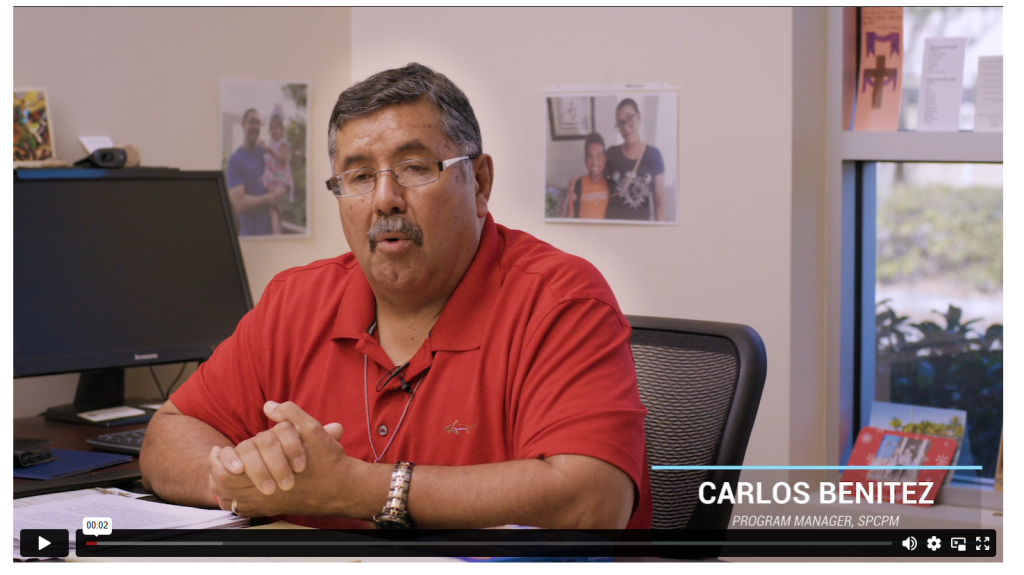
Has your Council or Conference ever considered starting a reentry program? There are several SVdP Reentry Programs operating throughout the nation that could be a valuable resource for you. The St. Vincent de Paul St. Peter Claver Prison Ministry in Orlando, featured in this video, was one of National Council’s original Immersion/Reentry programs. This ministry has recently partnered with an organization called Promising People, which trains former inmates in the electric trade using virtual reality.

You may also connect with our Shared Interest Group in Reentry/Immersion, which embodies the very action of transformational change. Just as mentoring is a key component in an effective Reentry program, members of this shared interest group can offer mentoring to any SVdP Council or Conference that wants to begin a program in their community.

In the same way Conferences respond to the specific needs of their communities, so do Reentry programs focus on the needs in their local areas – perhaps the local jail or a nearby prison. Every program takes on key components and designs a program that fits the needs of their local returning citizens. Most are challenged first with the need for housing and jobs to create stability in their lives. Community and spiritual support are also offered along the way.

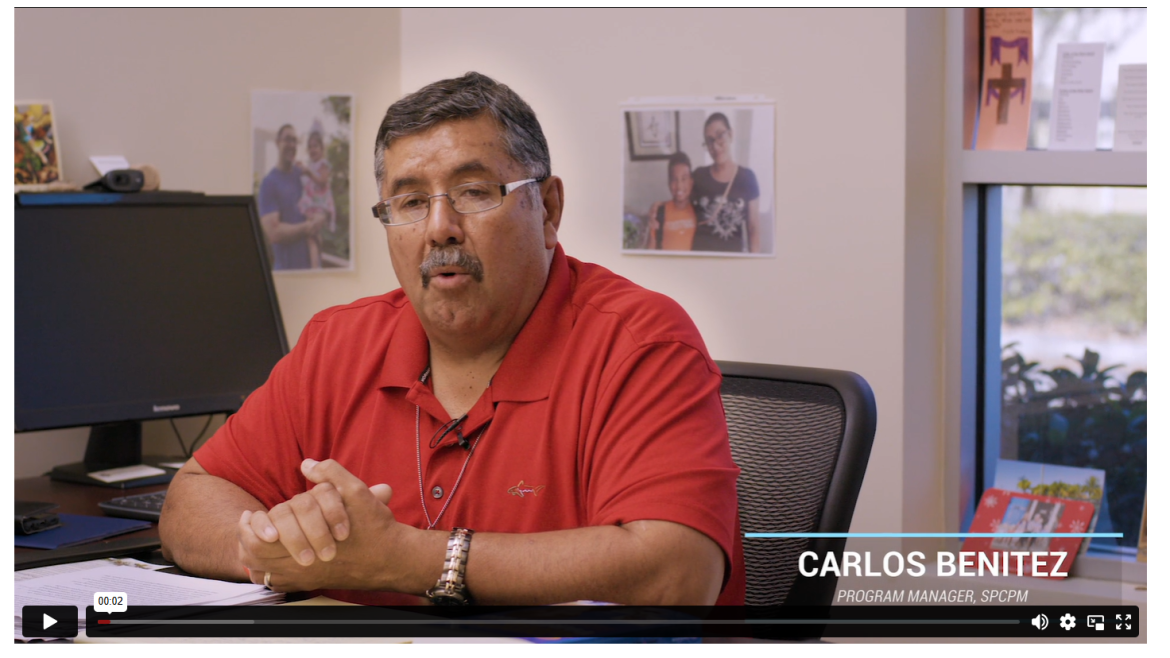
“Our mission and our guiding principles are those acts of mercy – feeding the hungry, clothing the naked…and visiting the people that are in prison,” said Carlos Benitez, Program Manager for St Peter Claver Prison Ministry. “We go into prison bringing spirituality, and compassion and kindness and goodness, to the folks who don’t get that in prison.”

You can learn more about our Reentry/Immersion program on our website. Members of the Shared Interest Group are happy to share their stories and best practices. Additionally, you can reach out to Steve Uram, National Director of Poverty Programs with the National Council.

SVdP Poverty Programs consist of the Homelessness Prevention Committee, the Poverty Action Committee, the Voice for the Poor and the following shared interest groups: Reentry, Workforce Development, and Getting Ahead

Contemplation: A Sliver of Hope

Contemplation: A Sliver of Hope 800 800 admin

By Timothy Williams, Senior Director of Formation and Leadership Development 

Sister of Charity Stanislaus Malone of New Orleans was often asked why she offered help to everybody, even criminals. She pointed out that there is only one individual in all the gospels to whom Jesus promised a place in paradise: the thief nailed to the cross next to His own. Unlike Christ, that thief was not there despite a life of holiness; he was nether a martyr nor an innocent victim. By his own account, he had been condemned justly and received the usual sentence for his crimes.

Is he not the very image of the “undeserving poor” that Bishop Untener so movingly describes in the essay printed in Serving in Hope, Module IV? “They are the ones,” he says, “who have made the bad choices, or failed to make any choice at all. They are the ones who have been helped before – and it didn’t help.” Yet because of Christ’s mercy, and despite his own life choices, we know the thief on the cross as “the good thief.”

Sometimes it seems so obvious that the neighbors’ troubles are of their own making that we can’t logically justify offering assistance that seems likely to be wasted. We convince ourselves that they are bound to repeat the same decisions which led to their current troubles. Blessed Frédéric called this way of thinking “that excuse familiar to hard hearts, that the poor are so through their own fault, as if the lack of light and morality were not the most deplorable of miseries and the most pressing for societies which want to live.” [To Good People, 1848]

We don’t even realize that the despair we are giving in to is our own realization that so much deprivation and poverty is beyond our ability to “fix”. We allow ourselves to forget that our first calling is to serve Christ, and to bring His hope to the neighbor – to alleviate not just hunger and cold, but the “lack of light” as Frédéric called it, by our loving presence and friendship. Maybe that’s why, when we find a neighbor “undeserving,” we so often feel a tug in our hearts urging us, in Bishop Untener’s words, to “help them anyway.”

Perhaps that prick of conscience is a sliver from the cross, piercing our souls to remind us that the logic of God is mercy. That the good thief brought his crucifixion on himself, through his own decisions and actions, did not cause God to abandon him. He sent His Son, and the Son sends us.

The way to salvation is through the cross, and if we wish to truly draw our neighbor closer to Christ, then rather than condemning him again to the cross he already bears, let us instead begin by helping him carry it.

Contemplate

Do I offer my love and mercy to the “good thieves” I encounter?

Recommended Reading

Serving in Hope, Our Vincentian Mission


Contemplación : Un rayo de Esperanza

Traducción de Sandra Joya

La hermana de la Caridad Stasnilaus Malone de Nueva Orleans fue preguntada en varias ocasiones por qué ofrecía ayuda a todos, incluso a los criminales. Ella señalaba que hay sólo una persona en todos los Evangelios a quién Jesús prometió un lugar en el paraíso. El ladrón clavado en la cruz junto a El. A diferencia de Cristo, ese ladrón no estaba allí a pesar de una vida de santidad, no era un martir ni víctima inocente. Según su propio relato, había sido condenado justamente y recibió la sentencia habitual por sus crímenes.

¿ No es él la imagen de los “” pobres no merecedores”” que el Obispo Untener describe tan conmovedoramente en el ensayo publicado en Serving in Hope, Módulo IV? Ellos son dice: “” los que han tomado malas decisiobes,o no han tomado ninguna decisión en absoluto. Ellos son los que ya han recibido ayuda antes, y no les sirvió “” Sin embargo, debido a la misericordia de Cristo, y a pesar de sus propias decisiones en la vida, conocemos al ladrón en la cruz cómo “” el buen ladrón”.

A veces parece tan obvio que los problemas de los vecinos son consecuencia de sus propias decisiones, que no podemos justificar, lógicamente ofrecerles, ayuda que parece destinada a ser desperdiciada.

Nos convencemos de que están condenados a repetir las mismas decisiones, que los llevaron a sus problemas actuales. El Beato Frédéric llamaba a ésta forma de pensar ” esa excusa familiar a los corazones duros, que los pobres son así por culpa propia, como si la falta de luz y moralidad no fuera la más deplorable de las miserias y la más urgente para las sociedades que quieren vivir ” ( To Good People, 1848)

Ni siquiera nos damos cuenta de que la desesperación a la que estamos cediendo es nuestra propia comprensión de que tanta privación y pobreza está más allá de nuestra capacidad de ” arreglar”. Nos permitimos olvidar que nuestro primer llamado es servir a Cristo y llevarle esperanza al prójimo, aliviar no sólo el hambre y el frío sino la ” falta de luz”, como la llamaba Frédéric, mediante nuestra presencia amorosa y amistad. Tal vez por eso, cuando encontramos a un vecino ” no merecedor”, con tanta frecuencia sentimos una punzada en el corazón que nos urge, en palabras del Obispo Untener, a ” ayudarlos de todos modos”.

Quizás esa punzada de conciencia es un fragmento de la cruz, que atravieza nuestras almas, para recordarnos que la lógica de Dios es la Misericordia. El hecho de que el buen ladrón haya causado su propia crucifixión, por sus decisiones y acciones, no hizo que Dios lo abandonara, El envió a su Hijo, y el Hijo nos envía a nosotros.

El camino hacia la Salvación es a tra ves de la cruz, y si deseamos realmente acercar a nuestro prójimo a Cristo, entonces en lugar de condenarlo nuevamente a la cruz que ya lleva, empecemos ayudándole a cargarla.

Contemplar 

¿ Ofrezco mi amor y misericirdia a los ” buenos ladrones” que qencuentro?

Councils And Their Conferences

Councils And Their Conferences 1198 1198 admin

Councils And Their Conferences

(Excerpted From Vincentian Life: Council)

This document is about Councils; yet, the starting point of this document is Conferences. Why is that? As you will see below, Councils don’t exist without Conferences and the Council’s primary role is to support the Conferences.

CONFERENCE PARTICIPATION IN THE COUNCIL

This is an important principle to keep in mind: Conferences that do not want to participate with the Council have not been convinced they receive anything of value from the Council and its activities.  Councils should never be formed simply for the sake of forming a Council.  Councils have a particular purpose and the Conferences must understand what that is.

In the Rule that was in effect prior to 2003, there was a statement that was a clear definition of the purpose of any Council.  This statement was in Part II of the Rule, Article 15:

  • Councils are responsible for animating and coordinating the work of SVdP units within their respective jurisdictions.
  • They serve the Conferences.  All Councils are first and foremost at the service of the Conferences with a view to furthering charitable activities.  Because every Council gathers information about human needs and services from a variety of sources – the community at large, as well as the Conferences – it keeps Conferences in touch with changing social problems and new programs for helping people.
  • … each year, each Council obtains and compiles a consolidated annual report of all the Conferences and Councils attached to it.  The Council’s report is then forwarded with any comments to the next higher Council for the preparation of the annual report of the (National) Council of the United States.
  • Councils encourage initiatives and strive to bring about the establishment of Conferences, Councils and new works, and the revival of dormant or defunct Conferences.
  • A Council reviews and evaluates applications for aggregationand institution that are submitted by its affiliated SVdP groups.  If approved at District and Diocesan Council levels, the application is forwarded to the National Council for transmittal to the Council General (International).
  • Councils organize, to the fullest possible extent, training and formation sessions for members and potential members on spiritual themes, the Vincentian vocation, and problems of social action and justice.
  • To coordinate Vincentian work, Councils keep in regular contact with their Conferences and Councils and inform them of the activities of the Society.
  • The Council represents its constituent units in contacts with religious and public authorities.
  • Each Council determines the expected contribution (solidarity) from attached Conferences and Councils in order to meet its necessary expenses and assist needy Conference and Council groupings attached to it.
  • Special works of the Society conducted by the Councils must rely on the Conferences for support, personnel and funds.

In the current Rule, these responsibilities have not changed.  They are also spelled out but not in so compact a form.

The fact of the matter is that all Conferences should be aware of what the Council is doing for them.  Conferences should be receiving benefits from the Council that clearly provide value to them.  It is the responsibility of the Council to ensure that Conferences understand this clearly.  Ultimately, it is the Conference members themselves who make up the Councils and who make the decisions in support of the Conferences.

STRONG CONFERENCES

Strong Conferences make a strong Council!  It is the Council’s responsibility to assist and guide Conferences in fulfilling the mission of the Society.  The best way to do this is to ensure that Conference leadership and members understand what the Society is all about, what the role of the Conference is and what is expected of members.

When Conferences get into trouble (begin to decline or get into some other difficulty), it is far better to be proactive rather than reactive.  It is recommended that each Council form a Conference Resources and Concerns Committee to:

  • Promote understanding and compliance with the Rule, Bylawsand Manual;
  • Develop resources that will help Conferencesto understand and fulfill their roles in the Society;
  • Provide trainingmaterials for Conference leadership;
  • Monitor Conference activityand act to assist Conferences who are in trouble;
  • Promote and assist in establishing new Conferences;
  • Assist in revitalizing existing Conferences, where needed; and
  • Mediate Conference concerns where needed.

A well-formed Conference Resources and Concerns Committee can monitor Conference activities and offer many aids to make a Conference more effective.

MONITOR SPECIAL CONDITIONS

The following special conditions should be monitored regularly and addressed as necessary:

  1. Conference President’s term of office is limited to two consecutive three-year terms.  After the two terms, the President must be out of office for at least three years before being elected once again.  Technically, as soon as the six years expires, the President is no longer in office and the Conference operates under the leadership of the first Vice President until the election of a new President.  In the case of violation of this rule, the Council must ensure that an election is held to replace the outgoing President as soon as possible.
  2. Each Conference is to have at least four officers: President, Vice President, Secretary and Treasurer.  Each office must be held by a separate person.  No one person may hold multiple officer positions.  In addition, Statute 12 of Part III of the Rule indicates that a President must not appoint his/her spouse or other closely related individual to an officer position.
  3. Service area comes into conflict often within the Society.  The District Council should ensure that Conferences provide service only to those people living within the boundaries established for the Conference.  These boundaries should be established as a formal agreement between the Conferences in the Council.  In some cases, the boundaries will simply be the parish boundaries.  In other cases the boundaries may be more extensive, as long as they are agreed upon by the Council. This way, people seeking service cannot simply go from Conference to Conference seeking help.  The Conference covering the area where that person or family lives is the one that makes the decision as to help or not help.

 VOICE/VOTE IN THE COUNCIL

Conferences should have a voice in every major decision.  No Voice, no Vote, no Vincentian will be at the meeting or activity.  It is important that every Conference is represented at the District Council and that the Conference President (or his/her designated representative) is there to speak for them.

Most Council bylaws have a clause that will remove a Conference President from Council membership/voice/vote if the President misses a certain number of meetings.  This removal is a tragedy for the Council, the Conference and the people we serve.

UP TO DATE

Conferences should be aware of all conditions and circumstances both local and global that will impact them or the Council.  Conferences should be especially aware of any major situation that threatens the well-being of the Council.  Therefore, it is an obligation of the Council to keep the Conferences well-informed and in a timely manner.

The Council should strive to develop a fabric of communication.  One that goes up and down the normal channels but also goes sideways from Conference to Conference and from Vincentian to Vincentian.  A strong fabric of communication will strengthen the Council and avoid the problems of it relying on a few people to make it run.  If those few leave the Council for any reason it can take weeks or months to learn all that needs to be known on how the Council operates.  A fabric of communications creates an informal communications network that helps keep the members informed.

HELP IN COUNCIL EFFORTS

Conferences should be involved on a regular and frequent basis in the operation of the Council.  This can be accomplished by involving them as Council Members, as volunteers, as committee members, on special projects, on fundraising, in special works, in general membership meetings and in every other way that may be appropriate.

FORMATION/TRAINING

The Council should provide formation and training to all members of the Council especially new Vincentians.  The National Formation and Spirituality Committee has developed formation/training programs that are available across the country.  The National website (https://members.ssvpusa.org/)  has many documents, presentations, etc. available that should be used to form and train Vincentians.

By a resolution of the National Council, all new members of the Society have to attend an Ozanam Orientation within their first year as a member.  Also, any member, who is elected to or appointed to be an officer at any level in the Society, must have attended an Ozanam Orientation or must attend one within the first year as an officer. It is highly recommended that all members of the Society attend the Ozanam Orientation at least once.  Attending the Ozanam Orientation every three to four years as a refresher is recommended for all members.

This places a burden on the Council.  The Council must provide the Ozanam Orientation formation program within the Council area as often as is necessary to fulfill the requirements for training prescribed by the National Council.  If the District Council lacks the resources to provide the Ozanam Orientation on an as needed basis, it should seek assistance from the next higher Council to provide this training.

CONFERENCE/COUNCIL VISITATION

Conference visitation by a District Council (District Council visitation by a Diocesan Council) is an extremely important responsibility of the Council.  The Officers and Chief Executive Officer/Executive Director should each attend one Conference (Council in case of Diocesan Council) meeting each month to facilitate communications and solidarity with them.  That means that five meetings a month could be attended if the President, Vice President, Secretary, Treasurer and Chief Executive Officer/Executive Director each participate.  In many District Councils, this would mean that each Conference is visited at least twice a year.  For Diocesan Councils, coverage depends on the frequency of District meetings.  A staff person should come along on some of the visits to explain what that department or special work does and how they can assist the Conference/Council.

YOUTH INVOLVEMENT

A planned program for youth involvement is very important.  Many aids are available for recruitment, involvement and understanding how we can utilize one of our greatest assets.  There are so many aids now available, such as brochures, outlines of how to start a youth conference, Power Point recruitment and many more.   There are Regional Youth chairs you can contact that are eager to offer ideas and assistance.  With no intent to overuse an old cliché, “youth are our future.”

DIVERSITY

The United States is a melting pot of race, creed, language, and culture.  It is important that our Conferences reflect the diversity of our local community within its membership.  Councils should emphasize awareness of community demographics and assist Conferences to build their membership based on who comprises their community.  Councils should also strive to develop diverse leadership both within the Conferences and Councils themselves.


Sign Up for Our Newsletter

Privacy Preferences

When you visit our website, it may store information through your browser from specific services, usually in the form of cookies. Here you can change your Privacy preferences. It is worth noting that blocking some types of cookies may impact your experience on our website and the services we are able to offer.

Click to enable/disable Google Analytics tracking code.
Click to enable/disable Google Fonts.
Click to enable/disable Google Maps.
Click to enable/disable video embeds.
Our website uses cookies, mainly from 3rd party services. Define your Privacy Preferences and/or agree to our use of cookies.
Skip to content