• Search the Site

Posts By :

admin

5-29-25 Weekly Questions & Answers

5-29-25 Weekly Questions & Answers 1200 628 admin

May 29, 2025

Q: I’m an active member of our St. Vincent de Paul Conference and working on recruiting new members. I read somewhere in SVdP documents that it’s best to keep active members to about 10 and associate members to about 20. We have eight active members but no associate members. Can you tell me where that document is located?

A: There is no known document at the National Council suggesting the ideal number of active or associate members. The absolute minimum number of members needed in a Conference is four, which are the officers; or five members if a spiritual advisor is appointed. The minimum six or seven members are suggested to really have an effective Conference. It depends on the number of activities and what the Conference is accomplishing in terms of the needs of the community that is being served.

Q: Is it allowed, or permitted, for an associate member to “go on a case with an active Vincentian?” Can an associate member take an active part in deciding what should or should not take place with a case once a case has been visited by an active Vincentian and this associate member?

A: If an associate member is allowed to go on home visits it means that the Conference has confidence in their judgment. It would be wrong to take an associate member along on a home visit just to fulfill the two Vincentians rule. Only active members can decide how to assist a neighbor visited.


29 de Mayo

P: Soy un miembro activo de nuestra Conferencia de San Vicente de Paúl y estoy trabajando en el reclutamiento de nuevos miembros. Leí en algún lugar de los documentos de SVdP que es mejor mantener los miembros activos en unos 10 y los miembros asociados en unos 20. Tenemos ocho miembros activos, pero no tenemos miembros asociados. ¿Puede decirme dónde se encuentra ese documento?

R: No se conoce ningún documento en el Consejo Nacional que sugiera el número ideal de miembros activos o asociados. El número mínimo absoluto de miembros necesarios en una Conferencia es de cuatro, que son los miembros de la Mesa Directiva; o cinco miembros si se nombra un Consejero Espiritual. Se sugiere un mínimo de seis o siete miembros para tener una Conferencia realmente efectiva. Depende del número de actividades y de lo que la Conferencia esté logrando en términos de las necesidades de la comunidad a la que se sirve.

P: ¿Está permitido, o está autorizado, que un miembro asociado “vaya a un caso” con un Vicentino activo”? ¿Puede un miembro asociado tomar parte activa en la decisión de lo que debe o no debe suceder en un caso una vez que ha sido visitado por un Vicentino activo y este miembro asociado?

R: Si a un miembro asociado se le permite ir a una Visita Domiciliaria, significa que la Conferencia tiene confianza en su juicio. Sería un error llevar a un miembro asociado a una Visita Domiciliaria solo para cumplir con la Regla de los dos Vicentinos. Solo los miembros activos pueden decidir cómo servir a un prójimo visitado.

5-22-25 Weekly Questions & Answers

5-22-25 Weekly Questions & Answers 1200 628 admin

May 22, 2025

Q: I am taking office as a new Conference president. I would like to have an audit done for our Conference. Is it proper for me to do so?

A: Yes. The Rule is explicit, Conferences are required to have an informal annual audit. It is especially recommended when a new president is taking office. This helps assure the Conference members that they are following proper procedures and all is well. If all is not well, then corrective action must be taken. Audit procedures can be found in Governance-in-a-Box: Conference Audit Manual and Worksheets. Also, the Rule, Part III, Statute 27 authorizes a Council president to call for an audit when he/she determines it is appropriate.

Q: Our Conference occasionally needs to order things online and we don’t want to use a debit card from our checking account. I am applying for a special credit card from our bank that is for non-profits. But in the application, they ask for “Proof of Legal Identity” by supplying one of the following documents: Articles of Incorporation, Trust Instrument, Secretary of State Filing, Certificate of Good Standing or Government-Issued Business License. I looked in the Governance in a Box and could not find any of these documents. Do you know if individual Conferences have these documents or are they all controlled from our National Offices? We use our Council’s Tax ID number, and we are included on their IRS Form 990. We do not have a separate Tax ID number.

A: If you are organized and have tax-exemption status under a Council, you should work with your Council to set up your debit card or credit card account. This matter should be based on who the legal entity is, or whose name the EIN# is listed under. If the Council is the legal entity and not the Conference, you must work with your Council to obtain the ‘proof of legal identity.’ None of the documents listed are owned or managed by National. If you are in an Isolated Conference or if the Conference otherwise has its own EIN, then those documents and licenses are controlled at the local level.


22 de Mayo

P: Asumiré el cargo como nuevo Presidente de la Conferencia. Me gustaría que se hiciera una auditoría de nuestra Conferencia. ¿Es correcto que yo lo haga?

R: Sí, La Regla es explícita, las Conferencias están obligadas a tener una auditoría anual informal. Es especialmente recomendable cuando un nuevo Presidente está asumiendo el cargo. Esto ayuda a asegurar a los miembros de la Conferencia que están siguiendo los procedimientos adecuados y que todo está bien. Si no todo está correcto, se deben tomar medidas correctivas. Los procedimientos de auditoría se pueden encontrar en Governance-in-a-Box: Conference Audit Manual and Worksheets. Además, la Regla, Parte III, Estatuto 27 autoriza al Presidente del Consejo a solicitar una auditoría cuando determine que es adecuado.

P: Nuestra Conferencia ocasionalmente necesita ordenar cosas en línea y no queremos usar una tarjeta de débito de nuestra cuenta corriente. Estoy solicitando una tarjeta de crédito especial de nuestro banco que es para organizaciones sin fines de lucro. Pero en la solicitud, piden “Prueba de Identidad Legal” proporcionando uno de los siguientes documentos: Artículos de Incorporación, Instrumento de Fideicomiso, Presentación del certificado de Existencia de Estado, Certificado de Buena Reputación o Licencia Comercial Emitida por el Gobierno. Busqué en Governance in a Box y no pude encontrar ninguno de estos documentos. ¿Sabe si cada una de las Conferencias tiene estos documentos o todos están controlados desde nuestras Oficinas Nacionales? Utilizamos el número de identificación fiscal de nuestro Consejo y estamos incluidos en su Formulario 990 del IRS. No tenemos un número de identificación fiscal separado.

R: Si usted está organizado y tiene un estado de exención de impuestos bajo un Consejo, debe trabajar con su Consejo para configurar su cuenta de tarjeta de débito o crédito. Este asunto debe basarse en quién es la entidad legal o bajo qué nombre figura el EIN#. Si el Consejo es la entidad legal y no la Conferencia, usted debe trabajar con su Consejo para obtener la ‘prueba de identidad legal’. Ninguno de los documentos enumerados es propiedad de la Oficina Nacional, ni está gestionado por la Oficina Nacional. Si se encuentra en una Conferencia Aislada o si la Conferencia tiene su propio EIN, entonces esos documentos y licencias se controlan a nivel local.

Feature: How SVdP Madison’s Work Release Partnerships Support Successful Reentry

Feature: How SVdP Madison’s Work Release Partnerships Support Successful Reentry 944 655 admin

Rebuilding Lives: How SVdP Madison’s Work Release Partnerships Support Successful Reentry

By Brooke Trick – Senior Director of Retail Operations – North Central Region

In 2024, nearly 1.8 million people were incarcerated in state or federal prisons or local jails across the United States. With one of the highest incarceration rates in the world, the country also faces a troublingly high rate of recidivism—individuals who reoffend after release. A major contributing factor? Nearly 60% of those reentering society remain unemployed one year after release.

Recognizing this barrier, in 2018, the Society of St. Vincent de Paul Madison started a work-release partnership with Oakhill Correctional Institution to offer incarcerated individuals job opportunities that would provide valuable work experience and financial support upon reentry. Following DOC work release requirements, individuals unload trucks and work in the hardline processing departments at the SVdP  Centralized Processing Center.

During the shutdown, SVdP Madison partnered with Nehemiah, a local faith-based organization that supports formerly incarcerated men through housing and employment. Together, we created alternative job opportunities for Nehemiah’s reentry program participants, ensuring continued access to meaningful work and support through a difficult time.

Now, the collaboration between SVdP Madison, Oakhill, and Nehemiah is stronger than ever. The three organizations are working together to ensure that individuals currently in the work release program not only gain employment while incarcerated but also receive housing and community support upon release. This comprehensive approach helps break the cycle of recidivism and supports long-term success.

John Cobb, Associate Director of Retail Operations at SVdP Madison, initiated these collaborations. He candidly shared his initial hesitation:

“I had many of the same thoughts and stigmas that others do when you talk about incarceration,” Cobb said. “But after working with the Oakhill staff, my perspective changed. I was humbled. These individuals have served their time. They deserve a chance at a new life and shouldn’t be held back by the burden of their record.”

Sergeant Craig Bruesewitz, Work Release Coordinator at Oakhill, also emphasized the power of this opportunity:

“They’ve put aside real temptations to get to this level and now have a chance to make some money. Taking advantage of opportunities during incarceration is key to a successful release. When these guys succeed, it benefits the whole community.”

Cobb agrees that success requires dedication from all sides.

“This isn’t a program where you can set it and forget it,” he said. “We follow DOC rules, hold participants accountable, pay a competitive wage, and treat them the same as all our employees. When they leave, they’re prepared for today’s workplace.”

Since the program’s start, 104 formerly incarcerated men have found employment through SVdP Madison. Several have remained in the area, continuing to work with SVdP or securing new jobs and housing opportunities with SVdP support.

One such employee, King*, is a testament to the program’s impact. He credits Oakhill’s work-release program and SVdP’s support for his successful reintegration:

“I want to be a beacon to others who’ve been in similar situations—to let them know you can make it happen, and your past doesn’t have to shape your future,” King said. “Being given that opportunity was a game changer. It helped me establish myself. It gave me a chance to start over.”

Implementing reentry and work-release programs in our retail operations wasn’t something SVdP Madison had considered before 2018. But the results have been deeply rewarding. These experiences have increased awareness among our management and staff about the importance of programs and legislation that prioritize second chances and uphold the dignity of all individuals.

Housing, education, and employment are essential to reducing recidivism. A recent report by the Council of Criminal Justice found that securing employment after incarceration can reduce the chance of reoffending by 61%. Addressing these needs not only helps returning citizens reintegrate successfully, but it also contributes to safer, healthier communities.

When asked what he would say to others considering similar programs — or to individuals in prison offered the opportunity — King’s advice was simple but powerful:

“If someone reaches out to give you a hand up, take it. And give it your all. The more programs like these, the more chances there are for real change.”

5-15-25 Weekly Questions & Answers

5-15-25 Weekly Questions & Answers 1200 628 admin

May 15, 2025

Q: I am a member of a Conference, and I have heard that fifth Sunday second collection of the church should be for St. Vincent de Paul. However, it became apparent that our church is not following that. I would appreciate it if you could send me in writing when and how it was voted in by the USCCB.

A: The fifth Sunday collection is considered traditional, but it is not a formal collection throughout the Church. Any collection held on behalf of the Society is at the option of the pastor. You will find many instances throughout the country where there is NO fifth Sunday collection for the Society.

Q: Can one person deliver food to another organization by himself, or do we need to send two?

A: The two-person rule must be followed. This is SVdP food still being given away and must be handled properly with accountability of our resources.


15 de Mayo

P: Soy miembro de una Conferencia, y he oído que la segunda colecta del quinto domingo de la iglesia debería ser para San Vicente de Paúl. Sin embargo, se hizo evidente que nuestra iglesia no está siguiendo eso. Le agradecería que me enviara por escrito cuándo y cómo fue votado por la USCCB.

R: La colecta del quinto domingo se considera tradicional, pero no es una colecta formal en toda la Iglesia. Cualquier colecta que se haga en nombre de la Sociedad es a elección del párroco. Encontrará muchos casos en todo el país donde NO hay una colecta del quinto domingo para la Sociedad.

P: ¿Puede una persona entregar alimentos a otra organización por sí misma, o necesitamos enviar a dos personas?

R: Se debe seguir la regla de las dos personas. Estos son los alimentos de SVdP que se donan y debe ser manejados adecuadamente con la responsabilidad de nuestros recursos.

Feature: Young Vincentian Excellence Awards

Feature: Young Vincentian Excellence Awards 2160 1440 admin

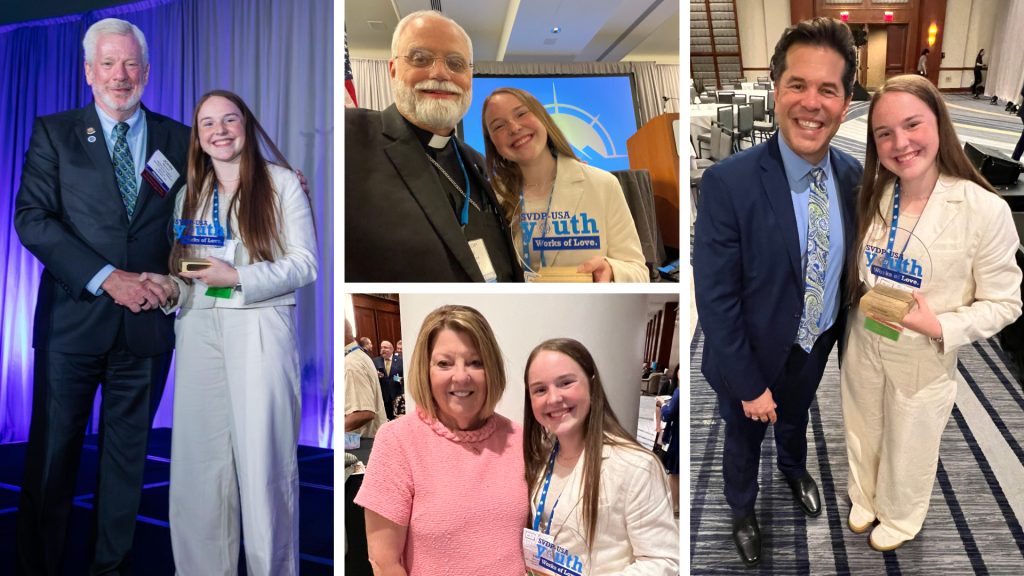
Young People in the Spotlight for the 2025 Young Vincentian Excellence Awards

By Linda Roghair, National Vice President of Youth, Young Adults & Emerging Leaders 


A Society-wide search for young people doing amazing work in their community is happening now.

Vincentians from across the U.S. are invited to nominate emerging young Vincentian servant leaders from their Conferences, Councils, and Special Works for two Young Vincentian Excellence Awards which will be presented at the National Assembly in Louisville, KY in August.

We are asking Vincentians to nominate a young person who serves the Society in their community, embodies servant leadership, and has a passion towards the Vincentian Charism. Nominations are open now until May 15, 2025.

Submission Requirements

  • Nominees must be involved in the Society of St. Vincent de Paul USAin some capacity (ie. Youth Conference, Youth University Conference, Adult Conference, Special Works, etc.).
  • Age groups: Youth 16-18 (High School) or Youth University (18-University age), and Young Adults (18-40)
  • Include photos, volunteer logs, etc. if possible
  • Nomination Form must be submitted via email to: YYAEL@svdpusa.org by May 15, 2025. Please include your Conference President, Council President, NCM & Regional Vice President when submitting a nomination.

Award recipients will be gifted a paid trip to participate in the 2025 National Assembly in Louisville, KY (August 28 – 30). Award recipients must commit to attending the National Assembly in order to receive the award.

Last year’s award winner Sarah of the Madison Wisconsin St. Vincent de Paul Youth Service Council had this to say:

“For me being a Vincentian means actively growing in my faith through allowing the grace of incarnational charity to fuel impactful service and beautiful friendships. Winning the Young Vincentian Excellence Award allowed me the opportunity to attend the National Assembly and connect with the Society on a larger scale. I am especially grateful for becoming a member of the YYAEL Team since this amazing group of passionate young people keep me connected to the Society while I am at a college with no current SVdP presence.”

Last year’s award winner Zoie Roghair of the Sioux Falls St. Michael Conference had this to say:

“I am grateful for what this award represents—opportunity, future growth, and community,” said Zoie Roghair of the Sioux Falls St. Michael Conference. “The award and Society have opened many doors for servant leadership, advocacy for the voiceless, friendships, and increasing the involvement of Youth and Young Adults. It is something I will cherish forever.”

Do you know a young person who serves the Society in their community, embodies servant leadership, and has a passion towards the Vincentian Charism? Please submit a completed form and any supplemental material to YYAEL@svdpusa.org by May 15, 2025.


5-8-25 Weekly Questions & Answers

5-8-25 Weekly Questions & Answers 1200 628 admin

May 8, 2025

Q: I am struggling with a decision made by our Conference.  I disagree with it.  How do I deal with this?

A: The decisions of a Conference or Council are made by the Conference or Council as a whole either through consensus or by a vote.  Once the decision is made, all members must abide by the decision whether they agree with it or not.

Q: What is the Society’s stand on comingled funds and parish collections?

A: In the Minimum Standards for Conferences that were approved by the National Council, number 11 states: The Conference maintains a bank account separate from the parish, under the control of the conference Treasurer. (Rule, Part III, Statutes 12 and 24, U.S. Manual, Pages 26 and 30) There shall be no comingling of funds.  The Society is in control of and responsible for all funds donated to it – the collection of those funds and the distribution of those funds.  A parish may hold a collection on behalf of the Society, but it must then turn over those funds to the Society in a reasonable time.  Sometimes the parish will count the collection and turn over the funds to the Society.  Sometimes the parish will put the collection in a bag and hand it to the Society for their counting.  In either case, the funds are given to the Society in a timely manner.  Each Conference, as part of their obligation to good stewardship, will provide to the parish at least an annual summary of its collections and expenditures.  No details are to be provided because of our emphasis on confidentiality.


8 de Mayo

P: Estoy batallando con una decisión tomada por nuestra Conferencia.  No estoy de acuerdo con la decisión.  ¿Cómo me enfrento a esto?

R: Las decisiones de una Conferencia o Consejo son tomadas por la Conferencia o el Consejo en su conjunto, ya sea por consenso o por votación.  Una vez tomada la decisión, todos los miembros deben acatar la decisión, estén o no de acuerdo con ella.

P: ¿Cuál es la posición de la Sociedad en cuanto a los fondos mezclados y las colectas parroquiales?

R: En las Guías Mínimas para las Conferencias que fueron aprobadas por el Consejo Nacional, el número 11 establece: La Conferencia mantiene una cuenta bancaria separada de la parroquia, bajo el control del Tesorero de la Conferencia. (Regla, Parte III, Estatutos 12 y 24, Manual de los Estados Unidos, páginas 26 y 30) No habrá mezcla de fondos.  La Sociedad tiene el control y es responsable de todos los fondos que se le donan: la recolección de esos fondos y la distribución de esos fondos.  Una parroquia puede realizar una colecta en nombre de la Sociedad, pero luego debe entregar esos fondos a la Sociedad en un tiempo razonable.  En ocasiones, la parroquia cuenta la colecta y entrega los fondos a la Sociedad.  En otras ocasiones, la parroquia pone la colecta en una bolsa y la entrega a la Sociedad para que la cuente.  En cualquier caso, los fondos se entregan a la Sociedad de manera oportuna.  Cada Conferencia, como parte de su obligación de buena administración, proporcionará a la parroquia por lo menos un informe anual de sus colectas y gastos.  No se proporcionarán detalles debido a nuestro énfasis en la confidencialidad.

5-1-25 Weekly Questions & Answers

5-1-25 Weekly Questions & Answers 1200 628 admin

May 1, 2025

Q: Can a Conference or Council accept a contribution from a member or any donor if the member or donor wants that contribution to be earmarked for a specific individual person that the Conference or Council is or has served? 

A: The answer is “yes, if…” the Conference or Council has made a specific determination that it wants to help the individual or family in question at this time and is seeking funding to do so.  The Council typically would not be doing this since direct aid is typically given through a Conference.  In our Annual Reporting, we don’t ask for direct aid from Councils except through special works.

Q: Where is it stated that an active member MUST attend regular Conference meetings.  Article 5 of our Bylaws is not specific with details.

A: Article 5 is a replication of the Rule, Part III, Statute 3.  Briefly, an Active Member is Catholic, attends meetings regularly, and participates in Conference works and activities.  A true Active Member will make an effort to attend all meetings. He/she will want to be with fellow Vincentians as often as possible. With that in mind, the answer is not based on a percentage.  An Active (Full) Member will attend the far majority of all meetings.


1 de Mayo

P: ¿Puede una Conferencia o Consejo aceptar una contribución de un miembro o de cualquier otro donante, si el miembro o donante desea que esa contribución se destine a una persona especifica a la que la Conferencia o el Consejo está o ha servido?

 R: La respuesta es “sí,” si la Conferencia o el Consejo ha tomado una determinación específica de que desea servir a la persona o familia en cuestión en este momento y está buscando fondos para hacerlo.  Normalmente, el Consejo no lo haría, ya que la ayuda directa suele prestarse a través de una Conferencia.  En nuestro Informe Anual, no pedimos ayuda directa a los Consejos, excepto a través Trabajos Especiales.

P: ¿Dónde dice que un miembro activo DEBE asistir a las reuniones regulares de la Conferencia?  El artículo 5 de nuestros Estatutos no es muy específico con esos detalles.

R: El Artículo 5 es una réplica de la Regla, Parte III, Estatuto 3.  En resumen, un miembro activo es católico, asiste a las reuniones con regularidad y participa en los trabajos y actividades de la Conferencia.  Un verdadero Miembro Activo hará un esfuerzo por asistir a todas las reuniones. Querrá estar con otros Vicentinos tan a menudo como sea posible. Teniendo esto en cuenta, la respuesta no se basa en un porcentaje.  Un Miembro Activo (en Pleno Derecho) asistirá a la gran mayoría de todas las reuniones.

Feature: Annual Reporting is an Essential Membership Requirement

Feature: Annual Reporting is an Essential Membership Requirement 800 800 admin

SVdP Annual Reporting is an Essential Membership Requirement

By Pam Hudson Johnson, National Director of Membership Services

Annual reporting is an essential requirement for all Councils and Conferences.

On May 1st at 11:59pm, the final deadline for online Annual Reports data entry closes (that is midnight tonight!). All Councils and Conferences must submit an annual report.

Why Annual Reporting is So Important:

Accountability and Compliance: The annual reports help maintain proper record-keeping and compliance with the requirements of our tax-exempt status.

Solidarity and Income Calculation: The current formula is based on income shown in the annual reports.  If a Council or Conference does not submit an annual report, it causes significant delays in the solidarity process.

Budgeting and Operations: Delays in reports cause delays in the budgeting process and affect the operations of the National Council.

Conference Annual Reports are due by November 30; District Council Reports by December 31; and (Arch)Diocesan Council Reports by January 31. Any reports not entered before midnight must be submitted in paper form.

Each year our national consolidated annual report publication is shared with our members nationally and internationally, U.S. Bishops, donors and contributors, elected officials and many more of the great works the Society is doing in the U.S. to serve our neighbors in need. This is our way of telling our story, and the good work we are doing to serve our neighbors in need to alleviate poverty in our communities. Find a copy of the 2022-2023 National annual report here.

To better understand the reporting structure, based on our formal structure, please see details below:

  1. For those dioceses which have an Archdiocesan or Diocesan Council: This is based on the formal structure of the Society – not on your legal name. Some Councils have improperly called themselves a Diocesan Council even though they are really a District Council. An Archdiocesan Council or a Diocesan Council has District Councils reporting to it. An Archdiocesan Council or a Diocesan Council has NO Conferences reporting directly to it.

An Archdiocesan Council or a Diocesan Council will provide multiple reports as appropriate. At a minimum, it will provide the (Arch)Diocesan Council Data, the Consolidated Districts Report and the Consolidated Conferences Report. In addition, if the (Arch)Diocesan Council operates any stores, it will provide a single store report for each store. If the (Arch)Diocesan Council operates any Special Works, it will provide a single Special Work Report for each separate Special Work.

  1. For all District Councils: This applies to every District Council regardless of whether they belong to an Archdiocesan Council or a Diocesan Council or are simply a standalone District Council. A District Council has Conferences reporting directly to it.

A District Council will provide multiple reports as appropriate. At a minimum, it will provide the District Council Data and the Consolidated Conferences Report. In addition, if the District Council operates any stores, it will provide a single store report for each store. If the District Council operates any Special Works, it will provide a single Special Work Report for each separate Special Work.

  1. For all Conferences: At a minimum, a Conference will provide the Annual Conference Report. In addition, if the Conference operates any stores, it will provide a single store report for each store. If the Conference operates any Special Works, it will provide a single Special Work Report for each separate Special Work.

Things to Know and Common Misconceptions:

-Some regions have believed new Councils and Conferences do not need to submit reports in their first year, but this is incorrect. All Councils and Conferences must submit an annual report each year.

-All Vincentians are accountable for the work they do and they are required, at all levels, to do proper record keeping. Remember that the key to good reporting is keeping good records throughout the reporting year [i.e., monthly and quarterly reporting].

-The National Council does not require quarterly report filings. Conference quarterly reports are provided by the national office as a courtesy for completion by Conferences at the request of their District Councils.

If you have any questions regarding annual reporting, contact Pam Hudson Johnson, National Director of Membership Services at phudson@svdpusa.org  or (314) 576-3993 extension 214. We are One Society!

Bridges of Charity: Seattle and Kerala United Through International Twinning

Bridges of Charity: Seattle and Kerala United Through International Twinning 680 510 admin

Bridges of Charity: Seattle and Kerala United Through Twinning

Through the International Twinning Program of the Society of St. Vincent de Paul, Vincentians are building bonds of faith, friendship, and service across continents. U.S. Conferences are walking in solidarity with their counterparts in countries where poverty is profound and resources are scarce. Through spiritual support and financial assistance, they are bringing Christ’s love to the most vulnerable.

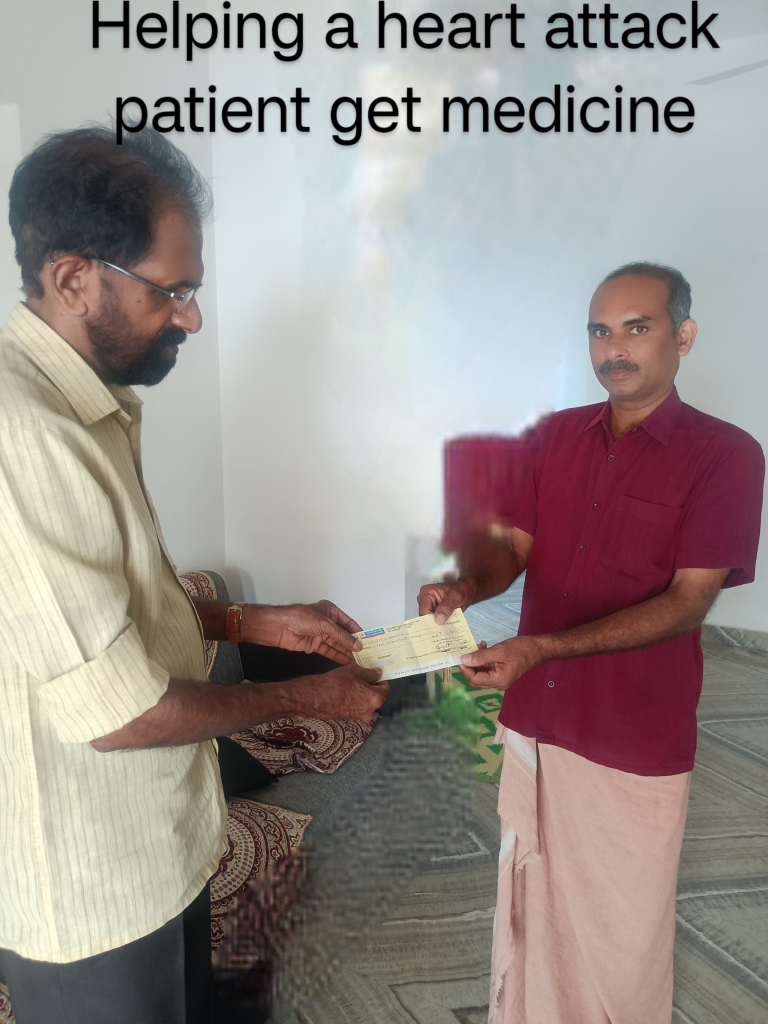
One inspiring example is the twinning partnership between the St. James Conference in Seattle, Washington and the St. Mary’s Conference in Kerala, India. This relationship has blossomed into a lifeline for families in need, enabling vital charitable works in the southern region of India—an area still recovering from the economic impacts of the COVID-19 pandemic, monsoon flooding, and ongoing unemployment challenges.

With support from the St. James Conference, St. Mary’s is able to provide much-needed financial assistance for medical care, housing, education, food, and other essential needs to low-income families and elderly individuals in their parish and surrounding communities. The impact has been deeply felt on both sides of the ocean.

“The International Twinning Program has impacted us spiritually since we are twinning with a place that has a bond with one of our Conference members whose family is in India,” said Blake Steller, President of the St. James Conference. “It helps us remember that our impact goes beyond our community.”

The partnership has not only fostered a sense of global solidarity but also deepened the mission and awareness within the Seattle-based Conference. When asked if he would recommend the program to others, Steller added:

“Absolutely. Twinning helps our Conference recognize that the work we do can spread and help people abroad—it expands our understanding of what it means to serve.”

The gratitude from the St. Mary’s Conference is heartfelt and profound. N.L. Jose, Secretary of the Conference, shared this message:

“We are able to provide some badly needed financial assistance—for medical, housing, education, food, and so on—to the poor people around us with your help. We are really grateful to you for that and eagerly look forward to your continued assistance to our Conference.”

This exchange of charity, communication, and prayer continues to strengthen both communities and bear lasting fruit in the lives of those served.

If your Conference is not yet involved in Twinning, now is the time to consider forming one. Twinning transforms lives—not only of those served, but of those serving.

To learn more about starting a Twinning relationship and discover the areas of greatest need, contact the National Council or visit: https://ssvpusa.org/international-twinning

4-24-25 Weekly Questions & Answers

4-24-25 Weekly Questions & Answers 1200 628 admin

April 24, 2025

Q: We got a call from an attorney handling an estate.  The specification was for funds to go to a Conference that no longer exists. The attorney indicates the funds were specified to serve the needy. Any suggestions?

A: If the attorney agrees, the funds can be turned over to the appropriate Council with the restriction that the funds be used to help people within the boundaries of the former Conference.  The District Council can then distribute those funds as necessary to Conferences assisting people within those boundaries.

Q:  If a resignation is received in writing from a Conference member — do they need to rejoin the Conference again as a new member? Please clarify this for us.

A: The Rule, Part III, Statute 3 provides a process for admission.  Ultimately, it is the decision of the Conference who may join. However, once they are members, they cannot be removed except by the National President.


24 de Abril 

P: Recibimos una llamada de un abogado que maneja un patrimonio.  La especificación era que los fondos fueran a una Conferencia que ya no existe.  El abogado indica que los fondos fueron específicamente para servir a los necesitados. ¿Alguna sugerencia?

R: Si el abogado está de acuerdo, los fondos pueden ser entregados al Consejo apropiado con la restricción de que los fondos se utilicen para ayudar a las personas dentro de los límites de la antigua Conferencia.  Después, el Consejo de Distrito puede distribuir esos fondos según sea necesario a las Conferencias que ayudan a las personas dentro de esos límites.

P: Si se recibe una renuncia por escrito de un miembro de la Conferencia, ¿es necesario que se reincorpore a la Conferencia nuevamente como nuevo miembro? Por favor, aclárenos esto.

R: La Regla, Parte III, Estatuto 3 establece un proceso de admisión.  En última instancia, es decisión de la Conferencia de quién puede adherirse.  Sin embargo, una vez que son miembros, no pueden ser removidos sino únicamente por el Presidente Nacional.

Sign Up for Our Newsletter

Privacy Preferences

When you visit our website, it may store information through your browser from specific services, usually in the form of cookies. Here you can change your Privacy preferences. It is worth noting that blocking some types of cookies may impact your experience on our website and the services we are able to offer.

Click to enable/disable Google Analytics tracking code.
Click to enable/disable Google Fonts.
Click to enable/disable Google Maps.
Click to enable/disable video embeds.
Our website uses cookies, mainly from 3rd party services. Define your Privacy Preferences and/or agree to our use of cookies.
Skip to content