By Timothy P. Williams, Senior Director of Formation and Leadership Development
The challenge of poverty seems always to be urgent, to demand our immediate attention and action. As people of action, Vincentians can even sometimes become impatient with one another as we seek to put into motion new plans and new works to serve the neighbor. St. Vincent would ask us to slow down, reminding us that “God is never rushed. He does all things in their own good time.” [Abelly, Bk I, 227]
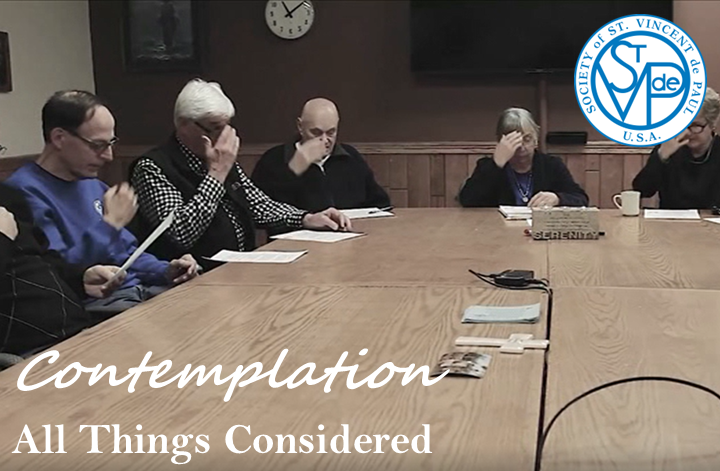
Surely, the hungry need not wait to be fed, but in developing new special works, collaborations with other organizations, or long-term plans with our communities, haste is not a virtue. It is partly for this reason that it is the Society’s practice to make decisions by consensus of the members. Although this might appear at times to be a very slow way of making plans, each of us has particular insights into God’s will for us, and none of us can know in advance which of us the Holy Spirit may choose to inspire. Seeking consensus is not about finding a middle ground but about finding the highest ground – the will of God.
Jesus Himself, Vincent pointed out, bided His time for thirty years before embarking on His mission, and even then, He did not choose to establish His church worldwide and all at once. On the contrary, He only laid the groundwork, entrusting the apostles, and in turn, us, to continue the work. If it is God’s will we seek, then it is in God’s way that we can best accomplish it. If, on the other hand we “act precipitously, we run the risk of thwarting the designs of God.” [Ibid, 228]
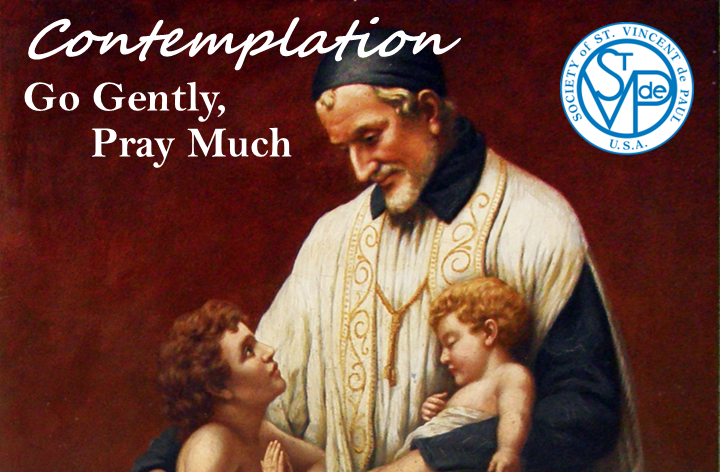
“What should we do, then?” Vincent asks. “Go gently, pray much to God and act in union of heart.” [Ibid, 227] The work that we do, and the works that we seek to build, are for the poor, but also are meant to draw us closer to holiness, which comes not from building a resume of good works, but from doing God’s will.
After all, St Louise remind us, “It is not enough to visit the poor and to provide for their needs; one’s heart must be totally purged of all self-interest”. [SWLM, L.217] It is when we do God’s will for God’s sake, not our own, we can trust that God will provide what is needed for the work to succeed. This also requires us to measure success in God’s terms, for “We’re mistaken…if we base the outcome of our little works on worldly esteem”. [CCD XII:231] Discerning God’s will together, however long it takes, is the path we are called to take.
“If the work we propose is from him it will succeed and endure, but if it is solely a human enterprise it will not do much good, nor will it last long.” [Abelly, Bk I, 228]
Time is on God’s side, and God is on our side.
Contemplate
Does my Conference sometimes rush to “do something” without fully, prayerfully discerning God’s will?
Recommended Reading
A Month with St Vincent de Paul – and take a whole month to read it.
Contemplación: Avanzar con dulzura, orar mucho
Traducción de Sandra Joya
El desafío de la pobreza parece siempre urgente, exige nuestra atención y acción inmediatas. Como personas de acción, los Vicentinos a veces incluso podemos impacientarnos unos a otros al intentar poner en marcha nuevos planes y nuevas obras para servir al prójimo. San Vicente nos pedía que fuéramos más despacio, recordándonos que «Dios nunca tiene prisa. Él hace todas las cosas a su debido tiempo». [Abelly, Libro I, 227]
Sin duda, los hambrientos no necesitan esperar a ser alimentados, pero al desarrollar nuevas obras especiales, colaboraciones con otras organizaciones o planes a largo plazo con nuestras comunidades, la prisa no es una virtud. En parte por esta razón, la Sociedad suele tomar decisiones por consenso entre sus miembros. Aunque a veces parezca una forma muy lenta de hacer planes, cada uno tiene una visión particular de la voluntad de Dios para sí mismo, y nadie puede saber de antemano a quién inspirará el Espíritu Santo. Buscar el consenso no se trata de encontrar un punto medio, sino de encontrar el punto más alto: la voluntad de Dios.
Jesús mismo, señaló Vicente, esperó treinta años antes de embarcarse en su misión, e incluso entonces, no eligió establecer su iglesia mundial y de una sola vez. Al contrario, solo sentó las bases, confiando a los apóstoles, y a su vez, a nosotros, la continuación de la obra. Si buscamos la voluntad de Dios, entonces es a su manera como mejor podemos lograrla. Si, por el contrario, «actuamos precipitadamente, corremos el riesgo de frustrar los designios de Dios». [Ibíd., 228]
«¿Qué debemos hacer, entonces?», pregunta Vicente. «Ir con dulzura, orar mucho a Dios y actuar con unidad de corazón». [Ibíd., 227] El trabajo que realizamos, y las obras que buscamos construir, son para los pobres, pero también tienen como objetivo acercarnos a la santidad, que no proviene de acumular buenas obras, sino de hacer la voluntad de Dios. Después de todo, Santa Luisa nos recuerda: «No basta con visitar a los pobres y proveer a sus necesidades; es necesario que el corazón esté totalmente purificado de todo interés propio». [SWLM, L.217] Es cuando hacemos la voluntad de Dios por amor a Dios, no por la nuestra, que podemos confiar en que Dios proveerá lo necesario para que la obra tenga éxito. Esto también requiere que medamos el éxito según los criterios de Dios, pues «Nos equivocamos… si basamos el resultado de nuestras pequeñas obras en la estima mundana». [CCD XII:231] Discernir juntos la voluntad de Dios, por mucho tiempo que lleve, es el camino que estamos llamados a seguir.
«Si la obra que nos proponemos proviene de Él, tendrá éxito y perdurará, pero si es solo una empresa humana, no servirá de mucho ni durará mucho». [Abelly, Libro I, 228]
El tiempo está del lado de Dios, y Dios está de nuestro lado.
Contemplar
¿A veces mi Conferencia se apresura a hacer algo sin discernir plenamente y con oración la voluntad de Dios?