• Search the Site

Upcoming Events

Feature: Poverty Program committees

Feature: Poverty Program committees 1280 853 admin

A Tradition of Transformative Action 

By Steve Uram, National Director of Poverty Programs

The Society of St. Vincent de Paul is composed of individuals who seek personal holiness through works of charity – in other words, we are called to action. When you think of advocacy, your mind may immediately move to our National Voice for the Poor Committee, legislative advocacy through Voter Voice, or to our new Washington DC office, led by National Director of Public Policy and Advocacy, Ingrid Delgado. These groups take action to influence policy and change the systems that trap people in poverty.

It should come as no surprise that our other National Poverty Program Committees are also all about action: our new Poverty Action Committee and our Homelessness Prevention Committee. Both committees meet monthly over video chat and are open sessions that Vincentians can listen to.

The Poverty Action Committee is charged with engaging more Councils and Conferences in systemic or transformational change. Valuable webinars are available to watch, like last fall’s webinars on “The Benefits Cliff” (Part 1, Part 2).

The Poverty Action Committee is focused on how to encourage Conferences and Councils to build and expand their systemic change programs.  One way to inspire such change is through the Systemic Change Grant.  This annual grant provides up to $20,000 a year for Councils or Conferences to create or expand a transformational program that will shift the conditions that hold poverty in place. The grant application asks Conferences and Councils to draw from encounters with their neighbors, survey the needs of their community, and build sustainable and replicable programs.

“I have reviewed systemic change grant applications for over four years and have seen the innovative programs presented by Conferences and Councils to address the barriers faced by our neighbors,” said Deb Zabloudil, Chair of the Poverty Action Committee.  “This grant program allows conferences and councils the opportunity to pilot a new program or implement a more established program such as reentry, workforce development, or Getting Ahead, that are prevalent across the Vincentian Family network.”

The grant application, scoring rubric, and a recording of last week’s informational webinar can be found on our websiteApplications are due July 11th.

The Homelessness Prevention Committee is charged with providing guidance and best practices in homelessness prevention and shelter diversion to Councils and Conferences. They are working with likeminded national homelessness organizations to create a series of training courses and toolkits for Vincentians, continuing our long-standing mission to prevent homelessness in our local communities.

Denise Fisher, Chair of the Homelessness Prevention Committee said of her committee, “Our goal is to help Vincentians become confident in their knowledge of the homelessness response system and potential interventions to help neighbors avoid the trauma of homelessness. By using best practices in program design, we hope to help councils and conferences become more intentional about who they are serving, more effective in the way they are serving, and more confident in their ability to communicate and advocate for homelessness prevention efforts in their community.”

“Each one of us plays a vital role in this beautiful network of charity. We as Vincentians know we need to work together to tackle issues of poverty: we cannot do it alone. We cannot feed the hungry, shelter the unsheltered or pay for all our neighbor’s utilities by ourselves: we gather up, go out two by two to do that work together,” said Bobby Kinkela, Chair of the Voice for the Poor Committee. “Countless small acts of service combine to make meaningful impact in the world.”

Advocacy and action are, by definition, transformative. Those actions will become part of your culture. That culture will become a tradition. That’s how systemic or transformational change takes place, one action step at a time. Ask yourself, do you regularly make advocacy and action a part of your meeting agenda? If not, consider how you might do that.

SVdP Poverty Programs consist of the Homelessness Prevention Committee, the Poverty Action Committee, the Voice for the Poor and the following shared interest groups: Reentry, Workforce Development, Housing, and Getting Ahead.

Feature: How SVdP Madison’s Work Release Partnerships Support Successful Reentry

Feature: How SVdP Madison’s Work Release Partnerships Support Successful Reentry 944 655 admin

Rebuilding Lives: How SVdP Madison’s Work Release Partnerships Support Successful Reentry

By Brooke Trick – Senior Director of Retail Operations – North Central Region

In 2024, nearly 1.8 million people were incarcerated in state or federal prisons or local jails across the United States. With one of the highest incarceration rates in the world, the country also faces a troublingly high rate of recidivism—individuals who reoffend after release. A major contributing factor? Nearly 60% of those reentering society remain unemployed one year after release.

Recognizing this barrier, in 2018, the Society of St. Vincent de Paul Madison started a work-release partnership with Oakhill Correctional Institution to offer incarcerated individuals job opportunities that would provide valuable work experience and financial support upon reentry. Following DOC work release requirements, individuals unload trucks and work in the hardline processing departments at the SVdP  Centralized Processing Center.

During the shutdown, SVdP Madison partnered with Nehemiah, a local faith-based organization that supports formerly incarcerated men through housing and employment. Together, we created alternative job opportunities for Nehemiah’s reentry program participants, ensuring continued access to meaningful work and support through a difficult time.

Now, the collaboration between SVdP Madison, Oakhill, and Nehemiah is stronger than ever. The three organizations are working together to ensure that individuals currently in the work release program not only gain employment while incarcerated but also receive housing and community support upon release. This comprehensive approach helps break the cycle of recidivism and supports long-term success.

John Cobb, Associate Director of Retail Operations at SVdP Madison, initiated these collaborations. He candidly shared his initial hesitation:

“I had many of the same thoughts and stigmas that others do when you talk about incarceration,” Cobb said. “But after working with the Oakhill staff, my perspective changed. I was humbled. These individuals have served their time. They deserve a chance at a new life and shouldn’t be held back by the burden of their record.”

Sergeant Craig Bruesewitz, Work Release Coordinator at Oakhill, also emphasized the power of this opportunity:

“They’ve put aside real temptations to get to this level and now have a chance to make some money. Taking advantage of opportunities during incarceration is key to a successful release. When these guys succeed, it benefits the whole community.”

Cobb agrees that success requires dedication from all sides.

“This isn’t a program where you can set it and forget it,” he said. “We follow DOC rules, hold participants accountable, pay a competitive wage, and treat them the same as all our employees. When they leave, they’re prepared for today’s workplace.”

Since the program’s start, 104 formerly incarcerated men have found employment through SVdP Madison. Several have remained in the area, continuing to work with SVdP or securing new jobs and housing opportunities with SVdP support.

One such employee, King*, is a testament to the program’s impact. He credits Oakhill’s work-release program and SVdP’s support for his successful reintegration:

“I want to be a beacon to others who’ve been in similar situations—to let them know you can make it happen, and your past doesn’t have to shape your future,” King said. “Being given that opportunity was a game changer. It helped me establish myself. It gave me a chance to start over.”

Implementing reentry and work-release programs in our retail operations wasn’t something SVdP Madison had considered before 2018. But the results have been deeply rewarding. These experiences have increased awareness among our management and staff about the importance of programs and legislation that prioritize second chances and uphold the dignity of all individuals.

Housing, education, and employment are essential to reducing recidivism. A recent report by the Council of Criminal Justice found that securing employment after incarceration can reduce the chance of reoffending by 61%. Addressing these needs not only helps returning citizens reintegrate successfully, but it also contributes to safer, healthier communities.

When asked what he would say to others considering similar programs — or to individuals in prison offered the opportunity — King’s advice was simple but powerful:

“If someone reaches out to give you a hand up, take it. And give it your all. The more programs like these, the more chances there are for real change.”

Feature: SVdP Reentry Program

Feature: SVdP Reentry Program 1474 828 admin

Faith-Based Mentorship for Individuals Reentering Society

By Judy Dietlein, Western Region RVP

Each year more than 600,000 individuals are released from state and federal prisons. Another nine million cycle through local jails. Nationally, nearly 30% of those we serve have been directly impacted by incarceration.

SVdP Reentry Programs are designed to assist citizens leaving jail or prison that are returning to society. These programs help citizens successfully transition to their community after they are released, and lives are transformed every day.

Has your Council or Conference ever considered starting a reentry program? There are several SVdP Reentry Programs operating throughout the nation that could be a valuable resource for you. The St. Vincent de Paul St. Peter Claver Prison Ministry in Orlando, featured in this video, was one of National Council’s original Immersion/Reentry programs. This ministry has recently partnered with an organization called Promising People, which trains former inmates in the electric trade using virtual reality.

You may also connect with our Shared Interest Group in Reentry/Immersion, which embodies the very action of transformational change. Just as mentoring is a key component in an effective Reentry program, members of this shared interest group can offer mentoring to any SVdP Council or Conference that wants to begin a program in their community.

In the same way Conferences respond to the specific needs of their communities, so do Reentry programs focus on the needs in their local areas – perhaps the local jail or a nearby prison. Every program takes on key components and designs a program that fits the needs of their local returning citizens. Most are challenged first with the need for housing and jobs to create stability in their lives. Community and spiritual support are also offered along the way.

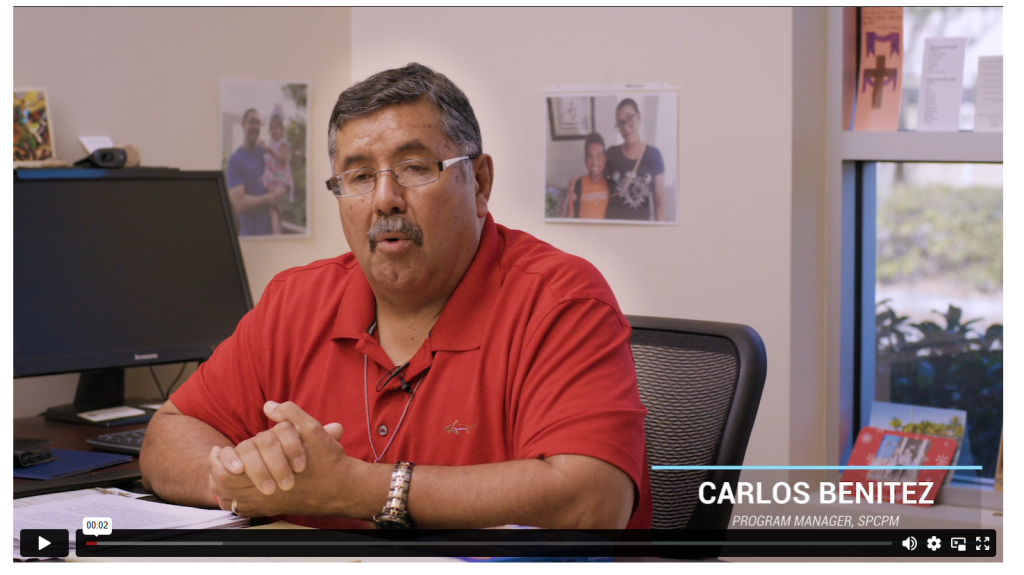
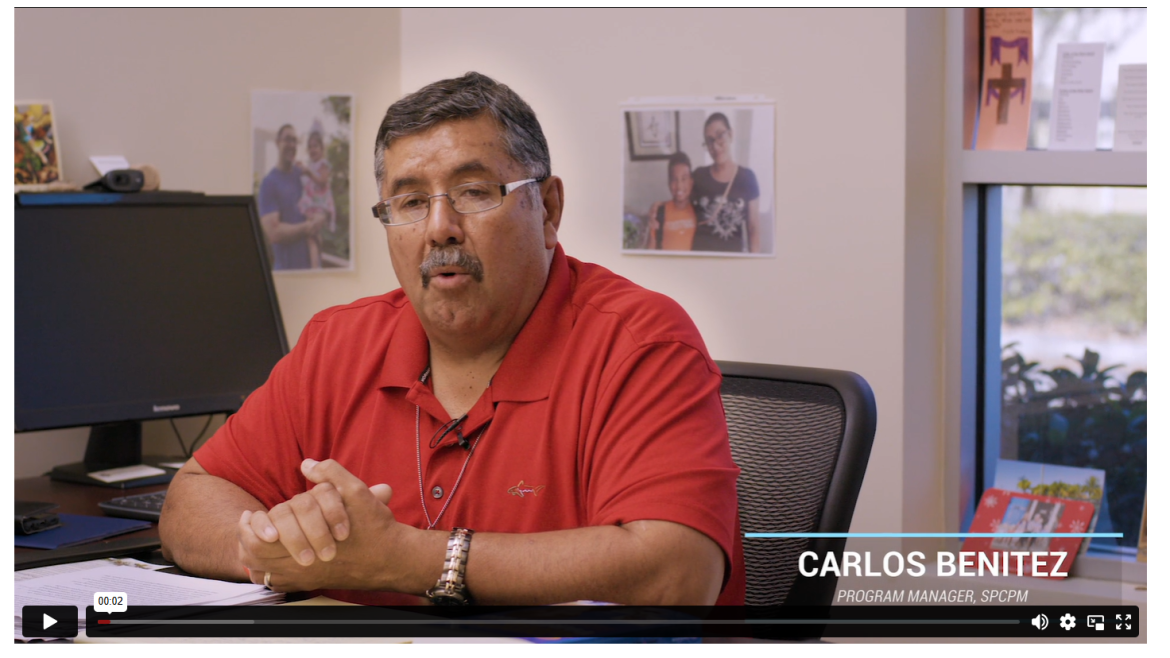
“Our mission and our guiding principles are those acts of mercy – feeding the hungry, clothing the naked…and visiting the people that are in prison,” said Carlos Benitez, Program Manager for St Peter Claver Prison Ministry. “We go into prison bringing spirituality, and compassion and kindness and goodness, to the folks who don’t get that in prison.”

You can learn more about our Reentry/Immersion program on our website. Members of the Shared Interest Group are happy to share their stories and best practices. Additionally, you can reach out to Steve Uram, National Director of Poverty Programs with the National Council.

SVdP Poverty Programs consist of the Homelessness Prevention Committee, the Poverty Action Committee, the Voice for the Poor and the following shared interest groups: Reentry, Workforce Development, and Getting Ahead

Sign Up for Our Newsletter

Privacy Preferences

When you visit our website, it may store information through your browser from specific services, usually in the form of cookies. Here you can change your Privacy preferences. It is worth noting that blocking some types of cookies may impact your experience on our website and the services we are able to offer.

Click to enable/disable Google Analytics tracking code.
Click to enable/disable Google Fonts.
Click to enable/disable Google Maps.
Click to enable/disable video embeds.
Our website uses cookies, mainly from 3rd party services. Define your Privacy Preferences and/or agree to our use of cookies.
Skip to content