Do The Good That Presents Itself
“Religion that is pure and undefiled before God, the Father, is this: to visit orphans and widows in their affliction.” (James 1:27)
Sometimes the greatest moments of mercy begin with small, everyday choices, the knock on a neighbor’s door, a loaf of bread delivered, a prayer whispered for someone alone. Recently I watched a volunteer gently listen to an elderly neighbor describe her loneliness. In that quiet moment, the Spirit was as present as in any cathedral. For us, this is Vincentian Spirituality alive: a faith that gets its hands dirty. Vincentian Spirituality is not just an idea reserved for theological textbooks; it is the fuel that keeps us running when the “low fuel” light has been blinking for quite some time.
As National President, I find myself continually grateful for the gifts our Vincentian tradition offers us, just as it has for two centuries, and even back to the days of St. Vincent de Paul himself. It strengthens us and shapes us, calling us to face adversity together, rooted in faith, animated by love, and driven by action. I admit there are days I feel like I am a GPS recalculating routes through road closures and mystery detours of life. Maybe you, like me, have felt like that GPS, always recalculating, never quite sure of the way. But our Vincentian tradition promises that whatever the detour, God walks with us and hands us a map. A map that never goes out of date. Inspired by Vincent’s compassion and Ozanam’s vision, Vincentians bring hope to troubled times by turning faith into fearless action.
A Legacy Born from Trouble
When the Society of St. Vincent de Paul was founded in 1833, Frédéric Ozanam and his companions were young, impassioned, and confronted with a difficult world. Paris was rife with poverty, economic uncertainty, and the aftershocks of revolution. The founding members, challenged to match Christian words with deeds, found themselves at a crossroads. Their answer? To step out into the streets, to visit the poor personally, to let service be their response to a world longing for hope. Their faith wasn’t theoretical, it was tested, prodded, and (often I think) challenged by the world they saw around them. Fortunately, Ozanam and his friends understood that faith is a verb; it acts, visits, listens, and walks into uncomfortable places, even if it sometimes stumbles over cobblestones along the way.
Their answer was practical and elegant: serve the poor, meet Christ in the forgotten, and if you drop a loaf of bread on the way, pick it up and keep going. Vincentian Spirituality encouraged them, even in a world that sometimes looked more chaotic than compassionate, to “do the good that presents itself,” knowing God was walking with them.
The Vincentian Mode
This fierce, practical hope springs from our patron, St. Vincent de Paul. Living in 17th-century France, Vincent experienced more than his share of trouble; wars, plagues, famine, and the soul-crushing poverty of both body and spirit. He faced personal adversity, including enslavement and loss. Yet what Vincent learned was that God’s will is revealed not just in quiet moments of prayer, but also in the urgent needs of the day. In 1617, he discovered a family near starvation in Châtillon, an event he later described as a spiritual turning point. Vincent rushed to the pulpit, inspired parishioners to act, and soon the family was cared for and a ministry had begun. Vincent discovered God in the faces of the poor, and as he liked to remind people, “Go to the poor: you will find God.”
Vincent was a man of deep prayer, but he was also a person of action. He looked at every crisis as a chance to respond with both compassion and competence. When children were abandoned, he rescued them; when prisoners languished, he consoled and advocated for them; when the sick suffered, he organized care. For Vincent, holiness meant rolling up his sleeves and moving toward the places where pain and uncertainty were thickest, always with trust in God’s loving guidance. Vincent believed serious work was best done with a joyful, even playful, heart. One letter brims with self-effacing humor: “To speak truly of me, you would have to say that I am a farmer’s son, who tended swine and cows, and add that this is nothing compared to my ignorance and malice.” If St. Vincent could laugh at himself, surely, we can see the light side of our own tangled efforts at charity
Virtues for Uncertain Times
The strengths of Vincentian Spirituality are human, really, and are especially relevant today. Selflessness, zeal, humility, simplicity, and gentleness, none are reserved for saints alone. Each of these virtues has proven to be more than mere ideals; they are strength for the long journey, especially when external circumstances seem overwhelming.
If you have ever shown up to a visit with your shirt inside out or explained “the Society” to someone who thought you were selling home insurance, you’re sharing in the humility and humor of our founders. Gentleness and joy are not optional extras; they are the signs of God’s Spirit alive in us.
Action Is Our Spirituality
We Vincentians know that spirituality leaps from reflection to action, especially when the world spins sideways. One of the most beautiful aspects of our Vincentian tradition is this, the insistence that spirituality and action are intertwined. “Do the good that presents itself.” This directive grounds us, even as it lifts our sights toward God. We are called to holiness, yes, but holiness that feels the needs of others and moves us to do something about it. It means looking for opportunities to serve, especially when things seem most uncertain. The good that presents itself is rarely tidy. The work, visiting the lonely, stocking food pantry shelves, cooking meals, listening with patience (or, at least, a smile) is sacred, even when the details are messy.
As times change, so too do the faces of need: the lonely elderly, children suffering from addiction, refugees, new families living on the margins. The specifics evolve, but our call does not. St. Vincent believed that God’s providence is continually revealed through the events unfolding around us, and that, often, the “good that presents itself” is not glamorous or easy. It is found in listening, comforting, advocating, and quietly standing by someone who feels alone.
Our Shared Journey
Whether responding to disasters, shopping for groceries on a budget rivaling St. Vincent’s, or offering prayer and presence, the Vincentian spirit carries us through. In an age of uncertainty, it’s tempting to hang a “closed for repairs” sign. Instead, we check our shoes for mud, wipe our brow, and trust Christ to meet us on the threshold, smiling at our efforts, loving us through every fumble and flourish.
For us, in a world torn by violence, upheaval, and division, it is easy to feel overwhelmed by the nightly news or the uncertainty rippling through our communities. Yet Vincentian charity offers another way. Rather than meeting confrontation with more confrontation, we ground ourselves in compassion, dialogue, and hope-filled action. St. Vincent understood that violence begins where love is absent, so our vocation is to bring love to the places the world forgets. As Vincentians, we respond not with resignation but with the courage to build communities of care, humbly listen, and stand as peaceful witnesses, showing that Christian love, lived boldly and practically, has the power to heal even the deepest wounds of our time.
Even as chaos swirls around us, threatening to pull our hearts into fear or despair, our Vincentian calling gently reminds us that hope is not blind optimism but deep trust in God’s presence amid the storm. The Gospel dares us to believe that God is still at work, even and especially when life looks most uncertain. Moved by this hope, we refuse to be paralyzed by anxiety. Instead, we step forward in faith and serve with compassion. Small acts of kindness become seeds of renewal, gentle words become anchors of calm, and our hands and hearts bring Christ’s light into the world. In this way, we help transform confusion into community, sadness into solidarity, and uncertainty into action rooted in hope.
So, let us not grow weary. Let us keep returning to prayer, to service, to joy, and yes, even to holy laughter. It is, perhaps, how we know Christ is present: when we love well, serve faithfully, and can still come together, look back on our work, and grin at the wonderful, wild journey God has given us.
We are bound together across time and place, from the streets of Paris in 1833 to the kitchens and porches of America today, from the war-torn villages of 1600s France to the homes and hearts found in Anytown, USA this very moment. By a spirituality that is best lived in service, best expressed in compassion, and best sustained by trusting in Divine Providence.
Thank you for journeying with the Society. Thank you for living the Vincentian Spirit, especially when times are hard. Let’s all commit to keep returning to prayer, to laughter, to the sturdy love that binds us. This is how we preach the Gospel, not just in words, but with sleeves rolled up and smiles shared at supper’s end.
May we meet God in every humble act of service today. May we each continue to find in our tradition the courage, faith, and practical hope our communities so deeply need.
Peace and God’s blessings,
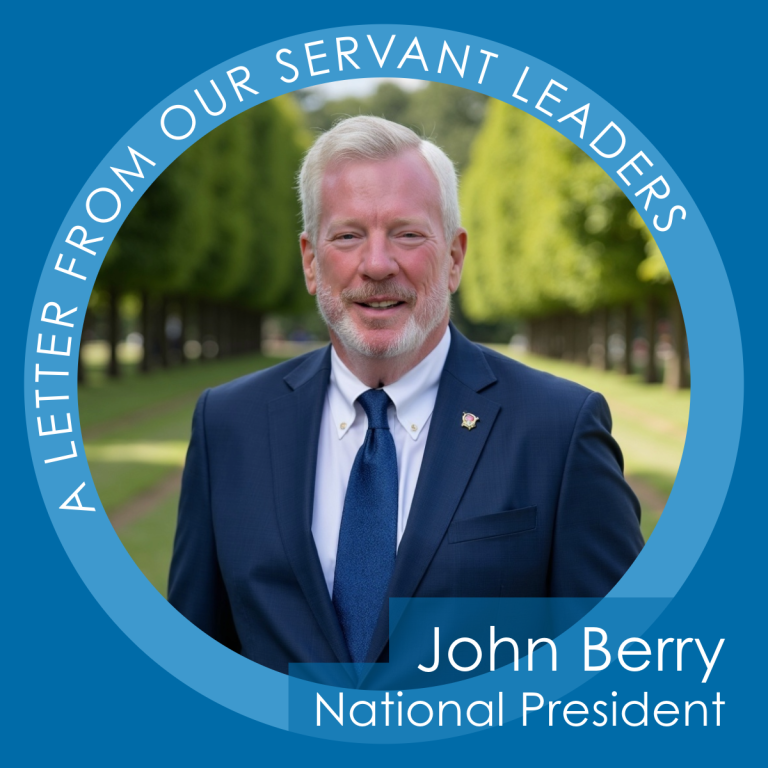
John


I liked that so much that I read it twice, and might write a few snippets on an index card to refer to over the next few days, & let it sink in some more. Very well said! : )