• Search the Site

Uncategorized

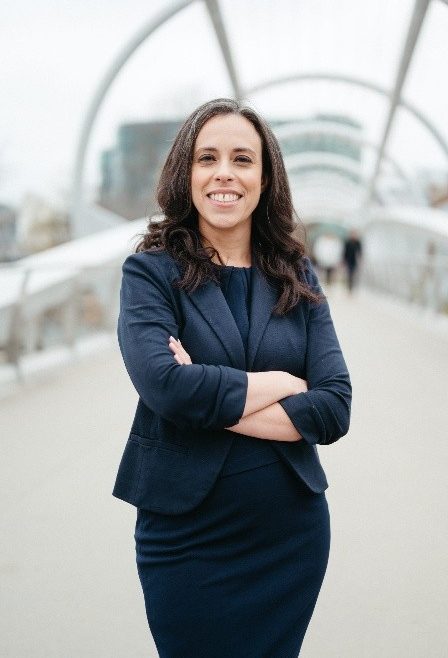
Q&A with Ingrid Delgado, SVdP National Director of Public Policy and Advocacy

Q&A with Ingrid Delgado, SVdP National Director of Public Policy and Advocacy 448 346 Devine PR Postings

When Ingrid Delgado talks about her journey into advocacy, she often returns to the stories she grew up hearing around her family’s dinner table. Her parents, immigrants from Cuba, refused to denounce their Catholic faith, even when it meant her father became a political prisoner and her mother was barred from pursuing the studies she wanted.

Those early experiences planted the seeds for a vocation that has since taken Ingrid from missionary work in the Dominican Republic to roles with Catholic Charities, the Florida Conference of Catholic Bishops, and the U.S. Conference of Catholic Bishops. Today, she serves as the Society of St. Vincent de Paul’s first National Director of Public Policy and Advocacy, ensuring that the voices of Vincentians and the neighbors they serve are represented in Washington, D.C.

We spoke with Ingrid about her path to this role, the work of the D.C. office, and her hopes for the months ahead.

What drew you to advocacy work, particularly at the intersection of faith and public policy?
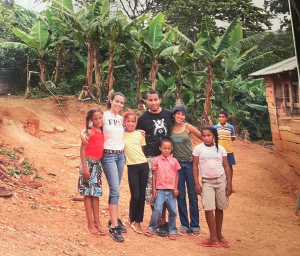
Ingrid and her husband serving as missionaries in the Dominican Republic.

As an adult, my husband and I served as missionaries in the Dominican Republic, near the Haiti border. We worked on projects that provided potable water, built houses and schools, and helped community members obtain birth certificates. When we began partnering with the government, I saw how much more effective our efforts became. That experience showed me, for the first time, how justice and charity can work together to benefit people in need.

I first learned about the Church’s role in public policy when I met my predecessor at the Florida Conference of Catholic Bishops while helping staff their table at a national event in Orlando. I remember thinking, “I want to do what she does when I grow up.” About a year later, she retired and encouraged me to apply for her position. I went on to serve eight years in public policy for the Florida bishops, followed by four years at the U.S. Conference of Catholic Bishops.

The D.C. office is still fairly new. Why was it important for the Society of St. Vincent de Paul (SVdP) to establish a presence here?
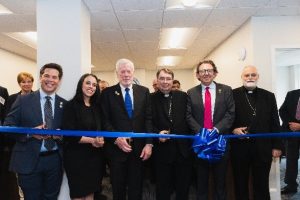
SVdP USA cutting the ribbon to its new national office in Washington, D.C.

Catholic Social Teaching calls us to walk on the “two feet” of justice and charity. Serving people in need through charitable works is essential to our identity, but Pope Benedict also spoke of “social charity,” engaging in policymaking to build up the common good and ensure no one is left on the margins. Washington, D.C. is the nation’s policy hub. Having a presence here allows SVdP to bring its unique perspective to the table which is informed by our deep roots in direct service. It’s how we can help shape policies that truly serve our brothers and sisters in need.

Can you describe your role as National Director of Public Policy and Advocacy?

A big part of my role is listening to Vincentians about what they’re seeing on the ground and the needs they encounter during home visits, and then translating those into policy solutions. Too often, policy is discussed at a theoretical or academic level without a clear connection to how it affects people’s lives. SVdP’s person-to-person service changes that. It gives us direct knowledge of the struggles people face and insight into solutions that work, whether to prevent homelessness or help someone out of poverty. For example, Vincentians have shared how hard it is to find affordable mental health care for the people they serve. That immediately raises a policy question: if Medicaid reimbursements for mental health care were higher, would there be more affordable providers available?

I also keep a close watch on Congress: what bills are moving, what’s being considered, who’s leading key committees, and where there’s potential to build relationships. From there, I analyze legislation through a Vincentian lens—asking questions like, “Will this help prevent homelessness?” or “Will it make housing less affordable?”—and make recommendations to our leadership on whether SVdP should weigh in.

Since the office opened, what are some key highlights or accomplishments you’re most proud of?
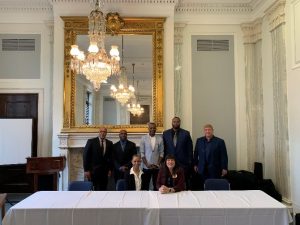
Panelists and moderators from the Hill briefing on faith-based approaches to re-entry.

One key accomplishment I’m especially proud of was when Steve Havemann, CEO of SVdP Des Moines, and Phil Conley, a mentor in the SVdP Des Moines Immersion Program, joined a Hill briefing we co-hosted with Catholic Charities USA, the National Religious Campaign Against Torture, and the Jesuit Conference Office of Justice and Ecology. They spoke with Hill staffers about the faith-based approach to incarceration and reentry. As Catholics, we believe in the capacity for human beings to reform and transform their lives, and when we center human dignity, we help people reenter society successfully, able to support themselves, their families, and avoid recidivism. It was a powerful and well-received event.

We also weighed in on the reconciliation bill, acknowledging some moderate improvements, but raising serious concerns about changes to SNAP and Medicaid and their impact on people who rely on these services. In addition, we’ve begun engaging on legislation that affects people in need, and we’ve joined Catholic partners in sending letters to Congress on the Farm Bill and appropriations. Even when legislation raises concerns, we look for opportunities to address them through upcoming bills and budget decisions.

As you look to the next several months, what are your top priorities for the D.C. office?

Over the summer, SVdP National Director of Poverty Programs Steve Uram and I hosted a Voice of the Poor webinar for Vincentians on making the most of the August work period, when members of Congress were back in their districts. We walked through how to request meetings, build relationships, and share stories from the community. I’m looking forward to hearing how those meetings went and how they might inform members’ work when they return to Washington.

Since returning to DC in September, members of Congress have been working on appropriations bills. We sent letters on the Agriculture and Transportation-HUD appropriations bills, urging robust funding for critical nutrition and housing programs.

We’re also working to strengthen our advocacy infrastructure. Over the summer, a Marquette University intern began creating a database to help us mobilize Vincentian volunteers more intentionally. My long-term goal is to capture SVdP’s impact by congressional district so that when we meet with members of Congress, we can show how many Vincentian volunteers are in their communities, what programs are available, and the local impact we’re making. This information not only positions us as a resource but also builds relationships rooted in our shared commitment to human dignity, not politics or partisanship. We hope to continue expanding this resource with the help of additional interns this fall.

How can Vincentians support SVdP’s advocacy work and get involved?
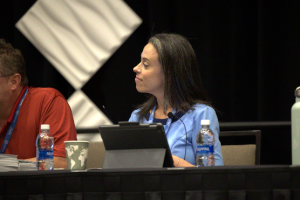
Ingrid presenting on a panel at the SVdP National Assembly 2025 in Louisville, Kentucky.

The easiest way to get involved is by signing up for our action alerts. You can do that through the “Members” section of our website under Voice of the Poor. When there’s important legislation to weigh in on, whether it’s encouraging support, opposing a bill, or offering a Vincentian perspective, those alerts make it simple. With just a few clicks, you can send a message directly to your elected officials.

Another valuable way to help is by sharing stories from your local community at stories@svdpusa.org. Vincentians can send us examples of needs, challenges, and successes from their service. Those stories are powerful tools in our advocacy, helping policymakers see the human impact behind the issues.

Advocacy can be challenging work, especially when we are living in an unprecedented political climate. What keeps you motivated and hopeful?

As people of faith, we’re called to be people of hope. In advocacy, that means remembering that no single bill is the end of the story. In my 12 years doing this work, including my time with the Catholic bishops, I’ve seen the political pendulum swing in both directions. Laws that were concerning have later been amended or repealed. There’s always another opportunity to engage, another bill to influence, another chance to make a difference.

If you could help people understand just one thing about SVdP’s advocacy, what would it be?

I’d want people to understand that SVdP’s advocacy is not partisan—nor should it be. In fact, we’re most effective when we remain nonpartisan, focusing solely on uplifting the needs of people we serve. Those needs transcend politics. Both parties have gotten some things right, and both have areas where they can do better. Our role is to build bridges across the political aisle, helping to heal some of the polarization we see today. We do that by bringing stories from our home visits directly to lawmakers, so they can create policies informed by real experiences. Legislators will make policy with or without us. How much better if those decisions are shaped by the Vincentian perspective and a commitment to the common good!

Do you have a favorite Scripture verse or Vincentian virtue that inspires your approach to public policy?

I’d say my favorite Vincentian virtue is humility. In public policy work, it can be easy to lose sight of that and start thinking we’re important because of our position or expertise. But as Catholics working for a faith-based organization alongside people in need, we have to remember that this is first and foremost about God, our faith, our calling, and serving our communities. Humility keeps the focus where it belongs.

Can you tell me a little about yourself outside of SVdP?

I was born in Miami, spent nearly 30 years in Orlando, and eight years in Tallahassee while working for the Florida Conference of Catholic Bishops. I used to say I’d never move farther north because this Cuban Floridian wasn’t made for cold weather, but when the opportunity to join the U.S. Conference of Catholic Bishops came along, I knew I had to take it. I’ve now called Virginia home for four years.

Outside of work, I’m a mom to three children and have been married for 25 years. As someone still relatively new to the D.C. area, I love spending weekends visiting museums, having picnics on the National Mall, and discovering new parts of the city.

I also serve on the board of the Catholic Mobilizing Network, continuing my long-standing commitment to ending the death penalty at both the state and federal level. In addition, I enjoy connecting with non-Catholic faith leaders, especially in the Latino evangelical community, who are eager to engage in public policy in a nonpartisan, faith-based way, much like the Catholic bishops do.
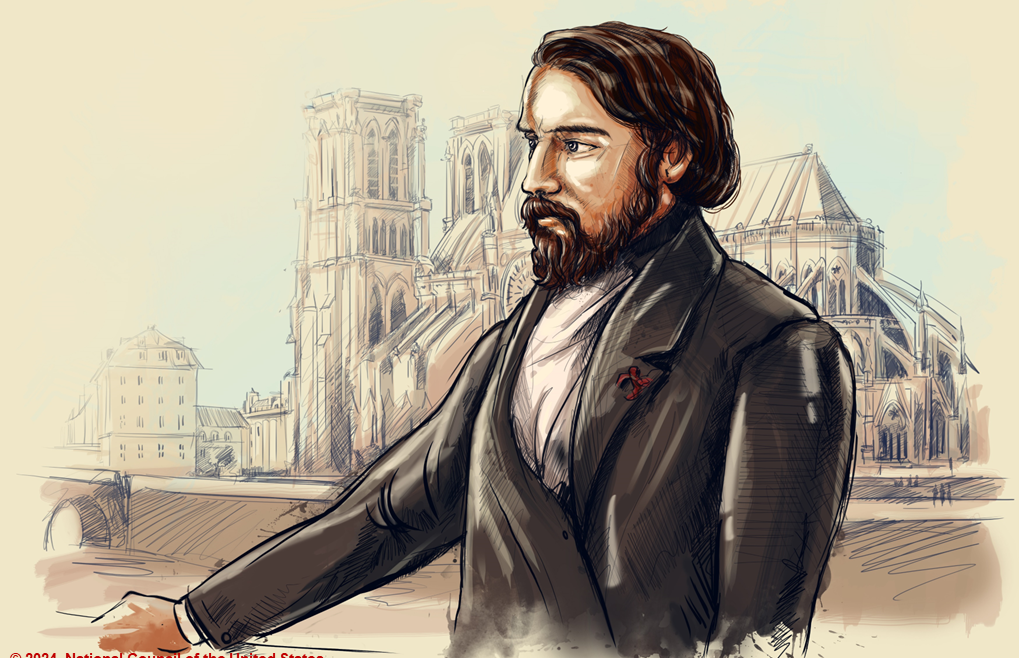
Frederic Ozanam

Blessed Frédéric Ozanam: A Man of His Time — and for Ours

Blessed Frédéric Ozanam: A Man of His Time — and for Ours 1019 720 admin

Today, we pause to honor the feast day of Blessed Frédéric Ozanam, founder of the Society of St. Vincent de Paul and a true witness of how the Gospel comes alive when we serve the poor. Nearly two centuries after he first gathered with fellow university students in Paris to form what would become our Society, his vision continues to shape and inspire our mission here in the United States and around the world.
Frédéric was not a priest or religious, but a lay Catholic with a restless heart. At just twenty years old, Frédéric and his companions resolved to put their faith into action by visiting the poor in their homes and offering what help they could. In these encounters, Frédéric discovered something profound: that in serving the poor, we do not only give—we also receive. He reminded us that Christ is present in the poor, and that when we draw close to them as our brothers and sisters, we draw closer to God.
Frédéric understood the struggles of his time—political upheaval, poverty, and doubts about faith – and yet, his response was not despair. Instead, his response was a radical act of love. He believed the Gospel demanded action. His life reminds us that holiness is not an abstract concept, but a daily choice to love and see Christ in the poor and to serve with compassion.
That charism remains the beating heart of the Society of St. Vincent de Paul. Every day, Vincentians across our nation carry forward this spirit of humble service. In living rooms, kitchens, and shelters, you listen to stories, pay an overdue utility bill, bring groceries, pray with families, and walk beside neighbors who feel forgotten.
You may arrive thinking you are there to provide assistance, but so often you leave with a deeper faith, renewed hope, and the grace of encountering Christ.
On this feast day, we give thanks for Blessed Frédéric’s life and legacy. We remember that our work is not just charity, but a vocation. It is the living out of Christ’s call to love “the least of these.” It is a journey of transformation—for those we serve and for ourselves.
As we reflect on Blessed Frédéric, I am mindful of the lives of the examples of two other saints whose lives are a reflection of the Vincentian values we hold dear.
Last Sunday, Pope Leo XIV canonized St. Pier Giorgio Frassati, whose life was spent serving the poor in his native Turin. Less known, perhaps, is that he was an active and passionate Vincentian from the age of 17 until his untimely passing from polio at 24.
His sister, Luciana, recounted how, on his deathbed and with his hand paralyzed by the disease, he scribbled instructions to a colleague who was attending the weekly meeting of his SVdP conference. “Medicines needed to be delivered. A pawn ticket needed renewed. Only then could he rest in peace.”
It is also fitting that Blessed Frédéric’s feast day this year is so close to the 50th anniversary of the canonization of St. Elizabeth Ann Seton on Sept. 14. Mother Seton was the first native-born American to become a saint and, for our purposes, is especially significant because she brought the Vincentian charism to the United States. The Sisters of Charity and the American province of the Daughters of Charity, whose lineages extends back to the Order she founded, are vital members of the international Vincentian community.
As Vincentians, we are heirs to Frédéric’s vision and the work and prayers of people like Pier Giorgio, Mother Seton, and all those who have followed them – including each one of you. Our world today faces its own challenges: economic hardship, isolation, injustice, and division. Yet their example shows us the way forward. We can choose hope over despair, service over indifference, and faith over fear.
Let us recommit ourselves today to the mission entrusted to us: to care for the poor, the forgotten, and the vulnerable. Let us walk together, encouraged by Frédéric’s witness, strengthened by prayer, and confident that Christ goes before us.
May Blessed Frédéric Ozanam continue to intercede for us and inspire us to serve with the same zeal, humility, and love that marked his life. And may our own encounters with the poor lead us ever closer to Christ, who is the source of our hope and joy.
Blessed Frédéric Ozanam, St. Pier Giorgio Frassati, and St. Elizabeth Ann Seton, pray for us!

God’s Call To Servant Leadership

God’s Call To Servant Leadership 1198 1198 Pam Hudson

Message From Bishop John Quinn

I believe God has a special place in His heart and in His kingdom for those Vincentians who heed His call to servant leadership in our Society.  Such service is a consummate example of following in the footsteps of St. Vincent, Blessed Frederic and Jesus Christ Himself.  The spiritual rewards of doing so are many and meaningful.

Our mission says we lead men and women to join together to grow spiritually.  Serving in a leadership role is a wonderful way to become closer to Jesus, the ultimate servant leader.  And we can be sure He will bless our efforts.

God wants us to utilize the unique talents He has given us to assist those in need.  If we have been gifted with the ability to lead as well, He expects that we will do so as part of our commitment to our Vincentian vocation.

Serving as the president of a Council or Conference provides an ideal platform from which to enhance one’s own spiritual life.  And a great privilege of leadership is the priceless opportunity to nurture the spirituality of fellow Vincentians while inspiring them to be ambassadors of the mission of St. Vincent de Paul in our communities…to bring the love and mercy of Christ to His suffering children.

Council and Conference presidents have told me that their years as a servant leader have been the richest part of their lives in terms of personal spirituality and appreciation of the eternally valuable gifts God had bestowed on them.  Their uplifting experiences changed them in many ways that strengthened their relationship to God and acquainted them intimately with the innate goodness and generosity of the human spirit.

Each of us has been chosen for a purpose.  That is evident in the day-to-day reality of our beautiful vocation.  Our Lord will happily help us discern that purpose…the special way He wants us to support the magnificent mission of St. Vincent de Paul.

Since our founding, Vincentians have been bolstered by an unwavering trust in the providence of God who has demonstrated during the past 190 years that He attaches a high priority to the success of our Society.  As we continue our grace-filled journeys to our heavenly homecoming, I am sure He is smiling down on us, cheering us on and clearing our path.  We have, after all, said “yes” to His call – and He wants us to succeed, whatever role we play in His plan for our personal ministry of love and compassion.

May God continue to bless you abundantly in your exceptional service to His beloved poor.

Donation Partnerships

Donation Partnerships 1200 628 Pam Hudson

Every so often, we review donations coming into our thrift stores. We compare quantity and quality month by month, versus the previous year’s data. After a recent review, we noticed that we were trending in a negative way on thrift store donations, especially in furniture. Numbers were down versus last year’s collections. What’s causing this trend? Is it the economy, inflation and people hanging onto their furniture and clothing longer because of the economy?

How can we improve our current trend?

Then I remembered a former mentor from my corporate retail days, who had great wisdom. One of his favorite sayings was, “think like a customer.” I thought about it and decided to go to the nearest furniture store with some business cards. I talked to the store manager and I was surprised to learn what their customers ask all the time, “Will you take my old furniture once you deliver my new furnishings?” Of course, this furniture store doesn’t and therefore the customer has to either take their stuff to the dump or donate it.  I asked the store manager if I could place St. Vincent de Paul business cards by the register in a little stand-up frame with our pickup flyer with information for their customers. The store manager approved and was thrilled to be able to give to his customers an option for their old furniture.

With that win in our pocket, I proceeded to have my team of store managers go to various furniture and appliance stores to see if we could display our pickup information and business cards at their store. My team was pleasantly surprised to see every business embrace this concept and let us display our flyer and cards.

Our furniture donations have turned around in a positive way with this strategy.

Creating a win-win situation is always a great thing. We found a way to improve a negative trend and resolve an issue.

Our mission to support St Vincent de Paul will never end; sometimes it just needs a little innovation.

——-

We hope you are planning to attend the National Assembly in August in Phoenix, AZ.

The National Stores Committee is actively planning for a great program for you.

In addition to our daylong program on Wednesday, we will have opportunities to visit a store and have workshops planned for Thursday.  Topics may include small and large store issues like merchandising, budgeting, POS, advertising, training, store layouts, budgeting, staffing, volunteers, productivity, vehicle tracking, E-Comm, loyalty cards and voucher processing, vehicle tracking.

We encourage you to talk to your store managers and leadership about attending the National Assembly.  It is a wonderful opportunity to network with and meet others around the country to share best practices.

—-

If you have questions or have a topic for a future Stores Corner article, please email our Director of Stores Support-Jeff Beamguard at jbeamguard@svdpusa.org.

06-30-2022 Questions and Answers

06-30-2022 Questions and Answers 1200 628 admin

Q: How much information on those we serve are we permitted to share with other organizations? Can we share our Home Visit reports?

A:  Confidentiality is extremely important in the Society. It is a violation to share information of those whom we serve with other organizations unless a written and signed waiver authorization is received from those served.

Q:  Is it against the Rule to give someone in need a ride? If not, are Conference members who do so liable if an injury occurs?

A:  It is not against the Rule; however, two Vincentians must be present and the Vincentian (driver) giving the ride should be licensed and insured. This needs to be written into your Council/Conference Safeguarding policy. If this service is an official SVDP program, it needs to be addressed one way or another in the Society’s insurance coverage. Don’t wait for an incident to ask about it!

Spanish Translation

P: ¿Cuánta información sobre aquellos a quienes servimos se nos permite compartir con otras organizaciones? ¿Podemos compartir nuestros informes de visitas domiciliarias?

R: La confidencialidad es extremadamente importante en la Sociedad. Es una violación compartir información de aquellos a quienes servimos con otras organizaciones a menos que se reciba una autorización de renuncia por escrito y firmada de aquellos a quienes servimos. Haga clic aquí para ver el formulario de liberación de confidencialidad de SVdP.

P: ¿Va en contra de la Regla llevar a alguien que lo necesita? Si no, ¿los miembros de la Conferencia que lo hacen son responsables si se produce una herida?

R:  No va en contra de la Regla; sin embargo, dos vicentinos deben estar presentes y el vicentino (conductor) que realiza el viaje debe tener licencia y seguro. Esto debe estar escrito en la política de salvaguardia de su Consejo/Conferencia. Si este servicio es un programa oficial de SVDP, debe abordarse de una forma u otra en la cobertura de seguro de la Sociedad. ¡No esperes a que ocurra un incidente para preguntar por ello!

2-10-2022 Questions and Answers

2-10-2022 Questions and Answers 150 150 admin

Q: The philosophy of the Conference to which I belong is to help people get over an emergency situation, not to offer continual ongoing support. Is this a correct position for a Conference to take in dealing with people who come to us with needs? Our philosophy is not related to our not having sufficient funds to help.

A: The Society of St. Vincent de Paul does NOT help “in emergencies only” or “only once each year.” It is the philosophy of the Society to “treat each case on its own merit.” It has nothing to do with how often a person or family comes to us for help. It has everything to do with whether or not the need is real, and if we have resources to help. It has everything to do with compassion toward those in need and sharing God’s love with those seeking help. It has everything to do with finding Jesus in the face of the poor. If your Conference has any limitations in your guidelines which prevent you from helping people, consider removing them. Our guidelines should be emphasizing how we can help people – not turn them away.

Q: How should Councils/Conferences hold elections during COVID-19 while practicing social distancing? How can elections by email meet the requirements of the Rule for a secret ballot vote by active members?

A: It is important to hold timely elections. The important thing to remember is that the Rule does not change, even during the COVID-19 pandemic. While practicing social distancing, Vincentians are being creative in conducting Society affairs. For example, election ballots can be mailed to active members with self-addressed postage paid return envelopes for secrecy. The completed ballots are then returned to the nominating committee chair for the committee count and results. This is announced by Conference call or virtual meetings such as Zoom video. The election results are published in the minutes afterwards.

Spanish Translation

P: La filosofía de la Conferencia a la que pertenezco es ayudar a las personas a superar una situación de emergencia, no ofrecer un apoyo continuo de largo plazo. ¿Es correcta para una Conferencia al tratar con personas que vienen a nosotros con necesidades? Nuestra filosofía no está relacionada con que no tengamos fondos suficientes para ayudar.

R: La Sociedad de San Vicente de Paúl NO ayuda “solo en emergencias” o “solo una vez al año”. La filosofía de la Sociedad es “tratar cada caso según sus propios méritos.” No tiene nada que ver con la frecuencia con la que una persona o familia viene a nosotros para buscar ayuda. Tiene mucho que ver con si la necesidad es real o no, y si tenemos recursos para ayudar. Tiene todo que ver con la compasión hacia los que tienen necesidades y compartir el amor de Dios con los que buscan ayuda. Tiene todo que ver con encontrar a Jesús en el rostro de los pobres. Si su conferencia tiene limitaciones en sus pautas que le impiden ayudar a las personas, considere eliminarlas. Nuestras pautas deben enfatizar cómo podemos ayudar a las personas, no rechazarlas.

P: ¿Cómo deben los Consejos/Conferencias celebrar elecciones durante COVID-19 mientras practican el distanciamiento social? ¿Cómo pueden las elecciones por correo electrónico cumplir con los requisitos de la Regla para una votación secreta de los miembros activos?

R: Es importante celebrar elecciones con tiempo. Lo importante a recordar es que la Regla no cambia, incluso durante la pandemia de COVID-19. Mientras practican el distanciamiento social, los Vicentinos están siendo creativos en la conducción de los asuntos de la Sociedad. Por ejemplo, las boletas electorales se pueden enviar por correo a los miembros activos con sobres de devolución (que incluyen franqueo pagado y la dirección para regresarlos) para mantener el secreto. Luego, las boletas completadas se devuelven al presidente del comité de nominaciones para el conteo y los resultados del comité. Esto se anuncia por conferencia telefónica o reuniones virtuales en Zoom o algo así. Los resultados de las elecciones se publican después en las actas.


How Can a Person Who Recently Lost a Loved One Cope With Christmas?

How Can a Person Who Recently Lost a Loved One Cope With Christmas? 2560 1704 admin

Vincentian John J. Donohue from the St. Mary Magdalen bereavement group shared this with fellow members in the hopes it might help others this Christmas season.

How Can a Person Who Recently Lost a Loved One Cope With Christmas?

Many people are very happy during the Christmas season. They are filled with joy. However, there are many others who are filled with sadness because of the death of a loved one.

I can remember when my wife of 28 years died of cancer and I had three children to raise. Christmas was immensely sad for my children and myself. I did not know how to function. I did not know how to cook, do the laundry and many other things. I wished someone would have told me how to survive this most difficult time of my life. I resolved that if I ever got over all of these issues, I will do my very best to help those in a similar situation. The following are some of my thoughts.

Some Thoughts on Coping With the Christmas Season

The chances are you are not going to have a happy Christmas. As a result, you should lower your expectations. A reasonable goal would be to make your Christmas tolerable. Some of the things to consider are as follows:

  • Rest. You are undergoing the equivalent of a heart attack. Like any person who endures a heart attack, you need peace and quiet. Rest is essential and therapeutic. Create a day of self-care or a self-health day.
  • Watch what you eat and drink. There is a strong tendency to eat junk food or use excessive drugs or alcohol.
  • Exercise. Exercise helps to relieve stress. Take walks. Walks help to relieve anxiety.
  • Build yourself up emotionally. Do not be too hard yourself. Have confidence you can do certain things. If you do not know how to do something, ask for help. Friends are glad to have an opportunity to help you. Speak to your friends. Buy something nice for yourself. Have some time alone.
  • Consider new traditions – plan ahead. Determine what you can do and what you cannot do. Do something different than you did last year.
  • Discuss with your family who is doing what. Give yourself a break. This is the year you should not be overdoing anything. Let others do the work. Do not set a place at the table for the loved one. It will make the day more difficult. Consider a buffet style dinner instead of a sit down dinner. You could also consider having dinner at someone else’s house.
  • Christmas cards. Do not be compelled to send Christmas cards. Send none or a few. No one expects to receive a card from you.
  • Invitations. You may be invited to go to a party or any other social event. Do not be afraid to say no. People should understand. Only attend if you know you will feel comfortable. Generally, it is a bad idea to go to a wedding or an affair where there will be a lot of singing or dancing.
  • Shopping. Keep your shopping to a minimum. Stay out of malls or crowds. This is the time to do any online-shopping.
  • It is ok to cry. It helps to relieve anxiety. Just let the tears flow. It is therapeutic.
  • OK to be happy. Your loved one would want you to be happy. It is not disrespectful to your loved one. It gives you a break from your sadness.
  • Journal. Some people find it helpful to write out their thoughts. Do not use a computer. It is more therapeutic to write out your thoughts.
Spirituality

Let Christmas be the beginning of a new version of yourself. Spend time to think about Christmas more than you ever did before. Your loved one is enjoying Christ’s birthday in heaven. What a special gift! He or she will reach down from heaven and touch your heart in a way it was never touched before. You just have to ignore the commercialism and open your heart to love.

Christ came into this world as an infant and left the world a martyr. Ask yourself, do you really believe there is a God? If so, place your trust in Him. Speak to Him about your problems. Christ has said He will remove the yoke from your shoulders. I have seen a yoke and it is very heavy.

Allow Christ to be your companion on your journey. Know that you are special. Christ has given you special gifts. He does not bring anyone into the world “empty handed”. So reach out to others with love, compassion and understanding and you will have a wonderful Christ filled Christmas.

Merry Christmas to all and may Our Good Lord fill all of our hearts with love and joy and hold all of us in the Palms of His hands!

John J. Donohue
St. Mary Magdalen bereavement group
December 9, 2021

Sign Up for Our Newsletter

Privacy Preferences

When you visit our website, it may store information through your browser from specific services, usually in the form of cookies. Here you can change your Privacy preferences. It is worth noting that blocking some types of cookies may impact your experience on our website and the services we are able to offer.

Click to enable/disable Google Analytics tracking code.
Click to enable/disable Google Fonts.
Click to enable/disable Google Maps.
Click to enable/disable video embeds.
Our website uses cookies, mainly from 3rd party services. Define your Privacy Preferences and/or agree to our use of cookies.
Skip to content