• Search the Site

Servant Leader

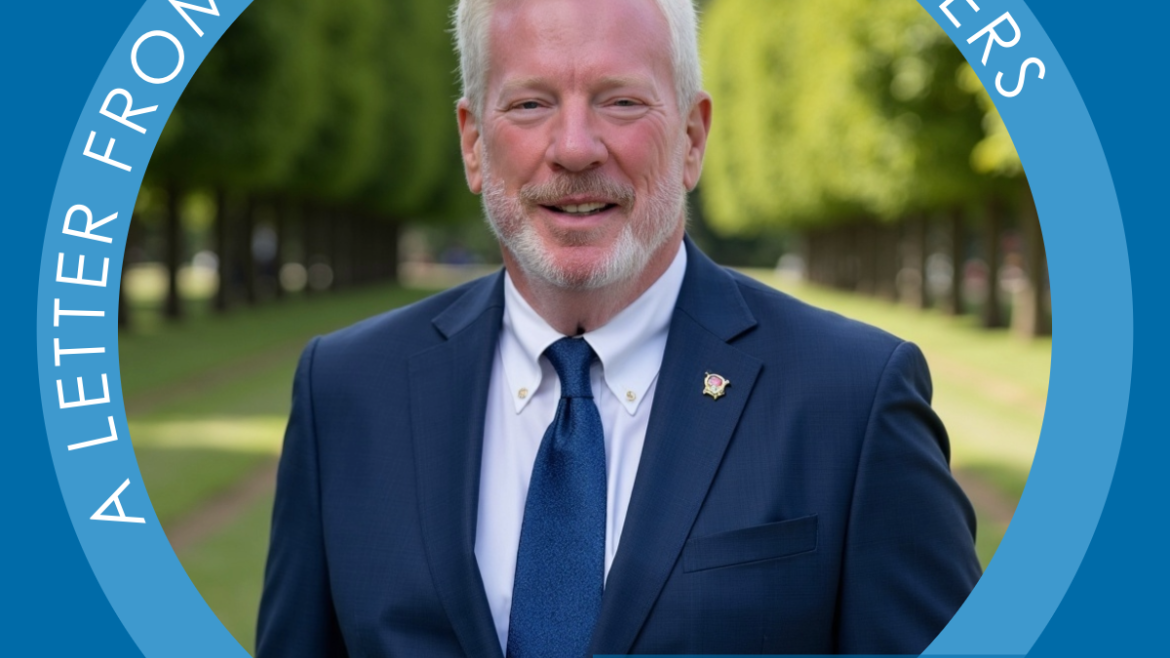
09-18-2025 A Letter from Our Servant Leaders

09-18-2025 A Letter from Our Servant Leaders 1200 1200 admin

A Beautiful Weekend in Emmitsburg

Last weekend, I had the privilege of being in Emmitsburg, Maryland for the 50th anniversary celebration of Saint Elizabeth Ann Seton’s canonization. What a joyous celebration it was! On Saturday, Father Tomas Mavrik, the Superior General of the Vincentian Family worldwide, celebrated a special Vincentian Family Mass. Sunday’s public Mass, marking the actual anniversary date, drew over 1,000 people as Archbishop Lori of Baltimore and Archbishop Broglio, Archbishop for the Military Services, USA and President of the USCCB, co-celebrated this historic milestone.

Being there to honor this incredible wife, mother, foundress, and saint filled my heart. I’ll be honest—before this weekend, I knew who Mother Seton was but didn’t fully grasp her deep connection to our Vincentian family. What I discovered filled me with joy and gratitude for this incredible woman, and I want to share it with you.

America’s First Saint and the Vincentian Heart

The National Shrine of Elizabeth Ann Seton

The National Shrine of Elizabeth Ann Seton

Elizabeth Ann Seton (1774-1821) became America’s first native-born saint when Pope Paul VI canonized her on September 14, 1975. Her story is remarkable: born into a prominent Episcopal family in New York, she married William Seton and had five children. After her husband’s death in Italy in 1803 and her conversion to Catholicism in 1805, Elizabeth felt called to serve the poor and establish Catholic education in America.

What makes her story so meaningful to us Vincentians is how naturally she embraced the charism of Saint Vincent de Paul and Saint Louise de Marillac. In 1809, she founded the Sisters of Charity of Saint Joseph in Emmitsburg, Maryland. Her spiritual director, Father Louis William Dubourg, encouraged her to adopt the rules of the French Daughters of Charity, and in 1812, her community received official approval based directly on the rules Saint Vincent and Saint Louise had established in 1633.

Seeing Christ in the Poor

The heart of Elizabeth’s spirituality perfectly mirrors what we experience in the Society of Saint Vincent de Paul; she truly saw Christ in the poor. Before even becoming Catholic, Elizabeth “saw Christ in the poor, especially in women and children in need.” This vision aligned beautifully with Saint Vincent’s teaching that “the poor are our masters” and that we must treat them “like guests at our family table and not as beggars at our gate.”

Elizabeth taught her sisters to embrace this Vincentian understanding completely. She instructed them to find Christ in those they served, echoing Vincent’s revolutionary idea that in serving the poor, we encounter Jesus himself. This spirituality of encounter became foundational to both the Sisters of Charity and later to our own Society.

Prayer and Action Together

What strikes me most about Mother Seton’s approach is how she balanced prayer with action – what we Vincentians call being “contemplatives in action.”

She taught a “prayer of the heart” that could thrive regardless of external circumstances while remaining deeply engaged in charitable works. Saint Vincent pioneered this concept, and Elizabeth lived it out beautifully in 19th-century America.

Both traditions understand that authentic spiritual life cannot be separated from service to those in need. As Vincentian spirituality teaches, “Our proclamation of the good news will resound in people’s hearts especially when we give vibrant witness through the language of works.”

John Berry and Fr. Tomas

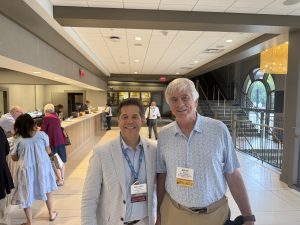
John Berry with Fr. Tomaz Mavric

Trusting in God’s Providence

Elizabeth’s spirituality of abandonment to Divine Providence resonates deeply with Vincentian trust in God’s care for the poor. During times of loss and financial hardship, she showed the same trust that Saint Vincent had, believing that God would provide the resources needed for charitable works. This foundational trust in God’s mercy enabled both Elizabeth and later members of our Society to take risks in service, confident that God would provide.

The Family Connection Grows

The spiritual connection between Elizabeth and the Daughters of Charity became official in 1850, when her Emmitsburg Sisters joined the French Company of the Daughters of Charity. This wasn’t just an administrative merger – it was recognition of the deep spiritual bond that had existed from the community’s founding. Elizabeth’s original intention was finally fulfilled, making her spiritual Daughters full members of the international Vincentian family.

Living the Legacy Today

Today, Saint Elizabeth Ann Seton holds a unique place within our global Vincentian Family. The various Sisters of Charity congregations that trace their roots to her foundation represent over 2,500 members across communities in New York, Cincinnati, Halifax, New Jersey, and Pennsylvania. These communities, along with the Daughters of Charity, carry forward the Vincentian charism that Mother Seton brought to America.

We in the Society of Saint Vincent de Paul explicitly recognize this connection, particularly through conferences named after Saint Elizabeth Ann Seton. Our commitment to her memory reflects the recognition that she was instrumental in bringing Vincentian spirituality to America, making possible the later establishment and growth of lay Vincentian organizations like ours.

Shared Mission, Shared Values

The relationship between Saint Elizabeth Ann Seton and our Society continues through our commitment to identical values: service to the poor, respect for human dignity, and the integration of faith and action. Both traditions emphasize that personal encounter is fundamental to our ministry. We recognize that charity requires relationship, not merely assistance.

We continue to draw inspiration from Mother Seton’s example of “acting with heart,” converting deep awareness of God into concrete service to others. Her model of combining educational excellence with charitable service provides a template for holistic human development that is still relevant to our work today.

Education and Justice

Elizabeth’s establishment of the first free Catholic school in America aligned with our Society’s emphasis on addressing the root causes of poverty. Both traditions recognize that true charity must encompass not only immediate relief but also long-term solutions that promote human dignity and empowerment.

A Living Heritage

John Berry and Luci Baines Johnson

John Berry with Luci Baines Johnson

The relationship between Saint Elizabeth Ann Seton and the Society of Saint Vincent de Paul represents a deep spiritual communion rooted in the Vincentian charism. From Elizabeth’s adoption of the Daughters of Charity rules to the contemporary work of our over 4,000 conferences in the United States today, this connection represents the flowering of Vincent de Paul’s vision in American soil.

Both Elizabeth and Blessed Frédéric Ozanam understood that authentic Christian life requires integrating contemplation and action, personal sanctification, and service to the poor. Their shared commitment to seeing Christ in those who suffer and responding with practical charity continues to inspire thousands of Vincentians worldwide.

As members of the broader Vincentian Family, both traditions remind us that holiness is not abstract but incarnational, found in the daily choice to serve with compassion and to recognize in every encounter with poverty an opportunity to meet Christ himself. Through this shared vision, Saint Elizabeth Ann Seton remains not merely a historical figure but a living presence within our Society and the entire Vincentian tradition.

In words that describe both Elizabeth and the Society she helped inspire: “The charity of Christ impels us” to serve, to hope, and to find God present in the poor who remain our teachers and our masters.

Peace and God’s blessings,

John
09-11-2025 A Letter from Our Servant Leaders

09-11-2025 A Letter from Our Servant Leaders 1200 1200 admin

The Value of Vincentian Friendship – Priceless!

The theme of Honoring Heritage and Embracing Change came to life at our National Assembly in Louisville!

It was awesome to be with all our Vincentians that were able to be with us at this faith filled gathering.

I told my 9-month granddaughter about the Assembly, and this was her reaction.

Now, I know you might think I am just a proud grandfather coming up with a creative way to share a video of my first grandchild, but there is more to it! Actually, I got this idea from Dr. Andrew Abela, Dean of the Busch Business School at the Catholic University of America, an outstanding keynote speaker at this year’s event. He gave a great talk on Super Habits, and he creatively made his grandchild the star of the presentation.

Gregg Colburn, another keynote speaker, did magnificent job of presenting how structural housing factors impact homelessness.

Stephanie Land, our final keynote speaker, gave a powerful testimony on how she has overcome poverty.  (This video requires a password.  Please check Frederic’s Five for more information)

An amazing meeting is only possible with the hard work of so many people. We thank Louisville Archdiocesan Council President David Neill and everyone on the Louisville team that put in incredible hours in making this gathering an absolute success.

As Vincentians, we know there is always behind the scenes work to make our efforts a reality.

Words of appreciation sometimes are not enough to express our appreciation for the countless hours spent making such a large effort a success. The quiet efforts of Vincentian staff (paid and unpaid) are priceless. On behalf of the entire Society, we thank them for everything they did to make this event a success!

Vincentian friendship is so important to our spiritual journeys. I saw this on display at the National Assembly, the Mid-Year Meeting, and the many Region meetings that I attended in my first year at the National Council.

Let me introduce you to a Vincentian friend I met at the Assembly, Matt Ryan from Houston, Texas. Matt tapped on my shoulder and said, “Hey Michael, I think we have the same mentor.” I looked around and Matt introduced himself and shared with me that Chuck Baimbridge in Houston was a Vincentian friend and mentor to him. Michael Acaldo, National CEO and Matt Ryan, St. Vincent de Paul conference in Archdiocese of Galveston-Houston.

Before Chuck retired from a high-level leadership role in a Louisiana chemical company, he was the Council President of the Society in the Diocese of Baton Rouge. Chuck was a great visionary leader who embraced our virtues. He helped us establish new special works and the first Society of St Vincent de Paul Council Foundation in the country.

I made a new friend with Matt and through him, I am reconnecting with an old one. My daughter’s family (and Stella – that beautiful grandbaby) live in Houston, so next time I am there, I’m going to visit Chuck and his wonderful wife Susan.

Aren’t our Vincentian friendships priceless! As Catholics, we know that these friendships never die but live on into eternal life.

To all of my Vincentian friends, thank you for being inspirational mentors to me!

If I have not had the blessing and opportunity to meet you, I cannot wait! See you soon as we journey together with Christ in our service to His children in need.

Sincerely yours in our Vincentian Journey,

Michael J. Acaldo

National Council CEO

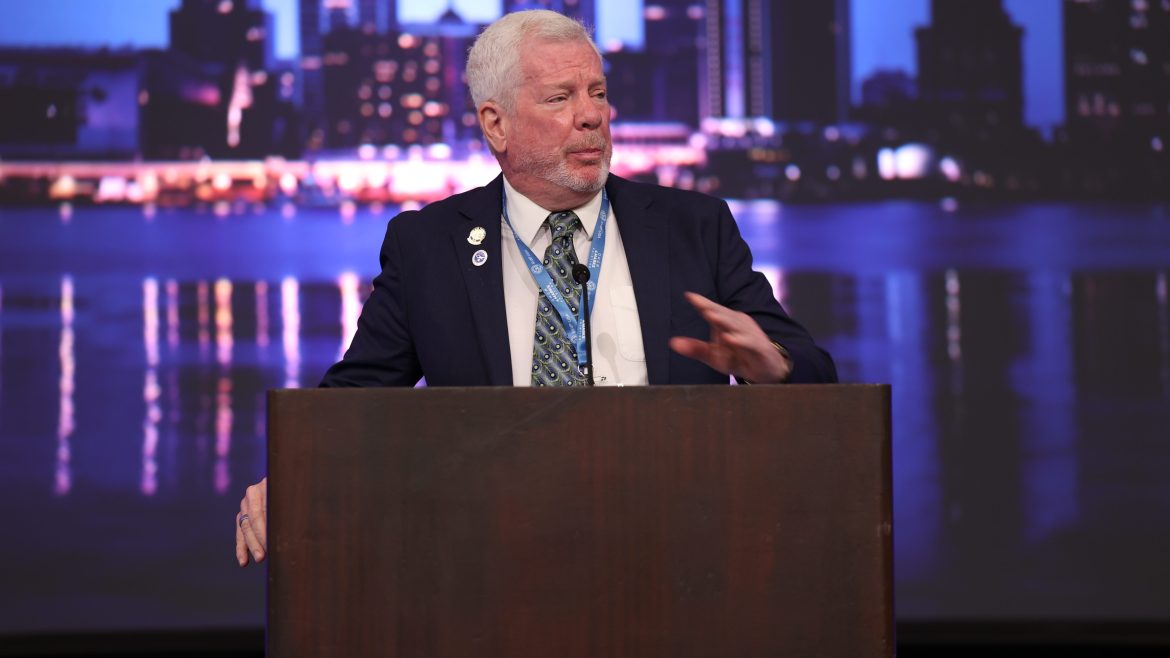
Jon Berry speaking

09-05-2025 A Letter from Our Servant Leaders

09-05-2025 A Letter from Our Servant Leaders 2560 1707 admin

Honoring Heritage, Embracing Change
2025 Annual Assembly, Louisville, KY
John Berry
Good morning, my Fellow Vincentians
It truly is a joy, and I mean a soul-deep joy, to stand before you this morning; old friends, new friends, colleagues, co-workers in mission, partners in faith. I look out at this room, and I see faces of people who care. That might sound simple, but think about it: in this age, when so much thrives on cynicism, on cruelty, on indifference… choosing to care, choosing to show up, choosing to stay faithful is an act which deserves great celebration.
We are this week, gathered as a Vincentian Family, to learn, grow, celebrate and to challenge ourselves as an organization. An organization founded in the year 1833. That is not just a date. That is a legacy. Old enough that our founding minutes were probably written with quill pens… but young enough that what they dreamed still beats in our hearts today.
Our theme for this National Assembly is Honoring Heritage, Embracing Change. Now, let me tell you something: as a theme, that’s dangerous. Because if you lean too hard into “heritage,” you run the risk of polishing brass plaques, telling sentimental stories, and quietly slipping into irrelevance. If you lean too hard into “change,” you run the risk of tossing away everything that gives you your character, your soul, your music.
So, what do we do? We do not choose between honoring heritage and embracing change. Like a good marriage, we commit ourselves to both. We strike a balance. Or, even better, we dance the dance, sometimes heritage leads, sometimes change leads, sometimes both stumble across the floor, but together, they create beauty that is timeless.
Honoring Heritage: Roots that Keep Us Grounded
Close your eyes for a moment and imagine those who came before us. Imagine that year: 1833. No airplanes. No antibiotics. No reality TV. No email to clutter inboxes at 7 a.m. just when you’re reaching for your first cup of coffee.
But there were immense needs. 1833 was a world of poverty, of social upheaval, of communities torn apart by war, famine, and inequality. And into that difficult world, our founders planted a seed. …A seed that has grown into the mighty tree we gather under today.
Consider what they gave us. They gave us more than a Rule. More than a name that doesn’t fit so well on a lapel pin or business card. More than even a mission. They gave us a vision. A conviction that faith is never meant to be kept locked up in a private devotion alone. Faith breathes best when it breathes outward, when it is embodied in works of service, when it lifts those who are bowed down.
Again and again through our history, that vision proved stronger than any obstacle. Wars came and went. Sixteen years after the first Conference in the United States formed in St. Louis the Civil War almost tore our nation apart, but we endured. Twenty-six years after the first Conference in my Council in Georgia was formed, the Great Depression almost destroyed America, but we endured. Other recessions tried to starve us. But we endured. New social movements tried to ignore or bury church-affiliated work in the secular age. Still, our vision lived. Or mission thrived.
Why? … Because people, ordinary people just like us, kept showing up. People like our grandparents, our parents, our mentors. Volunteers who stayed up too late visting people in need, processing checks to keep someone from being thrown out in the street, stocking thrift store shelves, or peeling potatoes for dining halls and soup kitchens. Conferences who endured meetings with too few resources and too many needs.
Supporters who believed that even a little money, in the right hands, with the right heart, could change a life.
My friends, honoring heritage means honoring them. The quiet saints whose names rarely make it onto buildings or banners. They are the reason we are here.
The Gift of Institutional Memory
Heritage also means institutional memory. Too often we hear people today say, “The church is irrelevant,” or “Nonprofits are inefficient,” or worse, “Charity is outdated.” And yet, our history tells another story. We survived because what we offered was not irrelevant, not outdated, but essential.
And here’s the thing: in times of chaos or confusion, our first instinct should be to remember. Not to cling to memory as nostalgia, but to use memory as a compass. A guide star. Yesterday’s struggles guide today’s courage. Yesterday’s failures keep us humble. Yesterday’s triumphs remind us that God really does supply daily bread, even when the cupboard looks bare.
So yes…as we plan, as we dream, as we innovate, we still honor heritage. Because even the most modern skyscraper is built on a foundation.
But I am not going to deliver a museum tour this morning. We honor the legacy not by staring at it, but by extending it. And that requires something that is both exhilarating and terrifying.
It requires change. Embracing Change
Change is Inevitable, but let’s be honest. Are we comfortable with change? (pause for reaction) Some of you are nodding …others are thinking, “Depends what’s being changed.” Some of you are sayin, neck no! (Or maybe something a little stronger).
Human beings don’t love change by nature. Familiar patterns feel safe. Familiar hymns, familiar meeting formats, familiar committee structures, these are our security blankets.
I’ll bet there are plenty of you in this room who, like me, just don’t feel right when the Choir at Sunday Mass tries to interject some new songs into the Liturgy. No, we yell (quietly to ourselves because after all, we’re at Mass). Give me my familiar hymns, my comfortable music.
I once heard someone joke about a pastor who wanted to move the hymnals from one side of the pews to the other. The Parish Advisory Council recommended doing it one inch per year so nobody would notice!
But let’s face it, change is inevitable. Change is not something to fear; it is something to steward. Because God’s own creation is built on change: seasons turning, years shifting, children growing, ideas unfolding. Every cell in your body is proof that change is happening constantly. Why then should we think our organization or mission is exempt from that holy rhythm?
The New Face of Need
Let me tell you something you no doubt already know and understand; the face of poverty and needs of today’s world are are different. In 1833, the frontier problem for charity was bread and shelter, basic survival. Today, of course, those remain. Hunger, hunger, always hunger. Homelessness. Addiction. But equally, we face needs our founders could hardly have imagined:
Digital poverty. The child who has a classroom but no internet access.
Mental health crises. The young adult, more connected online than any generation before, yet lonelier than ever.
Global displacement. Refugees from poverty, terror, and war zones around the world, appearing on our shores and in our parishes.
Climate vulnerability. Families not only impoverished by economics but displaced by floods, fires, hurricanes. Our heritage equips us to feed stomachs. Change requires us to also feed spirits, heal trauma, and transform unjust structures.
That is not betraying our roots. That is deepening them. Because what did our founders care about most? Loving God by serving real human needs. If the needs change, then our methods must as well.
Relevance with Youth and Young Adults
Let me address perhaps the most urgent part of this conversation: youth and young adults.
I want to be crystal clear: We cannot survive, let alone thrive, without young people. Those of you in your 20s, 30s: you are not just the “someday leaders.” You are already leaders, already carrying part of this mission.
Sometimes, when older organizations think about youth, they panic. They say: “How do we attract them?” And a frantic agenda begins – let’s add Instagram, let’s add hashtags, how about a pizza night? But let’s be honest: the younger generation is savvy. They can sniff out when you are using pizza as bait.
If we really want relevance, then we must go deeper. Young people want three things: authenticity, purpose, and participation.
Authenticity. Don’t give them sugar-coated jargon. Give them honesty, meaning and truth, teach them honesty, meaning and truth.
Purpose. Show them that we are not here to preserve our institution—we are here to serve real human pain.
Participation. Don’t just give them an internship to “watch and learn.” Let them shape the plan, shape the future, and make an impact.
If we do this, they will come, not because of flashy marketing, but because young adults are starved for purpose and meaning in a noisy world. And we have purpose and meaning to offer in abundance.
Growing New Members and Sustaining the Mission
This brings us to the perennial, age-old, motion-at-every-meeting topic: membership growth.
We all want to see more people in our Conferences. Not just younger people, but new people of every age. People bring gifts, energy, new ideas, and, yes, let’s be practical, resources.
But membership is not about creating new Vincentians. It is about extending an invitation to live into something bigger than yourself. It is about extending an invitation to live something bigger than yourself.
When people ask me, “How do we attract new members?” The best answer I can give is one word: hospitality. Not gimmicks, not numbers-reporting, but hospitality.
Hospitality that says: “You belong here before you prove yourself.”
Hospitality that says: “We see you not as a cog for our machine but as a gift to our family.”
Hospitality that says: “This is not our show. This is our shared work, come share it.”
People stay where they feel they belong. That is true in friendships, in churches, in nonprofits. If we offer belonging, the rest will follow.
Heritage and Change as Dance Partners
Now, allow me, just for a moment, to lean into metaphor. Imagine, if you will, a ballroom. Lights glowing. Musicians tuning. Onto the dance floor walk two figures: one named Heritage, one named Change.
Heritage has the poise, the discipline, the old-world charm. Change has the energy, the fire, the improvisation. Left alone, each is incomplete. But when they take hands, when they move together? The dance is electric.
That is us. That is the Society of St. Vincent de Paul. Part philosopher, part entrepreneur. Part historian, part visionary. Always remembering, always reaching.
Humor About Our Challenges
Now, we need to sometimes laugh at ourselves a little, don’t we? Because change and growth are not all glorious imagery. Sometimes they’re well … messy.
You know what I mean. A committee decides to “modernize” the thrift store, but it takes two months arguing about what color the carpet should be. Someone suggests we “go digital,” and before long, half the membership is still printing emails, and the other half is arguing about password resets.
That is reality, so let us embrace that chaos. Let us laugh at our quirks while still pushing forward. Because humor isn’t frivolous. Humor is a holy antidote to despair. A room that can laugh together is a room that can build together.
VisionSVdP
As we begin phase III of our VisionSVdP process, we have the opportunity to channel the energy, the fire, and the inspiration of change in concrete ideas and actions for our future. The process of Phase III is critically important because it allows the collective efforts of our listening sessions last year and earlier this year to become focused and aimed at specific changes we want to see. Some of expressed a concern that the Phase III process was complicated and laborious. We’ve heard those concerns and will be changing it to make it easier for every Council and Conference to participate. This is a very important part of VisionSVdP and I hope everyone will participate.
The Importance of Public Policy and Advocacy
I also want to talk this morning about an area of our work that is sometimes controversial but is absolutely essential – public policy and advocacy.
Now, some of you may be thinking, “Wait a minute, we’re a charitable organization. What does public policy have to do with us? Isn’t our mission simply to feed the hungry, to clothe the naked, to shelter the homeless?”
Yes. Absolutely yes. That is always our mission. But if we stop there, if we only respond to emergencies without also asking why the emergencies are happening, then we will always be playing catch-up.
Charity alone is never enough. Charity is the bandage, the food on the table tonight, the rent kept intact for this month. And thank God for it. But as any nurse or physician knows, once you apply the bandage, you also must ask: What caused the wound? How can it be prevented? How can healing be made permanent?
Public policy is where those questions get answered or get avoided. And advocacy is the way we make sure they are answered.
Why Public Policy Matters
Poverty is not just bad luck. Poverty is not just individuals making mistakes. Poverty is often the result of broken systems and short-sighted policies. A lack of affordable housing. A minimum wage that does not sustain a family. A health care network that leaves people behind. Gaps in education access. Marginalized neighborhoods that receive fewer investments but higher policing. When we ignore policies, we only ever dig the same trench again and again, giving out food but never asking why grocery stores disappeared from certain neighborhoods; handing out coats in the winter but never questioning why so many working families still cannot afford heating oil.
When we step into advocacy, though, our charity becomes amplified. Instead of just filling empty stomachs, we create food policies that bring down hunger rates across generations. Instead of endlessly handing out bus fare, we push for transportation systems that are dependable, accessible, and affordable for all. Instead of treating homelessness as an endless “one-by-one” crisis, we push for zoning, housing initiatives, and rental protections that prevent thousands from losing their homes.
This is not an abstraction. This is the multiplication of mission. It is the difference between serving one hundred people today and transforming the lives of hundreds of thousands tomorrow.The Tension Between Direct Service and Advocacy
Now, I am not naïve. I know advocacy can make people nervous. Trust me, I have read some of the comments on my Servant Leaders columns. Direct service feels safe, non-controversial. You can show someone a bowl of soup and say: “This is love.” It is hard to argue with that. Advocacy, on the other hand, gets messy. It asks us to step into debates, into legislative chambers, into city hall meetings where not everyone will agree with us.
But if we do not speak in those rooms, others will, and it will not always be with compassion for the poor in their hearts. If developers, lobbyists, and industries are the only ones speaking, then policies will be shaped by those priorities. The voice of faith, the voice of charity, the voice of justice must also be present.
And there is nothing unfaithful about this. In fact, it is profoundly faithful. In fact it was mandated by Christ himself. The prophets of the Old Testament were not shy about calling out kings and leaders. Jesus himself was not silent before unjust structures. To step into advocacy is not to drift from our mission – it is to live it more fully. It was a foundation of the philosophy of Blessed Frederick Ozanam when he started the Society.
Dependency and Dignity
One critique we sometimes hear is this: “Won’t more charity and safety net governmental programs simply create dependency?” It’s a fair question. But let us be honest, the greatest creator of dependency is not charity. The greatest creator of dependency is bad policy.
Think of it: when wages are too low, when schools are underfunded, when health care is unaffordable, when housing is out of reach, people are trapped in dependency. They do not choose dependency. It is manufactured by systems that deny them opportunity.
Good policy, on the other hand, restores dignity. When workers earn a living wage, when schools prepare children well, when housing is safe and sustainable, when medical care is accessible, then people are freed – not only from dependency on charity, but sometimes from dependency on the very government supports that opponents of justice complain about.
Advocacy, therefore, is not about fostering dependency but dismantling it. It is about creating conditions in which families thrive on their own strength and creativity. It is about enabling what Catholic social teaching calls subsidiarity: letting people and communities flourish at the most local level possible, without the crushing weight of systemic injustice.
Advocacy as Love in Action
Some will say: “But shouldn’t we just leave politics out of it?” And to that I reply – with love but with firmness – NO. Poverty is not a neutral issue. Hunger is not non-political. Lack of housing is not simply a coincidence. Every one of these conditions is impacted by legislation, budgets, funding priorities, and civic decisions. To pretend otherwise is to close our eyes to reality, put our heads in the sand, and hope it will all go away without us having to do the hard work. Let me tell you if you don’t already know – it won’t.
Advocacy, understood rightly, is not partisan. It is prophetic. We are not here to endorse candidates. We are not here to wave party flags. We are here to measure every policy, every decision, against a moral test: Does this lift up the poor? Does this defend the vulnerable? Does this respect human dignity?
If yes, we will support it. If no, we will oppose it. That is not politics as “us versus them.” That is public discipleship. That is mission with a megaphone.
Advocacy and the Youth
And let me say again, we must connect this to young people. Because what is clear about today’s youth movements is this: they care deeply about justice, and they are not afraid of advocacy. They march against climate change. They organize voter drives. They campaign for racial equality. If we want young adults to see our organization as a home for their energy, then we cannot shy away from advocacy. We must show them that faith and policy can work hand in hand for the good of society.
Ironically, if we refuse to engage in advocacy, we risk being seen as irrelevant by the very generation we hope to include. Young people want their lives to matter. They want their energy to build more than programs; they want to change structures. If our organization can show credibility in both feeding the hungry and speaking truth to power, then we will win their trust.
Practical Steps Forward
So, what does Advocacy look like? Well to start, it needs to include things that are practical, doable, and tied to our mission. Things like:
Coalition Building. We gain strength when we join with others – faith groups, secular nonprofits, civic leaders. Alone, we whisper. Together, we roar.
Training and Education. Advocacy should not be the job of a few. It should be built into our DNA. We must train our volunteers and staff to understand the issues, to share their stories, to become ambassadors for justice.
Witness with Presence. Sometimes advocacy is not about statistics or budgets. Sometimes it is about bringing a family who has experienced homelessness into a hearing room, letting them tell their story, making legislators look human suffering in the eyes.
Persistence. Policy change does not happen overnight. But then again, neither does ending hunger or poverty. This is marathon work. We are in it for the long haul.
Charity and Justice Together
Charity and advocacy are not enemies. They are companions. To paraphrase Blessed Frederick’s famous quote, Charity is the hand that wipes away the tear. Advocacy is the courage that stops the injustice that caused the tear. Charity saves lives today. Advocacy transforms lives for tomorrow.
To honor our heritage, we must continue our beautiful works of charity. To embrace change, we must also embrace advocacy as an essential arm of our mission. If we want to address poverty – not just temporarily soothe it… if we want to reduce unnecessary dependency – not just complain about it… then advocacy must be part of our DNA.
Because what is the point of feeding endless lines of hungry people if those lines only grow longer year after year? We were not founded simply to manage poverty – we were founded to help end it.
And with God’s help, and with courageous public advocacy, we still can.
A Call to Courage
So where do we end? We end with courage.
We honor our heritage – by remembering, by giving thanks, by grounding ourselves in the vision of 1833.
We embrace change – by not fearing it but shaping it with Gospel values.
We invite the young – not as spectators, but as builders.
We address need – by daring to go where the suffering is, with creativity. We grow – not for our own survival, but because the world needs more mercy, more justice, more hands at the plow.
This organization has survived nearly two centuries. But survival is not the goal. Faithfulness is. Relevance is. Holiness is.
And if we embrace those, then I promise: the next hundred years will not just be survival, they will be flourishing.
Closing
In 1833, do you think our founders knew more than 800 of us would be here this week? Of course not. But they knew this: If love is real, if God is faithful, if the poor are served, then the mission would outlast them.
Now it is our turn. Our turn to decide if this work will outlast us. Our turn to decide if we will cling to old ways for comfort or innovate
with courage for the sake of love. Our turn to say: Yes, heritage matters. And yes, change matters. And together they make us who we are.
So, my beloved friends, let us honor our heritage by embracing our future. Let us embrace our future by honoring our past.
And let us never, never forget: the Spirit is not finished with us yet.
Thank you.
And may our next chapter be the boldest, bravest chapter yet.

Sign Up for Our Newsletter

Privacy Preferences

When you visit our website, it may store information through your browser from specific services, usually in the form of cookies. Here you can change your Privacy preferences. It is worth noting that blocking some types of cookies may impact your experience on our website and the services we are able to offer.

Click to enable/disable Google Analytics tracking code.
Click to enable/disable Google Fonts.
Click to enable/disable Google Maps.
Click to enable/disable video embeds.
Our website uses cookies, mainly from 3rd party services. Define your Privacy Preferences and/or agree to our use of cookies.
Skip to content