• Search the Site

news

Jon Berry speaking

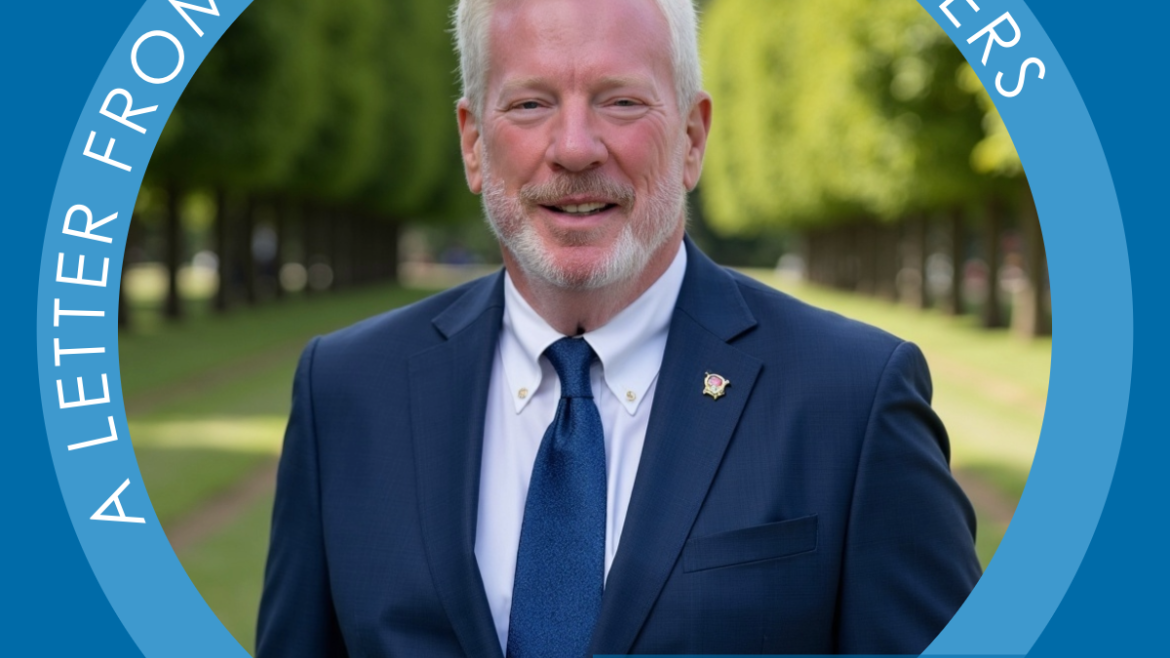
09-05-2025 A Letter from Our Servant Leaders

09-05-2025 A Letter from Our Servant Leaders 2560 1707 admin

Honoring Heritage, Embracing Change
2025 Annual Assembly, Louisville, KY
John Berry
Good morning, my Fellow Vincentians
It truly is a joy, and I mean a soul-deep joy, to stand before you this morning; old friends, new friends, colleagues, co-workers in mission, partners in faith. I look out at this room, and I see faces of people who care. That might sound simple, but think about it: in this age, when so much thrives on cynicism, on cruelty, on indifference… choosing to care, choosing to show up, choosing to stay faithful is an act which deserves great celebration.
We are this week, gathered as a Vincentian Family, to learn, grow, celebrate and to challenge ourselves as an organization. An organization founded in the year 1833. That is not just a date. That is a legacy. Old enough that our founding minutes were probably written with quill pens… but young enough that what they dreamed still beats in our hearts today.
Our theme for this National Assembly is Honoring Heritage, Embracing Change. Now, let me tell you something: as a theme, that’s dangerous. Because if you lean too hard into “heritage,” you run the risk of polishing brass plaques, telling sentimental stories, and quietly slipping into irrelevance. If you lean too hard into “change,” you run the risk of tossing away everything that gives you your character, your soul, your music.
So, what do we do? We do not choose between honoring heritage and embracing change. Like a good marriage, we commit ourselves to both. We strike a balance. Or, even better, we dance the dance, sometimes heritage leads, sometimes change leads, sometimes both stumble across the floor, but together, they create beauty that is timeless.
Honoring Heritage: Roots that Keep Us Grounded
Close your eyes for a moment and imagine those who came before us. Imagine that year: 1833. No airplanes. No antibiotics. No reality TV. No email to clutter inboxes at 7 a.m. just when you’re reaching for your first cup of coffee.
But there were immense needs. 1833 was a world of poverty, of social upheaval, of communities torn apart by war, famine, and inequality. And into that difficult world, our founders planted a seed. …A seed that has grown into the mighty tree we gather under today.
Consider what they gave us. They gave us more than a Rule. More than a name that doesn’t fit so well on a lapel pin or business card. More than even a mission. They gave us a vision. A conviction that faith is never meant to be kept locked up in a private devotion alone. Faith breathes best when it breathes outward, when it is embodied in works of service, when it lifts those who are bowed down.
Again and again through our history, that vision proved stronger than any obstacle. Wars came and went. Sixteen years after the first Conference in the United States formed in St. Louis the Civil War almost tore our nation apart, but we endured. Twenty-six years after the first Conference in my Council in Georgia was formed, the Great Depression almost destroyed America, but we endured. Other recessions tried to starve us. But we endured. New social movements tried to ignore or bury church-affiliated work in the secular age. Still, our vision lived. Or mission thrived.
Why? … Because people, ordinary people just like us, kept showing up. People like our grandparents, our parents, our mentors. Volunteers who stayed up too late visting people in need, processing checks to keep someone from being thrown out in the street, stocking thrift store shelves, or peeling potatoes for dining halls and soup kitchens. Conferences who endured meetings with too few resources and too many needs.
Supporters who believed that even a little money, in the right hands, with the right heart, could change a life.
My friends, honoring heritage means honoring them. The quiet saints whose names rarely make it onto buildings or banners. They are the reason we are here.
The Gift of Institutional Memory
Heritage also means institutional memory. Too often we hear people today say, “The church is irrelevant,” or “Nonprofits are inefficient,” or worse, “Charity is outdated.” And yet, our history tells another story. We survived because what we offered was not irrelevant, not outdated, but essential.
And here’s the thing: in times of chaos or confusion, our first instinct should be to remember. Not to cling to memory as nostalgia, but to use memory as a compass. A guide star. Yesterday’s struggles guide today’s courage. Yesterday’s failures keep us humble. Yesterday’s triumphs remind us that God really does supply daily bread, even when the cupboard looks bare.
So yes…as we plan, as we dream, as we innovate, we still honor heritage. Because even the most modern skyscraper is built on a foundation.
But I am not going to deliver a museum tour this morning. We honor the legacy not by staring at it, but by extending it. And that requires something that is both exhilarating and terrifying.
It requires change. Embracing Change
Change is Inevitable, but let’s be honest. Are we comfortable with change? (pause for reaction) Some of you are nodding …others are thinking, “Depends what’s being changed.” Some of you are sayin, neck no! (Or maybe something a little stronger).
Human beings don’t love change by nature. Familiar patterns feel safe. Familiar hymns, familiar meeting formats, familiar committee structures, these are our security blankets.
I’ll bet there are plenty of you in this room who, like me, just don’t feel right when the Choir at Sunday Mass tries to interject some new songs into the Liturgy. No, we yell (quietly to ourselves because after all, we’re at Mass). Give me my familiar hymns, my comfortable music.
I once heard someone joke about a pastor who wanted to move the hymnals from one side of the pews to the other. The Parish Advisory Council recommended doing it one inch per year so nobody would notice!
But let’s face it, change is inevitable. Change is not something to fear; it is something to steward. Because God’s own creation is built on change: seasons turning, years shifting, children growing, ideas unfolding. Every cell in your body is proof that change is happening constantly. Why then should we think our organization or mission is exempt from that holy rhythm?
The New Face of Need
Let me tell you something you no doubt already know and understand; the face of poverty and needs of today’s world are are different. In 1833, the frontier problem for charity was bread and shelter, basic survival. Today, of course, those remain. Hunger, hunger, always hunger. Homelessness. Addiction. But equally, we face needs our founders could hardly have imagined:
Digital poverty. The child who has a classroom but no internet access.
Mental health crises. The young adult, more connected online than any generation before, yet lonelier than ever.
Global displacement. Refugees from poverty, terror, and war zones around the world, appearing on our shores and in our parishes.
Climate vulnerability. Families not only impoverished by economics but displaced by floods, fires, hurricanes. Our heritage equips us to feed stomachs. Change requires us to also feed spirits, heal trauma, and transform unjust structures.
That is not betraying our roots. That is deepening them. Because what did our founders care about most? Loving God by serving real human needs. If the needs change, then our methods must as well.
Relevance with Youth and Young Adults
Let me address perhaps the most urgent part of this conversation: youth and young adults.
I want to be crystal clear: We cannot survive, let alone thrive, without young people. Those of you in your 20s, 30s: you are not just the “someday leaders.” You are already leaders, already carrying part of this mission.
Sometimes, when older organizations think about youth, they panic. They say: “How do we attract them?” And a frantic agenda begins – let’s add Instagram, let’s add hashtags, how about a pizza night? But let’s be honest: the younger generation is savvy. They can sniff out when you are using pizza as bait.
If we really want relevance, then we must go deeper. Young people want three things: authenticity, purpose, and participation.
Authenticity. Don’t give them sugar-coated jargon. Give them honesty, meaning and truth, teach them honesty, meaning and truth.
Purpose. Show them that we are not here to preserve our institution—we are here to serve real human pain.
Participation. Don’t just give them an internship to “watch and learn.” Let them shape the plan, shape the future, and make an impact.
If we do this, they will come, not because of flashy marketing, but because young adults are starved for purpose and meaning in a noisy world. And we have purpose and meaning to offer in abundance.
Growing New Members and Sustaining the Mission
This brings us to the perennial, age-old, motion-at-every-meeting topic: membership growth.
We all want to see more people in our Conferences. Not just younger people, but new people of every age. People bring gifts, energy, new ideas, and, yes, let’s be practical, resources.
But membership is not about creating new Vincentians. It is about extending an invitation to live into something bigger than yourself. It is about extending an invitation to live something bigger than yourself.
When people ask me, “How do we attract new members?” The best answer I can give is one word: hospitality. Not gimmicks, not numbers-reporting, but hospitality.
Hospitality that says: “You belong here before you prove yourself.”
Hospitality that says: “We see you not as a cog for our machine but as a gift to our family.”
Hospitality that says: “This is not our show. This is our shared work, come share it.”
People stay where they feel they belong. That is true in friendships, in churches, in nonprofits. If we offer belonging, the rest will follow.
Heritage and Change as Dance Partners
Now, allow me, just for a moment, to lean into metaphor. Imagine, if you will, a ballroom. Lights glowing. Musicians tuning. Onto the dance floor walk two figures: one named Heritage, one named Change.
Heritage has the poise, the discipline, the old-world charm. Change has the energy, the fire, the improvisation. Left alone, each is incomplete. But when they take hands, when they move together? The dance is electric.
That is us. That is the Society of St. Vincent de Paul. Part philosopher, part entrepreneur. Part historian, part visionary. Always remembering, always reaching.
Humor About Our Challenges
Now, we need to sometimes laugh at ourselves a little, don’t we? Because change and growth are not all glorious imagery. Sometimes they’re well … messy.
You know what I mean. A committee decides to “modernize” the thrift store, but it takes two months arguing about what color the carpet should be. Someone suggests we “go digital,” and before long, half the membership is still printing emails, and the other half is arguing about password resets.
That is reality, so let us embrace that chaos. Let us laugh at our quirks while still pushing forward. Because humor isn’t frivolous. Humor is a holy antidote to despair. A room that can laugh together is a room that can build together.
VisionSVdP
As we begin phase III of our VisionSVdP process, we have the opportunity to channel the energy, the fire, and the inspiration of change in concrete ideas and actions for our future. The process of Phase III is critically important because it allows the collective efforts of our listening sessions last year and earlier this year to become focused and aimed at specific changes we want to see. Some of expressed a concern that the Phase III process was complicated and laborious. We’ve heard those concerns and will be changing it to make it easier for every Council and Conference to participate. This is a very important part of VisionSVdP and I hope everyone will participate.
The Importance of Public Policy and Advocacy
I also want to talk this morning about an area of our work that is sometimes controversial but is absolutely essential – public policy and advocacy.
Now, some of you may be thinking, “Wait a minute, we’re a charitable organization. What does public policy have to do with us? Isn’t our mission simply to feed the hungry, to clothe the naked, to shelter the homeless?”
Yes. Absolutely yes. That is always our mission. But if we stop there, if we only respond to emergencies without also asking why the emergencies are happening, then we will always be playing catch-up.
Charity alone is never enough. Charity is the bandage, the food on the table tonight, the rent kept intact for this month. And thank God for it. But as any nurse or physician knows, once you apply the bandage, you also must ask: What caused the wound? How can it be prevented? How can healing be made permanent?
Public policy is where those questions get answered or get avoided. And advocacy is the way we make sure they are answered.
Why Public Policy Matters
Poverty is not just bad luck. Poverty is not just individuals making mistakes. Poverty is often the result of broken systems and short-sighted policies. A lack of affordable housing. A minimum wage that does not sustain a family. A health care network that leaves people behind. Gaps in education access. Marginalized neighborhoods that receive fewer investments but higher policing. When we ignore policies, we only ever dig the same trench again and again, giving out food but never asking why grocery stores disappeared from certain neighborhoods; handing out coats in the winter but never questioning why so many working families still cannot afford heating oil.
When we step into advocacy, though, our charity becomes amplified. Instead of just filling empty stomachs, we create food policies that bring down hunger rates across generations. Instead of endlessly handing out bus fare, we push for transportation systems that are dependable, accessible, and affordable for all. Instead of treating homelessness as an endless “one-by-one” crisis, we push for zoning, housing initiatives, and rental protections that prevent thousands from losing their homes.
This is not an abstraction. This is the multiplication of mission. It is the difference between serving one hundred people today and transforming the lives of hundreds of thousands tomorrow.The Tension Between Direct Service and Advocacy
Now, I am not naïve. I know advocacy can make people nervous. Trust me, I have read some of the comments on my Servant Leaders columns. Direct service feels safe, non-controversial. You can show someone a bowl of soup and say: “This is love.” It is hard to argue with that. Advocacy, on the other hand, gets messy. It asks us to step into debates, into legislative chambers, into city hall meetings where not everyone will agree with us.
But if we do not speak in those rooms, others will, and it will not always be with compassion for the poor in their hearts. If developers, lobbyists, and industries are the only ones speaking, then policies will be shaped by those priorities. The voice of faith, the voice of charity, the voice of justice must also be present.
And there is nothing unfaithful about this. In fact, it is profoundly faithful. In fact it was mandated by Christ himself. The prophets of the Old Testament were not shy about calling out kings and leaders. Jesus himself was not silent before unjust structures. To step into advocacy is not to drift from our mission – it is to live it more fully. It was a foundation of the philosophy of Blessed Frederick Ozanam when he started the Society.
Dependency and Dignity
One critique we sometimes hear is this: “Won’t more charity and safety net governmental programs simply create dependency?” It’s a fair question. But let us be honest, the greatest creator of dependency is not charity. The greatest creator of dependency is bad policy.
Think of it: when wages are too low, when schools are underfunded, when health care is unaffordable, when housing is out of reach, people are trapped in dependency. They do not choose dependency. It is manufactured by systems that deny them opportunity.
Good policy, on the other hand, restores dignity. When workers earn a living wage, when schools prepare children well, when housing is safe and sustainable, when medical care is accessible, then people are freed – not only from dependency on charity, but sometimes from dependency on the very government supports that opponents of justice complain about.
Advocacy, therefore, is not about fostering dependency but dismantling it. It is about creating conditions in which families thrive on their own strength and creativity. It is about enabling what Catholic social teaching calls subsidiarity: letting people and communities flourish at the most local level possible, without the crushing weight of systemic injustice.
Advocacy as Love in Action
Some will say: “But shouldn’t we just leave politics out of it?” And to that I reply – with love but with firmness – NO. Poverty is not a neutral issue. Hunger is not non-political. Lack of housing is not simply a coincidence. Every one of these conditions is impacted by legislation, budgets, funding priorities, and civic decisions. To pretend otherwise is to close our eyes to reality, put our heads in the sand, and hope it will all go away without us having to do the hard work. Let me tell you if you don’t already know – it won’t.
Advocacy, understood rightly, is not partisan. It is prophetic. We are not here to endorse candidates. We are not here to wave party flags. We are here to measure every policy, every decision, against a moral test: Does this lift up the poor? Does this defend the vulnerable? Does this respect human dignity?
If yes, we will support it. If no, we will oppose it. That is not politics as “us versus them.” That is public discipleship. That is mission with a megaphone.
Advocacy and the Youth
And let me say again, we must connect this to young people. Because what is clear about today’s youth movements is this: they care deeply about justice, and they are not afraid of advocacy. They march against climate change. They organize voter drives. They campaign for racial equality. If we want young adults to see our organization as a home for their energy, then we cannot shy away from advocacy. We must show them that faith and policy can work hand in hand for the good of society.
Ironically, if we refuse to engage in advocacy, we risk being seen as irrelevant by the very generation we hope to include. Young people want their lives to matter. They want their energy to build more than programs; they want to change structures. If our organization can show credibility in both feeding the hungry and speaking truth to power, then we will win their trust.
Practical Steps Forward
So, what does Advocacy look like? Well to start, it needs to include things that are practical, doable, and tied to our mission. Things like:
Coalition Building. We gain strength when we join with others – faith groups, secular nonprofits, civic leaders. Alone, we whisper. Together, we roar.
Training and Education. Advocacy should not be the job of a few. It should be built into our DNA. We must train our volunteers and staff to understand the issues, to share their stories, to become ambassadors for justice.
Witness with Presence. Sometimes advocacy is not about statistics or budgets. Sometimes it is about bringing a family who has experienced homelessness into a hearing room, letting them tell their story, making legislators look human suffering in the eyes.
Persistence. Policy change does not happen overnight. But then again, neither does ending hunger or poverty. This is marathon work. We are in it for the long haul.
Charity and Justice Together
Charity and advocacy are not enemies. They are companions. To paraphrase Blessed Frederick’s famous quote, Charity is the hand that wipes away the tear. Advocacy is the courage that stops the injustice that caused the tear. Charity saves lives today. Advocacy transforms lives for tomorrow.
To honor our heritage, we must continue our beautiful works of charity. To embrace change, we must also embrace advocacy as an essential arm of our mission. If we want to address poverty – not just temporarily soothe it… if we want to reduce unnecessary dependency – not just complain about it… then advocacy must be part of our DNA.
Because what is the point of feeding endless lines of hungry people if those lines only grow longer year after year? We were not founded simply to manage poverty – we were founded to help end it.
And with God’s help, and with courageous public advocacy, we still can.
A Call to Courage
So where do we end? We end with courage.
We honor our heritage – by remembering, by giving thanks, by grounding ourselves in the vision of 1833.
We embrace change – by not fearing it but shaping it with Gospel values.
We invite the young – not as spectators, but as builders.
We address need – by daring to go where the suffering is, with creativity. We grow – not for our own survival, but because the world needs more mercy, more justice, more hands at the plow.
This organization has survived nearly two centuries. But survival is not the goal. Faithfulness is. Relevance is. Holiness is.
And if we embrace those, then I promise: the next hundred years will not just be survival, they will be flourishing.
Closing
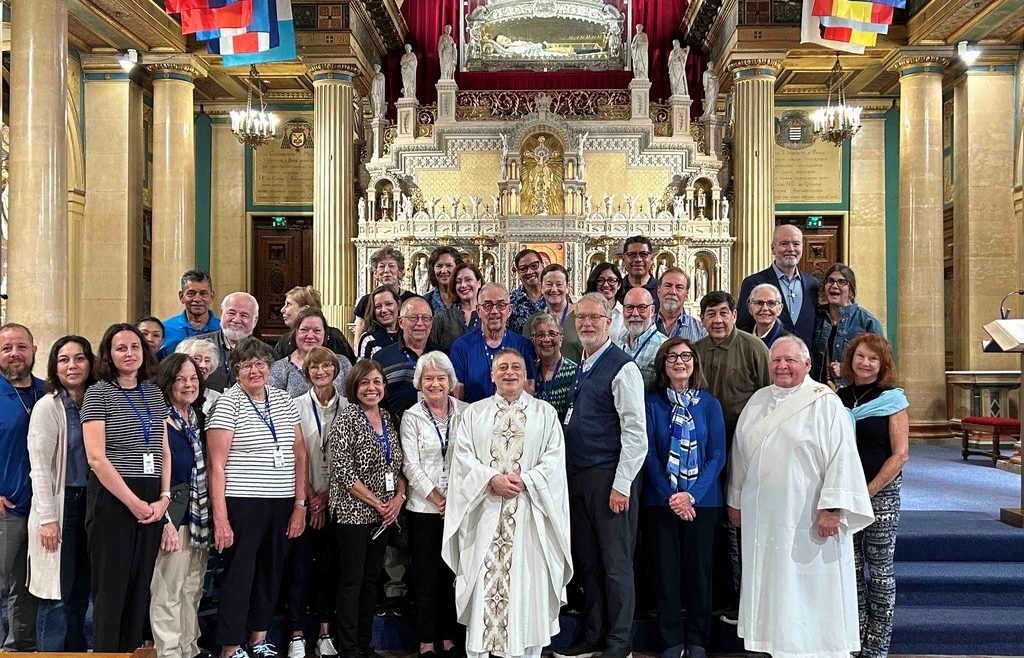
In 1833, do you think our founders knew more than 800 of us would be here this week? Of course not. But they knew this: If love is real, if God is faithful, if the poor are served, then the mission would outlast them.
Now it is our turn. Our turn to decide if this work will outlast us. Our turn to decide if we will cling to old ways for comfort or innovate
with courage for the sake of love. Our turn to say: Yes, heritage matters. And yes, change matters. And together they make us who we are.
So, my beloved friends, let us honor our heritage by embracing our future. Let us embrace our future by honoring our past.
And let us never, never forget: the Spirit is not finished with us yet.
Thank you.
And may our next chapter be the boldest, bravest chapter yet.

Friends of the Poor Grant Award Winners 2025 – Round 2

Friends of the Poor Grant Award Winners 2025 – Round 2 1080 1080 admin

Congratulations to the Friends of the Poor Grant Award Winners of the Mid-Atlantic, North Central, and Southeast!  

We received 177 grant applications totaling $862,910. Grant awards for this round total $135,000.

Through simple application process, SVdP Conferences and District Councils can apply for up to $5,000 from the National Council’s Friends of the Poor® Fund. The Friends of the Poor® funds available to grant is normally limited to the amount raised and/or approved by the National Council budget process. Individual grant award amounts may vary from the application amount but will not exceed $5,000.

Grants are targeted to specific areas of need, above and beyond available Conference resources: assistance for rent/housing, utilities, food, clothing, medical, transportation, and baby/children needs. No systemic change projects.

FOP Grant Awards – July 2025
Mid-Atlantic $5,000.00 Our Lady of Good Counsel- Vienna, VA Emergency Housing Assistance
Mid-Atlantic $5,000.00 St. Dorothea – Eatontown, NJ Rental Payments
Mid-Atlantic $4,500.00 St. Luke the Evangelist – Glenside, PA Rent, Food gift cards, Utility assistance
Mid-Atlantic $4,500.00 St. Phillip – Pittsburgh, PA Rent & Utility assistance
Mid-Atlantic $4,500.00 St. Timothy – Chantilly, VA Emergency assistance
Mid-Atlantic $3,000.00 Holy Spirit – Mullica Hill, NJ Rent & Utility assistance
Mid-Atlantic $3,000.00 Our Lady of Perpetual Help – Bethlehem, PA Rent and Utility assistance
Mid-Atlantic $3,000.00 St. Michael the Archangel – Glen Allen, VA Rent assistance to prevent Homelesness
Mid-Atlantic $2,500.00 Holy Spirit – New Castle, PA Utilities, Shelter, Food, Other needs
Mid-Atlantic $2,500.00 St. Michael the Archangel & Mary Mother of Peace – Georgetown, DE Rent payment, Utlities assistance to prevent disconnection, Bus passes
Mid-Atlantic $2,000.00 Immaculate Conception St. Cecilia – Glen Burnie, MD Sarahs hope family shelter, Grief ministry, Camp St. Vincent
Mid-Atlantic $1,500.00 St. Mary of the Immaculate Conception – Fredericksburg, VA Emergency Vehicle related expenses
North Central $4,200.00 St. Joseph Hand of Mercy – Devils Lake, ND Rent, Utilities, Transportation, Food, Clothing
North Central $4,000.00 Cathedral of the Holy Spirit – Bismark, ND Housing, Utilities, Transportation
North Central $4,000.00 Holy Family – Rockford, IL Rent & Utlities
North Central $4,000.00 Saints Joseph and Francis Xavier – Wilmette, IL Seasonal Outerwear & Boots/Gym Shoes
North Central $4,000.00 St. Joseph – Fort Atkinson, WI Rent & Utlities
North Central $4,000.00 St. Kateri Tekakwitha – Walker, MN Electricity, propane, car repairs
North Central $2,500.00 Queen of Apostles – Chicago, IL Hot meals, To go bags, Supplies
North Central $2,500.00 St. Anthony on the Lake – Pewaukee, WI Rent & Utlities
North Central $2,500.00 St. Francis Assisi – Freeport, IL Rent
North Central $2,500.00 St. Francis St. Mary – Sturgis, SD Rent
North Central $2,500.00 St. John XXIII – Waseca, MN Rent, Utilities, gas, car issues
North Central $2,500.00 St. Maria Goretti – Madison, WI Rent assistance
North Central $2,000.00 Blessed Sacrament – Milwaukee, WI Rent assistance, New Beds, Appliances
North Central $2,000.00 St. Bernadette – Appleton, WI Rent, Utilities, Bus passes/Gas cards, Laudormat gift cards
North Central $2,000.00 St. Joseph – Waupun, WI Housing, Utilities, Personal Items, Fuel&Transportation
North Central $2,000.00 St. Mary Frances of the Five Wound – Berwyn, IL Rent & Utlities
North Central $2,000.00 St. Mary St. Andrew – Mayville, WI Hotel Stays, Rent Payments, Disconnections
North Central $1,000.00 St. Mary – Oregon, IL Rent & Utlities
North Central $1,000.00 Sts. Peter & Paul – Weyauwega, WI Rent & Utlities
North Central $800.00 St. Joseph – Sheboygan, WI Gas Assistance
Southeast $5,000.00 Light of Christ – Clearwater, FL Rent/deposits, Motel, electric/water, Groceries
Southeast $5,000.00 Our Lady of Lourdes – Raleigh, NC Rent and Utility Assistance
Southeast $5,000.00 St. Elizabeth of Hungary – Columbus,MS Car Repairs
Southeast $5,000.00 St. Joseph Sacred Heart – Greenville, MS Purchase of box fans
Southeast $5,000.00 St. Michael – Gainesville, GA Rent assistance
Southeast $5,000.00 St. Michael – Murrells Inlet, SC Utilities
Southeast $2,000.00 Annunciation of the Lord – Decatur, AL Rent, Utility Payments
Southeast $2,000.00 Epiphany – Venice, FL Temp lodging for homeless
Southeast $2,000.00 Nativity of Our Lord – Pensacola, FL Rent Assistance, Utilities
Southeast $2,000.00 Our Lady of Lourdes – Atlanta, GA Rental assistance
Southeast $2,000.00 St. Mark the Evangelist – Birmingham, AL Rent and Utility Assistance
Southeast $2,000.00 St. Mary Help of Christian – Aiken, SC Utility & Food

Friends of the Poor Grant Award Winners 2025 – Round 1

Friends of the Poor Grant Award Winners 2025 – Round 1 1080 1080 admin

Congratulations to the Friends of the Poor Grant Award Winners of the Northeast Region, South Central Region, and West Region! 

Northeast $5,000.00 Corpus Christi Conference St. Johnsbury VT Rent, Transportation, Fuel & Utilities
Northeast $5,000.00 Sacred Heart Conference Merrick NY Car payments/repairs, Car Insurance/Registration, transportation
Northeast $5,000.00 Santo Christo Conference Fall River MA Rent & Food
Northeast $5,000.00 St. Boniface Martyr Conference Sea Cliff NY Rent payment to prevent Eviction
Northeast $5,000.00 St. Brendan Conference Riverside RI Rent and Utility assistance
Northeast $5,000.00 St. Charles Borromeo Conference Woburn MA Rent, Utilities, Food
Northeast $5,000.00 St. Francis of Assisi Conference Wakefield RI Food
Northeast $5,000.00 St. Joseph Conference West Warwick RI Heating/Oil/Gas, Rent (to prevent eviction), Utilities
Northeast $5,000.00 St. Pius V Conference Providence RI Rent payment & Security Deposits
Northeast $1,000.00 St. Anselm Conference Sudbury MA Rent and Utility assistance
Northeast $1,000.00 St. Frances Cabrini Conference Coram NY Beds/Bedding & Rental Assistance
Northeast $1,000.00 St. James Conference Seaford NY Rent/mortgage Utilities, Funds in kind/car repairs, transportation
Northeast $1,000.00 St. Mary of the Annunciation Conference Danvers MA Rent, Food , Utilities
Northeast $1,000.00 St. Matthias Conference Marlborough MA Rent payment & Transportation assistance
Northeast $1,000.00 St. Raphael Conference East Meadow NY Rent & Utilities
South Central $3,500.00 Sacred Heart Conference El Paso Tx Rent assistance
South Central $3,500.00 San Jose Conference Austin TX Rent and utility assistance
South Central $3,000.00 St. Gerard Majella Conference Baton Rouge LA Rent, electric, Water
South Central $3,000.00 St. Patrick Conference Houston TX Rent & Utilities
South Central $3,000.00 St. Rose of Lima Conference Houston TX Rent & Utilities
South Central $3,000.00 St. Thomas Aquinas Conference Ruston LA Rent payment assistance
South Central $2,500.00 Santa Cruz Conference Buda TX Rental assistance to avoid eviction
South Central $2,500.00 St. Helen Conference Pearland TX Food Purchase
South Central $2,500.00 St. Rose of Lima Conference San Antonio TX Food, Utilities, Rental Assistance
South Central $2,000.00 St. Helen Conference Georgetown TX Prevent Eviction, Car Repair
South Central $2,000.00 St. Mary Conference Wimberley TX Rent Payment up to 500 per family
South Central $1,500.00 St. Edward Conference Athens TX Rent & Housing
South Central $1,500.00 St. Helena Conference Amite LA Utilities, Rent, Eviction prevention
South Central $1,500.00 St. Pius X Conference Dallas TX Rent Payment
West $5,000.00 Callistus Conference El Sobrante CA Rent, Electricity, Water
West $4,000.00 Holy Family Conference San Jose CA Rent assistance & Utility payments
West $4,000.00 Holy Innocents Conference Duvall WA Large back rent/Large Utility Bills
West $4,000.00 Our Mother of Good Counsel Conference Los Angeles CA Rent payment, Room Rentals & Utilities
West $4,000.00 St. Bruno  Conference Whittier CA Rent assistance, Motel Stays, Utilities, gas card, gift cards
West $4,000.00 St. Phillip Conference Woodland WA Rental Assistance & Utility assistance
West $4,000.00 St. Stephen the Martyr Conference Renton WA Rent and Utility assistance
West $3,500.00 Christ the King Conference San Diego CA Rental Assistance & Utility Assistance
West $3,500.00 Nativity Conference Los Angeles CA Food, utilities, Eviction Prevention
West $3,500.00 Our Lady of Mount Carmel Conference San Ysidro CA Rent Assistance
West $3,500.00 St. Mark Conference Shoreline WA Rent support, Utility support, Beds & Furniture, Auto/emergency related
West $3,500.00 St. Mary Conference Eugene OR Rent assistance
West $3,500.00 St. Peter Martyr Conference Pittsburg CA Rent, utilities, Registrations & Food for pantry distribution
West $2,800.00 Immaculate Conception Conference Arlington WA Ret for neediest families
West $2,800.00 Immaculate Conception Conference Seattle WA Rent, utilities, Beds
West $2,800.00 Queen of Angeles Conference Port Angeles WA Gasoline, ferry tickets, lodging and phone/Cards
West $2,800.00 St. Catherine of Alexandria Conference Temecula CA Motel stays, Rental Assistance, Utilities Assistance
West $2,800.00 St. Matthew Conference Seattle WA Rent assistance, Eviction prevention


Our Work to Protect the Poor Must Go on After Reconciliation Bill Passage

Our Work to Protect the Poor Must Go on After Reconciliation Bill Passage 1600 1065 admin

Our Work to Protect the Poor Must Go on After Reconciliation Bill Passage

By John Berry, National President of SVdP USA 

In the Gospel reading on July 4, our nation’s independence day, Jesus called Matthew to join the disciples, prompting the Pharisees to ask why he ate with tax collectors and sinners. Jesus responded, “Those who are well do not need a physician, but the sick do. Go and learn the meaning of the words, ‘I desire mercy, not sacrifice.’”

This reading is fitting. After all, America was founded as a Christian nation. At our best, we are a nation of Matthews, sinners who hear the Word and follow Him. That is why it was so disappointing to me personally that on this very same day, a bill was signed into law that lacks mercy for the least of these.

The budget reconciliation bill, also known as the “One Big Beautiful Bill,” changes our nation’s SNAP and Medicaid programs, which will hurt men, women, and children by stripping away food and medical benefits that they rely on to survive. That is why the US Bishops and I, along with numerous other secular and faith-based organizations, urged Congress to protect Medicaid and SNAP. With freedom comes a responsibility to feed the hungry, shelter the homeless, and comfort the lonely.

So now, we must go forward. From the passage of this bill, it is estimated that millions of people will lose their Medicaid or food assistance benefits. Here are ways you can respond:

  1. We can expect an increased need for assistance in our communities. We encourage you to discuss at the local level how you might be able to adapt and scale up your services and programs.
  2. On July 17, SVdP USA’s national director of public policy and advocacy Ingrid Delgado will join a Voice for the Poor webinar to provide an update on current federal policy and how our new D.C. office staff is engaging on key issues, as well as how all of us can advocate effectively at the local level. You may register here.
  3. As SVdP USA continues to advocate for our neighbors in need, you can sign up for Voter Voice to receive electronic action alerts so that you can contact your elected officials on key legislation.

We 85,000 American Vincentians are fortified by the strength and knowledge that we are doing God’s will. We do this through our food banks and homeless shelters. We do this through our charitable pharmacies and our programs to aid immigrants. Mostly, we do this through our one-on-one encounters with people, for it is in those encounters that we see the very face of God. We will not stop working for them, and we will not stop advocating for those who have nobody else. We cannot – we will not – fail them.

Feature: Young Vincentian Excellence Awards

Feature: Young Vincentian Excellence Awards 2160 1440 admin

Young People in the Spotlight for the 2025 Young Vincentian Excellence Awards

By Linda Roghair, National Vice President of Youth, Young Adults & Emerging Leaders 


A Society-wide search for young people doing amazing work in their community is happening now.

Vincentians from across the U.S. are invited to nominate emerging young Vincentian servant leaders from their Conferences, Councils, and Special Works for two Young Vincentian Excellence Awards which will be presented at the National Assembly in Louisville, KY in August.

We are asking Vincentians to nominate a young person who serves the Society in their community, embodies servant leadership, and has a passion towards the Vincentian Charism. Nominations are open now until May 15, 2025.

Submission Requirements

  • Nominees must be involved in the Society of St. Vincent de Paul USAin some capacity (ie. Youth Conference, Youth University Conference, Adult Conference, Special Works, etc.).
  • Age groups: Youth 16-18 (High School) or Youth University (18-University age), and Young Adults (18-40)
  • Include photos, volunteer logs, etc. if possible
  • Nomination Form must be submitted via email to: YYAEL@svdpusa.org by May 15, 2025. Please include your Conference President, Council President, NCM & Regional Vice President when submitting a nomination.

Award recipients will be gifted a paid trip to participate in the 2025 National Assembly in Louisville, KY (August 28 – 30). Award recipients must commit to attending the National Assembly in order to receive the award.

Last year’s award winner Sarah of the Madison Wisconsin St. Vincent de Paul Youth Service Council had this to say:

“For me being a Vincentian means actively growing in my faith through allowing the grace of incarnational charity to fuel impactful service and beautiful friendships. Winning the Young Vincentian Excellence Award allowed me the opportunity to attend the National Assembly and connect with the Society on a larger scale. I am especially grateful for becoming a member of the YYAEL Team since this amazing group of passionate young people keep me connected to the Society while I am at a college with no current SVdP presence.”

Last year’s award winner Zoie Roghair of the Sioux Falls St. Michael Conference had this to say:

“I am grateful for what this award represents—opportunity, future growth, and community,” said Zoie Roghair of the Sioux Falls St. Michael Conference. “The award and Society have opened many doors for servant leadership, advocacy for the voiceless, friendships, and increasing the involvement of Youth and Young Adults. It is something I will cherish forever.”

Do you know a young person who serves the Society in their community, embodies servant leadership, and has a passion towards the Vincentian Charism? Please submit a completed form and any supplemental material to YYAEL@svdpusa.org by May 15, 2025.


Feature: Weaving Bonds and Building Community

Feature: Weaving Bonds and Building Community 1906 1071 admin

Weaving Bonds and Building Community

By Pam Matambanadzo, SVdP Chicago area

We “make no distinctions in those we serve because, in them, Vincentians see the face of Christ.”

We follow in the footsteps set by Blessed Frédéric so many years ago, journeying towards holiness and building on generations before us. Now that we have accepted the baton, we need to pass it on to others so that we can reinforce the strength of the baton. Our challenge is that the world has changed and evolved but our ways have lagged. Our parish communities no longer look like they did 20 or 40 years ago. We hold on to the ways we have been operating even when our efforts are not bearing fruit.

Change is hard. How do we make sure that as we journey together our legacy, like Blessed Frédéric , will inspire diverse Vincentians for generations to come?

Striving for diversity within the Society of St. Vincent de Paul is not just a reflection of societal values, but also a strategic approach to better fulfill our mission. By mirroring the diversity of both Catholic parishioners and the communities they serve, SVdP ensures a more inclusive, culturally competent, and effective response to the challenges of poverty.

Our efforts need to reflect the diversity of both those in the pews, as well as those attending Mass at different time slots to ours. Our awareness should also be inclusive of the broader communities we serve, extending beyond ethnicity and encompassing age and economic diversity. We need to ask ourselves this: Are we “enabling each person to participate actively in the Church’s mission according to his or her own charism and vocation”? Here are four areas that we should contemplate:

Inclusivity and Representation

  • Fellow Parishioners: The global Church is a community that spans a rich tapestry of cultural, linguistic, and ethnic backgrounds. Mirroring this diversity ensures that we, as an organization, are inclusive and representative of the broader Catholic community, fostering a sense of belonging among parishioners.
  • Communities Served: Those who seek assistance from us come from various backgrounds, reflecting the diversity of the broader society. By embracing diversity within our own ranks, the Society ensures that our members can better relate to and understand the unique needs of those we serve, fostering trust and creating a more empathetic and effective support system.

Cultural Competence

  • Understanding Different Perspectives: A diverse membership brings a range of perspectives, experiences, and cultural competencies. This diversity allows us to approach issues with a more nuanced understanding, ensuring that our services are culturally sensitive and relevant to the diverse needs of the communities we serve. Encountering them where they are. When stocking our pantries, are we providing food for the communities we are serving, or are we guided by our own lived experience? Culturally, we each have different comfort foods.
  • Communication and Outreach: We have always prided ourselves on our ability to tailor services based on the needs of the person in front of us. Different communities will have unique challenges and require tailored approaches. Having a diverse membership allows us to communicate effectively and engage with a wider audience, breaking down potential cultural and linguistic barriers that might hinder outreach efforts. Have we explored growth potential locally — even if we may need to accommodate other languages?

Young and Economic Diversity

  • Attracting a New Generation of Vincentians: Embracing young members ensures the longevity and sustainability of the Society’s mission. By involving younger members, the organization can benefit from fresh perspectives, technological savvy, and a passion for social justice, helping to adapt and evolve its services to meet changing community needs. Are we open to changing our meeting times to accommodate younger members with work and family commitments?
  • Economic Diversity: Economic challenges affect individuals and families across various demographics. A diverse member base, including individuals from different economic backgrounds, can bring a more comprehensive understanding of the issues related to poverty and inequality. This can lead to more effective strategies for addressing these challenges at both the individual and systemic levels.

Building a Stronger Community 

  • Collaboration and Unity: A diverse group of members fosters collaboration and unity within the organization. When individuals from diverse backgrounds work together towards a common goal, it strengthens the sense of community within community and society as a whole.
  • Inspiring Others: Seeing a diverse group of members actively engaged in service to the People of God can inspire others to join our chosen vocation. This can lead to a snowball effect, encouraging more people from various backgrounds to participate, broadening the organization’s impact and reach.

The Multicultural Diversity Committee is committed to “End Poverty Through Systemic Change” with a laser focus on removing all barriers associated with discrimination of any kind through education, awareness, and compassion. The committee holds a monthly Zoom call to encourage Vincentians to advocate for justice in their local community. Learn more information at https://members.ssvpusa.org/diversity

Ozanam PR Corp/SVdP Eyedentity Program Celebrates 40 Years

Ozanam PR Corp/SVdP Eyedentity Program Celebrates 40 Years 2321 1807 admin

Written by Jack Ahern, MagnaliteCatholic.com

In 1985, the SVdP Phoenix Council decided to inform the public that St. Vincent de Paul exists. To help with this, they formed the SVdP Eyedentity Program. Ozanam PR Corp. was created to run it. Under the leadership of Phoenix Council board member, Jack Ahern, it began to operate. Jack ran it out of his company warehouse.

When word got out about the program, it quickly spread from Phoenix to throughout the United States. In 1996, the SVdP National Council contracted with Ozanam PR Corp. to be an official company promoting and producing SVdP logo merchandise.

From a dozen products in 1985, Ozanam PR Corp now produces and warehouses over 100 SVdP items.  This includes apparel, awards, statues, medals, rosaries, lapel pins, prayer boxes, lanyards, name badges and much, much more. Having almost $100,000 worth of products in their warehouse, they can generally ship orders within a couple of days.

With four generations of Vincentians, the Ahern family has a pretty good idea of what items are needed to help us Vincentians with our vocation.  The dedicated staff of Ozanam PR Corp is honored to have served their fellow Vincentians for 40 years.  We hope to continue our service for many years to come. Please visit us at www.MagnaliteCatholic.com for a complete catalog of our products.

Haiti Daughters of Charity Thank You

Haiti Daughters of Charity Thank You 289 269 admin

Dear Benefactor Friends,

We are entering a new liturgical year, inviting us to reflect on the great mystery of God, who leans toward humanity by sending His Son, Jesus, made man, to give us the fullness of true life. Pope Francis is proposing a year of prayer and a journey of hope for the Holy Year 2025. The Advent season is a time of Hope, grounded in faith in God, who is love. The most beautiful proof of this love is the Father sending Jesus and Jesus’ self-gift on the cross for the salvation of humanity. Let us be pilgrims of hope, following in Christ’s footsteps and, in imitation of Him, proclaim to our brothers and sisters the boundless love of His heart.

This past year has brought many blessings and challenges to our land of Haiti, where we are witnessing the exodus of a people sinking deeper into social instability. Yet, this people lives in hope, believing that one day the light will shine brightly!

Let us pray for all the children, youth, adults, and elderly who live in suffering and uncertainty. Our presence among them is a sign of hope, supporting their daily efforts. Let us be attentive to our brothers and sisters around us, offering them a word, a gesture of closeness, or material aid. For them, these are manifestations of God’s tenderness, bending to hear the cries of the afflicted.

Your timely contributions in aid of Haiti are not in vain. On the contrary, they are drops of water that increase the sea of solidarity with this people.

Dear Benefactor Friends, be assured of our prayers for you and for all your loved ones. Receive the best wishes of our brothers and sisters living in poverty for the Christmas and New Year celebrations.

May God fill you with grace and blessings forever.

The Daughters of Charity of St. Vincent de Paul

https://members.ssvpusa.org/wp-content/uploads/2024/12/Haiti-Thank-You-Images.docx

COMPAGNIE

Chers Amis bienfaiteurs.

Nous voici à une nouvelle année liturgique qui nous invite à réfléchir sur le grand mystère de Dieu qui se penche sur l`humanité en envoyant son Fils Jésus fait homme pour nous donner la plénitude de la vraie vie. Le Pape François nous propose une année de prière et un parcours d`espérance pour l`année sainte 2025. Le temps de l`Avent est le temps de l’Espérance fondée dans la foi en Dieu qui est amour. La preuve la plus belle de cet amour est l`envoi de Jésus par le Père et le don de Jésus sur la croix pour le salut des hommes. Soyons pèlerins d`espérance, mettons nos pas dans ceux du Christ et à son imitation, annonçons à nos frères et sœurs tout l`amour de son cœur.

Cette année qui s’achève, nous a porté pas mal de choses bonnes et moins bonnes dans notre terre d`Haïti où nous sommes en train de vivre un exode d’un peuple qui va de mal en pire dans une instabilité sociale ; et pourtant ce peuple vit dans l’espérance qu’un jour on verra briller la lumière !

Prions pour tous les enfants, les jeunes, adultes et personnes âgées qui vivent dans la souffrance et l`incertitude de vie. Notre présence au milieu d`eux est un signe d’espérance les soutenant dans leurs efforts quotidiens disant nos frères et sœurs qui vivent autour de nous. Leur offrir une parole, un geste de proximité, une aide matérielle est pour eux la tendresse de Dieu qui se penche aux cris des malheureux.

Votre apport ponctuel d’aide en faveur d`Haïti n`est pas vain, au contraire ce sont des gouttes d’eau qui font augmenter le volume de la mer de solidarité avec ce peuple.

Chers Amis bienfaiteurs, soyez assurés de nos prières pour vous et pour tous ceux qui vous sont chers ; Recevez les souhaits les meilleurs de nos frères et sœurs les pauvres pour les festivités de Noel et du nouvel An.

Que Dieu vous comble de grâce et de bénédictions à jamais.

Les Filles de la Charité de St Vincent de Paul


National Puerto Rican Heritage Month

National Puerto Rican Heritage Month 624 587 admin

Join us this November as we celebrate National Puerto Rican Heritage Month!

“Had we but one spark of the divine fire that consumed the heart of Jesus Christ, would we remain with our arms folded and abandon those whom we could assist”—St. Vincent de Paul.

We know that we are called to assist our neighbors in need. Yet, if we had that one spark of divine fire that consumed the heart of Christ, could we ignore and be blind to the beauty of the cultural heritages of our neighbors in need. Our neighbors may be caught up in situational or generational poverty, but their culture and history keeps them grounded and sustains them through their difficulties.

In this month of National Puerto Rican Heritage Month, let’s look at two traditional types of Puerto Rican music beyond salsa: the music of the mountains, or jibaro music, and bomba.

Take a listen to this traditional music of the people in the mountainous region of Puerto Rico by Ramito: https://www.youtube.com/watch?v=qHA_30e7eEc&list=PLygGmiBruOlf6Aw7BDr34GWA2eDp6OosP&index=10

Modern jibaro music composed by Fabiola Mendez: https://www.youtube.com/watch?v=1yJjALda0X4

The second traditional type of Puerto Rican music is bomba. Bomba is an umbrella term that refers to a variety of musical styles and associated dances originating in Puerto Rico. It was developed by enslaved Africans and their descendants in sugar plantations along coastal towns, most notably Loiza, Mayagüez, Ponce, and San Juan, during the 17th century.  https://www.youtube.com/watch?v=zXRMF2ndL2Y

Take a listen to the vibrant bomba that a group of young people played in a subway in Chicago. This version is a modern interpretation of bomba.

https://www.youtube.com/watch?v=nkK68RxqKAE&list=RDQMpRXHg7WufZY&index=7

When we look at the table of St. Vincent de Paul, those of us with eyes to see can almost see the Puerto Rican jibaro and the dancers and players of bomba at the table.


NATIONAL HISPANIC HERITAGE MONTH

NATIONAL HISPANIC HERITAGE MONTH 1024 512 admin

SEPTEMBER 16 MEXICAN INDEPENDENCE DAY 

Written by: Margarita Galindo – In honor of National Hispanic Heritage Month, which is September 15 through October 15 

The Independence of México was the process in which the former territory of New Spain, part of the Spanish empire, became an independent country. Mexico was part of the Latin American wars of Independence.

Traditionally, the celebration of this national holiday begins on September 15, when, around 11:00 p.m., the President of the Republic of Mexico gave the Cry of Independence from the National Palace and rang the bell of Dolores, the same one that rang during the harangue pronounced by the Catholic priest, Miguel Hidalgo, on September 16, 1810.

We, Mexicans, celebrate this National Holiday with respect and pride.

We love our homeland every day of our lives because those who do not value the place where they were born have no identity.

I am incredibly happy to be Mexican. VIVA MEXICO

Mexico celebrates this national holiday with a military parade. The Mexican president reviews the army and then he leads the parade.

In other countries, Mexicans celebrate September 16 with a parade very different from the one in Mexico.

The United States of America recognizes and celebrates the culture, history, and contributions that the Hispanic/Latino community have made to the American Society and culture.

The celebrations begin in the middle rather than the start of September because it coincides with the National Independence days in different Latin American countries. Guatemala, Honduras, El Salvador, Nicaragua, and Costa Rica celebrate their independence on September 15, followed by México on September 16, Chile, September 18, and Belize, September 21.


EL 16 DE SEPTIEMBRE DÍA DE LA INDEPENDENCIA DE MÉXICO 

La Independencia de México fue el proceso por el que el antiguo territorio de Nueva España, que formaba parte del imperio español, se convirtió en un País Independiente. México formo parte de las guerras de Independencia.

Tradicionalmente, la celebración de esta fiesta patria empieza el 15 de septiembre, cuando —alrededor de las 23:00 horas— el presidente de la República de México da el Grito de Independencia desde Palacio Nacional y hace sonar la campana de Dolores, la misma que sonó durante la arenga que pronunció el Cura Católico Miguel Hidalgo el 16 de septiembre de 1810.

Nosotros los Mexicanos festejamos las Fiestas Patrias con respeto y orgullo.

Amamos a nuestra patria cada día de nuestras vidas porque aquel que no valora el lugar donde nació, no tiene identidad.  Yo soy muy feliz de ser Mexicana. VIVA MÉXICO

México celebra esta fiesta nacional con un desfile militar.  El presidente mexicano pasa una revisión del ejército y luego encabeza el desfile.

En otros países, los mexicanos celebran el 16 de septiembre con un desfile muy diferente al de México.

Los Estados Unidos de América reconoce y celebra la cultura, la historia y las contribuciones que los hispanos/latinos han hecho a la sociedad y la cultura estadounidense.

Las celebraciones comienzan a mediados de septiembre y no a principios de septiembre, ya que coincide con los días de la Independencia Nacional en diferentes países de América Latina: Guatemala, Honduras, El Salvador, Nicaragua y Costa Rica celebran la suya el 15 de septiembre, seguida de México el 16 de septiembre, Chile el 18 de septiembre y Belice el 21 de septiembre.


Sign Up for Our Newsletter

Privacy Preferences

When you visit our website, it may store information through your browser from specific services, usually in the form of cookies. Here you can change your Privacy preferences. It is worth noting that blocking some types of cookies may impact your experience on our website and the services we are able to offer.

Click to enable/disable Google Analytics tracking code.
Click to enable/disable Google Fonts.
Click to enable/disable Google Maps.
Click to enable/disable video embeds.
Our website uses cookies, mainly from 3rd party services. Define your Privacy Preferences and/or agree to our use of cookies.
Skip to content