• Search the Site

news

Communicating the Charism and Spirituality of Saint Vincent de Paul

Communicating the Charism and Spirituality of Saint Vincent de Paul 1024 540 Devine PR Postings

Rome, 27 September 2025

To the members of the Vincentian Family

Communicating the charism and spirituality of Saint Vincent de Paul: a legacy that never fades

Dear members of the Vincentian Family,

May the grace and peace of Jesus be always with us!

Each year, the Solemnity of Saint Vincent de Paul is a special moment to rediscover his spiritual legacy, strengthen the bonds of communion within the Vincentian Family, and renew the missionary commitment that unites us.

Pope Francis, in his message of 11 December 2024, sent to me on the occasion of the commemoration of the fourth centenary of the foundation of the Congregation of the Mission, gave all of us a clear recommendation; namely, to persevere in the charism and spirituality lived by our Founder, Saint Vincent de Paul. In fact, the late Pontiff wrote that “it is fitting to reflect on the legacy of spirituality, apostolic zeal and pastoral care that Saint Vincent de Paul bequeathed to the universal Church.”

To reflect is to persevere. However, this action does not mean remaining “mummified” in practices, but rather interpreting the “signs of the times” in the light of the Gospel of Charity, which is God. Our charism, in fact, always refers us back to the concrete conditions, to the human contexts in which we are immersed, in order to build meaningful relationships where we are sent as witnesses of Love.

The charism, as Saint Vincent taught, requires each of us to interpret human situations in order to proclaim and live the Gospel, just as it obliges us to promote human development in an integral and concrete way. Only in this way can we be recognized as witnesses of Charity and, therefore, witnesses of the Love we have encountered and wish to proclaim.

In his life, Saint Vincent allowed himself to be surprised and moved by the newness of the Gospel, because he was capable of letting the face of Jesus present in the poor radically challenge him. Love thus became hope for something new, an active hope that puts the proclamation of the Gospel first, living it and then preaching it with words.

Saint Vincent presents himself to us as a man of hope because in his concrete actions he showed uncompromising faith in God, faith lived in the most marginal human situations, and he brought the fragrance of love where the abandonment of the poor spread its acrid smell. It is there that Vincent made hope active because he “got his hands dirty” with humanity and bore witness to the Truth.

The Mystic of Charity is still today the man of active hope, and all of us, members of the Vincentian Family, become like him, hands that serve, hearts that love. In a world marked by wars, injustice, and new forms of poverty, Saint Vincent reminds us that Christian hope is not escapism, but commitment. He invites us to believe that, even in the face of seemingly hopeless situations, charity can open new doors. Being Vincentians in today’s world means bringing hope that translates into service, capable of uniting faith and action, contemplation and social transformation.

Hope, faith, and love, as lived by Saint Vincent, are virtues to be lived and communicated everywhere and by every means. Recent Popes have reiterated this in their magisterium and have lived it through the use of the mass media, social networks, and every means of social communication.

We live in an age marked by the power of social communication: words, images, social networks, videos, podcasts, websites. All of this is not simply a neutral tool, but a real living environment, in which women and men of every culture meet, learn information, are formed, and sometimes even are hurt by distorted messages.

As members of the Vincentian Family, we are called to recognize this reality as a new frontier of evangelization and service. Saint Vincent used every means that Providence made available to him: letters, conferences, written reports, and networks of collaboration. Today, with the same boldness, we are sent to inhabit contemporary languages in order to communicate the beauty of the charism entrusted to us.

Over the centuries, the figure of our Founder has inspired numerous artistic and multimedia expressions: songs, musicals, plays, and films. Each era has sought to give voice and image to his life, to convey the appeal of his holiness and the relevance of his work. Among these productions, the film Monsieur Vincent occupies a special place, not only because it was one of the first major cinematographic attempts to tell the story of a saint, but above all because it captures his profound spirit, presenting Vincent not as an inaccessible hero, but as a man capable of transforming faith into action and charity into a way of life.

Monsieur Vincent is a classic French film from 1947, directed by Maurice Cloche, dedicated to the life of Saint Vincent de Paul, played by Pierre Fresnay, who converted to Catholicism during the filming of the movie. In 1949, it won the Oscar for Best Foreign Language Film. Our confrere,

Father Celestino Fernández, in one of his studies, highlighted the two essential axes of the film:

  • the holistic liberation of man (which is pleasantly surprising for its connection with post-conciliar theology and pastoral care regarding evangelization);
  • the Incarnation, the foundation of all Christian

Between these two main axes, there are various themes: love, the Christian conception of the world, a selfish and unsupportive society as a terrible machine that produces poor and marginalized people, charity, justice, the faces of the Church, and the organization of charity.

LINK

Netflix: https://www.netflix.com/title/70042283

Plex: https://watch.plex.tv/movie/monsieur-vincent

JustWatch: https://www.justwatch.com/it/film/monsieur-vincent

JustWatch: https://www.justwatch.com/es/pelicula/monsieur-vincent

JustWatch: https://www.justwatch.com/fr/film/monsieur-vincent

JustWatch: https://www.justwatch.com/us/movie/monsieur-vincent

IMDb: https://www.imdb.com/title/tt0039632/

Letterboxd: https://letterboxd.com/film/monsieur-vincent/

Even today, the creativity of our Vincentian Family is still at work throughout the world and is enriched by various artistic and multimedia expressions, all of which deserve praise and support. I am pleased with this and thank all those who are involved in this field of missionary animation.

Even the General Curia of the Congregation of the Mission of Saint Vincent de Paul, on the occasion of the fourth centenary of the Foundation of the Congregation, together with the Italian Province of the Congregation of the Mission, produced a musical work entitled Fino alla fine. San Vincenzo de Paoli, messaggero e servo (Until the End: Saint Vincent de Paul, Messenger and Servant). The musical work was coordinated by Father Salvatore Farì, CM, with script and lyrics by Sister Rosanna Pitarresi, DC, and music and direction by Maestro Claudio Mantegna. It was produced by the musical group GM Music of Catania in collaboration with Bluverse Academy.

The work consists of: a prologue that quickly immerses us in the characteristics of today’s world; eight musical scenes introduced by a monologue by Vincent de Paul who tells us today about his life (his vocation, his mission, his service of the poor, his commitment to prisoners and to building peace), followed by a video clip with the musical piece that brings his message up to date; an epilogue in which, as successor to Saint Vincent, I invite the Missionaries, the Vincentian Family, friends, and young people to serve their brothers and sisters, to love them, to protect them… until the end.

LINK

https://www.youtube.com/watch?v=1-jv4i5arPY&t=2913s

In the coming months, our Communications Office will distribute the script of the film and musical and an educational-pastoral guide to be used after viewing the film Monsieur Vincent and the musical Fino alla fine (Until the End) in the various settings where the Vincentian Family operates.

On this occasion, I am delighted to announce that a new film, Vincent (SAJE Production), will be released in 2028. I am certain that we will be presented with a masterpiece as a sign of continuity and an act of living memory: continuity, because Vincent’s mission continues to inspire the Church and the Vincentian Family throughout the world; living memory, because the film will be a tool for listening to Vincent’s voice again and allowing ourselves to be challenged by his example, in a language that is still capable of touching our minds and hearts today.

I encourage everyone to disseminate and promote these productions in communities, parishes, schools, missions, and works of the Vincentian Family as an opportunity for knowledge, formation, and prayer; to use them as missionary tools to reach out to young people, families, and those distant from the faith, showing them the beauty of a life given to God and to others; to experience the viewing of the productions as a community event that strengthens our sense of belonging and rekindles in us the flame of the spirituality and charism.

I entrust you to the intercession of Our Lady of the Miraculous Medal, Saint Vincent de Paul, and all the Saints, Blessed, and Servants of God of the Vincentian Family, so that we may be messengers and servants of the Gospel of charity.

Your brother in Saint Vincent,

Tomaž Mavrič, CM

9-25-25 Weekly Questions & Answers

9-25-25 Weekly Questions & Answers 1200 628 Devine PR Postings

September 25, 2025

Q: The definition of memberships is somewhat vague in the Manual. Does National have any additional guidelines on what constitutes a full voting member of a Conference, especially on how many meetings members need to attend to maintain active status?

A: The Rule, Part III, Statute 3 identifies clearly the membership types. There is nothing in the Rule that specifies who is eligible to vote. However, in the Nationally Approved Bylaws for Conferences, it states that each Active Member is entitled to one vote, and that vote must be cast in person. The Rule does say an Active Member must be Catholic, attend meetings on a regular basis, and provide person-to-person service to those in need. A true Active Member will make an effort to attend all meetings, will want to be with fellow Vincentians as often as possible and will attend the far majority of all meetings.

Q: When soliciting funds from various sources, who in the SVdP chain of command is authorized to sign contracts? Should a copy of this contract be filed with the District Council or Archdiocesan Council?

A: It is the holder of the EIN (District or (Arch)Diocesan Council) that should authorize contracts.  The owner of the EIN can authorize a specific person(s) such as the president and/or executive director to sign on behalf of the Council. A copy of the contract should be filed with the EIN Council owner. Your bylaws should also reflect signatory authority by person and amount limits.

P: La definición de membresías es algo vaga en el Manual. ¿La Oficina Nacional tiene alguna pauta adicional sobre lo que constituye un miembro con derecho a voto de una Conferencia, especialmente sobre cuántas reuniones deben asistir los miembros para mantener el estado activo?

R: La Regla, Parte III, Estatuto 3 identifica claramente los tipos de miembros. No hay nada en la Regla que especifique quién es elegible para votar. Sin embargo, en los Estatutos Aprobados a Nivel Nacional para las Conferencias, se establece que cada Miembro Activo tiene derecho a un voto, y ese voto debe ser emitido en persona. La Regla dice que un Miembro Activo debe ser católico, asistir a las reuniones de manera regular y brindar servicio personal a las personas en necesidad. Un verdadero Miembro Activo se esforzará por asistir a todas las reuniones, querrá estar con otros Vicentinos tan a menudo como sea posible y asistirá a la gran mayoría de todas las reuniones.

P: Al solicitar fondos de diversas fuentes, ¿quién en la cadena de mando de SVdP está autorizado a firmar contratos? ¿Se debe presentar una copia de este contrato ante el Consejo de Distrito o el Consejo Arquidiocesano?

R: Es el titular del EIN (Consejo Distrital o Diocesano) el que debe autorizar los contratos.  El propietario del EIN puede autorizar a una persona o personas específicas, como el Presidente y/o el Director Ejecutivo, para firmar en nombre del Consejo. Se debe presentar una copia del contrato ante el del Consejo propietario del EIN. Sus estatutos también deben reflejar la autoridad del firmante y los límites de cantidad.


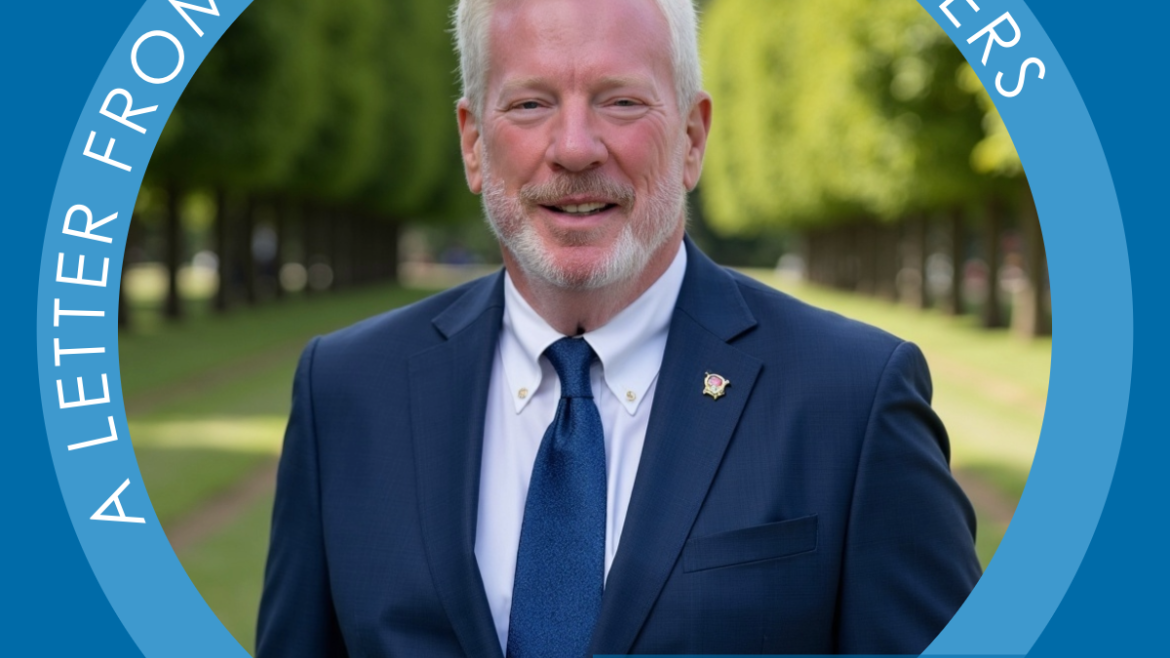
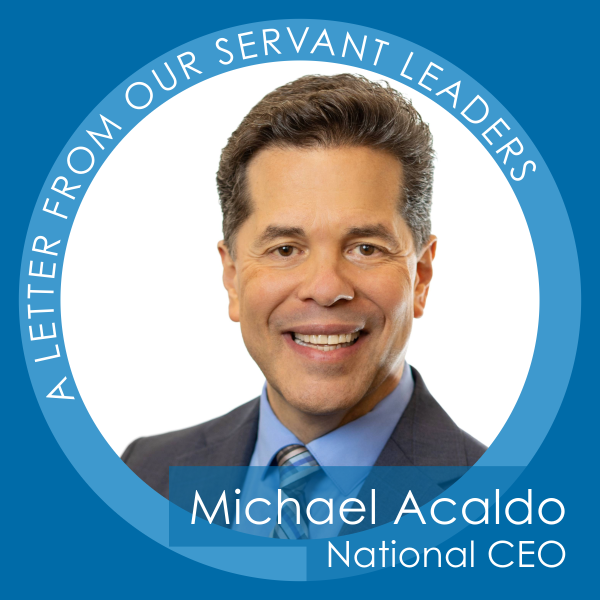
09-25-2025 A Letter from Our Servant Leaders

09-25-2025 A Letter from Our Servant Leaders 1200 1200 Devine PR Postings

Seeing Christ through Personal Encounter

Why did I join the Society of St Vincent de Paul, and why am I still a member?

Fifteen years ago, I was retiring from paid work and a friend of mine asked if I would consider joining the Society.  I had “new” free time, felt I had been blessed by God and wanted to give back in some small way – so  I said “yes.”  Little did I realize at the time how profoundly my life would be graced by that decision.

Most people join the Society for similar reasons as mine, but most stay because of the friendships they develop and how the Society helps us to grow spiritually.  That spiritual growth is fostered in the prayer and discussion during our conference meetings, and at gatherings with other Vincentians.  I recently returned from the Society’s annual National Assembly.  More than 800 Vincentians from around the country joined for several days of keynote presentations, workshops, and uplifting liturgies.  My soul is always refreshed by these gatherings.

Over the past 15 years, I’ve had the privilege of serving in local, regional and national servant leadership roles for the Society, but our home visits touch me the most. Over the years, I have visited hundreds of needy individuals and families in my local community of Peoria, Ill. Each case is unique, but beyond just helping people to pay a bill that keeps them housed, I am most touched by the personal encounter which brings us to see Christ in the faces of those we serve.

In one case, we visited a mother of two young boys.  She called for help with a utility bill.  We sought to understand how she got behind.  She worked as a night security watchman monitoring industrial properties in her car.  However, her tires were bald and kept getting flats which she had to repair.  It was winter, and her utility couldn’t be shut off for several months.  Since she had regular income and children, her tax refund would enable her to get fully paid up on her utilities, so we offered to instead put new tires on her car.  This more sustainable solution would never have come to light without spending time in a home visit.

More recently, a visit partner and I met with a 66-year-old woman with several emotional and physical disabilities who needed help with a part of her monthly rent. She’s lived in the same apartment for over 11 years, a remarkable achievement for her situation. She lives on fixed income and must walk or pay friends for a ride to get food or go to doctor appointments. While discussing how she got behind and what we might be able to do to help cover the small remaining rent she owed, it quickly became apparent that her greatest need was to be seen and heard.  We spent time talking about how she had become estranged from her out-of-state children, about her faith life and her church; and she took time to show us her small apartment and told us where each of her wall and table decorations came from. We prayed together for the grace to get through this immediate crisis and to thank God for the blessings she had.

It is these personal encounters that touch me most and keep me serving as a Vincentian.

Blessings,

Tom Pelger

National Vice President, Regional & Council Support


Vincentians at St. Vincent de Paul Chapel in Paris, France

September is a Month of Vincentian Celebration and Veneration

September is a Month of Vincentian Celebration and Veneration 1024 768 admin

September is a Month of Vincentian Celebration and Veneration

By Tim Williams, Senior Director of Formation & Leadership Development

A feast is a celebration, and September marks two great celebrations for Vincentians – the Feast of St Vincent de Paul on September 27, and the Feast of Blessed Frédéric Ozanam which occurred on September 9.

Traditionally, the Feast Day assigned to the saints and blessed of our church is the anniversary of their death. Assuming them to be holy, we regard this day as the date of their rebirth into eternal life in union with the Creator. But this is not always the case, and for Vincentians, both Vincent and Frédéric Ozanam provide examples.

St. Vincent de Paul died on September 27, 1660 at the age of 79, and was canonized June 16, 1737. However, September 27 was already the feast day of Saints Cosmas and Damian, martyrs of the early church, and so Vincent’s feast day was declared to be July 19. In Frédéric Ozanam’s letters, he recounts visiting, along with other members, the Chapelle Saint-Vincent-de-Paul in 1836 where Vincent’s body had been brought in a silver reliquary in a great procession through Paris in April of 1830. In 1834, along with the other six founders of the Society, he visited the church in Clichy where Vincent had served as pastor in 1612, again to commemorate the July 19th feast day.

And it was on July 19, 1830, that the Blessed Virgin first appeared to St. Catherine Labouré in the chapel of the Motherhouse of the Daughters of Charity. She would return again to that chapel on November 27 and share the instructions for the Miraculous Medal, for which the chapel is now named.

By 1969, Saint Vincent had become a far more widely venerated saint in the Catholic Church, and the General Calendar was revised to move his feast day to September 27, where we celebrate it today. Frédéric Ozanam, however, is unlikely ever to have his feast day moved to his own date of rebirth.

Having spent much of his final year in declining health in Italy, Frédéric sensed in September of 1853 that his end was near.

“I am coming if you call me and I have no right to complain,” he wrote. “Were you to chain me to a bed during the remaining days of my life, these would not be enough for me to thank you for the days which I have lived. Ah, if these pages are the last which I shall write, may they be a hymn to your goodness. “

He asked his wife Amélie to arrange for them to travel, so that he could die in France. He never made it all the way to Paris, but died in Marseilles, France on September 8, 1853, at the age of 40.

September 8th was and is celebrated as the Feast of the Nativity of Mary, one of only three birthdays on the Roman Calendar, along with Jesus and John the Baptist. As widely venerated as Frédéric may one day become, he will never replace the Blessed Mother on this day, nor would he want to! (We might note, though, that his current feast day of September 9 is also the birthday of Blessed Rosalie Rendu.)

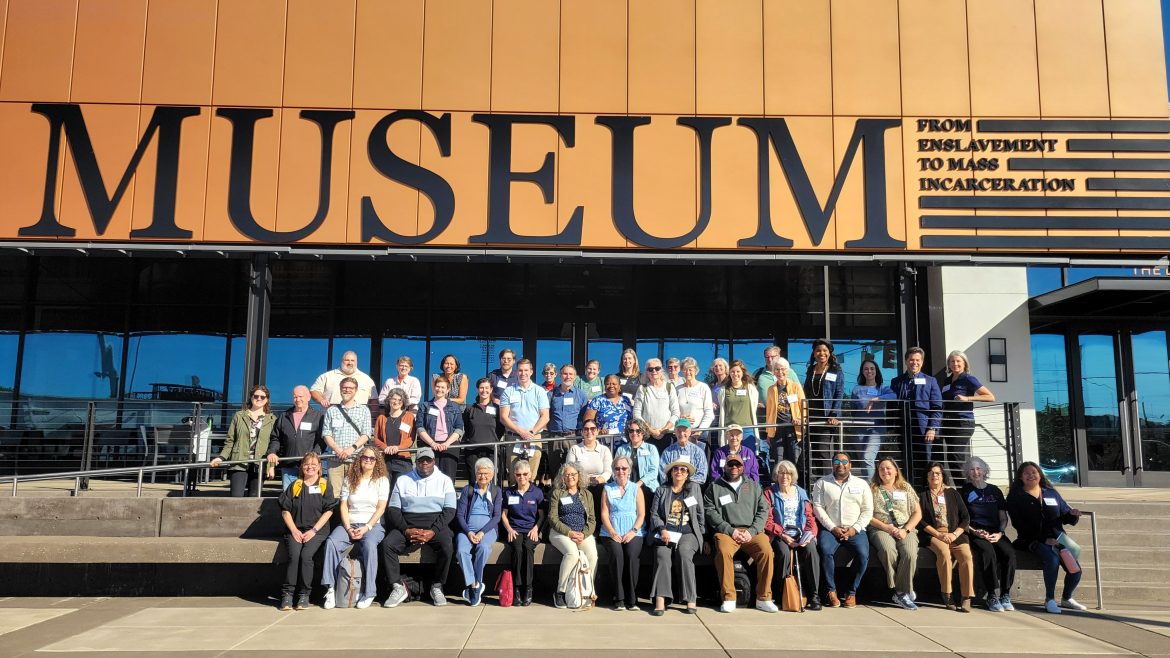
Last week, a group of 35 Vincentians from the United States, guided by Ralph Middlecamp and me, embarked on a Vincentian Pilgrimage to France. While there, we visited several of the places mentioned above: Chapelle Saint-Vincent-de-Paul, Église Saint-Médard in Clichy, the Chapel of the Miraculous Medal, and many more sites, including celebrating the Feast of Blessed Frédéric in the CGI office.

09-18-2025 A Letter from Our Servant Leaders

09-18-2025 A Letter from Our Servant Leaders 1200 1200 admin

A Beautiful Weekend in Emmitsburg

Last weekend, I had the privilege of being in Emmitsburg, Maryland for the 50th anniversary celebration of Saint Elizabeth Ann Seton’s canonization. What a joyous celebration it was! On Saturday, Father Tomas Mavrik, the Superior General of the Vincentian Family worldwide, celebrated a special Vincentian Family Mass. Sunday’s public Mass, marking the actual anniversary date, drew over 1,000 people as Archbishop Lori of Baltimore and Archbishop Broglio, Archbishop for the Military Services, USA and President of the USCCB, co-celebrated this historic milestone.

Being there to honor this incredible wife, mother, foundress, and saint filled my heart. I’ll be honest—before this weekend, I knew who Mother Seton was but didn’t fully grasp her deep connection to our Vincentian family. What I discovered filled me with joy and gratitude for this incredible woman, and I want to share it with you.

America’s First Saint and the Vincentian Heart

The National Shrine of Elizabeth Ann Seton

The National Shrine of Elizabeth Ann Seton

Elizabeth Ann Seton (1774-1821) became America’s first native-born saint when Pope Paul VI canonized her on September 14, 1975. Her story is remarkable: born into a prominent Episcopal family in New York, she married William Seton and had five children. After her husband’s death in Italy in 1803 and her conversion to Catholicism in 1805, Elizabeth felt called to serve the poor and establish Catholic education in America.

What makes her story so meaningful to us Vincentians is how naturally she embraced the charism of Saint Vincent de Paul and Saint Louise de Marillac. In 1809, she founded the Sisters of Charity of Saint Joseph in Emmitsburg, Maryland. Her spiritual director, Father Louis William Dubourg, encouraged her to adopt the rules of the French Daughters of Charity, and in 1812, her community received official approval based directly on the rules Saint Vincent and Saint Louise had established in 1633.

Seeing Christ in the Poor

The heart of Elizabeth’s spirituality perfectly mirrors what we experience in the Society of Saint Vincent de Paul; she truly saw Christ in the poor. Before even becoming Catholic, Elizabeth “saw Christ in the poor, especially in women and children in need.” This vision aligned beautifully with Saint Vincent’s teaching that “the poor are our masters” and that we must treat them “like guests at our family table and not as beggars at our gate.”

Elizabeth taught her sisters to embrace this Vincentian understanding completely. She instructed them to find Christ in those they served, echoing Vincent’s revolutionary idea that in serving the poor, we encounter Jesus himself. This spirituality of encounter became foundational to both the Sisters of Charity and later to our own Society.

Prayer and Action Together

What strikes me most about Mother Seton’s approach is how she balanced prayer with action – what we Vincentians call being “contemplatives in action.”

She taught a “prayer of the heart” that could thrive regardless of external circumstances while remaining deeply engaged in charitable works. Saint Vincent pioneered this concept, and Elizabeth lived it out beautifully in 19th-century America.

Both traditions understand that authentic spiritual life cannot be separated from service to those in need. As Vincentian spirituality teaches, “Our proclamation of the good news will resound in people’s hearts especially when we give vibrant witness through the language of works.”

John Berry and Fr. Tomas

John Berry with Fr. Tomaz Mavric

Trusting in God’s Providence

Elizabeth’s spirituality of abandonment to Divine Providence resonates deeply with Vincentian trust in God’s care for the poor. During times of loss and financial hardship, she showed the same trust that Saint Vincent had, believing that God would provide the resources needed for charitable works. This foundational trust in God’s mercy enabled both Elizabeth and later members of our Society to take risks in service, confident that God would provide.

The Family Connection Grows

The spiritual connection between Elizabeth and the Daughters of Charity became official in 1850, when her Emmitsburg Sisters joined the French Company of the Daughters of Charity. This wasn’t just an administrative merger – it was recognition of the deep spiritual bond that had existed from the community’s founding. Elizabeth’s original intention was finally fulfilled, making her spiritual Daughters full members of the international Vincentian family.

Living the Legacy Today

Today, Saint Elizabeth Ann Seton holds a unique place within our global Vincentian Family. The various Sisters of Charity congregations that trace their roots to her foundation represent over 2,500 members across communities in New York, Cincinnati, Halifax, New Jersey, and Pennsylvania. These communities, along with the Daughters of Charity, carry forward the Vincentian charism that Mother Seton brought to America.

We in the Society of Saint Vincent de Paul explicitly recognize this connection, particularly through conferences named after Saint Elizabeth Ann Seton. Our commitment to her memory reflects the recognition that she was instrumental in bringing Vincentian spirituality to America, making possible the later establishment and growth of lay Vincentian organizations like ours.

Shared Mission, Shared Values

The relationship between Saint Elizabeth Ann Seton and our Society continues through our commitment to identical values: service to the poor, respect for human dignity, and the integration of faith and action. Both traditions emphasize that personal encounter is fundamental to our ministry. We recognize that charity requires relationship, not merely assistance.

We continue to draw inspiration from Mother Seton’s example of “acting with heart,” converting deep awareness of God into concrete service to others. Her model of combining educational excellence with charitable service provides a template for holistic human development that is still relevant to our work today.

Education and Justice

Elizabeth’s establishment of the first free Catholic school in America aligned with our Society’s emphasis on addressing the root causes of poverty. Both traditions recognize that true charity must encompass not only immediate relief but also long-term solutions that promote human dignity and empowerment.

A Living Heritage

John Berry and Luci Baines Johnson

John Berry with Luci Baines Johnson

The relationship between Saint Elizabeth Ann Seton and the Society of Saint Vincent de Paul represents a deep spiritual communion rooted in the Vincentian charism. From Elizabeth’s adoption of the Daughters of Charity rules to the contemporary work of our over 4,000 conferences in the United States today, this connection represents the flowering of Vincent de Paul’s vision in American soil.

Both Elizabeth and Blessed Frédéric Ozanam understood that authentic Christian life requires integrating contemplation and action, personal sanctification, and service to the poor. Their shared commitment to seeing Christ in those who suffer and responding with practical charity continues to inspire thousands of Vincentians worldwide.

As members of the broader Vincentian Family, both traditions remind us that holiness is not abstract but incarnational, found in the daily choice to serve with compassion and to recognize in every encounter with poverty an opportunity to meet Christ himself. Through this shared vision, Saint Elizabeth Ann Seton remains not merely a historical figure but a living presence within our Society and the entire Vincentian tradition.

In words that describe both Elizabeth and the Society she helped inspire: “The charity of Christ impels us” to serve, to hope, and to find God present in the poor who remain our teachers and our masters.

Peace and God’s blessings,

John

Micro Loans Contra Costa

A Little Loan and a Big Difference: The Power of SVdP’s Microloan Programs

A Little Loan and a Big Difference: The Power of SVdP’s Microloan Programs 1350 988 admin

When a man in Massachusetts lost his driver’s license because of unpaid excise taxes, his commute to Boston—more than 60 miles each way—became an exhausting ordeal. Without a license, he couldn’t drive. Without driving, he risked losing his job.

Through the Society of St. Vincent de Paul’s (SVdP) microloan program, he received a loan that helped him pay off more than $1,200 in back taxes – enough to renew his license, keep his job, and ease the financial and emotional toll on his family.

“Both his and his wife’s blood pressure went way down real fast,” said Judy Coleman, a Vincentian of almost 25 years from the Northeast. “That’s the kind of difference these loans make.”

The Mini Loan Program of the Society of St. Vincent de Paul (SVdP) North Texas provides small-dollar loans — typically between $500 and $4,000 – to individuals caught in predatory payday or title loans, or those in urgent need of car repairs or apartment deposits. Loans are paid directly to vendors and carry just 3% interest over a 12-month period.

SVdP’s Alternative Lending/Microloan Programs are just a few of many ways SVdP serves vulnerable individuals and families, reaching an average of 5 million people each year across the United States with compassionate, person-to-person assistance.

Juli Maxon, Mini Loan Program Coordinator and trained financial coach for SVdP North Texas, says microloans are just the beginning. “We started shifting toward financial literacy,” Maxon explained. “We help people set up budgets, prioritize their debt, and start saving, even if it’s just $5 a month. That’s how change begins.”

Maxon meets one-on-one with participants over Zoom and also offers group classes. One client, a single mother, dreamed of taking her son on a vacation and eventually buying her first home. With guidance and accountability, she did both – saving for a weekend getaway, and later purchasing a home in January.

SVdP’s Conferences in Central Ohio are also educating their communities, but through somewhat of a different lens. They have held community forums on predatory lending, for example, to help communities understand how payday lending works and its detrimental effects on people who are unable to afford high interest rates.

“At each forum, we had someone who had taken out a payday loan speak about how hard it was to get out from under the loan,” said Deb Zabloudil, SVdP volunteer and chair of its Poverty Action Committee. “After the sessions, we sent letters and one of us testified before the Ohio Senate once the bill finally made its way to the floor of the Ohio House and Senate for hearings.” As a result, the Ohio Fairness in Lending Act was passed in 2018 and went into effect in 2019.

In every region, the stories multiply. A widowed woman in her 70s took out a title loan to cover a car repair. With SVdP’s help, she paid it off and returned later—this time avoiding the payday lender—to request a second emergency loan. She’s now repaying on time and doing well.

Whether it’s through a microloan program, food pantry, or Home Visit, the principle is the same: SVdP Vincentians offer a lifeline and walk alongside neighbors to a stronger, more stable future.

“It’s about trust, compassion, and hope,” said Louise Bland, Mini Loan Program Leader for SVdP North Texas. “Sometimes a little help goes a very long way.”

09-11-2025 A Letter from Our Servant Leaders

09-11-2025 A Letter from Our Servant Leaders 1200 1200 admin

The Value of Vincentian Friendship – Priceless!

The theme of Honoring Heritage and Embracing Change came to life at our National Assembly in Louisville!

It was awesome to be with all our Vincentians that were able to be with us at this faith filled gathering.

I told my 9-month granddaughter about the Assembly, and this was her reaction.

Now, I know you might think I am just a proud grandfather coming up with a creative way to share a video of my first grandchild, but there is more to it! Actually, I got this idea from Dr. Andrew Abela, Dean of the Busch Business School at the Catholic University of America, an outstanding keynote speaker at this year’s event. He gave a great talk on Super Habits, and he creatively made his grandchild the star of the presentation.

Gregg Colburn, another keynote speaker, did magnificent job of presenting how structural housing factors impact homelessness.

Stephanie Land, our final keynote speaker, gave a powerful testimony on how she has overcome poverty.  (This video requires a password.  Please check Frederic’s Five for more information)

An amazing meeting is only possible with the hard work of so many people. We thank Louisville Archdiocesan Council President David Neill and everyone on the Louisville team that put in incredible hours in making this gathering an absolute success.

As Vincentians, we know there is always behind the scenes work to make our efforts a reality.

Words of appreciation sometimes are not enough to express our appreciation for the countless hours spent making such a large effort a success. The quiet efforts of Vincentian staff (paid and unpaid) are priceless. On behalf of the entire Society, we thank them for everything they did to make this event a success!

Vincentian friendship is so important to our spiritual journeys. I saw this on display at the National Assembly, the Mid-Year Meeting, and the many Region meetings that I attended in my first year at the National Council.

Let me introduce you to a Vincentian friend I met at the Assembly, Matt Ryan from Houston, Texas. Matt tapped on my shoulder and said, “Hey Michael, I think we have the same mentor.” I looked around and Matt introduced himself and shared with me that Chuck Baimbridge in Houston was a Vincentian friend and mentor to him. Michael Acaldo, National CEO and Matt Ryan, St. Vincent de Paul conference in Archdiocese of Galveston-Houston.

Before Chuck retired from a high-level leadership role in a Louisiana chemical company, he was the Council President of the Society in the Diocese of Baton Rouge. Chuck was a great visionary leader who embraced our virtues. He helped us establish new special works and the first Society of St Vincent de Paul Council Foundation in the country.

I made a new friend with Matt and through him, I am reconnecting with an old one. My daughter’s family (and Stella – that beautiful grandbaby) live in Houston, so next time I am there, I’m going to visit Chuck and his wonderful wife Susan.

Aren’t our Vincentian friendships priceless! As Catholics, we know that these friendships never die but live on into eternal life.

To all of my Vincentian friends, thank you for being inspirational mentors to me!

If I have not had the blessing and opportunity to meet you, I cannot wait! See you soon as we journey together with Christ in our service to His children in need.

Sincerely yours in our Vincentian Journey,

Michael J. Acaldo

National Council CEO

Frederic Ozanam

Blessed Frédéric Ozanam: A Man of His Time — and for Ours

Blessed Frédéric Ozanam: A Man of His Time — and for Ours 1019 720 admin

Today, we pause to honor the feast day of Blessed Frédéric Ozanam, founder of the Society of St. Vincent de Paul and a true witness of how the Gospel comes alive when we serve the poor. Nearly two centuries after he first gathered with fellow university students in Paris to form what would become our Society, his vision continues to shape and inspire our mission here in the United States and around the world.
Frédéric was not a priest or religious, but a lay Catholic with a restless heart. At just twenty years old, Frédéric and his companions resolved to put their faith into action by visiting the poor in their homes and offering what help they could. In these encounters, Frédéric discovered something profound: that in serving the poor, we do not only give—we also receive. He reminded us that Christ is present in the poor, and that when we draw close to them as our brothers and sisters, we draw closer to God.
Frédéric understood the struggles of his time—political upheaval, poverty, and doubts about faith – and yet, his response was not despair. Instead, his response was a radical act of love. He believed the Gospel demanded action. His life reminds us that holiness is not an abstract concept, but a daily choice to love and see Christ in the poor and to serve with compassion.
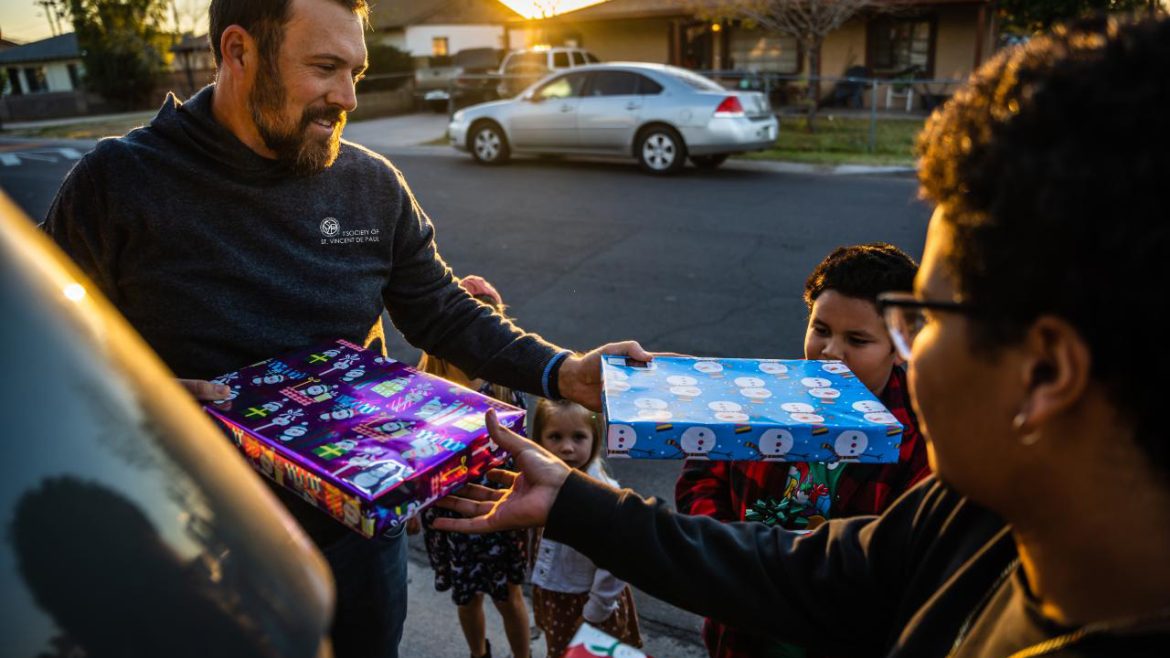
That charism remains the beating heart of the Society of St. Vincent de Paul. Every day, Vincentians across our nation carry forward this spirit of humble service. In living rooms, kitchens, and shelters, you listen to stories, pay an overdue utility bill, bring groceries, pray with families, and walk beside neighbors who feel forgotten.
You may arrive thinking you are there to provide assistance, but so often you leave with a deeper faith, renewed hope, and the grace of encountering Christ.
On this feast day, we give thanks for Blessed Frédéric’s life and legacy. We remember that our work is not just charity, but a vocation. It is the living out of Christ’s call to love “the least of these.” It is a journey of transformation—for those we serve and for ourselves.
As we reflect on Blessed Frédéric, I am mindful of the lives of the examples of two other saints whose lives are a reflection of the Vincentian values we hold dear.
Last Sunday, Pope Leo XIV canonized St. Pier Giorgio Frassati, whose life was spent serving the poor in his native Turin. Less known, perhaps, is that he was an active and passionate Vincentian from the age of 17 until his untimely passing from polio at 24.
His sister, Luciana, recounted how, on his deathbed and with his hand paralyzed by the disease, he scribbled instructions to a colleague who was attending the weekly meeting of his SVdP conference. “Medicines needed to be delivered. A pawn ticket needed renewed. Only then could he rest in peace.”
It is also fitting that Blessed Frédéric’s feast day this year is so close to the 50th anniversary of the canonization of St. Elizabeth Ann Seton on Sept. 14. Mother Seton was the first native-born American to become a saint and, for our purposes, is especially significant because she brought the Vincentian charism to the United States. The Sisters of Charity and the American province of the Daughters of Charity, whose lineages extends back to the Order she founded, are vital members of the international Vincentian community.
As Vincentians, we are heirs to Frédéric’s vision and the work and prayers of people like Pier Giorgio, Mother Seton, and all those who have followed them – including each one of you. Our world today faces its own challenges: economic hardship, isolation, injustice, and division. Yet their example shows us the way forward. We can choose hope over despair, service over indifference, and faith over fear.
Let us recommit ourselves today to the mission entrusted to us: to care for the poor, the forgotten, and the vulnerable. Let us walk together, encouraged by Frédéric’s witness, strengthened by prayer, and confident that Christ goes before us.
May Blessed Frédéric Ozanam continue to intercede for us and inspire us to serve with the same zeal, humility, and love that marked his life. And may our own encounters with the poor lead us ever closer to Christ, who is the source of our hope and joy.
Blessed Frédéric Ozanam, St. Pier Giorgio Frassati, and St. Elizabeth Ann Seton, pray for us!

Jon Berry speaking

09-05-2025 A Letter from Our Servant Leaders

09-05-2025 A Letter from Our Servant Leaders 2560 1707 admin

Honoring Heritage, Embracing Change
2025 Annual Assembly, Louisville, KY
John Berry
Good morning, my Fellow Vincentians
It truly is a joy, and I mean a soul-deep joy, to stand before you this morning; old friends, new friends, colleagues, co-workers in mission, partners in faith. I look out at this room, and I see faces of people who care. That might sound simple, but think about it: in this age, when so much thrives on cynicism, on cruelty, on indifference… choosing to care, choosing to show up, choosing to stay faithful is an act which deserves great celebration.
We are this week, gathered as a Vincentian Family, to learn, grow, celebrate and to challenge ourselves as an organization. An organization founded in the year 1833. That is not just a date. That is a legacy. Old enough that our founding minutes were probably written with quill pens… but young enough that what they dreamed still beats in our hearts today.
Our theme for this National Assembly is Honoring Heritage, Embracing Change. Now, let me tell you something: as a theme, that’s dangerous. Because if you lean too hard into “heritage,” you run the risk of polishing brass plaques, telling sentimental stories, and quietly slipping into irrelevance. If you lean too hard into “change,” you run the risk of tossing away everything that gives you your character, your soul, your music.
So, what do we do? We do not choose between honoring heritage and embracing change. Like a good marriage, we commit ourselves to both. We strike a balance. Or, even better, we dance the dance, sometimes heritage leads, sometimes change leads, sometimes both stumble across the floor, but together, they create beauty that is timeless.
Honoring Heritage: Roots that Keep Us Grounded
Close your eyes for a moment and imagine those who came before us. Imagine that year: 1833. No airplanes. No antibiotics. No reality TV. No email to clutter inboxes at 7 a.m. just when you’re reaching for your first cup of coffee.
But there were immense needs. 1833 was a world of poverty, of social upheaval, of communities torn apart by war, famine, and inequality. And into that difficult world, our founders planted a seed. …A seed that has grown into the mighty tree we gather under today.
Consider what they gave us. They gave us more than a Rule. More than a name that doesn’t fit so well on a lapel pin or business card. More than even a mission. They gave us a vision. A conviction that faith is never meant to be kept locked up in a private devotion alone. Faith breathes best when it breathes outward, when it is embodied in works of service, when it lifts those who are bowed down.
Again and again through our history, that vision proved stronger than any obstacle. Wars came and went. Sixteen years after the first Conference in the United States formed in St. Louis the Civil War almost tore our nation apart, but we endured. Twenty-six years after the first Conference in my Council in Georgia was formed, the Great Depression almost destroyed America, but we endured. Other recessions tried to starve us. But we endured. New social movements tried to ignore or bury church-affiliated work in the secular age. Still, our vision lived. Or mission thrived.
Why? … Because people, ordinary people just like us, kept showing up. People like our grandparents, our parents, our mentors. Volunteers who stayed up too late visting people in need, processing checks to keep someone from being thrown out in the street, stocking thrift store shelves, or peeling potatoes for dining halls and soup kitchens. Conferences who endured meetings with too few resources and too many needs.
Supporters who believed that even a little money, in the right hands, with the right heart, could change a life.
My friends, honoring heritage means honoring them. The quiet saints whose names rarely make it onto buildings or banners. They are the reason we are here.
The Gift of Institutional Memory
Heritage also means institutional memory. Too often we hear people today say, “The church is irrelevant,” or “Nonprofits are inefficient,” or worse, “Charity is outdated.” And yet, our history tells another story. We survived because what we offered was not irrelevant, not outdated, but essential.
And here’s the thing: in times of chaos or confusion, our first instinct should be to remember. Not to cling to memory as nostalgia, but to use memory as a compass. A guide star. Yesterday’s struggles guide today’s courage. Yesterday’s failures keep us humble. Yesterday’s triumphs remind us that God really does supply daily bread, even when the cupboard looks bare.
So yes…as we plan, as we dream, as we innovate, we still honor heritage. Because even the most modern skyscraper is built on a foundation.
But I am not going to deliver a museum tour this morning. We honor the legacy not by staring at it, but by extending it. And that requires something that is both exhilarating and terrifying.
It requires change. Embracing Change
Change is Inevitable, but let’s be honest. Are we comfortable with change? (pause for reaction) Some of you are nodding …others are thinking, “Depends what’s being changed.” Some of you are sayin, neck no! (Or maybe something a little stronger).
Human beings don’t love change by nature. Familiar patterns feel safe. Familiar hymns, familiar meeting formats, familiar committee structures, these are our security blankets.
I’ll bet there are plenty of you in this room who, like me, just don’t feel right when the Choir at Sunday Mass tries to interject some new songs into the Liturgy. No, we yell (quietly to ourselves because after all, we’re at Mass). Give me my familiar hymns, my comfortable music.
I once heard someone joke about a pastor who wanted to move the hymnals from one side of the pews to the other. The Parish Advisory Council recommended doing it one inch per year so nobody would notice!
But let’s face it, change is inevitable. Change is not something to fear; it is something to steward. Because God’s own creation is built on change: seasons turning, years shifting, children growing, ideas unfolding. Every cell in your body is proof that change is happening constantly. Why then should we think our organization or mission is exempt from that holy rhythm?
The New Face of Need
Let me tell you something you no doubt already know and understand; the face of poverty and needs of today’s world are are different. In 1833, the frontier problem for charity was bread and shelter, basic survival. Today, of course, those remain. Hunger, hunger, always hunger. Homelessness. Addiction. But equally, we face needs our founders could hardly have imagined:
Digital poverty. The child who has a classroom but no internet access.
Mental health crises. The young adult, more connected online than any generation before, yet lonelier than ever.
Global displacement. Refugees from poverty, terror, and war zones around the world, appearing on our shores and in our parishes.
Climate vulnerability. Families not only impoverished by economics but displaced by floods, fires, hurricanes. Our heritage equips us to feed stomachs. Change requires us to also feed spirits, heal trauma, and transform unjust structures.
That is not betraying our roots. That is deepening them. Because what did our founders care about most? Loving God by serving real human needs. If the needs change, then our methods must as well.
Relevance with Youth and Young Adults
Let me address perhaps the most urgent part of this conversation: youth and young adults.
I want to be crystal clear: We cannot survive, let alone thrive, without young people. Those of you in your 20s, 30s: you are not just the “someday leaders.” You are already leaders, already carrying part of this mission.
Sometimes, when older organizations think about youth, they panic. They say: “How do we attract them?” And a frantic agenda begins – let’s add Instagram, let’s add hashtags, how about a pizza night? But let’s be honest: the younger generation is savvy. They can sniff out when you are using pizza as bait.
If we really want relevance, then we must go deeper. Young people want three things: authenticity, purpose, and participation.
Authenticity. Don’t give them sugar-coated jargon. Give them honesty, meaning and truth, teach them honesty, meaning and truth.
Purpose. Show them that we are not here to preserve our institution—we are here to serve real human pain.
Participation. Don’t just give them an internship to “watch and learn.” Let them shape the plan, shape the future, and make an impact.
If we do this, they will come, not because of flashy marketing, but because young adults are starved for purpose and meaning in a noisy world. And we have purpose and meaning to offer in abundance.
Growing New Members and Sustaining the Mission
This brings us to the perennial, age-old, motion-at-every-meeting topic: membership growth.
We all want to see more people in our Conferences. Not just younger people, but new people of every age. People bring gifts, energy, new ideas, and, yes, let’s be practical, resources.
But membership is not about creating new Vincentians. It is about extending an invitation to live into something bigger than yourself. It is about extending an invitation to live something bigger than yourself.
When people ask me, “How do we attract new members?” The best answer I can give is one word: hospitality. Not gimmicks, not numbers-reporting, but hospitality.
Hospitality that says: “You belong here before you prove yourself.”
Hospitality that says: “We see you not as a cog for our machine but as a gift to our family.”
Hospitality that says: “This is not our show. This is our shared work, come share it.”
People stay where they feel they belong. That is true in friendships, in churches, in nonprofits. If we offer belonging, the rest will follow.
Heritage and Change as Dance Partners
Now, allow me, just for a moment, to lean into metaphor. Imagine, if you will, a ballroom. Lights glowing. Musicians tuning. Onto the dance floor walk two figures: one named Heritage, one named Change.
Heritage has the poise, the discipline, the old-world charm. Change has the energy, the fire, the improvisation. Left alone, each is incomplete. But when they take hands, when they move together? The dance is electric.
That is us. That is the Society of St. Vincent de Paul. Part philosopher, part entrepreneur. Part historian, part visionary. Always remembering, always reaching.
Humor About Our Challenges
Now, we need to sometimes laugh at ourselves a little, don’t we? Because change and growth are not all glorious imagery. Sometimes they’re well … messy.
You know what I mean. A committee decides to “modernize” the thrift store, but it takes two months arguing about what color the carpet should be. Someone suggests we “go digital,” and before long, half the membership is still printing emails, and the other half is arguing about password resets.
That is reality, so let us embrace that chaos. Let us laugh at our quirks while still pushing forward. Because humor isn’t frivolous. Humor is a holy antidote to despair. A room that can laugh together is a room that can build together.
VisionSVdP
As we begin phase III of our VisionSVdP process, we have the opportunity to channel the energy, the fire, and the inspiration of change in concrete ideas and actions for our future. The process of Phase III is critically important because it allows the collective efforts of our listening sessions last year and earlier this year to become focused and aimed at specific changes we want to see. Some of expressed a concern that the Phase III process was complicated and laborious. We’ve heard those concerns and will be changing it to make it easier for every Council and Conference to participate. This is a very important part of VisionSVdP and I hope everyone will participate.
The Importance of Public Policy and Advocacy
I also want to talk this morning about an area of our work that is sometimes controversial but is absolutely essential – public policy and advocacy.
Now, some of you may be thinking, “Wait a minute, we’re a charitable organization. What does public policy have to do with us? Isn’t our mission simply to feed the hungry, to clothe the naked, to shelter the homeless?”
Yes. Absolutely yes. That is always our mission. But if we stop there, if we only respond to emergencies without also asking why the emergencies are happening, then we will always be playing catch-up.
Charity alone is never enough. Charity is the bandage, the food on the table tonight, the rent kept intact for this month. And thank God for it. But as any nurse or physician knows, once you apply the bandage, you also must ask: What caused the wound? How can it be prevented? How can healing be made permanent?
Public policy is where those questions get answered or get avoided. And advocacy is the way we make sure they are answered.
Why Public Policy Matters
Poverty is not just bad luck. Poverty is not just individuals making mistakes. Poverty is often the result of broken systems and short-sighted policies. A lack of affordable housing. A minimum wage that does not sustain a family. A health care network that leaves people behind. Gaps in education access. Marginalized neighborhoods that receive fewer investments but higher policing. When we ignore policies, we only ever dig the same trench again and again, giving out food but never asking why grocery stores disappeared from certain neighborhoods; handing out coats in the winter but never questioning why so many working families still cannot afford heating oil.
When we step into advocacy, though, our charity becomes amplified. Instead of just filling empty stomachs, we create food policies that bring down hunger rates across generations. Instead of endlessly handing out bus fare, we push for transportation systems that are dependable, accessible, and affordable for all. Instead of treating homelessness as an endless “one-by-one” crisis, we push for zoning, housing initiatives, and rental protections that prevent thousands from losing their homes.
This is not an abstraction. This is the multiplication of mission. It is the difference between serving one hundred people today and transforming the lives of hundreds of thousands tomorrow.The Tension Between Direct Service and Advocacy
Now, I am not naïve. I know advocacy can make people nervous. Trust me, I have read some of the comments on my Servant Leaders columns. Direct service feels safe, non-controversial. You can show someone a bowl of soup and say: “This is love.” It is hard to argue with that. Advocacy, on the other hand, gets messy. It asks us to step into debates, into legislative chambers, into city hall meetings where not everyone will agree with us.
But if we do not speak in those rooms, others will, and it will not always be with compassion for the poor in their hearts. If developers, lobbyists, and industries are the only ones speaking, then policies will be shaped by those priorities. The voice of faith, the voice of charity, the voice of justice must also be present.
And there is nothing unfaithful about this. In fact, it is profoundly faithful. In fact it was mandated by Christ himself. The prophets of the Old Testament were not shy about calling out kings and leaders. Jesus himself was not silent before unjust structures. To step into advocacy is not to drift from our mission – it is to live it more fully. It was a foundation of the philosophy of Blessed Frederick Ozanam when he started the Society.
Dependency and Dignity
One critique we sometimes hear is this: “Won’t more charity and safety net governmental programs simply create dependency?” It’s a fair question. But let us be honest, the greatest creator of dependency is not charity. The greatest creator of dependency is bad policy.
Think of it: when wages are too low, when schools are underfunded, when health care is unaffordable, when housing is out of reach, people are trapped in dependency. They do not choose dependency. It is manufactured by systems that deny them opportunity.
Good policy, on the other hand, restores dignity. When workers earn a living wage, when schools prepare children well, when housing is safe and sustainable, when medical care is accessible, then people are freed – not only from dependency on charity, but sometimes from dependency on the very government supports that opponents of justice complain about.
Advocacy, therefore, is not about fostering dependency but dismantling it. It is about creating conditions in which families thrive on their own strength and creativity. It is about enabling what Catholic social teaching calls subsidiarity: letting people and communities flourish at the most local level possible, without the crushing weight of systemic injustice.
Advocacy as Love in Action
Some will say: “But shouldn’t we just leave politics out of it?” And to that I reply – with love but with firmness – NO. Poverty is not a neutral issue. Hunger is not non-political. Lack of housing is not simply a coincidence. Every one of these conditions is impacted by legislation, budgets, funding priorities, and civic decisions. To pretend otherwise is to close our eyes to reality, put our heads in the sand, and hope it will all go away without us having to do the hard work. Let me tell you if you don’t already know – it won’t.
Advocacy, understood rightly, is not partisan. It is prophetic. We are not here to endorse candidates. We are not here to wave party flags. We are here to measure every policy, every decision, against a moral test: Does this lift up the poor? Does this defend the vulnerable? Does this respect human dignity?
If yes, we will support it. If no, we will oppose it. That is not politics as “us versus them.” That is public discipleship. That is mission with a megaphone.
Advocacy and the Youth
And let me say again, we must connect this to young people. Because what is clear about today’s youth movements is this: they care deeply about justice, and they are not afraid of advocacy. They march against climate change. They organize voter drives. They campaign for racial equality. If we want young adults to see our organization as a home for their energy, then we cannot shy away from advocacy. We must show them that faith and policy can work hand in hand for the good of society.
Ironically, if we refuse to engage in advocacy, we risk being seen as irrelevant by the very generation we hope to include. Young people want their lives to matter. They want their energy to build more than programs; they want to change structures. If our organization can show credibility in both feeding the hungry and speaking truth to power, then we will win their trust.
Practical Steps Forward
So, what does Advocacy look like? Well to start, it needs to include things that are practical, doable, and tied to our mission. Things like:
Coalition Building. We gain strength when we join with others – faith groups, secular nonprofits, civic leaders. Alone, we whisper. Together, we roar.
Training and Education. Advocacy should not be the job of a few. It should be built into our DNA. We must train our volunteers and staff to understand the issues, to share their stories, to become ambassadors for justice.
Witness with Presence. Sometimes advocacy is not about statistics or budgets. Sometimes it is about bringing a family who has experienced homelessness into a hearing room, letting them tell their story, making legislators look human suffering in the eyes.
Persistence. Policy change does not happen overnight. But then again, neither does ending hunger or poverty. This is marathon work. We are in it for the long haul.
Charity and Justice Together
Charity and advocacy are not enemies. They are companions. To paraphrase Blessed Frederick’s famous quote, Charity is the hand that wipes away the tear. Advocacy is the courage that stops the injustice that caused the tear. Charity saves lives today. Advocacy transforms lives for tomorrow.
To honor our heritage, we must continue our beautiful works of charity. To embrace change, we must also embrace advocacy as an essential arm of our mission. If we want to address poverty – not just temporarily soothe it… if we want to reduce unnecessary dependency – not just complain about it… then advocacy must be part of our DNA.
Because what is the point of feeding endless lines of hungry people if those lines only grow longer year after year? We were not founded simply to manage poverty – we were founded to help end it.
And with God’s help, and with courageous public advocacy, we still can.
A Call to Courage
So where do we end? We end with courage.
We honor our heritage – by remembering, by giving thanks, by grounding ourselves in the vision of 1833.
We embrace change – by not fearing it but shaping it with Gospel values.
We invite the young – not as spectators, but as builders.
We address need – by daring to go where the suffering is, with creativity. We grow – not for our own survival, but because the world needs more mercy, more justice, more hands at the plow.
This organization has survived nearly two centuries. But survival is not the goal. Faithfulness is. Relevance is. Holiness is.
And if we embrace those, then I promise: the next hundred years will not just be survival, they will be flourishing.
Closing
In 1833, do you think our founders knew more than 800 of us would be here this week? Of course not. But they knew this: If love is real, if God is faithful, if the poor are served, then the mission would outlast them.
Now it is our turn. Our turn to decide if this work will outlast us. Our turn to decide if we will cling to old ways for comfort or innovate
with courage for the sake of love. Our turn to say: Yes, heritage matters. And yes, change matters. And together they make us who we are.
So, my beloved friends, let us honor our heritage by embracing our future. Let us embrace our future by honoring our past.
And let us never, never forget: the Spirit is not finished with us yet.
Thank you.
And may our next chapter be the boldest, bravest chapter yet.

Friends of the Poor Grant Award Winners 2025 – Round 2

Friends of the Poor Grant Award Winners 2025 – Round 2 1080 1080 admin

Congratulations to the Friends of the Poor Grant Award Winners of the Mid-Atlantic, North Central, and Southeast!  

We received 177 grant applications totaling $862,910. Grant awards for this round total $135,000.

Through simple application process, SVdP Conferences and District Councils can apply for up to $5,000 from the National Council’s Friends of the Poor® Fund. The Friends of the Poor® funds available to grant is normally limited to the amount raised and/or approved by the National Council budget process. Individual grant award amounts may vary from the application amount but will not exceed $5,000.

Grants are targeted to specific areas of need, above and beyond available Conference resources: assistance for rent/housing, utilities, food, clothing, medical, transportation, and baby/children needs. No systemic change projects.

FOP Grant Awards – July 2025
Mid-Atlantic $5,000.00 Our Lady of Good Counsel- Vienna, VA Emergency Housing Assistance
Mid-Atlantic $5,000.00 St. Dorothea – Eatontown, NJ Rental Payments
Mid-Atlantic $4,500.00 St. Luke the Evangelist – Glenside, PA Rent, Food gift cards, Utility assistance
Mid-Atlantic $4,500.00 St. Phillip – Pittsburgh, PA Rent & Utility assistance
Mid-Atlantic $4,500.00 St. Timothy – Chantilly, VA Emergency assistance
Mid-Atlantic $3,000.00 Holy Spirit – Mullica Hill, NJ Rent & Utility assistance
Mid-Atlantic $3,000.00 Our Lady of Perpetual Help – Bethlehem, PA Rent and Utility assistance
Mid-Atlantic $3,000.00 St. Michael the Archangel – Glen Allen, VA Rent assistance to prevent Homelesness
Mid-Atlantic $2,500.00 Holy Spirit – New Castle, PA Utilities, Shelter, Food, Other needs
Mid-Atlantic $2,500.00 St. Michael the Archangel & Mary Mother of Peace – Georgetown, DE Rent payment, Utlities assistance to prevent disconnection, Bus passes
Mid-Atlantic $2,000.00 Immaculate Conception St. Cecilia – Glen Burnie, MD Sarahs hope family shelter, Grief ministry, Camp St. Vincent
Mid-Atlantic $1,500.00 St. Mary of the Immaculate Conception – Fredericksburg, VA Emergency Vehicle related expenses
North Central $4,200.00 St. Joseph Hand of Mercy – Devils Lake, ND Rent, Utilities, Transportation, Food, Clothing
North Central $4,000.00 Cathedral of the Holy Spirit – Bismark, ND Housing, Utilities, Transportation
North Central $4,000.00 Holy Family – Rockford, IL Rent & Utlities
North Central $4,000.00 Saints Joseph and Francis Xavier – Wilmette, IL Seasonal Outerwear & Boots/Gym Shoes
North Central $4,000.00 St. Joseph – Fort Atkinson, WI Rent & Utlities
North Central $4,000.00 St. Kateri Tekakwitha – Walker, MN Electricity, propane, car repairs
North Central $2,500.00 Queen of Apostles – Chicago, IL Hot meals, To go bags, Supplies
North Central $2,500.00 St. Anthony on the Lake – Pewaukee, WI Rent & Utlities
North Central $2,500.00 St. Francis Assisi – Freeport, IL Rent
North Central $2,500.00 St. Francis St. Mary – Sturgis, SD Rent
North Central $2,500.00 St. John XXIII – Waseca, MN Rent, Utilities, gas, car issues
North Central $2,500.00 St. Maria Goretti – Madison, WI Rent assistance
North Central $2,000.00 Blessed Sacrament – Milwaukee, WI Rent assistance, New Beds, Appliances
North Central $2,000.00 St. Bernadette – Appleton, WI Rent, Utilities, Bus passes/Gas cards, Laudormat gift cards
North Central $2,000.00 St. Joseph – Waupun, WI Housing, Utilities, Personal Items, Fuel&Transportation
North Central $2,000.00 St. Mary Frances of the Five Wound – Berwyn, IL Rent & Utlities
North Central $2,000.00 St. Mary St. Andrew – Mayville, WI Hotel Stays, Rent Payments, Disconnections
North Central $1,000.00 St. Mary – Oregon, IL Rent & Utlities
North Central $1,000.00 Sts. Peter & Paul – Weyauwega, WI Rent & Utlities
North Central $800.00 St. Joseph – Sheboygan, WI Gas Assistance
Southeast $5,000.00 Light of Christ – Clearwater, FL Rent/deposits, Motel, electric/water, Groceries
Southeast $5,000.00 Our Lady of Lourdes – Raleigh, NC Rent and Utility Assistance
Southeast $5,000.00 St. Elizabeth of Hungary – Columbus,MS Car Repairs
Southeast $5,000.00 St. Joseph Sacred Heart – Greenville, MS Purchase of box fans
Southeast $5,000.00 St. Michael – Gainesville, GA Rent assistance
Southeast $5,000.00 St. Michael – Murrells Inlet, SC Utilities
Southeast $2,000.00 Annunciation of the Lord – Decatur, AL Rent, Utility Payments
Southeast $2,000.00 Epiphany – Venice, FL Temp lodging for homeless
Southeast $2,000.00 Nativity of Our Lord – Pensacola, FL Rent Assistance, Utilities
Southeast $2,000.00 Our Lady of Lourdes – Atlanta, GA Rental assistance
Southeast $2,000.00 St. Mark the Evangelist – Birmingham, AL Rent and Utility Assistance
Southeast $2,000.00 St. Mary Help of Christian – Aiken, SC Utility & Food

Sign Up for Our Newsletter

Privacy Preferences

When you visit our website, it may store information through your browser from specific services, usually in the form of cookies. Here you can change your Privacy preferences. It is worth noting that blocking some types of cookies may impact your experience on our website and the services we are able to offer.

Click to enable/disable Google Analytics tracking code.
Click to enable/disable Google Fonts.
Click to enable/disable Google Maps.
Click to enable/disable video embeds.
Our website uses cookies, mainly from 3rd party services. Define your Privacy Preferences and/or agree to our use of cookies.
Skip to content