• Search the Site

news

12-4-2025 A Letter from Our Servant Leaders

12-4-2025 A Letter from Our Servant Leaders 1200 1200 Devine PR Postings

The Wish We Live: Personal Relationships in the Heart of Service

When I moved to Georgia almost 34 years ago, it didn’t take me long to become a country music fan. Seems unlikely for a hardcore rock and roller who grew up on the beach. But it happened (let me clarify that I do not mean the old time ‘twangy’ country music of the ‘50s and ‘60s; that doesn’t do it for me).

There’s a song that I especially fell in love with. It has touched millions of hearts over the years. It’s by the country music group Rascal Flatts called “My Wish.” A song so simple and yet so profound that it transcends genre, age, and circumstance. It speaks of wishes. Not the frivolous desires we sometimes chase, but the deep, sacred longings we hold for those we love. When I consider the work we do at the Society of St. Vincent de Paul, I find myself returning again and again to those verses, to that chorus that captures something essential about what it means to serve another human being.

The songwriter penned those words thinking of his youngest daughter. He wanted her to know, in a world that felt overwhelming and complex, that someone was thinking of her. Someone cared about where she was going. Someone believed in her. That simple act of holding another person in your heart and expressing that devotion; that is the essence of what I see reflected in every Vincentian I meet.

Listen to the heart of the song’s message: the wish that “days come easy, that moments pass slow, that dreams stay big and worries stay small.” Those aren’t material wishes. They’re wishes for peace, for hope, for the assurance that someone believes in you and wants good things for your life. This is precisely the work we do. Every single day.

You know, anyone can give things. Anyone can open a checkbook or drop off food or clothes, and those are wonderful, important acts of love. But what you as Vincentians have chosen to do is far more difficult and infinitely more sacred. You have chosen to ‘know’ people. You have chosen to see them. And in that seeing, in that genuine encounter, something holy happens.

Let me be honest with you, although you, no doubt, already know it. Service at its finest can be deeply uncomfortable. We want to help, yes, but we also want our helping to feel good, to feel efficient. We want to cross items off our list. What the Society of St. Vincent de Paul asks of you is harder than that. It asks you to sit with someone – really sit with them – to to listen to their story, to understand not just their material need but their dignity, their dreams, their place in this world. When you do this, you are honoring them as a beloved child of God, not as a project to be completed or a box to be checked.

The refrain of “My Wish” keeps returning to a simple but profound truth: the hope that when you’re down and alone, you’ll know somebody loves you. This is the Gospel made manifest through your hands, your presence, your willingness to show up. When you visit someone in their home, when you listen without judgment, when you remember their name and ask about their children, you are communicating that fundamental message: ‘You are loved. You are not alone.’

I think of a person I once helped; let’s call her June. You all, no doubt, have a similar story. June came to us, and by all objective measures, what she needed was clear: food assistance, help with rent, connections to housing resources. A volunteer coordinator could have checked those boxes. But instead, I spent hours listening to her story. I learned that June had been a teacher in her home country. I learned about her grandchildren. I learned what made her laugh and what kept her awake at night. And in that time, something shifted. June was no longer a “case” or a “neighbor in need.” She became a person to me. A person I cared about.

This is what the song means when it speaks of someone knowing that somebody loves them. It’s the recognition that another human being cares about your dreams, about whether your burdens are too heavy to carry. When June sat with me, I prayed that she felt that care. That she felt someone wishing her well in the truest sense. That she felt less alone in the world.

The song ‘My Wish’ speaks of wishing that someone would find you where you are – not where they think you should be, but where you actually are. This captures something crucial about our work. We don’t ask people to clean themselves up before we help them. We don’t demand that they have their lives together. We meet them exactly where they stand. We see the person beneath the circumstances. We recognize that homelessness, poverty, and struggle do not diminish someone’s fundamental worth and humanity.

Our culture tells us that efficiency is everything. That we should do more with less, that our time is a precious commodity to be guarded. But the Gospel tells us something very different. The Gospel tells us that time spent with another person, truly and fully present, is not time wasted, it is the very substance of love made visible. You know this instinctively. That’s why you’re a Vincentian.

Think about the relationships you’ve developed through your time as a Vincentian. I’ll bet that many of them have surprised you. You came prepared to give, but you received something too. Perhaps you met a man who, despite his homelessness, greeted you each week with a joke that made you laugh. Perhaps you encountered a woman who, though she had almost nothing, offered you tea and gratitude with such graciousness that you felt humbled. Perhaps you saw resilience that shamed your own complaints, faith that deepened your own faith.

This is the sacred dance of authentic service. The poor teach us as much as we serve them. The people we come to help often carry wisdom that no amount of education or advantage could have purchased. When we approach them with genuine respect, when we acknowledge them not as problems to be solved but as people to be known, we create space for true encounters. We stop looking down and start looking eye to eye.

“My Wish” speaks of wishing that you never need a reason to smile and that your life becomes a beautiful story you can’t wait to tell. How many times have you witnessed that transformation? Someone who arrived defeated and hollow-eyed, and weeks or months later, because someone believed in them, because someone insisted on their dignity and their possibility, they began to smile again. They began to imagine a future. They began to tell their story not as a tragedy but as a journey.

You are the architects of that transformation. Not because we have unlimited resources or miraculous solutions, but because we offer something far more valuable: We offer presence. We offer encounter. We offer insistence that their life matters and that their story is not over.

I know it’s tempting sometimes to create distance, to maintain professional boundaries that keep us safe from the messiness of real relationship. It’s easier to help if we don’t get too close, isn’t it? But I believe deep in my heart that the heartache of close relationship is worth every moment. Because when you truly know someone, their struggle becomes your struggle. Their joy becomes your joy. You can’t compartmentalize it into “volunteer hours.” It changes you.

A wish, when it comes from the depths of our hearts, is a kind of prayer. When “My Wish” speaks of wishing that the days come easy and the moments pass slow, it is expressing a longing for another person’s well-being that transcends the ordinary. It’s a blessing. And what are we doing here, if not blessing one another?

Every time you show up, you are making a wish for the people you serve. You’re wishing them dignity. You’re wishing them hope. You’re wishing them the knowledge that someone, somewhere, sees them and believes in their worth. You’re wishing for them what we all wish for ourselves: to know that we matter, that we’re not invisible, that our lives have meaning.

I want to be clear about something. The relationships you build aren’t pleasant extras to your volunteer work – they are the work. They are the point. The material assistance we provide matters, profoundly. But it is secondary to the fundamental message you communicate simply by showing up, again and again, with respect and genuine interest in their humanity. You are saying: ‘You are worth my time. You are worth knowing. You matter.’

The song’s refrain returns again and again to this simple truth: When you’re down and alone, may you know somebody loves you. In a world that often treats people as disposable, that judges worth by productivity or wealth, that looks away from suffering, that is something countercultural. It is insisting on the sacred worth of every single person.

As we move forward, I want to encourage you to lean into these relationships more deeply. Don’t be afraid of the emotions they stir in you. Don’t pull back because it hurts to know someone struggling. Let yourself care. Let yourself be changed by these encounters. That vulnerability, that openness of heart, is where the real spiritual growth happens.

And on days when the work feels overwhelming, when you hear stories that break your heart or when systems seem immovable, remember that your worth is not measured by what you can fix. It is measured by how faithful you are to showing up with love. Sometimes all we can do is accompany someone in their suffering. And sometimes, that is everything.

The wish we live out here, as members of the Society of St. Vincent de Paul, is not so different from the wish in “My Wish” by Rascal Flatts. It’s a wish that someone would care. That someone would see us. That we would know we’re not alone. It’s a wish that we would have the strength to carry our burdens, not alone, but supported by a community that genuinely believes in us and wants the best for us.

So: Keep wishing. Keep believing in the people you serve. Keep showing up with your whole heart. Keep building relationships that honor their dignity and reflect the profound truth that we are all children of God, all beloved, all worthy of love.

The people we serve aren’t the only ones being blessed. We are being blessed too. And thus, our capacity to love, to see deeply, to connect authentically is growing. We are becoming more fully human, more fully alive, more fully reflecting the image of Christ in our midst.

That is the wish worth making. That is the life worth living.

So this Christmas, and every day of the year, may we all have the courage to hold that wish close, and may we live it out with every encounter, every conversation, every moment we choose presence and relationship over efficiency and distance. May we never forget that what we offer to those we serve is the assurance that when you’re down and alone, you know somebody loves you.

That is the Gospel. That is the Society of St. Vincent de Paul. That is why we are here.

Merry Christmas and may God Bless you and your family,

John

Bringing the Vincentian Voice to PRSA: Paula Gwynn Grant Speaks at Annual Conference

Bringing the Vincentian Voice to PRSA: Paula Gwynn Grant Speaks at Annual Conference 2560 1920 Devine PR Postings

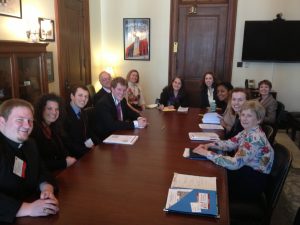
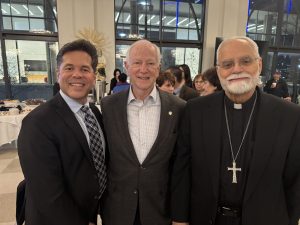
Last month, our Senior National Director of Marketing and Communications Paula Gwynn Grant participated in an interfaith communications workshop session at the annual Public Relations Society of America (PRSA) conference held at the historic Washington Hilton Hotel in Washington, D.C.  The hotel is known for hosting major events like the White House Correspondents’ Association Dinner and the National Prayer Breakfast.  It is also the site of the 1981 assassination attempt on President Ronald Reagan.

A longtime PRSA member since 2004, Paula joined a one-hour panel discussion with other communications experts from The Church of Jesus Christ of Latter-Day Saints, Religion News Service, a Christian filmmaker, and a Jewish public relations executive to specifically share insights about her work experience and our Catholic perspective regarding “A Leap of Faith: How Religion, Media and Communication Sectors Work Together (or Don’t) in our Digital Age.”

Paula enjoyed freely sharing how she navigates communications in a faith-based context by sharing our daily Vincentian work here at SVdP and in our global Catholic Church.  She talked about the necessity of having the conviction of your faith, clear messaging and priorities, and a deep commitment to authentic truth-telling in all of our stories, interfaith partnerships, and day-to-day work in order to touch hearts and make a positive impact on our brothers and sisters online, in person, and in every way that life presents us.

Paula reminded the over 110 attendees of communications/marketing students and professionals from Catholic University, Brigham Young University, and various secular and religious non-profits that, as members of the human family with various faith traditions or perhaps no particular faith tradition (as Pope Francis used to say), it is vitally important that we focus our individual and collective efforts on consistently thoughtful marketing and communications strategies.  Paula offered this as one way for us to emphasize the common good, so we build/maintain trust and good health to counter the high volume of divisive language, mis/disinformation, and other negatives we all experience each day.

11-26-2025 A Letter from Our Servant Leaders

11-26-2025 A Letter from Our Servant Leaders 1200 1200 Devine PR Postings

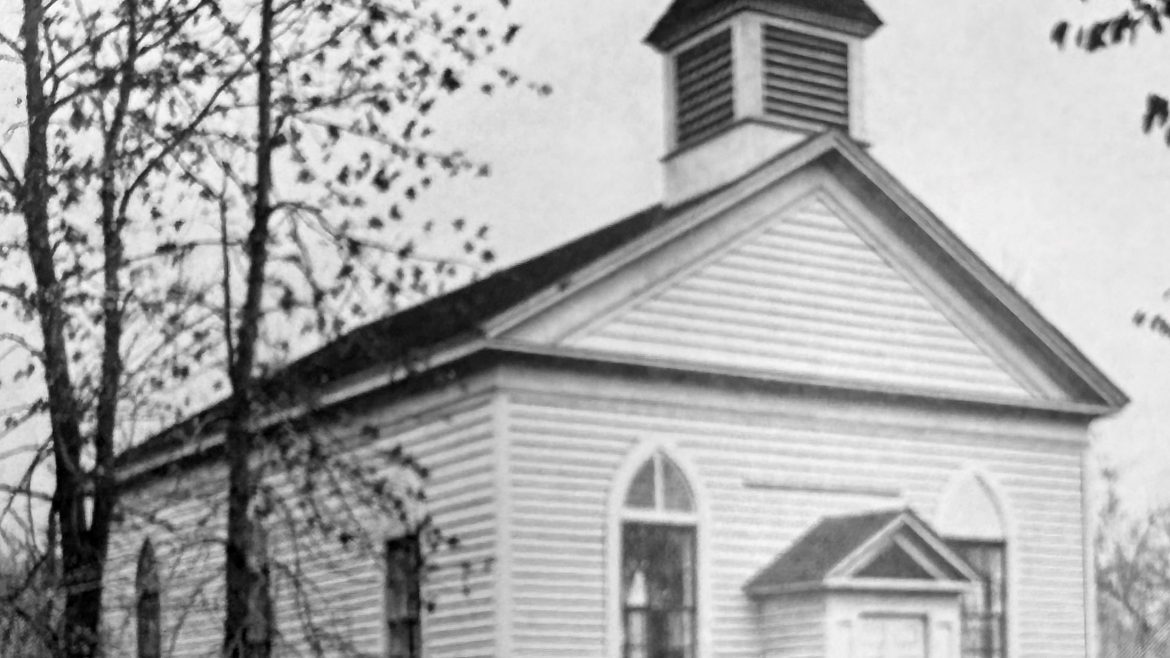
Should We Think of the Society as an Apostolate or a Ministry?

In Catholic Church circles, there has been a debate over the last 20 years about what to call church groups – “ministries” or “apostolates.”  “Ministry” seems to be the favorite as it’s easy to say, but in recent years there has been more of a push to use the word “apostolates.”  I want to argue the Society of St. Vincent de Paul is more of an apostolate and why it’s important.

In the book, Modern Catholic Dictionary by John A. Hardon, S.J. (from my area of Southwest Michigan), Fr. Hardon defines ministry as “authorized service of God in the service of others, according to specified norms revealed by Christ and determined by the Church.”  This means:

  1. service of God, who is glorified by the loving service given to others
  2. authorization by the Church’s hierarchy … this authorization may require ordination …
  3. based on the teaching of Christ, who showed by word and example how to minister to people’s spiritual and temporal needs;
  4. under the guidance of the Church in accordance with her directives and decrees.

Based on the above, I think the easiest way to think about a “ministry” is that it’s concerned with the Sacramental mission to bring people to Christ through the Sacraments. All four of Hardon’s definitions directly connect to the Sacraments. While   it is a great cause of the Church to connect people to the Sacraments, it is not necessarily the mission of the Society of St. Vincent de Paul.

We have a unique calling, and a unique ability, to witness our faith not just within the Church, but in the world. Frédéric explained that our Church and world lives are not split into two: we need to both determine the truth and to live it. This is why he was insistent that the Society remain “profoundly Catholic without ceasing to be lay.” In addition, the universal call of the laity to the apostolate, there are groups defined under Canon Law as lay apostolates, including the Society of St. Vincent de Paul. Despite not being a “ministry,” we always remember that living an apostolate or charism includes, definitionally, serving the good of the church.

What is an apostolate?

The word “apostolate” comes from the word “apostolic,” meaning that the Church, through the succession of and following in the example of the apostles, is SENT out into the world to spread the Gospel.  So, an apostolate is an organization that is sent out to spread the Kingdom of God.

“Indeed, we call an apostolate ‘every activity of the Mystical Body; that aims to spread the Kingdom of God over all the earth.’” – (CCC, 863)

I was working at a parish in Chicago when after Mass, an usher SENT me to see a man who was asking for help. His name was Joseph.  He was in an old military jacket and kind of intimidating. He told me he needed help, so I sat down and talked to him.  Mostly, I just sensed he wanted a friend, so I became his friend. I invited him to the church brunch which was happening at the same time right then. People looked at him and me kind of oddly, but we sat and had a meal together. Afterwards, I invited him to come to join me next week at daily Mass.  In those days, I looked after my 3-month-old daughter while I worked, so sometimes I was a little late making it to Mass, and I was late the day he came.  The daily Mass people were a little taken aback when Joseph came to Mass, but when he mentioned my name, they eased up a little. Afterwards, I invited him to come and sit with my daughter and I in my office. This made my priest boss a little upset that I would invite “a man like that” to be so close to my daughter and “I had to think about protecting my family.” But then I explained that I was trained as a Vincentian at another parish and Father Bob was quickly on board. “Oh, I didn’t know you were a Vincentian!”

Joseph and I would often sit during daily Mass and afterwards he would come to my office and talk with me and play with Naomi. I visited him quite a few times in his little dorm room he called a one-room apartment, which was above a bar. As time went on, he was getting more involved in the parish and offered to help grill during our parish picnic. People were starting to get to know him. Then suddenly, I got the call that Joseph died.

Father Bob asked me to lector at Joseph’s funeral. I came up to the ambo, 9-month child in my arms, and proclaimed the Word of God being very clear that I was connecting Joseph to a holy person in my gestures and silence. Afterwards, Joseph’s father came up to me, as Joseph had been estranged from the family. He asked, “You knew my Joey?”  I told him how we would sit in daily Mass together. He was so touched that Joseph came back into the Church, and the Church welcomed him.

The Holy Spirit SENT me to that moment. From the time I was a 10-year-old in the DRE’s office to now where I am a DRE, I don’t know exactly what the Holy Spirit is. I don’t know the Holy Spirit’s plan or exactly what He wants me to do. But tell me any story, and I can point him out. I love that Guy! He helps empower people to SEND people where we need to go.

Based on the Holy Spirit, the Society SENDS out Vincentians to encounter our neighbors in need. We do not just sit idly by; we are active in our apostolate.

The Vincentians see they cannot do this work alone. Vincentians SEND requests to pastors and parishes to get funding, food and more volunteers to help alleviate suffering of our neighbors in need.

Pastors SEND their parishioners to help or join the Vincentians in their mission.

Parishioners SEND their donations to the parish, which Vincentians are more than happy to organize, for our neighbors in need.

Vincentians see the need for greater organization and elect Conference and Council presidents and SEND them to our national assembly for their input and training to continue to grow our Conferences and Councils.

Conferences SEND Vincentians to Ozanam Orientations so we can be trained and respond to those we serve.  That Ozanam Orientation helped me respond to Joseph.

Vincentians see the overwhelming need and SEND Vincentians to do systemic change.  Systemic change is transformation. It is to change the systems, structures, mindsets, policies, and root causes of poverty. Systemic change is not the symptoms; it is holistic; it is collective action; it is complex and strives for a lasting impact. By embracing the apostolate nature of being sent by God, we strive toward systemic change in all things of the Society.

Voice for the Poor SENDS Vincentians to our government officials to advocate for our neighbors in need. Sometimes we go in person. Sometimes we send messages via voter voice. You can join voter voice here: https://ssvpusa.org/take-action.

Blessed Frédéric Ozanam prayed for faith and consecrated his life to God’s service (Apostle in a Top Hat, pg. 28). When the early Vincentians were forming the Society, Blessed Rosalie Rendu trained them and SENT them to the poor. We are grateful to be sent out in Jesus’ name in the instruction of Blessed Frédéric Ozanam and Blessed Rosalie Rendu. They too were SENT to help instruct us. Just as we strive to SEND ourselves to train others in our apostolate.

Below is a closing prayer and reflection. It is said that “the law of prayer is the law of belief” and so I thank the national spirituality committee for the recent update of the closing prayer, which you can purchase here: https://ssvpusa.org/product-category/spirituality/

This prayer, which includes the word “apostolate,” is part of the inspiration for this column. As spiritual advisor in my Conference, I use it as part of the closing prayer. Please note, I’ve adapted the prayer slightly to include the word “encounter” which our National President John Berry, has encouraged us to think about.

Father, grant that we who are nourished by the Body and Blood of Christ in the Holy Eucharist may realize the depths of our needs, respond more spontaneously to the suffering of others, and come to love You more deeply by service to our neighbor. 

Grant us also the wisdom and strength to persevere when disappointed or distressed. May we never claim that the fruitfulness of our apostolate springs from ourselves alone.

United in prayer and action, may we become a visible sign of Christ, and may we give witness to his boundless love which reaches out to all and draws them to love one another in Him.

We thank You, Lord, for the many blessings which we receive from those whom we encounter. Help us to love and respect them, to understand their deeper needs to share their burdens and joys as true friends in Christ. 

Amen.

Blessings,

Bobby Kinkela

11-20-25 Monthly Questions & Answers

11-20-25 Monthly Questions & Answers 1200 628 Devine PR Postings

November 20, 2025

Q: A parishioner has come to us asking if we could help with a loan of around $2,000 for a real estate problem that may keep the lender from foreclosing on her home. Is this allowed?

A: Conferences generally don’t loan money; they give gifts to those in need. Giving loans and expecting payback is contrary to the spirit and tradition of the Society. Specific circumstances might occur that would make this appropriate; however, not as a general rule. When we give assistance to people, it is given as a gift – not a loan; we should not look for repayment or a return.

P: Un feligrés ha venido a nosotros preguntando si podemos ayudar con un préstamo de alrededor de $2,000 por un problema de bienes raíces que puede evitar que el prestamista ejecute la hipoteca de su casa. ¿Está permitido?

R: Las Conferencias generalmente no prestan dinero, sino que dan regalos a las personas en necesidad. Dar préstamos y esperar que se les devuelva es contrario al espíritu y la tradición de la Sociedad. Pueden ocurrir circunstancias específicas que lo hagan apropiado; sin embargo, no como regla general. Cuando damos ayuda a las personas, se da como un regalo, no como un préstamo; No debemos buscar el reembolso o la devolución

Q: Our annual budget is about $120,000 plus food. We request grants to finance our activities. Recently, we have been turned down due to the lack of certified statements. Given that an audit would have little value aside from this requirement, is there any SVdP policy on Conference audits?

 A: The Society has always recommended that Conferences have an informal audit annually or at least when a new president takes office. Because of the size of your program, you need to decide if the cost of a formal audit is justifiable related to the grant request. It boils down to your choice: fulfill the requirements associated with the grant request or withdraw the request. Depending on your finance relationships with your Council, you may be able to obtain a Conference audit as part of your Council’s audit or bundle the work to reduce the cost of your separate audit.

P: Nuestro presupuesto anual es de aproximadamente $ 120,000 más comida. Solicitamos subvenciones para financiar nuestras actividades. Recientemente, hemos sido rechazados debido a la falta de declaraciones certificadas. Teniendo en cuenta que una auditoría tendría poco valor aparte de este requisito, ¿existe alguna política de SVdP sobre las auditorías de las Conferencias?

R: La Sociedad siempre ha recomendado que las Conferencias tengan una auditoría informal anualmente o al menos cuando un nuevo Presidente asuma el cargo. Debido al tamaño de su programa, debe decidir si el costo de una auditoría formal es justificable en relación con la solicitud de subvención. Todo se reduce a su elección: cumplir con los requisitos asociados con la solicitud de subvención o retirar la solicitud. Dependiendo de sus relaciones financieras con su Consejo, es posible que pueda obtener una auditoría de la Conferencia como parte de la auditoría de su Consejo o agrupar el trabajo para reducir el costo de su auditoría por separado.

SVdP Joins Catholic Mobilizing Network in Jubilee to Alabama

SVdP Joins Catholic Mobilizing Network in Jubilee to Alabama 2560 1440 Devine PR Postings

By Ingrid Delgado, National Director of Public Policy and Advocacy

2025 is a Jubilee Year which Pope Francis designated as a time to rededicate ourselves as “Pilgrims of Hope.” Honoring this Biblical Jubilee tradition of reconciliation and pilgrimage, earlier this month, I was blessed to join the Catholic Mobilizing Network in a Jubilee Experience to Montgomery and Selma, Alabama – along with Michael Acaldo, Connie Steward, and Paula Gwynn Grant. We had a very full but deeply moving two-and-a-half days walking in the footsteps of civil rights leaders, reflecting on historical racial injustices, and recognizing injustices that continue today. Perhaps most inspiring, though, was learning about the Catholic leaders that were on the side of justice during the civil rights movement, and the Catholic Church’s work that continues in needy areas of Alabama today. Although the Jubilee year will soon come to an end, may we continue to be pilgrims of hope who seek justice for our most vulnerable brothers and sisters.

11-20-2025 A Letter from Our Servant Leaders

11-20-2025 A Letter from Our Servant Leaders 1200 1200 Devine PR Postings

OUR INCREDIBLE JOURNEY – AND IT IS FAR FROM OVER!

November 20 is a special date for the Society of St. Vincent de Paul USA. This date marks the anniversary of an event that changed the face of charity in the United States. A date that we celebrate with gratitude this year as we commemorate 180 years since the Society of St. Vincent de Paul was founded in America.

In 1845, in St. Louis, Missouri, at the Basilica of St. Louis King of France (“Old Cathedral”), a small group of laypeople gathered to establish the first SVdP Conference in the United States. What they didn’t know, and never could have imagined, was that this humble beginning would grow into a nationwide network of nearly 81,000 members serving our most vulnerable neighbors with dignity, respect, and genuine friendship for nearly two centuries.

Let’s take a trip down ‘memory lane’ for a moment.

The Atlantic Crossing and a Divine Appointment

The story of SVdP in America begins with an encounter (it is always about encounter) on the high seas. In the autumn of 1845, Father John Timon, a Vincentian priest from Pennsylvania, was traveling from Ireland to the United States. In his hands, he carried something special: copies of the ‘Rule of the Society of St. Vincent de Paul.’ Having just seen the amazing work of Vincentians in Dublin, Father Timon felt called to bring this charism across the Atlantic.

When Father Timon arrived in St. Louis and spoke with Bishop Peter Richard Kenrick about what he had seen, the Holy Spirit moved the Bishop’s heart. He asked Father Ambrose Heim, a local priest who was known for his work with the poor (so much so that he was known as ‘The Priest of the Poor’) to help establish the Society in St. Louis and serve as its Spiritual Advisor.

And just like that, the Holy Spirit lit a fire that has burned for 180 years and counting!

The first meeting on November 20, 1845, brought together men of vision and heart: Dr. Moses Linton, a prominent physician, was elected President and his friend Bryan Mullanphy, widely known for his generous philanthropy, became Vice President. These men and their fellow members understood something essential that remains at the core of our mission today: that serving the poor is not primarily about what we give, but about the relationships we build. It’s about encountering Christ in every person we meet.

The St. Louis Conference was officially recognized by the Society’s International Council in Paris on February 2, 1846. The movement that had begun just twelve years earlier in Paris with young students challenging one another to live their faith more authentically had now reached across an ocean to a young nation hungry for the Gospel to be lived out in action.

Growth and Spreading Grace

What followed was nothing short of remarkable. Just as the Society had spread across France like wildfire, so too did it take hold across America. Conferences began forming in New York (1847), Buffalo (1847), Milwaukee (1849), Philadelphia (1851), Pittsburgh (1852), and soon in every corner of the nation. By the end of the nineteenth century, the Society had established seven major jurisdictions stretching from coast to coast, and in 1857, New York organized the first District Council in the United States.

In those early days, women could not be members, and women’s groups operated in parallel to the men’s society. For example, the Women’s Society of St. Vincent de Paul was founded in Italy in 1856 to support women and children, a role that men were not handling at the time. But in 1968, the SSVP CGI voted to allow women to become full active members, although women-only and men-only conferences continued to exist initially, and new conferences were encouraged to be co-ed. The society’s international rules were changed after 1968, and the process of integrating women continued over the next few years in different countries.

These early Vincentians, many of them immigrants or children of immigrants, understood poverty. They knew what it meant to struggle. They saw firsthand the conditions facing newly arrived families from Ireland, Germany, Italy, and beyond. Beyond distributing aid, they advocated tirelessly for systemic change. They fought to reform almshouses that treated children like prisoners. They established schools, founded boys’ clubs, opened orphanages, and created industrial training programs. The Society didn’t just respond to poverty; it worked to change the systems that created it. That is our approach today as well, and that early focus on advocacy and justice – with roots back to Ozanam and the Founders – animates our work today.

One of the major turning points in the SVdP USA story occurred in 1915 when leaders from seven major councils, New York, St. Louis, New Orleans, Chicago, Boston, Philadelphia, and Brooklyn, made the visionary decision to unite under a single national structure. The Superior Council of the United States instituted on June 7, 1915, with the formal inauguration ceremony taking place at the Catholic University of America on November 21, 1915. The first president of SVdP USA was Thomas Maurice Mulry, a man so deeply devoted to the Vincentian charism that he became known as “the American Ozanam.”

Thomas Mulry personified what it means to live the Vincentian Charism to its fullest. Not only did he lead our Society with profound conviction, but he also became a founder and vice president of the National Conference of Catholic Charities, helped establish the Fordham School of Social Service, and served as a trusted advisor to President Theodore Roosevelt on matters affecting children and families. He understood that a single person, animated by Gospel values and connected to a community of faithful servants, could help reshape an entire nation’s approach to poverty and care. Though he passed away just a year after unifying our national councils, his legacy endures in everything we do.

The Essence of Our Mission Then and Now

Throughout our 180 years of service in America, one principle has remained constant: we create relationships, not transactions. This is what makes the Society of St. Vincent de Paul fundamentally different from many charitable organizations. We don’t simply hand out aid – we sit in someone’s home, listen to their story, offer our presence, and walk with them toward stability and hope.

The Personal Encounter has been the beating heart of our mission since those first meetings at the ‘Old Cathedral.’  Two Vincentians visit a person or family in need, they develop genuine friendship, they listen, maybe they pray together, and then they offer emergency financial assistance with rent, utilities, food, clothing, and whatever else will help prevent a crisis from becoming a catastrophe. This simple practice, rooted in the Gospel, has remained remarkably consistent for 180 years because it works. It transforms both the giver and the receiver. We often refer to the practice as the ‘Home Visit’ based on the early practices of our foundation. But the reality is that the term ‘home visit’ is too limiting to describe the beauty of our work. We engage in human-to-human, Christ-centered personal encounters in many ways and places, not just in someone’s home.

Our Work Today: Serving Over 5 million Neighbors with Dignity

At the Society today, we can see the same spirit animating us that moved Frédéric Ozanam to action in 1833, and those brave founders to build their first Conference in St. Louis in 1845. The scale of our service has grown exponentially, but the mission remains beautifully unchanged.

In the 2023-2024 fiscal year alone, our network of nearly 81,000 Vincentian volunteers:

– Served over 5.2 million people across rural, suburban, and urban communities

– Made nearly 2 million visits to neighbors in need

– Provided services valued at $2.2 billion

– Contributed an estimated $416 million in volunteer hours

But behind every one of these numbers is a human story. The family that avoided eviction because a Vincentian sat with them and helped secure rental assistance. The senior citizen who can now afford her medications because of our charitable pharmacies. The person that had a place to sleep on a cold night because we operated a shelter. The young person who found steady employment through our workforce development programs.

The Many Ways We Serve

Our work has expanded and evolved to meet the changing needs of our communities. We operate thrift stores across the nation. They do double duty: providing affordable and free clothing and household goods while generating funding for our local Conferences to use in their communities. The profits from these stores provide the lifeblood of many of our Conferences and Councils.

Our Food Pantries are a lifeline in neighborhoods impacted by poverty. Thousands of families who are plagued by food insecurity and might not be able to put food on the table depend on the fresh and non-perishable goods we distribute. But we’ve gone further. We operate meal programs and community dining halls that not only nourish bodies but build dignity and connection.

Our ever-accelerating efforts in homelessness prevention meets families on the edge of disaster and provides the financial help and support they need to stay housed. For those experiencing homelessness, our rapid re-housing, transitional, and supportive housing programs work to get people off the streets and into stable housing. Innovative programs partner with landlords, navigate systems, and provide the support services that make permanent housing possible.

Our charitable pharmacies in places like Baton Rouge, Madison, Atlanta, Dallas, Cincinnati, and several other communities are a powerful testimony to our commitment to wholeness. Patients no longer must choose between buying groceries and taking their life-saving medications.

We’ve launched programs like Back2Work that provides customized training, continuing education, and connections to meaningful employment for people impacted by incarceration, poverty, and homelessness. We operate youth and young adult conferences nationwide, recognizing that young people are not just the future of our Society but are already the present, already serving with enthusiasm and idealism.

Our Disaster Services Corporation mobilizes when tragedy strikes, providing long-term recovery support that extends far beyond the initial emergency. DSC has innovated with the ‘House in a Box’ program which delivers essential household items to disaster survivors within hours, sometimes within 24 hours, at no cost to families, with donated values often exceeding $3,400 per box.

This spring, we opened a National Office in Washington, D.C., to emphasize and accelerate our efforts in Public Policy and Advocacy. Going back to the days of Ozanam and the founding members of SVdP USA we recognize that to truly serve the poor, we must advocate for systemic change at the national level. Our voice is now heard in Washington, speaking up for those experiencing homelessness, those struggling with poverty, those seeking re-entry after incarceration, and all vulnerable populations.

What Makes Us Different

In a world of nonprofit organizations and charitable agencies, what makes the Society of St. Vincent de Paul unique? It is this: we believe that growth in holiness is found in service to the poor.

For us, this is not a vocation – it is a calling that shapes our spiritual lives. We do not serve the poor to feel good about ourselves or to check a box. We serve because we believe we encounter Christ in every person we meet. We serve because we have been called by our Catholic faith to live the Gospel, not just read it, and to be the answer to someone else’s prayer, to show up in their moment of greatest need and say, “You are not alone.”

This is why our members and volunteers continue to show up, year after year, decade after decade, century after century. It’s why a seventy-year-old retiree will wake up on a Saturday morning to deliver emergency assistance to a family he’s never met before. It’s why a young parent will take time away from their family to help another family find stability. It is why a businessperson will leave the office to sit in someone’s living room and simply listen.

Gratitude and Hope for What’s Ahead

As we stand here in November 2025, celebrating 180 years of faithful service, my heart overflows with gratitude. Gratitude for Frédéric Ozanam, whose youthful idealism was ignited by a challenging question and transformed the world. Gratitude for Father John Timon and Father Ambrose Heim and all the clergy who saw in the Vincentian charism something essential for the American Church. Gratitude for the countless laypeople, priests, bishops, religious sisters, and above all our dedicated volunteers, who have kept this flame burning bright.

I’m grateful for Thomas Mulry, who showed us that one person’s commitment to the Vincentian mission can influence an entire nation. I’m grateful for all the Vincentians who have come before us, who built our thrift stores and food pantries and shelters, who sat in countless living rooms and changed lives through relationship and presence.

And I am profoundly grateful for you, the 81,000 people who make up our Society today. You are the living embodiment of Vincentianism. Whether you’re folding clothes in one of our thrift stores, distributing food at a pantry, visiting a family in their home, serving on a board, or supporting us financially, you are the heart and hands of the Society. You are how Christ’s love reaches the most vulnerable in our communities.

What’s Ahead – Looking Forward with Eyes of Faith

As we celebrate this milestone, we also look to the future with eyes full of hope and excitement. The needs of our communities are great; poverty hasn’t disappeared, homelessness continues to grow, hunger persists, and so many people are just one crisis away from disaster. But we are not discouraged. We know that with faith, with community, with determination, and with the grace of God, transformation is possible.

We are in an excellent position to accelerate and innovate in how we serve. Over the next years, we will be making significant investments from our reserves and resources (prudently and strategically) to continue to meet people where they are; in rural communities where poverty is often invisible, in urban neighborhoods where visible homelessness breaks our hearts, in suburban communities where struggles hide behind closed doors. But we cannot just throw money and aid at these problems and hope they go away; they won’t. We must continue to invest and build capacity, systems, programs, and relationships that will give us the ability to leverage our resources to do more to address the systemic and root cause issues, not just distribute aid. We must, and we will, help our Conferences and Councils grow. Grow in financial resources, membership, and spirituality. Not just by providing funding and National Office staff support, but by training and mentoring, and helping create the systems needed to thrive. And we will continue and grow our work of advocating for policies and systemic changes while serving immediate needs. We will continue to form young people in the Vincentian spirit so that this charism doesn’t fade but deepens with each generation.

Most importantly, we will continue to remember that every person we serve is precious, beloved, and made in the image of God. Every single person deserves dignity. Every single person deserves to be seen and heard. Every single person deserves a friend who will walk with them toward hope.

A Final Word

On this 180th anniversary of the Society’s founding in America, I invite you into deeper communion with our Vincentian mission. If you are not yet an active conference member, consider joining us. If you are already a Vincentian, thank you and accept the challenge to deepen your commitment, to bring a friend, to mentor a young person in this vocation we love.

Let us commit to making sure that 180 years from now, in the year 2205, there are still Vincentians walking through neighborhoods (or maybe they’ll be flying around on personal hovercraft by then), sitting in living rooms, visiting the poor, offering friendship and assistance, and showing the world what it looks like when people take seriously the Gospel mandate to love their neighbor as themselves.

The work of charity will never be finished in this world. But neither will the grace of God. And as long as there are people experiencing poverty and injustice, the Society of St. Vincent de Paul will be there, formed by 180 years of tradition, animated by the love of Christ, and committed to walking with our neighbors toward dignity and hope.

Thank you for being part of this remarkable story. Thank you for caring. Thank you for serving. Thank you for all you do.

Peace and God’s blessings,

John


SVdP’s International Twinning Program: Connecting Vincentians Across the World

SVdP’s International Twinning Program: Connecting Vincentians Across the World 1500 1000 Devine PR Postings

By Valeria Vlasich, International Twinning Coordinator

The Society of St. Vincent de Paul International Twinning Program is a powerful way for Conferences to connect with Vincentians in communities around the world. Through this program, Conferences in different countries form meaningful partnerships, sharing friendship, prayer, and support in the true spirit of St. Vincent de Paul.

Twinning is more than a financial partnership. It is a relationship built on solidarity and faith. Conferences exchange correspondence, share updates, and pray for one another, learning from each other’s experiences and witnessing the impact of God’s love in different cultural and social contexts.

Participation in International Twinning allows a Conference to support other Conferences abroad, from food distribution and educational programs to healthcare initiatives and housing projects. The program strengthens the global Vincentian network, offering members the opportunity to grow spiritually while making a real difference in the lives of those in need.

Michael J. Nizankiewicz, chair of the International Twinning Commission, emphasizes the importance of these connections.

“Since we often refer to ourselves as members of the Vincentian Family, International Twinning reminds us that members of a family help each other when needed,” Nizankiewicz said. It also reminds us that we are not just a local (Conference) state or national organization, but truly an international family working together to help over 30 million people a day around the world.”

By joining the International Twinning Program, a Conference becomes part of a worldwide network of faith, service, and charity. It is an invitation to extend the reach of your Conference beyond your local community, to build bridges of hope and compassion that span continents. Through Twinning, Vincentians around the world are reminded that charity knows no borders and that together, we can bring Christ’s love to those who need it most.

If you have questions or want to learn more about International Twinning, email Valeria Vlasich at vvlasich@svdpusa.org or call (314) 576-3993, extension 225.

Michael Acaldo, National CEO

11-13-2025 A Letter from Our Servant Leaders

11-13-2025 A Letter from Our Servant Leaders 600 600 Devine PR Postings

We Are a Youth Movement

On April 23, 1833, his 20th birthday, Blessed Frédéric Ozanam and his university friends started a powerful movement we now know and love as the Society of St. Vincent de Paul.

Frédéric always recognized the important role the young play in revitalizing the Church and his Society: “…it is essential for the Society to recruit its members from among the young. The Society was born fourteen years ago: it must not grow old as its founders grow old and charity becomes a common practice. Young people are useful for their boldness, and even for their imprudent acts, for the new ideas they bring, for the initiatives we had not thought of.”

It was a youth movement then — and it remains one today. We are living in an exciting time for the Catholic Church! You may have read an article or seen a news piece in recent months, noting the increase in conversions to Catholicism among Gen Z.

When you read about these young converts, you start to see the same themes come up about what’s drawing them to the Church: an attraction to the physical beauty of Catholic churches and the Mass, an appreciation of the history and tradition of the Church, and a desire for discipline and structure.

Thank God for drawing these young people to Him! This is an invaluable opportunity for Vincentians to hear Jesus’s voice saying, “…Look up and see the fields ripe for the harvest.”

We should be excited not just by the opportunity to gather these young souls for eternal life through Christ and His Church, but also to invite and involve these passionate young people in our Society!

Our Society can undoubtedly offer the beauty, tradition and structure that young people are hungering for. Think of the strong tradition we’ve inherited from Blessed Frédéric Ozanam—our Society, now more than 190 years old—and from the Church’s 2,000-year-old commitment to the poor. Think of the structure required by our Society for Vincentians to meet regularly and follow the discipline of our Rule. Think of the beauty of the smiles of our neighbors in need when we assist them with their material needs and bring hope into their lives.

A wise Vincentian once told me, “You’re either growing every day, or you’re dying.” So, I pray that I and every Vincentian would embrace this opportunity the Lord is providing us to grow – and to grow younger ourselves in embracing the young! Ultimately, I believe youth is not a number — it’s a state of mind. It lives between your right and left ear. It’s a spirit of openness, curiosity, and passion. If we accept the Lord’s invitation to involve the young, we will “stay fresh and green” (even if we have a gray hair or two – or more).

Recently, our National Vice President for Youth, Young Adults, and Emerging Leaders, Linda Roghair, shared a wonderful reflection about our youth conferences. She reminded us that every youth conference must be connected to a parish conference or a council. In discussing this, we reflected on how Frédéric’s first conference was a youth conference — a small group of young believers who decided to bring their faith to life through action. In that spirit, every one of our over 4,000 U.S. conferences is truly a youth conference.

As many of you know, I recently became a grandfather — and I’m loving every minute of it! Yet even as I hold that new life in my arms, I want to stay young and vibrant on my own spiritual journey. Jesus tells us how, reminding us that “unless you turn and become like children, you will not enter the kingdom of heaven.”

So, what would Blessed Frédéric do today?

He would listen to the needs of the poor, invite everyone (young and old) and go out — two by two — to meet Christ in the poor.

As we look toward the 180th anniversary of the Society in the United States on November 20, we give thanks for all who have carried this mission forward — young and old — with faith, courage, and joy.

And as we near Thanksgiving, let’s give thanks for the gift of youth — not measured in years, but in the daily renewal of our minds through God’s grace and our willingness to grow with Him. May we continue to see Christ in every person we serve and may the youthful spirit of Blessed Frédéric inspire us to transform the world with love.

Blessings,

Michael

11-6-2025 A Letter from Our Servant Leaders

11-6-2025 A Letter from Our Servant Leaders 1200 1200 Devine PR Postings

A Gospel Mandate, Not a Political Choice: Why We Must Act Now

Last Friday, I issued a letter regarding the current government shutdown and the moral failure of leadership and service by all parties involved in allowing it to hurt the needy and the innocent.

I received a number of responses from some of our Vincentians. Interestingly, as many thought I was too easy on the Democrats as those who thought I was too easy on the Republicans and the Administration.

Those who say I didn’t fault one side or the other may not understand the non-partisan nature of our advocacy work and, therefore, the point I was trying to make.

The issue isn’t who is more to blame. The issue is the proper response from people of faith.

Simply put, the government shutdown and its impact on the innocent and vulnerable is not a political problem requiring political solutions. It is a moral emergency demanding a Gospel response.

This week, millions of Americans face an impossible choice: feed their children or keep the lights on. Parents stare at empty cupboards. Elderly neighbors skip meals. Infants lack formula. And yet, in the corridors of power, ideological brinkmanship continues, while the vulnerable become collateral damage in a struggle that has nothing to do with their survival and everything to do with partisan victory.

This is not a moment for political hand-wringing. This is a moment for faithful action rooted in the deepest truths of our Catholic faith, truths that transcend left and right, Republican and Democrat, conservative and progressive. When the poor cry out, there is no ideology, only injustice. When a child is hungry, there is no political debate, only sin.

The False Gospel of Political Neutrality

Scripture does not permit us the luxury of neutrality on this question. Jesus does not speak carefully around suffering; He names it. He does not equivocate about our duty; He commands it. “Whatever you did for one of these least brothers of mine, you did for me” (Matthew 25:40). This is not political rhetoric. This is not a talking point. This is the measuring rod by which Christ will judge us.

The prophet Isaiah cuts through all political complexity with searing clarity: “Learn to do good; seek justice, rescue the oppressed, defend the orphan, plead for the widow” (Isaiah 1:17). There is no footnote that says, “unless it’s inconvenient.” There is no asterisk that permits us to abandon the poor because budget negotiations stall. Justice is not negotiable. The dignity of the vulnerable is not a bargaining chip.

The real scandal here is that both sides have failed simultaneously. This is indeed a bipartisan moral failure, perhaps the only true bipartisan achievement of recent years. Both Republicans and Democrats who permit ideological struggle to weaponize hunger have betrayed the Gospel mandate. Neither party owns this failure alone; both have collaborated in it. And for those of us called to follow Christ, that shared culpability demands a shared response that transcends partisan loyalty.

What Vincentian Charity Demands of Us

Blessed Frédéric Ozanam understood something crucial: Social reform begins not in legislative chambers or theoretical debate, but in the lived encounter with suffering. His famous words remain a burning challenge to our comfortable distance from reality:

“The knowledge of social well-being and reform is to be learned, not from books, nor from the public platform, but in climbing the stairs to the poor man’s garret, sitting by his bedside, feeling the same cold that pierces him, sharing the secret of his lonely heart and troubled mind.”

St. Vincent de Paul spent his life answering this call. He did not debate whether charity or justice was more important, he understood they are inseparable. Real compassion demands both the immediate works of mercy and persistent advocacy for systems that prevent suffering in the first place. Feeding a hungry child at our door is essential. Demanding that no child should go to bed hungry because politicians chose ideology over basic human decency is equally essential.

This is the Vincentian charism — to see Christ in the face of the poor, and to fight, with our voices, our presence, and our persistent action, to remove the obstacles that keep them suffering. No, my friends, being a Vincentian does not mean simply serving in silence and staying out of the important issues of the day. There are some who believe that our only obligation is to do works of charity. But that is not true. If you read our history and the words of our founders and our Patron Saint, the call for advocacy and action is clear:

Politics – never! Advocacy for the poor, needy, deprived, and vulnerable – always!

What We Must Do Now: A Call to Concrete Action

If we claim to follow Christ, if we claim to walk in the footsteps of Ozanam and Vincent de Paul, we cannot respond to this crisis with thoughts and prayers alone. We must act. Here is what conscience demands:

First, encounter the reality. Do not let statistics numb you. Behind the figure of “40 million SNAP recipients” are your neighbors, your parish members, families in your community who will go hungry. As Ozanam insisted, climb those stairs. Call local food banks. Learn their names. Learn their stories. Let the suffering Christ look at you from their eyes and shatter your complacency.

Second, use your voice. Contact your representatives, all of them, and demand the immediate restoration of every program meant to protect the innocent. Do not ask politely. Demand. This is not a request; it is an obligation rooted in scripture and centuries of Catholic social teaching. Tell them that partisan victory purchased with a hungry child’s tears is not victory – it is sin.

Third, demand solutions, not blame. We are not called to pick a political team. We are called to stand with the poor. That means asking: Which elected officials will prioritize the vulnerable? Which leaders will refuse to use hunger as a negotiating tactic? Vote, speak, and advocate based not on partisan loyalty but on the simple question: Who will protect those who cannot protect themselves?

Fourth, help strengthen our local response. Food banks, assistance programs, community networks cannot replace what government programs provide, but they become lifelines when those programs fail. Bring more people into SVdP. Fundraise for your Conference and Council. Help build and grow relationships of solidarity. In these acts we model the world Christ calls us to build.

Fifth, sustain the witness. When the shutdown ends, and it will, we cannot retreat into silence. The systems that made this crisis possible will still exist. The vulnerability of the poor will remain. We must become persistent advocates, not just crisis responders. This is the long work of justice.

No Ideology Required, Only Faithfulness

Those of us called to serve in the Society of St. Vincent de Paul know this truth intimately: the Gospel makes no room for indifference to suffering. It makes no room for the excuse that “politics is complicated.” Yes, policy is complex. Yes, reasonable people disagree on solutions. But there is no reasonable disagreement about this: When the innocent are weaponized in political struggle, that struggle becomes  immoral.

This statement is not partisan. It is prophetic. It judges all sides equally. It invites all people of conscience, regardless of political affiliation, to choose solidarity with the poor over loyalty to political teams. It calls each of us to conversion: to examine where our true allegiance lies.

The Urgent Moment

We are in November. Every day that lifeline programs remain interrupted, the human cost grows heavier. Every day that passes without restoration of essential support programs is another day a child goes to bed unsure if there will be breakfast. This is not hyperbole; this is the lived reality for millions.

The question before us is not political but spiritual. It is the ancient question posed by every prophet, every saint, every authentic voice of the Gospel: Will you act? Will you use whatever influence you have – your voice, your vote, your presence, your prayers transformed into deeds – to demand that those entrusted with power choose justice over ideology?

St. Vincent de Paul’s life answers this question for us. We are called to more than charity; we are called to advocacy. We are called to more than private mercy; we are called to public justice. We are called to more than kindness; we are called to solidarity.

A Final Word

In Matthew 25, Christ describes the final judgment. He does not ask what political party we belonged to. He does not ask whether we had ideological purity. He asks a single, piercing question: Did we feed the hungry? Did we see Him in the suffering and act?

In this moment, the answer is clear. Our government has failed the Gospel mandate. Now, the mandate falls to us. Every Vincentian, every person of faith, every advocate for justice must rise to meet this crisis with the full force of our conviction and our action.

We cannot build the kingdom of God on the bones of children made hungry by political gamesmanship. We cannot claim to follow Christ while remaining silent as the vulnerable are sacrificed. We cannot accept the false necessity of such cruelty.

The call is urgent. The work is clear. The time is now.

May our prayers become deeds. May our words become action. May our solidarity with the poor become the witness that transforms a nation. And may we never forget that in serving the least among us, we serve Christ Himself.

This is not optional. This is the Gospel. This is our calling. This is what it means to follow Jesus in our time.

Peace and God’s blessings,

John

A Bipartisan Moral Failure: How Both Parties Weaponized the Defenseless

A Bipartisan Moral Failure: How Both Parties Weaponized the Defenseless 1080 1350 Devine PR Postings

This week, millions of mothers are wondering how to feed their children. Government doors are closed, but hunger will not wait.

Allowing the innocent and vulnerable, children, families, people with disabilities, and the poor, to become casualties of an ideological political struggle is an egregious moral failure. The present government shutdown in the United States exposes this immorality with painful clarity, as millions face the immediate threat of hunger, the chill of a cold apartment, and deprivation due to the interruption of lifelines, such as the Supplemental Nutrition Assistance Program (SNAP) and the Low Income Energy Assistance Program (LIHEAP). At the same time, many federal workers face hardship due to  the loss of income from being furloughed or having  to work without compensation.

This crisis is not a distant tragedy: it is right in front of our face in the look in a mother’s eyes as she worries that her innocent children may soon feel the ache of an empty stomach. Its roots run deep in the decisions of policymakers who have chosen partisan brinkmanship over human dignity, and the consequences demand an urgent moral critique through faith and reason. This is not a partisan failure. Ironically, it’s one of the few times that both sides of the political aisle have managed to do something together – morally fail in their efforts to appeal to their supporters.

When Politics Endangers the Innocent

SNAP (Supplemental Nutrition Assistance Program) is an essential form of help for more than 40 million Americans, and LIHEAP keeps the heat on for millions of people. While the program for Women, Infants and Children (WIC) was funded in October, November funding is still unclear. The loss of funding would threaten nearly 7 million mothers, infants, and young children use rely on the program for food security and basic health.

With the shutdown stretching into November and contingency reserves mired in political refusal, countless families and individuals now face anguish and impossible choices between feeding their children, keeping the lights on, or affording medicine. State governments are scrambling, with some managing to tap emergency funds, but  others simply cannot fill the federal vacuum. The stark truth is that politics has weaponized food and safety, holding the most defenseless as hostages for ideological gain.

Biblical Mandate for Justice and Mercy

Scripture, at its heart, proclaims a duty toward the defense of the vulnerable, a duty utterly at odds with policies that inflict suffering to secure political leverage. The prophet Isaiah demands: “Learn to do good; seek justice, rescue the oppressed, defend the orphan, plead for the widow.” (Isaiah 1:17). Isaiah’s command to ‘rescue the oppressed,’ is not only a biblical mandate, it is the fundamental test of our nation’s soul today. Jesus teaches: “Whatever you did for one of these least brothers of mine, you did for me.” (Matthew 25:40). Civil authority in the biblical vision exists not for self-interest, but rather to “…punish those who do evil and promote those who do good.” (Romans 13:3-4).

To turn away from those suffering so they become collateral in a battle over budgetary priorities, is nothing less than a reversal of God’s will for society. Scripture’s recurring theme is this: How nations treat their poor and marginalized is the measure of their true justice and righteousness.

Vincentian Wisdom: Advocacy, Experience, and Action

Blessed Frédéric Ozanam and St. Vincent de Paul both left us a legacy of service intimately bound to justice. Ozanam’s critique remains piercingly relevant: “Charity is the Samaritan who pours oil on the wounds of the traveler who has been attacked. It is justice’s role to prevent the attack.” His insistence was that real social reform begins not in distant legislatures or theoretical debates, but in the living experience of the poor:

“The knowledge of social well-being and reform is to be learned, not from books, nor from the public platform, but in climbing the stairs to the poor man’s garret, sitting by his bedside, feeling the same cold that pierces him, sharing the secret of his lonely heart and troubled mind”.

St. Vincent de Paul’s lifework of advocating for resources to relieve distress, making visible the plight of those society ignores reflects an unwavering “option for the poor,” echoing the call in Matthew 25 to see Christ in those suffering. Their example teaches that even the most well-intentioned charity fails if it does not confront systems, structures, and policies that perpetuate suffering.

The Immorality of Political Hostage-Taking

To persist in a shutdown while millions are deprived of safety net programs is to choose indifference over compassion and abstraction over personal encounter. It is a scandal not merely for the recipients who will be hungry, cold, and frightened, but for a society that claims to value life, justice, and the common good. The poor and vulnerable caught in today’s shutdown are not statistics. Rather they are sacred realities, beloved by God and deserving of dignity. As Vincentians have written in the present crisis:

“Abrupt and devastating policy changes by the U.S. government…threaten human dignity, particularly in the treatment of immigrants and asylum seekers…True discipleship demands an active solidarity with the poor and excluded. This is not merely a moral or religious obligation, but a civic responsibility that aligns with the founding ideals of the United States.” (Statement of the Eastern Province Congregation of the Mission, July 22, 2025)

Justice and Charity: Both Are Required

Catholic tradition does not allow a retreat into mere private charity as substitute for real justice. As I wrote in my Servant Leader column in April of this year: “If we do not use the knowledge and learning we uniquely gain through our personal encounters with the people we serve to help change the causes of poverty, dependence, and need, then we are failing in our duty as Christians”. In other words, our advocacy for policies that protect the vulnerable is just as vital as our daily works of mercy.

Real charity and real justice both require the healing of wounds, the meeting of immediate needs, and the building of systems that don’t allow those wounds to be created in the first place.  The knowledge to solve “the formidable problem of misery” comes from persistent accompaniment and attentive listening, not from political abstractions or partisan gamesmanship.

The Human Cost

As November begins, the ramifications of stalled SNAP and WIC programs grow dire. For many families: milk, eggs, and formula for babies are suddenly unavailable. Parents are forced to skip meals so their children can eat. Older adults, sick and isolated, find their groceries may not last till next benefit cycle. Community food banks, stretched past all reasonable limits, cannot come close to replacing lost federal aid. Each headline and statistic are a cry for help; the cry of Lazarus at the gate, ignored by the comfortable.

A Call to Conscience and Concrete Change

For those entrusted with authority, be they legislators, administrators, or citizens, the mandate is clear. Policy debates must never lose sight of the faces and wounds of those who will be most affected. “To serve the poor is to serve Jesus Christ,” St. Vincent said, and that service demands both immediate relief and persistent action to end the causes of suffering.

No government is exempt from the law of justice, nor from judgment when it fails the least among us. Partisan struggle becomes morally intolerable when its cost is paid by the most defenseless.  Vincentians, other Christians and all people of conscience must reject the false necessity of such cruelty, insisting instead that every person deserves food security, not fear. The poor deserve our voices, our votes, and our unyielding advocacy.

Conclusion: Building the Kingdom, Not the Contest

In this pivotal moment, the Catholic Church, the Vincentian family, and every advocate for justice must demand an end to politics as hostage-taking and demand the full restoration of every program meant to protect the innocent. This is not optional; it is a Gospel imperative and a test of our nation’s true character. May those with the power to act climb the stairs to the poor’s apartment, encounter the suffering Christ, and choose justice, mercy, and solidarity over ideological victory.

Let us pray and labor “that justice roll down like waters and righteousness like an ever-flowing stream” (Amos 5:24). For where politics fail the innocent, God’s call remains: Act justly, love mercy, and walk humbly with your God. Anything less is far too little, and utterly immoral for a nation that claims to care for its own.

Together, we can build a nation where justice flows. Where no child goes hungry, and every person finds dignity. May our prayers become deeds, and may peace and justice guide our path forward.

Peace and God’s blessings,

John

Sign Up for Our Newsletter

Privacy Preferences

When you visit our website, it may store information through your browser from specific services, usually in the form of cookies. Here you can change your Privacy preferences. It is worth noting that blocking some types of cookies may impact your experience on our website and the services we are able to offer.

Click to enable/disable Google Analytics tracking code.
Click to enable/disable Google Fonts.
Click to enable/disable Google Maps.
Click to enable/disable video embeds.
Our website uses cookies, mainly from 3rd party services. Define your Privacy Preferences and/or agree to our use of cookies.
Skip to content