• Search the Site

Posts By :

Devine PR Postings

Communicating the Charism and Spirituality of Saint Vincent de Paul

Communicating the Charism and Spirituality of Saint Vincent de Paul 1024 540 Devine PR Postings

Rome, 27 September 2025

To the members of the Vincentian Family

Communicating the charism and spirituality of Saint Vincent de Paul: a legacy that never fades

Dear members of the Vincentian Family,

May the grace and peace of Jesus be always with us!

Each year, the Solemnity of Saint Vincent de Paul is a special moment to rediscover his spiritual legacy, strengthen the bonds of communion within the Vincentian Family, and renew the missionary commitment that unites us.

Pope Francis, in his message of 11 December 2024, sent to me on the occasion of the commemoration of the fourth centenary of the foundation of the Congregation of the Mission, gave all of us a clear recommendation; namely, to persevere in the charism and spirituality lived by our Founder, Saint Vincent de Paul. In fact, the late Pontiff wrote that “it is fitting to reflect on the legacy of spirituality, apostolic zeal and pastoral care that Saint Vincent de Paul bequeathed to the universal Church.”

To reflect is to persevere. However, this action does not mean remaining “mummified” in practices, but rather interpreting the “signs of the times” in the light of the Gospel of Charity, which is God. Our charism, in fact, always refers us back to the concrete conditions, to the human contexts in which we are immersed, in order to build meaningful relationships where we are sent as witnesses of Love.

The charism, as Saint Vincent taught, requires each of us to interpret human situations in order to proclaim and live the Gospel, just as it obliges us to promote human development in an integral and concrete way. Only in this way can we be recognized as witnesses of Charity and, therefore, witnesses of the Love we have encountered and wish to proclaim.

In his life, Saint Vincent allowed himself to be surprised and moved by the newness of the Gospel, because he was capable of letting the face of Jesus present in the poor radically challenge him. Love thus became hope for something new, an active hope that puts the proclamation of the Gospel first, living it and then preaching it with words.

Saint Vincent presents himself to us as a man of hope because in his concrete actions he showed uncompromising faith in God, faith lived in the most marginal human situations, and he brought the fragrance of love where the abandonment of the poor spread its acrid smell. It is there that Vincent made hope active because he “got his hands dirty” with humanity and bore witness to the Truth.

The Mystic of Charity is still today the man of active hope, and all of us, members of the Vincentian Family, become like him, hands that serve, hearts that love. In a world marked by wars, injustice, and new forms of poverty, Saint Vincent reminds us that Christian hope is not escapism, but commitment. He invites us to believe that, even in the face of seemingly hopeless situations, charity can open new doors. Being Vincentians in today’s world means bringing hope that translates into service, capable of uniting faith and action, contemplation and social transformation.

Hope, faith, and love, as lived by Saint Vincent, are virtues to be lived and communicated everywhere and by every means. Recent Popes have reiterated this in their magisterium and have lived it through the use of the mass media, social networks, and every means of social communication.

We live in an age marked by the power of social communication: words, images, social networks, videos, podcasts, websites. All of this is not simply a neutral tool, but a real living environment, in which women and men of every culture meet, learn information, are formed, and sometimes even are hurt by distorted messages.

As members of the Vincentian Family, we are called to recognize this reality as a new frontier of evangelization and service. Saint Vincent used every means that Providence made available to him: letters, conferences, written reports, and networks of collaboration. Today, with the same boldness, we are sent to inhabit contemporary languages in order to communicate the beauty of the charism entrusted to us.

Over the centuries, the figure of our Founder has inspired numerous artistic and multimedia expressions: songs, musicals, plays, and films. Each era has sought to give voice and image to his life, to convey the appeal of his holiness and the relevance of his work. Among these productions, the film Monsieur Vincent occupies a special place, not only because it was one of the first major cinematographic attempts to tell the story of a saint, but above all because it captures his profound spirit, presenting Vincent not as an inaccessible hero, but as a man capable of transforming faith into action and charity into a way of life.

Monsieur Vincent is a classic French film from 1947, directed by Maurice Cloche, dedicated to the life of Saint Vincent de Paul, played by Pierre Fresnay, who converted to Catholicism during the filming of the movie. In 1949, it won the Oscar for Best Foreign Language Film. Our confrere,

Father Celestino Fernández, in one of his studies, highlighted the two essential axes of the film:

  • the holistic liberation of man (which is pleasantly surprising for its connection with post-conciliar theology and pastoral care regarding evangelization);
  • the Incarnation, the foundation of all Christian

Between these two main axes, there are various themes: love, the Christian conception of the world, a selfish and unsupportive society as a terrible machine that produces poor and marginalized people, charity, justice, the faces of the Church, and the organization of charity.

LINK

Netflix: https://www.netflix.com/title/70042283

Plex: https://watch.plex.tv/movie/monsieur-vincent

JustWatch: https://www.justwatch.com/it/film/monsieur-vincent

JustWatch: https://www.justwatch.com/es/pelicula/monsieur-vincent

JustWatch: https://www.justwatch.com/fr/film/monsieur-vincent

JustWatch: https://www.justwatch.com/us/movie/monsieur-vincent

IMDb: https://www.imdb.com/title/tt0039632/

Letterboxd: https://letterboxd.com/film/monsieur-vincent/

Even today, the creativity of our Vincentian Family is still at work throughout the world and is enriched by various artistic and multimedia expressions, all of which deserve praise and support. I am pleased with this and thank all those who are involved in this field of missionary animation.

Even the General Curia of the Congregation of the Mission of Saint Vincent de Paul, on the occasion of the fourth centenary of the Foundation of the Congregation, together with the Italian Province of the Congregation of the Mission, produced a musical work entitled Fino alla fine. San Vincenzo de Paoli, messaggero e servo (Until the End: Saint Vincent de Paul, Messenger and Servant). The musical work was coordinated by Father Salvatore Farì, CM, with script and lyrics by Sister Rosanna Pitarresi, DC, and music and direction by Maestro Claudio Mantegna. It was produced by the musical group GM Music of Catania in collaboration with Bluverse Academy.

The work consists of: a prologue that quickly immerses us in the characteristics of today’s world; eight musical scenes introduced by a monologue by Vincent de Paul who tells us today about his life (his vocation, his mission, his service of the poor, his commitment to prisoners and to building peace), followed by a video clip with the musical piece that brings his message up to date; an epilogue in which, as successor to Saint Vincent, I invite the Missionaries, the Vincentian Family, friends, and young people to serve their brothers and sisters, to love them, to protect them… until the end.

LINK

https://www.youtube.com/watch?v=1-jv4i5arPY&t=2913s

In the coming months, our Communications Office will distribute the script of the film and musical and an educational-pastoral guide to be used after viewing the film Monsieur Vincent and the musical Fino alla fine (Until the End) in the various settings where the Vincentian Family operates.

On this occasion, I am delighted to announce that a new film, Vincent (SAJE Production), will be released in 2028. I am certain that we will be presented with a masterpiece as a sign of continuity and an act of living memory: continuity, because Vincent’s mission continues to inspire the Church and the Vincentian Family throughout the world; living memory, because the film will be a tool for listening to Vincent’s voice again and allowing ourselves to be challenged by his example, in a language that is still capable of touching our minds and hearts today.

I encourage everyone to disseminate and promote these productions in communities, parishes, schools, missions, and works of the Vincentian Family as an opportunity for knowledge, formation, and prayer; to use them as missionary tools to reach out to young people, families, and those distant from the faith, showing them the beauty of a life given to God and to others; to experience the viewing of the productions as a community event that strengthens our sense of belonging and rekindles in us the flame of the spirituality and charism.

I entrust you to the intercession of Our Lady of the Miraculous Medal, Saint Vincent de Paul, and all the Saints, Blessed, and Servants of God of the Vincentian Family, so that we may be messengers and servants of the Gospel of charity.

Your brother in Saint Vincent,

Tomaž Mavrič, CM

9-25-25 Weekly Questions & Answers

9-25-25 Weekly Questions & Answers 1200 628 Devine PR Postings

September 25, 2025

Q: The definition of memberships is somewhat vague in the Manual. Does National have any additional guidelines on what constitutes a full voting member of a Conference, especially on how many meetings members need to attend to maintain active status?

A: The Rule, Part III, Statute 3 identifies clearly the membership types. There is nothing in the Rule that specifies who is eligible to vote. However, in the Nationally Approved Bylaws for Conferences, it states that each Active Member is entitled to one vote, and that vote must be cast in person. The Rule does say an Active Member must be Catholic, attend meetings on a regular basis, and provide person-to-person service to those in need. A true Active Member will make an effort to attend all meetings, will want to be with fellow Vincentians as often as possible and will attend the far majority of all meetings.

Q: When soliciting funds from various sources, who in the SVdP chain of command is authorized to sign contracts? Should a copy of this contract be filed with the District Council or Archdiocesan Council?

A: It is the holder of the EIN (District or (Arch)Diocesan Council) that should authorize contracts.  The owner of the EIN can authorize a specific person(s) such as the president and/or executive director to sign on behalf of the Council. A copy of the contract should be filed with the EIN Council owner. Your bylaws should also reflect signatory authority by person and amount limits.

P: La definición de membresías es algo vaga en el Manual. ¿La Oficina Nacional tiene alguna pauta adicional sobre lo que constituye un miembro con derecho a voto de una Conferencia, especialmente sobre cuántas reuniones deben asistir los miembros para mantener el estado activo?

R: La Regla, Parte III, Estatuto 3 identifica claramente los tipos de miembros. No hay nada en la Regla que especifique quién es elegible para votar. Sin embargo, en los Estatutos Aprobados a Nivel Nacional para las Conferencias, se establece que cada Miembro Activo tiene derecho a un voto, y ese voto debe ser emitido en persona. La Regla dice que un Miembro Activo debe ser católico, asistir a las reuniones de manera regular y brindar servicio personal a las personas en necesidad. Un verdadero Miembro Activo se esforzará por asistir a todas las reuniones, querrá estar con otros Vicentinos tan a menudo como sea posible y asistirá a la gran mayoría de todas las reuniones.

P: Al solicitar fondos de diversas fuentes, ¿quién en la cadena de mando de SVdP está autorizado a firmar contratos? ¿Se debe presentar una copia de este contrato ante el Consejo de Distrito o el Consejo Arquidiocesano?

R: Es el titular del EIN (Consejo Distrital o Diocesano) el que debe autorizar los contratos.  El propietario del EIN puede autorizar a una persona o personas específicas, como el Presidente y/o el Director Ejecutivo, para firmar en nombre del Consejo. Se debe presentar una copia del contrato ante el del Consejo propietario del EIN. Sus estatutos también deben reflejar la autoridad del firmante y los límites de cantidad.


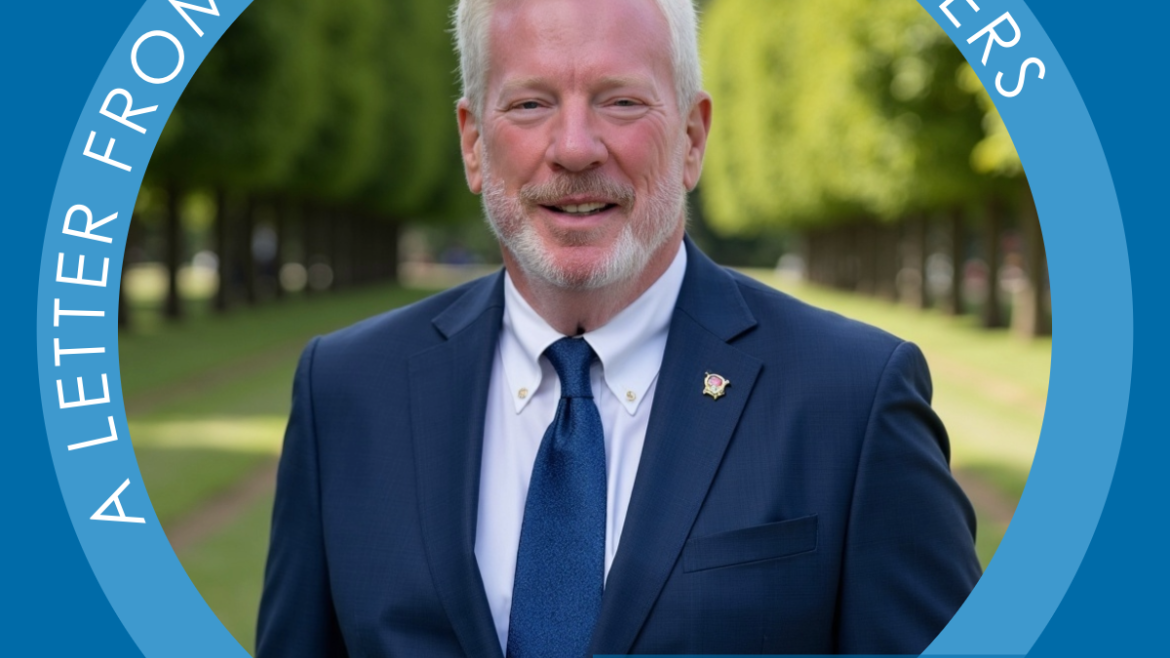
09-25-2025 A Letter from Our Servant Leaders

09-25-2025 A Letter from Our Servant Leaders 1200 1200 Devine PR Postings

Seeing Christ through Personal Encounter

Why did I join the Society of St Vincent de Paul, and why am I still a member?

Fifteen years ago, I was retiring from paid work and a friend of mine asked if I would consider joining the Society.  I had “new” free time, felt I had been blessed by God and wanted to give back in some small way – so  I said “yes.”  Little did I realize at the time how profoundly my life would be graced by that decision.

Most people join the Society for similar reasons as mine, but most stay because of the friendships they develop and how the Society helps us to grow spiritually.  That spiritual growth is fostered in the prayer and discussion during our conference meetings, and at gatherings with other Vincentians.  I recently returned from the Society’s annual National Assembly.  More than 800 Vincentians from around the country joined for several days of keynote presentations, workshops, and uplifting liturgies.  My soul is always refreshed by these gatherings.

Over the past 15 years, I’ve had the privilege of serving in local, regional and national servant leadership roles for the Society, but our home visits touch me the most. Over the years, I have visited hundreds of needy individuals and families in my local community of Peoria, Ill. Each case is unique, but beyond just helping people to pay a bill that keeps them housed, I am most touched by the personal encounter which brings us to see Christ in the faces of those we serve.

In one case, we visited a mother of two young boys.  She called for help with a utility bill.  We sought to understand how she got behind.  She worked as a night security watchman monitoring industrial properties in her car.  However, her tires were bald and kept getting flats which she had to repair.  It was winter, and her utility couldn’t be shut off for several months.  Since she had regular income and children, her tax refund would enable her to get fully paid up on her utilities, so we offered to instead put new tires on her car.  This more sustainable solution would never have come to light without spending time in a home visit.

More recently, a visit partner and I met with a 66-year-old woman with several emotional and physical disabilities who needed help with a part of her monthly rent. She’s lived in the same apartment for over 11 years, a remarkable achievement for her situation. She lives on fixed income and must walk or pay friends for a ride to get food or go to doctor appointments. While discussing how she got behind and what we might be able to do to help cover the small remaining rent she owed, it quickly became apparent that her greatest need was to be seen and heard.  We spent time talking about how she had become estranged from her out-of-state children, about her faith life and her church; and she took time to show us her small apartment and told us where each of her wall and table decorations came from. We prayed together for the grace to get through this immediate crisis and to thank God for the blessings she had.

It is these personal encounters that touch me most and keep me serving as a Vincentian.

Blessings,

Tom Pelger

National Vice President, Regional & Council Support


Q&A with Ingrid Delgado, SVdP National Director of Public Policy and Advocacy

Q&A with Ingrid Delgado, SVdP National Director of Public Policy and Advocacy 448 346 Devine PR Postings

When Ingrid Delgado talks about her journey into advocacy, she often returns to the stories she grew up hearing around her family’s dinner table. Her parents, immigrants from Cuba, refused to denounce their Catholic faith, even when it meant her father became a political prisoner and her mother was barred from pursuing the studies she wanted.

Those early experiences planted the seeds for a vocation that has since taken Ingrid from missionary work in the Dominican Republic to roles with Catholic Charities, the Florida Conference of Catholic Bishops, and the U.S. Conference of Catholic Bishops. Today, she serves as the Society of St. Vincent de Paul’s first National Director of Public Policy and Advocacy, ensuring that the voices of Vincentians and the neighbors they serve are represented in Washington, D.C.

We spoke with Ingrid about her path to this role, the work of the D.C. office, and her hopes for the months ahead.

What drew you to advocacy work, particularly at the intersection of faith and public policy?

Ingrid and her husband serving as missionaries in the Dominican Republic.

As an adult, my husband and I served as missionaries in the Dominican Republic, near the Haiti border. We worked on projects that provided potable water, built houses and schools, and helped community members obtain birth certificates. When we began partnering with the government, I saw how much more effective our efforts became. That experience showed me, for the first time, how justice and charity can work together to benefit people in need.

I first learned about the Church’s role in public policy when I met my predecessor at the Florida Conference of Catholic Bishops while helping staff their table at a national event in Orlando. I remember thinking, “I want to do what she does when I grow up.” About a year later, she retired and encouraged me to apply for her position. I went on to serve eight years in public policy for the Florida bishops, followed by four years at the U.S. Conference of Catholic Bishops.

The D.C. office is still fairly new. Why was it important for the Society of St. Vincent de Paul (SVdP) to establish a presence here?

SVdP USA cutting the ribbon to its new national office in Washington, D.C.

Catholic Social Teaching calls us to walk on the “two feet” of justice and charity. Serving people in need through charitable works is essential to our identity, but Pope Benedict also spoke of “social charity,” engaging in policymaking to build up the common good and ensure no one is left on the margins. Washington, D.C. is the nation’s policy hub. Having a presence here allows SVdP to bring its unique perspective to the table which is informed by our deep roots in direct service. It’s how we can help shape policies that truly serve our brothers and sisters in need.

Can you describe your role as National Director of Public Policy and Advocacy?

A big part of my role is listening to Vincentians about what they’re seeing on the ground and the needs they encounter during home visits, and then translating those into policy solutions. Too often, policy is discussed at a theoretical or academic level without a clear connection to how it affects people’s lives. SVdP’s person-to-person service changes that. It gives us direct knowledge of the struggles people face and insight into solutions that work, whether to prevent homelessness or help someone out of poverty. For example, Vincentians have shared how hard it is to find affordable mental health care for the people they serve. That immediately raises a policy question: if Medicaid reimbursements for mental health care were higher, would there be more affordable providers available?

I also keep a close watch on Congress: what bills are moving, what’s being considered, who’s leading key committees, and where there’s potential to build relationships. From there, I analyze legislation through a Vincentian lens—asking questions like, “Will this help prevent homelessness?” or “Will it make housing less affordable?”—and make recommendations to our leadership on whether SVdP should weigh in.

Since the office opened, what are some key highlights or accomplishments you’re most proud of?

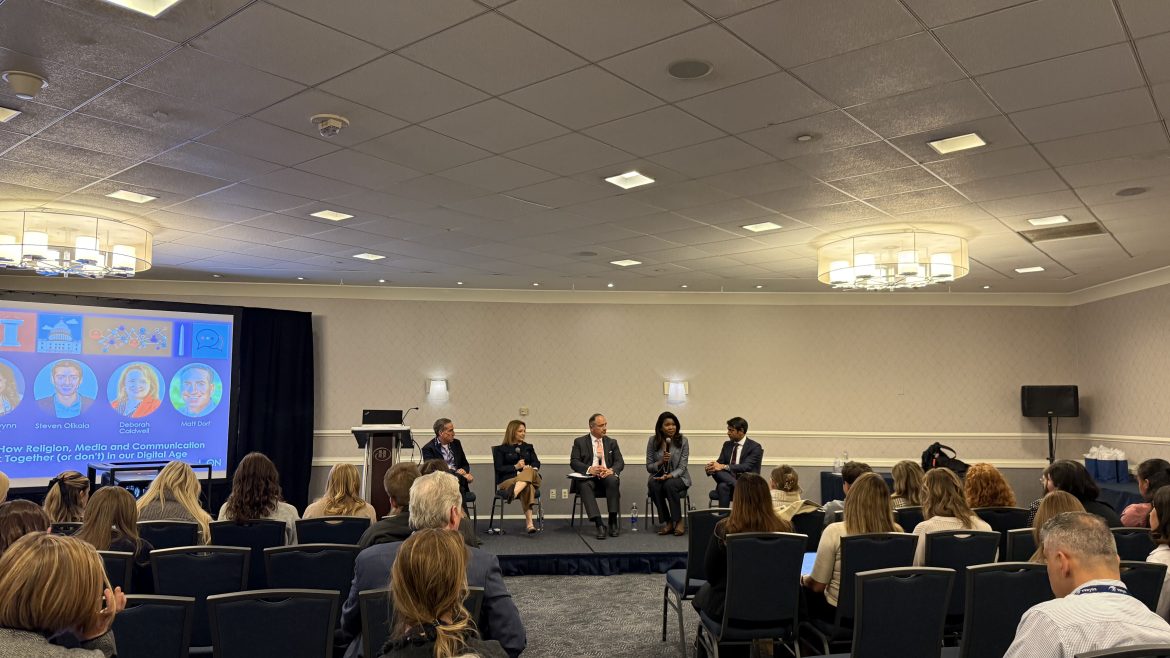
Panelists and moderators from the Hill briefing on faith-based approaches to re-entry.

One key accomplishment I’m especially proud of was when Steve Havemann, CEO of SVdP Des Moines, and Phil Conley, a mentor in the SVdP Des Moines Immersion Program, joined a Hill briefing we co-hosted with Catholic Charities USA, the National Religious Campaign Against Torture, and the Jesuit Conference Office of Justice and Ecology. They spoke with Hill staffers about the faith-based approach to incarceration and reentry. As Catholics, we believe in the capacity for human beings to reform and transform their lives, and when we center human dignity, we help people reenter society successfully, able to support themselves, their families, and avoid recidivism. It was a powerful and well-received event.

We also weighed in on the reconciliation bill, acknowledging some moderate improvements, but raising serious concerns about changes to SNAP and Medicaid and their impact on people who rely on these services. In addition, we’ve begun engaging on legislation that affects people in need, and we’ve joined Catholic partners in sending letters to Congress on the Farm Bill and appropriations. Even when legislation raises concerns, we look for opportunities to address them through upcoming bills and budget decisions.

As you look to the next several months, what are your top priorities for the D.C. office?

Over the summer, SVdP National Director of Poverty Programs Steve Uram and I hosted a Voice of the Poor webinar for Vincentians on making the most of the August work period, when members of Congress were back in their districts. We walked through how to request meetings, build relationships, and share stories from the community. I’m looking forward to hearing how those meetings went and how they might inform members’ work when they return to Washington.

Since returning to DC in September, members of Congress have been working on appropriations bills. We sent letters on the Agriculture and Transportation-HUD appropriations bills, urging robust funding for critical nutrition and housing programs.

We’re also working to strengthen our advocacy infrastructure. Over the summer, a Marquette University intern began creating a database to help us mobilize Vincentian volunteers more intentionally. My long-term goal is to capture SVdP’s impact by congressional district so that when we meet with members of Congress, we can show how many Vincentian volunteers are in their communities, what programs are available, and the local impact we’re making. This information not only positions us as a resource but also builds relationships rooted in our shared commitment to human dignity, not politics or partisanship. We hope to continue expanding this resource with the help of additional interns this fall.

How can Vincentians support SVdP’s advocacy work and get involved?

Ingrid presenting on a panel at the SVdP National Assembly 2025 in Louisville, Kentucky.

The easiest way to get involved is by signing up for our action alerts. You can do that through the “Members” section of our website under Voice of the Poor. When there’s important legislation to weigh in on, whether it’s encouraging support, opposing a bill, or offering a Vincentian perspective, those alerts make it simple. With just a few clicks, you can send a message directly to your elected officials.

Another valuable way to help is by sharing stories from your local community at stories@svdpusa.org. Vincentians can send us examples of needs, challenges, and successes from their service. Those stories are powerful tools in our advocacy, helping policymakers see the human impact behind the issues.

Advocacy can be challenging work, especially when we are living in an unprecedented political climate. What keeps you motivated and hopeful?

As people of faith, we’re called to be people of hope. In advocacy, that means remembering that no single bill is the end of the story. In my 12 years doing this work, including my time with the Catholic bishops, I’ve seen the political pendulum swing in both directions. Laws that were concerning have later been amended or repealed. There’s always another opportunity to engage, another bill to influence, another chance to make a difference.

If you could help people understand just one thing about SVdP’s advocacy, what would it be?

I’d want people to understand that SVdP’s advocacy is not partisan—nor should it be. In fact, we’re most effective when we remain nonpartisan, focusing solely on uplifting the needs of people we serve. Those needs transcend politics. Both parties have gotten some things right, and both have areas where they can do better. Our role is to build bridges across the political aisle, helping to heal some of the polarization we see today. We do that by bringing stories from our home visits directly to lawmakers, so they can create policies informed by real experiences. Legislators will make policy with or without us. How much better if those decisions are shaped by the Vincentian perspective and a commitment to the common good!

Do you have a favorite Scripture verse or Vincentian virtue that inspires your approach to public policy?

I’d say my favorite Vincentian virtue is humility. In public policy work, it can be easy to lose sight of that and start thinking we’re important because of our position or expertise. But as Catholics working for a faith-based organization alongside people in need, we have to remember that this is first and foremost about God, our faith, our calling, and serving our communities. Humility keeps the focus where it belongs.

Can you tell me a little about yourself outside of SVdP?

I was born in Miami, spent nearly 30 years in Orlando, and eight years in Tallahassee while working for the Florida Conference of Catholic Bishops. I used to say I’d never move farther north because this Cuban Floridian wasn’t made for cold weather, but when the opportunity to join the U.S. Conference of Catholic Bishops came along, I knew I had to take it. I’ve now called Virginia home for four years.

Outside of work, I’m a mom to three children and have been married for 25 years. As someone still relatively new to the D.C. area, I love spending weekends visiting museums, having picnics on the National Mall, and discovering new parts of the city.

I also serve on the board of the Catholic Mobilizing Network, continuing my long-standing commitment to ending the death penalty at both the state and federal level. In addition, I enjoy connecting with non-Catholic faith leaders, especially in the Latino evangelical community, who are eager to engage in public policy in a nonpartisan, faith-based way, much like the Catholic bishops do.

Sign Up for Our Newsletter

Privacy Preferences

When you visit our website, it may store information through your browser from specific services, usually in the form of cookies. Here you can change your Privacy preferences. It is worth noting that blocking some types of cookies may impact your experience on our website and the services we are able to offer.

Click to enable/disable Google Analytics tracking code.
Click to enable/disable Google Fonts.
Click to enable/disable Google Maps.
Click to enable/disable video embeds.
Our website uses cookies, mainly from 3rd party services. Define your Privacy Preferences and/or agree to our use of cookies.
Skip to content