• Search the Site

Posts By :

admin

Donation Acquisition

Donation Acquisition 1200 628 admin

Donation Acquisition

By Bryan Engel-Director of Operations – Mid-Atlantic Region, Diocesan Council of Pittsburgh

Do not tell anyone, but at one time, I worked for another thrift store organization. My title was Donations Acquisition Coordinator. I only worked there for two years before seeing the light and coming over to St. Vincent de Paul. But, during that time, I was able to raise their donations from 300,000 pounds of donations to 1.2 million pounds of donations in that timeframe. How did I do it?

  1. Fun-raising … To get their name out there, we reached out to other non-profit organizations, schools, churches, and sporting organizations. For two hours, we would show up with a truck and collect donations on site. After that two-hour period, the truck closed. The donations were weighed, and we paid 10 cents per pound to the non-profit hosting the drive. No need to sell cookies, candy, hoagies … just donate to a non-profit and feel good about raising extra money for your school, church, or sports team.
  2. Promote on Social Media … To book a fundraiser, non-profits were required to promote the event for at least 3 weeks (anything less did not help them or the charity). That got their logo out to the community without us having to do anything (other than create a flyer). If you can get other organizations to promote your brand for free … that 10 cents per pound also includes FREE advertising.
  3. Word of Mouth … At EVERY event, I would print out flyers with a QR code on how to schedule a donation drive. You would be surprised by how many people on the softball team have family members at another school in the band. Eventually, the word spread. I went from doing ONE event to THREE every Saturday. At some drives, we would schedule two trucks because they would fill them. It became a contest. “Let’s make more than the other school!”

If paying for donations is not for you, here are some other options:

  1. More donations bins in high traffic areas.
  2. Extended Hours. In Pittsburgh, we just opened our stores on Sundays from 11am-5p. Guess what? We got donations on Sundays too! More people donate on the weekend, so we are making it convenient for them.
  3. Email your donor database.
  4. Discount Coupons for Donors.
  5. Partner with Real Estate Agents … pre-Covid, we saw a spike in furniture donations by reaching out to local Agents … you would be surprised how many of them need to clean out a house quickly and will pay to do so (win-win).
  6. Use social media – it is FREE!

I hope this helps you get more donations for your stores or your friends in need. If you want to see how SVdP Pittsburgh promotes our donation drives, click the link https://svdppitt.org/wp-content/uploads/2019/03/donation_drive_video.mp4 … check me out as a cartoon.

If you have questions or have a topic for a future Stores Corner article, please email our Director of Stores Support-Jeff Beamguard at jbeamguard@svdpusa.org.

 

A Time For Thanks

A Time For Thanks 1198 1198 admin

At this special time of the year when our thoughts turn to giving thanks, it is appropriate to reflect on the many reasons Vincentians have to be grateful.

Perhaps the two most important are the ongoing guidance of Divine Providence, which has been wondrously at work on behalf of the Society of St. Vincent de Paul during the past 191 years, and the constant inspiration of the Holy Spirit evidenced so beautifully by the way Vincentians respond every day to the challenges we face in serving Christ’s beloved poor.

We are privileged to participate in the perpetual miracle of our Society:  Ordinary people doing extraordinary things which restore hope to those who have none and change their lives for the better.  Our countless benefactors, whose generosity makes it possible for us to help so many people in so many ways, deserve our gratitude as well.

On the most personal level, going to the essence of Vincentian spirituality, we should be thankful to those we serve for the blessings they bestow on us which transform our own lives.

Very importantly, we have each other, truly something to cherish.  Loving and supporting one another while helping the poor is an integral part of our mission.

Vincentians have been graced by God to be members of one family throughout the world living Blessed Frederic’s divinely inspired vision of a global network of charity and social justice.  We should thank God for our Vincentian vocation, a blessing of eternal value.

And, ultimately, how blessed we are with the gift of faith, and in that faith Christ’s greatest gift – the Eucharist.  How fitting it is that “eucharist” means “gratitude.”


11-27-24 Weekly Questions & Answers

11-27-24 Weekly Questions & Answers 1200 628 admin

Q: Our Conference was given a considerable amount of canned goods for our Food Pantry Special Works.  We cannot use all of it so we decided to give some to another Conference.  Is this “twinning”? 

A: What you are describing is indeed twinning and not “in-kind.”  The Conference receiving donated food from another Conference does not report the donation on its annual reports. Only the Conference that initially received the food donation from an outside source and passed it on to another Conference reports the donation as “in-kind.”

Q:  Are all three levels of membership eligible for the Top Hat Award?  Is the ‘spirit’ of the Top Hat Award to nominate someone who is an Active or Associate Member, but not necessarily someone who is a Contributing Member?

A:  The Top Hat Award is a local award given by the local SVdP Council, who decides the requirements and eligibility for the award. The National Council has no guidelines for this award and does not determine which membership level is eligible to receive it. This is a decision solely for each local Council.  Also, the National Council no longer separately recognizes Contributing Members.

P: Nuestra Conferencia recibió una cantidad considerable de productos enlatados para nuestros Trabajos Especiales de la alacena de Alimentos.  No podemos usarlo todo, así que decidimos donar algo a otra Conferencia.  ¿Es esto “hermanamiento”?

R: Lo que usted está describiendo es, en efecto, un hermanamiento y no “en especie”.  La Conferencia que recibe alimentos donados de otra Conferencia no informa de la donación de estos productos en sus informes anuales. Solo la Conferencia que inicialmente recibió la donación de alimentos de una fuente externa informa que la donación fue “en especie” y que la pasó a otra Conferencia.

P: ¿Los tres niveles de membresía son elegibles para el Galardón Top Hat?  ¿El “espíritu” del Galardón Top Hat es nominar a alguien que es un Miembro Activo o Asociado, pero no necesariamente a alguien que es un Miembro Contribuyente?

R: El Premio Top Hat es un Galardón local otorgado por el Consejo local de SVdP, que decide los requisitos y la elegibilidad para el premio. El Consejo Nacional no tiene pautas para este premio y no determina qué nivel de membresía es elegible para recibirlo. Esta es una decisión exclusiva de cada Consejo local.  Además, el Consejo Nacional ya no reconoce por separado a los Miembros Contribuyentes.


11-21-24 Weekly Questions & Answers

11-21-24 Weekly Questions & Answers 1200 628 admin

Q:  We have a Food Pantry at our parish, and as long as I can remember, it’s been SVdP Food Pantry to our Parish and our community. I am told by our District President that it isn’t SVdP Food Pantry, but our church’s pantry run by Vincentians, and funds from our SVdP account cannot be used to purchase food. Can you please clarify?

A:  Your District President is correct in that we are not permitted to give funds to outside organizations.  However, the key words in the phrase are “run by Vincentians.”  If the pantry is indeed run by Vincentians, it is a work of the Society and can be funded by the Conference.  Keep in mind that, if the phrase is only used loosely and if a member or two only occasionally help out, then this does not qualify as a SVdP work.  The essential question is: Is this a SVdP program, or a parish ministry? That distinction dictates our Society independence, and therefore, our financial support.

Q: One of our Conferences noted that in the SVdP Manual on page 10 (2nd to last paragraph), there is mention of “obtaining plenary indulgences on the day of their admission to the Society….”  We were wondering if there is a special SVdP ceremony that will suitably achieve the granting of the indulgence on the participants.  I could not find anything in the Vincentian Celebrations Manual.  We are looking for an official description of such a ceremony that would result in the granting of the indulgences.

A: There are no ceremonies associated with indulgences.  You fulfill the requirements of the indulgences, and they are granted – not by us, but by God. The requirements are specified in the paragraph you referenced in the Manual.  You can review the Guideline for Indulgences document on our website to learn more.

P: Tenemos un almacén de alimentos en nuestra parroquia y, desde que tengo memoria, ha sido ‘Almacén de alimentos SVdP’ para nuestra parroquia y nuestra comunidad. Nuestro Presidente de Distrito me dice que no es el Almacén de Alimentos de SVdP, pero el almacén de nuestra iglesia administrada por Vicentinos y los fondos de nuestra cuenta de SVdP no se pueden usar para comprar alimentos. ¿Podría aclarar, por favor?

R: Su Presidente de Distrito tiene razón en que no se nos permite dar fondos a organizaciones externas.  Sin embargo, las palabras clave en la frase son “dirigido por Vicentinos”.  Si el almacén es realmente administrado por Vicentinos, es una obra de la Sociedad y puede ser financiada por la Conferencia.  Sin embargo, tenga en cuenta que, si la frase solo se usa de manera vaga y si uno o dos miembros solo ayudan ocasionalmente, entonces esto no califica como un trabajo de SVdP.  La pregunta esencial es: ¿Es este un programa de SVDP o un ministerio parroquial? Esa distinción dicta la independencia de nuestra Sociedad y, por lo tanto, nuestro apoyo financiero.

P: Una de nuestras Conferencias señaló que en el Manual de la SVdP en la página 10 (penúltimo párrafo), se menciona “obtener indulgencias plenarias el día de su admisión a la Sociedad…”  Nos preguntábamos si hay una ceremonia especial de SVdP que logre adecuadamente la concesión de la indulgencia a los participantes.  No pude encontrar nada en el Manual de “Celebraciones Vicentinas”.  Estamos buscando una descripción oficial de tal ceremonia que resultaría en la concesión de las indulgencias.

R: No hay ceremonias asociadas con indulgencias.  Cumple usted con los requisitos de las indulgencias y le son concedidas, no por nosotros, sino por Dios. Los requisitos se especifican en el párrafo al que usted hizo referencia en el Manual.


Owners And Stakeholders – Part Two

Owners And Stakeholders – Part Two 1198 1198 admin

Owners And Stakeholders – Part Two

The source of this article is Governance: Council and Board, the original version of which was authored by former National Vice President Terry Wilson.

Last week we discussed five groups of people who should be considered stakeholders in what we do as Vincentians.  Here are five additional groups:

  • Collaborative Nonprofit Organizations
  • Governmental Entities
  • The Community At Large
  • The Local Bishop (in the case of all Catholic organizations)
  • Pastors and Clergy (in the case of any Catholic organization supported by a parish)

Other nonprofit organizations are stakeholders. We all share a com­mon goal to some degree.  All nonprofits influence other nonprofit or­ganizations in their community.  Especially important are those nonprofits that we partner with. If the Society does something to dam­age its reputation, then those that collaborate with it also may suffer collateral damage.

Every nonprofit needs other nonprofits to accomplish larger projects.  With diversity of missions nonprofits can share the overall needs of those served by sharing our strengths with each other.  For example, a person may need shelter that is provided by another nonprofit while the same person also needs clothing or food that is available from our Society.

The city, county, state and federal govern­ments are additional stakeholders.  Nonprofits and their volunteers are significant contributors to the support of the responsibilities of all these governmental entities.  If federal and state governments did not allow donations to nonprofits to be tax-deductible, much of our work would be impossible to fund.  If nonprofit organizations did not exist, it would be left up to the gov­erning bodies to provide necessary services to the public.  Government agencies are very interested in what is done, how it is done, and the level of effectiveness and efficiency with which it is accomplished.  They are also responsible to ensure that all laws are followed and that services provided do no harm to those who are served.

The entire community is a stakeholder. It has an interest in how those in need are served. The overall community and its image are improved when the disadvantaged are taken care of.  The community is then thought of as a better place to live, raise children and experience a better quality of life. Where the care of those in need is provided by nonprof­its, the taxes necessary for broader social services are lessened.

Residents of the community often consider themselves “owners” of our Society.   Because the people of the community see our work, some become donors, some volunteer, and some know of someone who was served.  Most agree with our work and readily identify with what we do even though they may not be directly involved. They may simply know that the Society of St. Vincent de Paul is in their community and helping the poor.  That knowledge is im­portant to them.

The finances of the nonprofit corporation are also more important to a wider community than the finances of a for-profit.  Everyone who contributes in some way, who receives services, or who simply knows about its work consider themselves an owner or stakeholder.  There is a perceived level of stewardship by the community.  They expect the nonprofit to be run efficiently and that the money donated or granted to it goes toward intended programs.  In fact, many people believe that nonprofit organizations should have plain, inexpensive offices and equipment.   To them it is an indication that most of the donations are given to the poor and not to the people running the nonprofit.  The people of the community will not tolerate what they consider to be excessive salaries.  In their eyes a nonprofit employee is really a dedicated volunteer and does the work because of a love of the mission and not for a well-paid job.  For many employees that is a reality.

In our Society we recognize the need to maximize the amount of our donations that goes directly to those in need.  But that maximization cannot come at the expense of our employees who deserve adequate wages.  The Society’s Voice of the Poor Committee has developed a policy about a just wage for our employees.  That policy has been approved by the National Council Members.

In the case of Catholic organizations, the local Bishop is responsible for all activities related to the Church in his Diocese.  Because our Society is in the Diocese at the pleasure of the bishop, he is a stakeholder.  He allows us to be in the parishes because of our close relationship to the Church and the work we do for Christ’s poor.  Because the way we operate directly reflects on the Diocese in the eyes of the community, and because our Society also contributes to the spiritual growth of its members and evangelizes by its members’ actions, the bishop has great interest in what we do.  He knows that we assist in fulfilling the Church’s preferential option for the poor.  This vital relationship requires regular and close attention.  Keeping your Bishop informed about the activities and achievements of your Council should be a high priority.

Pastors and Clergy are stakeholders for reasons similar to those of the bishop.  Our presence in the parish helps the pastor and other clergy serve the poor and relieves the parish burden of responding to the needs of people coming to the Church for assistance.  Always keep in mind that St. Vincent de Paul serves in the parish with the pastor’s permission.

11-14-24 Weekly Questions & Answers

11-14-24 Weekly Questions & Answers 1200 628 admin

Q: How do we report the number of people helped with cash (i.e. rent, electric etc.)?  There is a reporting section for in-kind activity, but not cash.

A: The number of people helped with cash is not captured on the annual report separately but is reflected in our Visits and Services to People, which includes in-kind services.  Expenses gathered under the treasurer’s report reflect all funds expended for goods and services provided to those we served, including cash, checks, certificates, bus tickets, and gift cards. The principal method for payment of aid will be check, paid directly to the provider of those goods or services. This also includes the cost of food purchased to stock your food pantry.  For those Conferences that operate stores and other Special Works, this includes dollars spent for direct aid to those in need.

Q: We work with a nearby motel, and the owner said she will be charging us a $150 security deposit for anyone we assist who stays at the motel. We do not think this is a good use of funds, as it is transitional/emergency housing where there is no lease or long-term commitment. Some Vincentians think it’s no big deal, as we would pay a security deposit for someone moving into an apartment with a lease. Some Vincentians think it is a bad use of our funds, as it is typically short-term emergency housing: the deposit would complicate matters, and it’s not our mission to guarantee a tenant’s behavior, and it would be a bad precedent. Some of us believe we can handle it on a case-by-case situation, but others still want our policy defined.

A:  There is no policy on this.  Each Conference establishes its own operating guidelines. There are strong arguments that can be made in either the pro or con of providing security deposits.  The current trend is not to offer them.  However, we should never make our decisions based on the fact of “we always do…” or “we never do…”  Our decisions should be on a case-by-case basis, with the Conference deciding if the deposit is appropriate for the circumstances.  It is not our mission to guarantee a tenant’s behavior.  The details should be worked out with the motel ownership, or a different motel may be more helpful.

P: ¿Cómo informamos el número de personas a las que se han servido con dinero en efectivo, es decir, alquiler, electricidad, etc.?  Hay una sección en el informe para la actividad en especie, pero no para el efectivo.

R: El número de personas a las que se ayuda con dinero en efectivo no se refleja en el informe anual por separado, sino que se refleja en nuestras Visitas y Servicios a las Personas, que incluyen servicios en especie.  Como se describe en las instrucciones del informe anual, los gastos recopilados según el informe del Tesorero reflejan todos los fondos gastados en bienes y servicios proporcionados a aquellos a quienes servimos, incluidos efectivo, cheques, certificados, boletos de autobús y tarjetas de regalo. El principal medio de pago de la ayuda será el cheque, pagado directamente al proveedor de dichos bienes o servicios. Esto también incluye el costo de los alimentos comprados para abastecer su despensa de alimentos.  Para aquellas Conferencias que operan tiendas y otros Trabajos Especiales, esto incluye los dólares gastados para ayudar directamente a las personas en necesidad.

P: La dueña de un motel cercano que usamos dijo que nos cobrará un depósito de seguridad de $ 150 para cualquier persona que servimos y que se quede en el motel.  Nuestro problema es que no creemos que este sea un buen uso de los fondos, ya que se trata de viviendas transitorias y se consideran más viviendas de emergencia ya que no hay contrato de arrendamiento ni compromiso a largo plazo.  Algunos Vicentinos piensan que no es gran cosa, ya que pagaríamos un depósito de seguridad para alguien que se muda a un apartamento con un contrato de arrendamiento.  Algunos Vicentinos piensan que es un mal uso de nuestros fondos, ya que generalmente se trata de viviendas de emergencia a corto plazo y el depósito complicaría las cosas, y que no es nuestra misión garantizar el comportamiento de un inquilino, y eso sería un mal precedente para establecer. Algunos de nosotros creemos que podemos manejarlo caso por caso, pero otros todavía quieren que nuestra política esté definida.

R: No hay una política al respecto.  Cada Conferencia establece sus propias directrices de funcionamiento. Hay fuertes argumentos que se pueden hacer a favor o en contra de proporcionar depósitos de seguridad.  La tendencia actual es no ofrecerlos.  Sin embargo, nunca debemos tomar nuestras decisiones basándonos en el hecho de “siempre hacemos…” o “nunca hacemos…”  Nuestras decisiones deben ser caso por caso, y la Conferencia debe decidir si el depósito es apropiado para las circunstancias.  No es nuestra misión garantizar el comportamiento de un inquilino”.  Los detalles deben ser resueltos con el propietario del motel o un motel diferente puede ser más útil.

National Puerto Rican Heritage Month

National Puerto Rican Heritage Month 624 587 admin

Join us this November as we celebrate National Puerto Rican Heritage Month!

“Had we but one spark of the divine fire that consumed the heart of Jesus Christ, would we remain with our arms folded and abandon those whom we could assist”—St. Vincent de Paul.

We know that we are called to assist our neighbors in need. Yet, if we had that one spark of divine fire that consumed the heart of Christ, could we ignore and be blind to the beauty of the cultural heritages of our neighbors in need. Our neighbors may be caught up in situational or generational poverty, but their culture and history keeps them grounded and sustains them through their difficulties.

In this month of National Puerto Rican Heritage Month, let’s look at two traditional types of Puerto Rican music beyond salsa: the music of the mountains, or jibaro music, and bomba.

Take a listen to this traditional music of the people in the mountainous region of Puerto Rico by Ramito: https://www.youtube.com/watch?v=qHA_30e7eEc&list=PLygGmiBruOlf6Aw7BDr34GWA2eDp6OosP&index=10

Modern jibaro music composed by Fabiola Mendez: https://www.youtube.com/watch?v=1yJjALda0X4

The second traditional type of Puerto Rican music is bomba. Bomba is an umbrella term that refers to a variety of musical styles and associated dances originating in Puerto Rico. It was developed by enslaved Africans and their descendants in sugar plantations along coastal towns, most notably Loiza, Mayagüez, Ponce, and San Juan, during the 17th century.  https://www.youtube.com/watch?v=zXRMF2ndL2Y

Take a listen to the vibrant bomba that a group of young people played in a subway in Chicago. This version is a modern interpretation of bomba.

https://www.youtube.com/watch?v=nkK68RxqKAE&list=RDQMpRXHg7WufZY&index=7

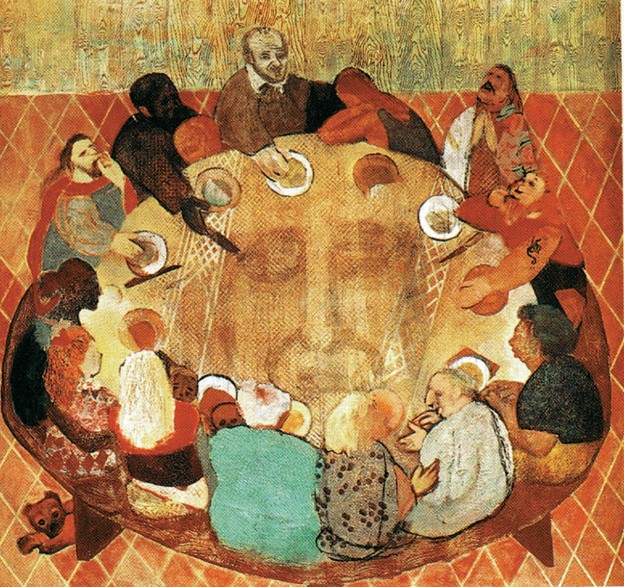
When we look at the table of St. Vincent de Paul, those of us with eyes to see can almost see the Puerto Rican jibaro and the dancers and players of bomba at the table.


Key Benefits of Adding an In-Store Radio System to Your Thrift Store

Key Benefits of Adding an In-Store Radio System to Your Thrift Store 1200 628 admin

Key Benefits of Adding an In-Store Radio System to Your Thrift Store

By James Conley, National Store Support Manager  

Sets the mood for your store

By selecting the correct music for your store, you can create an inviting environment for your customers and give them a more enjoyable experience while shopping. You can add different genres of music playing at various times of day to appeal to your customer base.

Promote Sales/Color Rotations

You can inform your customers of current sales, upcoming sales, current color rotations, St. Vincent de Paul Society’s community programs, all through ads, promotions, etc., that can be created to play in between songs. This will help guide your customers throughout the store.

Increase Shopping Time

Studies have shown music, and promotions increase your customers’ shopping time, which adds to your average ticket price. By nature, customers wait for the next ad, the next promotion, to make sure they are getting the best deals.

Build Our Brand

What better way to promote all the programs St. Vincent de Paul has to offer than through ads that you can customize to play on your radio system. What is your local St Vincent de Paul doing? What events do you have coming up? Are you hiring? What benefits are there to working for St. Vincent de Paul? These are all ways to build the brand of St. Vincent de Paul.

Employee Morale

“Take care of your employees and they will take care of the business.”  Music is always a great way to boost employee morale. Have fun with it!!  Create some competition to allow employees to pick a favorite station if they win, etc.

Commercial Free

The best part of My In Store Radio is that it is commercial free! No unwanted ads! Only the ads you want your customers to hear!!!!

Music plays a significant role in our society, not only in retail, but in overall health. It helps to relieve stress and anxiety and create a feeling of well-being for our employees, volunteers, and our customers. It also can trigger feelings of pleasure and well-being, which in a retail setting increases total spending!

If you would like more information, you are welcome to contact My In Store Radio at (646) 968-0339.

We encourage you to check out other SVdP National Partners here: (https://members.ssvpusa.org/fundraising-development/national-partners/)

If you have questions or have a topic for a future Stores Corner article, please email our Director of Stores Support-Jeff Beamguard at jbeamguard@svdpusa.org.
 

Owners And Stakeholders – Part One

Owners And Stakeholders – Part One 1198 1198 admin

Owners And Stakeholders – Part One

The source of this article is Governance: Council and Board, the original version of which was authored by former National Vice President Terry Wilson.

Have you ever considered the audiences you have as a Vincentian and especially as a Vincentian leader? Whether you are a Conference or Council President, a member of a Board of Directors, serve on a committee or are an active or associate member of a Conference there are a number of people to whom you are accountable, are your audience, or have a stake in what you do and how you do it.  We call these people “stakeholders.”

In for-profit companies the finances are mainly of interest to those who own the corporation or those interested in becoming owners.  Nonprofit corporations, however, have many “owners,” also known as stakeholders.  This week we’ll discuss five of these groups and next week an additional five.

  • Members
  • Those They Serve
  • Donors
  • Volunteers
  • Employees

Let’s talk about these one at a time:

Members are stakeholders. In the Society of St. Vincent de Paul, most Vincentians consider their work to be a vocation. They believe in the mission and have invested heavily with their time, talent and resources to help achieve it.  More than that, it is often their very way of life.

The needs of those served make them stakeholders.  For example, our Society’s mission is carried out by supplying people in need with serv­ices and goods they require to live a decent life.  In many cases our help is the difference between the abject poverty of living on the street or the peace of having a place of their own in which to live.

Our Society’s work goes beyond food, shelter, clothes, furniture, etc.  When life circumstances such as illness, job loss or poor decisions fall heavily on a person or family, Vincentians can bring hope, share our spirituality and provide at least for basic needs.

Donors make our work possible. They want to be sure their dona­tions are used to achieve the greatest amount of benefits for the program to which they contributed.  Even though they know it is not possible, they would like every dollar they give to go directly to those in need.

Donors give of their time and money because they believe in what we do and how we do it. They want to find a way to give to the poor or make a difference in someone’s life.  Our Society and the way we oper­ate gives them confidence that their support will achieve their desires to help those in need.

Volunteers are closely aligned with any nonprofit, especially ours. They desire to contribute to those in need and to give back to the community for their own good fortune. They see the Society as a well-run organiza­tion that knows how to reach those in need and assist them.  It is not uncommon that a volunteer will eventually become a member.

Employees work for any corporation or business to provide for their own needs.  In our Society they become our partners in our mis­sion. More than that, they become believers in our work and who we are. We expect them to present themselves to those we serve and the public in the same way a member does. They are often so involved that you find it hard to separate them from our Vincentian members.

They are true stakeholders because they both support and foster the mission and because they need to earn a living.  Some may even be will­ing to continue to work for less than they can earn elsewhere.  The Soci­ety has a responsibility to pay a living wage and provide necessary benefits.  All members of the Society must ask:  How can we live out our mission to help others if our own employees are underpaid?

11-7-24 Weekly Questions & Answers

11-7-24 Weekly Questions & Answers 1200 628 admin

Q: Can Councils create endowment scholarships?

A: Endowments are permitted as long as they are funded by donations specifically for that purpose. Funds identified for service to those in need should not be used to build an endowment. An endowment campaign can be established to solicit funds specifically for the purpose desired.

 Q:  When the executive committee meets and a question of utmost importance is considered, can the committee agree with a consensus, or does a motion need to be made, seconded, discussion and vote? What does a consensus mean?

A:  The Rule, Part I, Article 3.10 calls for decisions to be made by consensus: “All decisions are made by consensus after the necessary prayer, reflection and consultation. The democratic spirit is fundamental at all levels of the Society and, when appropriate, matters are put to a vote.”  Consensus means that, if it is clear that everyone is in agreement (no matter if the decision is “yes” or “no”), then no formal vote is necessary. However, that does not mean that an important decision is not to be recorded in the minutes.  This also means that, if it is clear that not everyone is in agreement, then a vote should take place.  In either case, the motion and resulting decision must be recorded.

Another consideration is the executive committee.  Executive committees typically have limited authority to make decisions, since decisions within a Conference or a Council are to be made by the members.  The Council/Conference Bylaws and charter for an executive committee usually defines the type of decisions they are allowed to make.

P: ¿Pueden los Consejos crear un Legado de becas?

A: Los legados están permitidos siempre y cuando estén financiadas por donaciones específicamente para ese propósito. Los fondos identificados para el servicio a los necesitados no deben usarse para construir un legado. Se puede establecer una campaña de donación para solicitar fondos específicamente para el propósito deseado.

 P: Cuando el comité ejecutivo se reúne y se considera un asunto de suma importancia, ¿puede el comité llegar a un consenso o es necesario presentar una moción, secundarla y votarla? ¿Qué significa un consenso?

R: La Regla, Parte I, Artículo 3.10 pide que las decisiones se tomen por consenso: “Todas las decisiones se toman por consenso después de la oración, reflexión y consulta necesarias. El espíritu democrático es fundamental en todos los niveles de la Sociedad, y cuando corresponda, los asuntos se someten a votación”.  El consenso significa que, está claro que todos están de acuerdo (no importa si la decisión es “sí” o “no”), entonces no es necesaria una votación formal. Sin embargo, eso no significa que una decisión importante no deba constar en el acta.  Esto también significa que, está claro que no todo el mundo está de acuerdo, entonces se debe llevar a cabo una votación.  En cualquier caso, la moción y la decisión resultante deben ser registradas.

Otra consideración es el Comité Ejecutivo.  Los Comités Ejecutivos suelen tener una autoridad limitada para tomar decisiones, ya que las decisiones dentro de una Conferencia o un Consejo deben ser tomadas por los miembros.  Los Estatutos del Consejo/Conferencia y los Estatutos de un Comité Ejecutivo generalmente definen el tipo de decisiones que se les permite tomar.

Sign Up for Our Newsletter

Privacy Preferences

When you visit our website, it may store information through your browser from specific services, usually in the form of cookies. Here you can change your Privacy preferences. It is worth noting that blocking some types of cookies may impact your experience on our website and the services we are able to offer.

Click to enable/disable Google Analytics tracking code.
Click to enable/disable Google Fonts.
Click to enable/disable Google Maps.
Click to enable/disable video embeds.
Our website uses cookies, mainly from 3rd party services. Define your Privacy Preferences and/or agree to our use of cookies.
Skip to content